
Hardware

Fabian Tollenaar

Teppo Kurki
--
You received this message because you are subscribed to the Google Groups "Signal K" group.
To unsubscribe from this group and stop receiving emails from it, send an email to signalk+u...@googlegroups.com.
For more options, visit https://groups.google.com/d/optout.
Fabian Tollenaar | Starting Point
Ask him to join the list & start a thread?Or if he prefers a non-public discussion share connection info on the list.
I for one am interested in MFD, or let's say skip the MF because I*ll provide those myself, but a marine display as you said.

Onno Harders
I am the guy ! not that scared by the way!
Fabian Tollenaar
Op woensdag 1 oktober 2014 16:10:47 UTC+2 schreef Onno Harders:

rob...@42.co.nz
You are just what we need! The ideal unit in my view is a waterproof andriod tablet with sunlight viewable display. It should connect with WIFI to the server and possibly offer ethernet for backup, since you could then do power over ethernet too. Some nice screw holes so it can be properly attached-or maybe a robust holder.!
Just generic hardware - no need for sensors/gps/etc - but its probably hard to avoid them. Its the waterproof sunlight readable display thats currently missing.
Rob

j...@jtaylor.ca
A 6" panel with 200dpi (1024x758) in black and white would reproduce most any data that isn't active chartplotting.
Waterproofing such a panel should be almost trivial.
I could fit 4 of them in my sea-hood's instrument pod; they could be bulkhead-mounted in the cockpit or pretty much anywhere.
E-ink's power requirements are orders of magnitude lower than LCD and refresh rates can be around 120ms which is good enough for speed, wind and depth displays along with trend lines: https://www.youtube.com/watch?v=0DVlGZ3_d3Q
Cheers,
/Jason
Tim Mathews
j...@jtaylor.ca
The visionect dev kit is 239euros which isn't bad. I have some reading up to do to see if it can fit my needs.
I don't like their "minimum requirements of a 2GB Core2Duo class backend server, though. That kind of defeats the purpose of the ultra-low power panels.
/Jason

Alex Wetmore
From my research the cheapest way to get a waterproof eInk display is to hack one of these to run Linux:
http://www.kobo.com/koboaurah2o
It isn't clear if someone has already done the hack. Other Aura models do have Linux or Android ports.
They aren't waterproof when a cable is connected, but it seems like that could be solved by permanently attaching the power cable with a little sealant.
I'm also on the pre-order list for the Earl eInk waterproof tablet, but it is looking more and more like vaporware.
alex
Sent: Wednesday, November 26, 2014 12:18 PM
To: sig...@googlegroups.com
Cc: t...@signalk.org
Subject: Re: Hardware
Fabian Tollenaar | Starting Point
rob...@42.co.nz
They look really good! - decent size, decent resolution - daylight readable. I think that some hacking would confirm they run android or some linux flavour underneath. Theres no point in these manufacturers re-inventing the wheel on low cost devices so most just adapt android etc. Probably add screen driver, custom UI, and backend into their cloud.
If we could get one set up for web based instruments, using signalk over wifi, that would be a big win.Wonder if they have a decent web browser built in, thats all you really need.
Could also double as a book on those long night shifts...
Rob

Practical_Pirate
http://hackaday.com/2012/09/07/adding-epaper-navigation-data-to-a-sailboat/
His page has picture and descriptions, links to code etc.
Now about that nanotech waterproofing...Liquipel only quotes 80% of spills and other liquid hazard although they mention "brief shallow immersion" which seems a good thing. Usual disclaimers about not using DIY stuff for mission critical human occupied vehicles...blah blah blah... nothwithstanding. Any real life experiences in this group?

blue
Practical_Pirate
http://www.jfwhome.com/2014/05/01/raspberry-pi-powered-waterproof-plex-media-centre/
Fabian Tollenaar | Starting Point
This guy built a waterproof pi/TP-link/plex media server driven shower proof media screen with UPS for elegant shutdown. Nice build. Looks like a few tweaks would give you an color MFD or rather BFD as a it were. Not touch screen though. He mentions wet touchscreens don't work. Anyone have experience with touch in wet environment?
http://www.jfwhome.com/2014/05/01/raspberry-pi-powered-waterproof-plex-media-centre/

Manfred van der Voort
I've just finalised the global design of a Maritime Instrument & Display Controller (MIDC), based on a brand new Single Board Computer. The design goals for this MIDC are quite extensive:
- suitable for small crafts (22" +) as well as bigger ones
- low power consumption (< 12 W - based on 10' display)
- sunlight readable screen ranging from 10' - 15'
- multi touch user interface possibility
- keyboard & mouse support still possible for non touch environments (like OpenCPN on Linux)
- large temp. range -20 / +60 Celcius
- electric interfaces for serial RS232, RS422, USB, RS485 and CAN (NMEA2000)
- Bluetooth LE
- dual OS: Linux and Android
- On board Wifi and AP capable
- AIS reciever optionally integrated
- DIY to be built under € 500 with a 10' touch display sunlight readable
- future proof platform for marine Internet of Things (whatever that exactly may become)
Although it looks like quite simple to build such a MIDC thing with existing hardware components, I know it isn't. The heart of this MIDC will be UDOO Neo which is due to be released on pre order in October this year. I'm patiently waiting for this device to become available. The Italian Open Saling Processor initiative also makes use of UDOO (quad or dual) and I read there are opting to incorporate SignalK in their Fairwind software. I think it's not a coincidence they are using another UDOO currently, obviously because of the Italian roots of UDOO.
It's my intention to share the design information through SignalK when the first prototype has been built and proofed to be working (more or less) in practise. I expect this will be in late autumn this year.
The topolocial system design has been visualised and can be seen here: https://www.lucidchart.com/documents/view/fd2bef70-7c8d-4d0b-9677-b08a61a67b3c
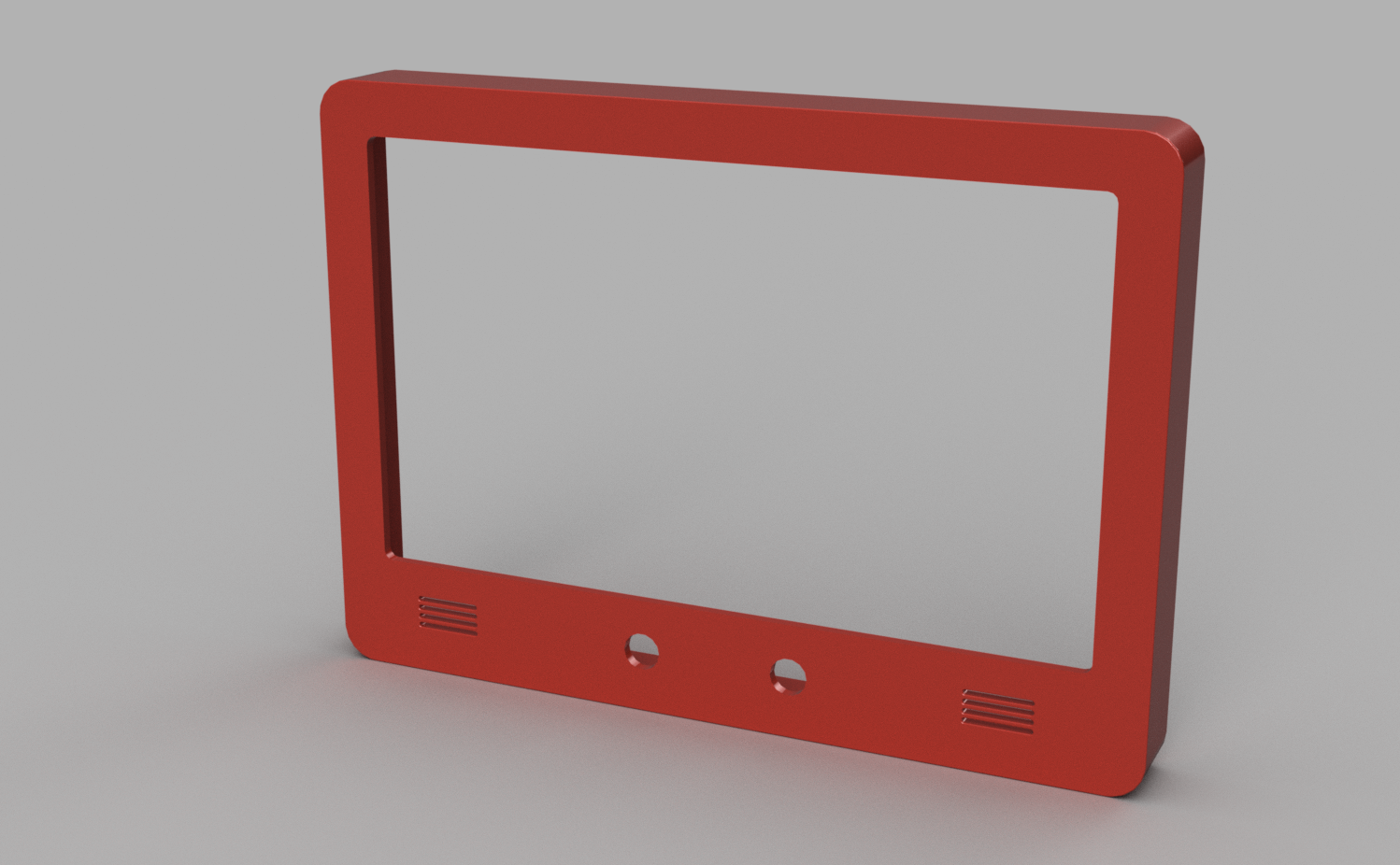
The enclosure of the outside "rugged" waterproof can be seen here in 3D (use a modern Web-browser like Firefox, Chrome or Edge to fully enjoy 3D): https://skfb.ly/FOXY
A lot of my research for this adventure has been documented. Just to give an example: how to get a Ubuntu 14.04 working with a LVDS touch screen based on a eGalax touch interface board? If there are people out there interested in cooperation, I'm open for it. The main current challenges are:
- the non standard LVDS integration between standard touch screens and UDOO Neo, including I2C,
- a good mechanical enclosure for the cockpit display part (rugged, waterproof, speakers and switches) and
- making the (simple) hardware plus software part for Seatalk - NMEA 0183 instrument interfacing
https://nl.linkedin.com/in/manfredvandervoort
Op vrijdag 28 november 2014 18:13:28 UTC+1 schreef Fabian Tollenaar:
Manfred van der Voort
Op maandag 24 augustus 2015 11:37:58 UTC+2 schreef Manfred van der Voort:
Manfred van der Voort
Manfred van der Voort
Op maandag 14 september 2015 09:53:40 UTC+2 schreef Manfred van der Voort:

Mike Bremford
--
Practical_Pirate
Glyph is a wifi-connected e-paper sign. It is housed in an elegant wooden frame, and can be updated from anywhere in the world using a simple Web interface.
He is offering wood housed versions (~195 USD) and electronics only versions. (~125 USD)
3D printed waterproof housing anyone?
https://www.kickstarter.com/projects/304702265/glyph/description
Matt

Ben Ellison
Teppo Kurki
Manfred van der Voort
Kind regards,
Manfred van der Voort
e-mail: mvande...@microcost.nl
-
Creator of the flexible and powerful Maritime Instrument & Display Controller
Simon Vestdijkstraat 35
6708 NW WAGENINGEN
The Netherlands
--
You received this message because you are subscribed to a topic in the Google Groups "Signal K" group.
To unsubscribe from this topic, visit https://groups.google.com/d/topic/signalk/q-5IMcEHqO4/unsubscribe.
To unsubscribe from this group and all its topics, send an email to signalk+u...@googlegroups.com.
Alex Wetmore
However it isn't too hard to machine IP-rated enclosures to work in the marine environment. Small scale CNC is inexpensive. A basic CNC routers are under $1000, a basic CNC milling machine that can also cut metals is under $2000, and large scale industrial CNC vertical milling centers with tool changers and all of the other fun bits can be acquired for scrap value (around $10000).
I have a small Taig CNC mill that I've used for modifying Bud NEMA enclosures:
http://www.budind.com/view/NEMA+Boxes/NEMA+4x
They just announced this enclosure which looks perfect for these types of projects:
http://www.budind.com/view/Plastic+Boxes/Tablet+Enclosures
I've done a lot of work on upgrading a scraped Hurco BMC30M VMC to run on LinuxCNC, but that is way overkill for this type of project.
That Kickstarter kit looks interesting, but it would be good to know what the latency and max refresh rate are on the display. His intended use (a sign for his kid's door) doesn't care about latency at all, where latency matters a lot for showing boat instrumentation (especially wind information on a sailboat).
alex
Sent: Monday, October 19, 2015 9:41 AM
To: sig...@googlegroups.com
Subject: Re: Hardware
Mike Bremford
Manfred van der Voort
Kind regards,
Manfred van der Voort
e-mail: mvande...@microcost.nl
-
Creator of the flexible and powerful Maritime Instrument & Display Controller
Simon Vestdijkstraat 35
6708 NW WAGENINGEN
The Netherlands
Mike Bremford
I got some ASA testprint outdoors for testing UV/water/dirt abrasive. Since today it looks and feels like a day old. Its outdoors stored about one year. Beware printing ASA is not easy and it might take 2 or 3 trys to get a nice perfect print.
Manfred van der Voort
Beware printing ASA is not easy and it might take 2 or 3 trys to get a nice perfect print.
Kind regards,
Manfred van der Voort
e-mail: mvande...@microcost.nl
-
Creator of the flexible and powerful Maritime Instrument & Display Controller
Simon Vestdijkstraat 35
6708 NW WAGENINGEN
The Netherlands
Manfred van der Voort

In short: the bare basics of OpenCPN, NMEA 0183 sensor, AIS receiver and a non touch display running all on Lubuntu functions.
Have a look a the Hackster project log for more information and some photo's.
Obviously there are some issues to resolve. In 2016, I'll catch up and move on to the more difficult part: sunlight readable touch display on Linux and some wireless addons. Plus a waterproof enclosure. Design is already done. And for this group the holy thing: SignalK stack running on it.
To be continued.
Op zondag 20 september 2015 13:06:15 UTC+2 schreef Manfred van der Voort:
Onno Harders

Sailoog
I just found out your project. It seems really interesting and really similar to OpenPlotter project :)
It is so similar that many of your future features are already implemented in OpenPlotter v0.6.0beta3 (sensors, switches, alarms...). I suppose all this is a natural evolution.
Is your project open-source hardware/software? How do you share your hardware/software sources? Do you have english info?
If so, I would be glad to exchange goals materials and code.
Best, Roberto.
El dimecres, 30 desembre de 2015 11:29:33 UTC+1, Onno Harders va escriure:
Onno Harders
Onno Harders
Sailoog
I really wish we could work but I am afraid it will be difficult.
As open-source evangelists, we do not feel comfortable collaborating with proprietary software, actually we work against it. In most cases, you can use open-source software with commercial purposes (OpenPlotter allows this) but it is mandatory to reference the original author in a visible place and publish the source code and your improvements. You must release your product under the same license terms too. So if you are using open source software in your project, be careful and follow all the obligations or you might have problems. We open-source developers take this seriously.
Regarding the hardware, from the beginning of OpenPlotter project we set 3 basic principles: open-source, low-cost and low-power; and a golden rule: always satisfy 2 of them. Assuming that your modules will be low-power, we could recommend your devices if they satisfy the low-cost principle. We prioritize using standard modules in order to avoid brand dependencies and we will design some of them as open source but we will be watching you in case we can exchange resources in this area :)
Despite our different motivations, I wish you the best and if you ever change your mind, please do not hesitate to contact.
Thanks!
R.
El dilluns, 4 gener de 2016 10:13:49 UTC+1, Onno Harders va escriure:
Sailoog
El dilluns, 4 gener de 2016 10:19:55 UTC+1, Onno Harders va escriure:
Manfred van der Voort
- ~10' size
- Sunlight readable
- > 600 Nits brightness measured after cover glass treatment
- 1280 x 800
- Single channel LVDS
- Touch
- Multi touch
- Touch driver board with USB/I2C connector
- Linux drivers available
- AG/ AR treatment
- Hardenened glass cover, optical bonded
- Temp range: -20 / +60 Celcius
- Power consumption: ideally not more than 10W
On https://www.hackster.io/mvandervoort/maritime-instrument-display-controller-2b3736 the background info about is documented.
- colloboration with some othe ones looking to make a HDMI/LVDS Maritime touch display or
- after I decided to commercialize my MIDC and succeeed with a crowdfunding campaign.
--
You received this message because you are subscribed to a topic in the Google Groups "Signal K" group.
To unsubscribe from this topic, visit https://groups.google.com/d/topic/signalk/q-5IMcEHqO4/unsubscribe.
To unsubscribe from this group and all its topics, send an email to signalk+u...@googlegroups.com.
Onno Harders


Manfred van der Voort
The design goals for this MIDC were quite extensive:
- suitable for small crafts (22" min) as well as some bigger ones
- low power consumption (<= 12 W - based on 10' display)
- sunlight readable screen ranging from 10' - 15'
- on board electrical interfaces for serial RS232, RS422, USB, RS485 and CAN (required for NMEA2000)
- DIY to be build under € 500 with one 10' touch display sunlight readable
Regarding the application software (stacks), there must be support minimally for:
Objected price for MIDC is mentioned. That's SBC, Wireless KB & Marine Display. Currently I'm quite well on target with still approx. €60 above.
Kind regards,
Manfred van der Voort
e-mail: mvande...@microcost.nl
-
Creator of the flexible and powerful Maritime Instrument & Display Controller
Simon Vestdijkstraat 35
6708 NW WAGENINGEN
The Netherlands
--
Mike Bremford
--
You received this message because you are subscribed to the Google Groups "Signal K" group.
To unsubscribe from this group and stop receiving emails from it, send an email to signalk+u...@googlegroups.com.
Alex Wetmore
I've had problems with the iPad 1 and 2 (I didn't try an Air and no longer have one) overheating and shutting down when used in direct sunlight. A waterproof case would make it even worse. I also found the displays of the 1 and 2 unreadable in bright sunlight (419 nits according to the same site that you mention below).
I think that there will be a decent market for an outdoor touchscreen display that is waterproof and includes basic hard buttons including a small joystick and rotary encoder. This would allow one to build an open source version of something like a Raymarine e-series or B&G Zeus 2.
The hard buttons are essential for use in rough conditions since touchscreen displays don't work so well when coated in salt water or when the user is wearing thick waterproof gloves.
Sent: Tuesday, January 5, 2016 10:46 AM


Al Thomason
I am glad to see someone mentioned damnability of a display, not all underway are during bright sunlight!
A common issue I have had with consumer displays is the inability to adjust them to a point where night vision is not compromised. And perhaps even adding (scope creep I know) a low cost ambient light sensor to allow some level of auto-adjustment is one thing to perhaps consider.
-al-
Viking Star
45' Monk Sr. / McQueen
Manfred van der Voort
- Consumer devices are not going to work for multiple reasons. The most important ones are lack of waterproofness obviously and lack of being rugged. Appying an Ottrerbox or whatever waterproof box will create 2 problems as a result of overheating: very rapidly shorten battery life and decreasing performance and completely fail out. Not very handy while navigating :-) Replacing a consumer tablet battery is financially very unattractive!
- Regarding brightness the following. In general I'll keep 500 Nits as the absolute minimum, 600 as preferable and >750 as excellent in all light conditions. These numbers are the effective numbers measured when cover glass is applied! Most screen specs "forget" about this, so you get a substantial lower brightness when the AR/AG cover is bonded on the screen
- The type of sunglasses you're wearing has a direct positive/negative effect of the readability of a screen. For the MIDC, the requirements are being used to have minimally a fair to good and sometimes excellent readability with your sunglasses on.
- The MIDC requirements also keep in mind wearing gloves. The touch sreen must be usable with gloves on and in wet conditions.
- All these considerations and my extensive experience with coastal sailing on a small (22") cabin cruiser and navigating with tablets and phablets, have led to my project. I'll repeat: consumer devices will not going to work on small yachts. A dedicated device is what's needed.
- In Phase 2 on the roadmap there are the specific radio buttons like someone mentioned in this thread to allow one to build an open source version of something like a Raymarine e-series or B&G Zeus 2
I'll keep this group udated about the progress. Also have a look at https://www.hackster.io/mvandervoort/maritime-instrument-display-controller-2b3736 There a build logs published quite regularly.
Kind regards,
Manfred van der Voort
e-mail: mvande...@microcost.nl
-
Creator of the flexible and powerful Maritime Instrument & Display Controller
Simon Vestdijkstraat 35
6708 NW WAGENINGEN
The Netherlands
--
You received this message because you are subscribed to a topic in the Google Groups "Signal K" group.
To unsubscribe from this topic, visit https://groups.google.com/d/topic/signalk/q-5IMcEHqO4/unsubscribe.
To unsubscribe from this group and all its topics, send an email to signalk+u...@googlegroups.com.
Alex Wetmore
Does a multitouch screen technology exist that works with any gloves and in wet conditions? I've never encountered such a touch screen, and would guess that Raymarine and Navico would use them if they did.
alex
Sent: Tuesday, January 5, 2016 12:23 PM
- Consumer devices are not going to work for multiple reasons. The most important ones are lack of waterproofness obviously and lack of being rugged. Appying an Ottrerbox or whatever waterproof box will create 2 problems as a result of overheating: very rapidly
shorten battery life and decreasing performance and completely fail out. Not very handy while navigating :-) Replacing a consumer tablet battery is financially very unattractive!
- Regarding brightness the following. In general I'll keep 500 Nits as the absolute minimum, 600 as preferable and >750 as excellent in all light conditions. These numbers are the effective numbers measured when cover glass is applied! Most screen specs "forget" about this, so you get a substantial lower brightness when the AR/AG cover is bonded on the screen
- The type of sunglasses you're wearing has a direct positive/negative effect of the readability of a screen. For the MIDC, the requirements are being used to have minimally a fair to good and sometimes excellent readability with your sunglasses on.
- The MIDC requirements also keep in mind wearing gloves. The touch sreen must be usable with gloves on and in wet conditions.
- All these considerations and my extensive experience with coastal sailing on a small (22") cabin cruiser and navigating with tablets and phablets, have led to my project. I'll repeat: consumer devices will not going to work on small yachts. A dedicated
device is what's needed.
- In Phase 2 on the roadmap there are the specific radio buttons like someone mentioned in this thread to allow one to build an open source version of something like a Raymarine e-series or B&G Zeus 2
I'll keep this group udated about the progress. Also have a look at https://www.hackster.io/mvandervoort/maritime-instrument-display-controller-2b3736 There a build logs published quite regularly.

Manfred van der Voort
Mike Bremford
Alex Wetmore
From: sig...@googlegroups.com <sig...@googlegroups.com> on behalf of Mike Bremford <mi...@bfo.com>
Mike Bremford
The difficult part of building marine hardware is the display, HID interface, and waterproof enclosure. Providing a single solution for those challenges that looks nice and which is flexible in compute implementation would be a really neat product.
Mike Bremford - CTO mi...@bfo.com
Big Faceless Organization http://bfo.com
--
Alex Wetmore
" That, and the fact that there seems to be an advance in compact computing every week."
A generic empty space to put the single board computer into solves that problem.
I agree with you that heat may be a concern.
The Fit-PC4 has quite high power consumption compared to other options, a general downside of more powerful and flexible solutions. If I'm building a replacement for my Raymarine e7d then I also want to get power consumption similar to the e7d (around 8-10 watts with the sonar on and display on full brightness).
I understand the desire to separate the CPU and display. I think it's pretty reasonable and nice, especially if display power and signal can all be sent over a shared and easy to route connector (some flavor of waterproof usb-C would be awesome). Of course a display with a little space in the back for custom electronics would allow you to make the CPU remote (by putting in a LVDS to HDMI controller) and allow me to try and put a Beaglebone back there if I prefer.
alex
rob...@42.co.nz
My own RPi lies in the open in a jumble of cable on the chart table - so no problem with heat for me :-)
Rob
On Wednesday, January 6, 2016 at 1:03:14 PM UTC+13, Alex Wetmore wrote:
" That, and the fact that there seems to be an advance in compact computing every week."
A generic empty space to put the single board computer into solves that problem.
I agree with you that heat may be a concern.
The Fit-PC4 has quite high power consumption compared to other options, a general downside of more powerful and flexible solutions. If I'm building a replacement for my Raymarine e7d then I also want to get power consumption similar to the e7d (around 8-10 watts with the sonar on and display on full brightness).
I understand the desire to separate the CPU and display. I think it's pretty reasonable and nice, especially if display power and signal can all be sent over a shared and easy to route connector (some flavor of waterproof usb-C would be awesome). Of course a display with a little space in the back for custom electronics would allow you to make the CPU remote (by putting in a LVDS to HDMI controller) and allow me to try and put a Beaglebone back there if I prefer.
alex
From: sig...@googlegroups.com <sig...@googlegroups.com> on behalf of Mike Bremford <mi...@bfo.com>
Sent: Tuesday, January 5, 2016 3:43 PM
To: sig...@googlegroups.com
Subject: Re: Hardware
So far I've overheated both a Pi and my previous favourite option, the Hummingboard i2ex. I managed to get the eMMC flash disk on the Hummingboard to an astonishing 114° according to the SMART readout, which explained why it would randomly hang. I guess that's why I'm a little nervous about the processor being bundled with the screen in an airtight enclosure - many of these single board units aren't typically tested in that sort of environment. That, and the fact that there seems to be an advance in compact computing every week.
For what it's worth I'm now running a Fit-PC4. It's more expensive, but in terms of bang for buck it's a few orders of magnitude more capable than the Pis, Beaglebones etc. I'd been using previously. It has a very nice hardware design (8 first-class USB ports, rather than 4 through two internal hubs like the Pi), takes unregulated 10-15V power, comes with a secure wall mount and also has very decent thermal characteristics. If anyone is shopping for more power I'd very highly recommend it.
The difficult part of building marine hardware is the display, HID interface, and waterproof enclosure. Providing a single solution for those challenges that looks nice and which is flexible in compute implementation would be a really neat product.
Certainly agree with that statement.
-----------------------------------------------------
Mike Bremford - CTO m...@bfo.com
Big Faceless Organization http://bfo.com
On 5 January 2016 at 23:07, Alex Wetmore <al...@phred.org> wrote:
From: sig...@googlegroups.com <sig...@googlegroups.com> on behalf of Mike Bremford <mi...@bfo.com>
> Speaking for myself I'd be more interested in seeing a "dumb screen" as a product - either a computer> functioning as a display running only a full-screen browser (effectively a kiosk running Chromium),> or just a screen with HDMI and USB for touch. I'd rather have the "brains", and the associated nest of> cables, in a separate unit where it can be upgraded or modified as technology, and the software,> evolves, while the screen remains fixed and unchanged.
An alternative implementation that I'd prefer is one where the monitor's enclosure has enough room in the back for a single board computer. This could be a 25mm deep space behind the display (25mm behind a 10" display is a lot of room) and standoffs for installing a mounting board for the single board computer. It would then be trivial to put a Raspberry Pi, Beaglebone, Galelio, or whatever other option there. The display could use LVDS or whatever is both common and cheap. A couple of cable glands can be provided for getting NMEA 2000, NMEA 0183, power, and other protocols in and out.
The difficult part of building marine hardware is the display, HID interface, and waterproof enclosure. Providing a single solution for those challenges that looks nice and which is flexible in compute implementation would be a really neat product.
alex--
You received this message because you are subscribed to the Google Groups "Signal K" group.
To unsubscribe from this group and stop receiving emails from it, send an email to signalk+u...@googlegroups.com.
For more options, visit https://groups.google.com/d/optout.
Manfred van der Voort
- Headless, for those not wanting a fixed cabin based screen and only using wireless access through tablets
- Headed with the cabin display in 2 sizes: 10 and ?
- Cabin display only, with a HDMI/USB touch interface externally and LVDS internally, for those who want their own unique MIDC built with their favourite flavour of a SBC
Kind regards,
Manfred van der Voort
e-mail: mvande...@microcost.nl
-
Creator of the flexible and powerful Maritime Instrument & Display Controller
Simon Vestdijkstraat 35
6708 NW WAGENINGEN
The Netherlands
--
You received this message because you are subscribed to a topic in the Google Groups "Signal K" group.
To unsubscribe from this topic, visit https://groups.google.com/d/topic/signalk/q-5IMcEHqO4/unsubscribe.
To unsubscribe from this group and all its topics, send an email to signalk+u...@googlegroups.com.
Onno Harders
- Light Source : Front light integrated with LCD
- Size (closed) : Approximately 3.3" height/3.23" width/0.96" depth
- Screen (diagonal) reflective TFT color LCD
Adam
Manfred van der Voort
Those following my MIDC project, know finding an appropriate display is one of the most challenging tasks. After hunting for more than 4 moniths, it looks like there is some good progress to mention here. For all kind of reasons I won't publish any details yet. When there is a specific result and the whole process of importing them in large quantities from China is feasable, I'll publish more details.
Op woensdag 6 januari 2016 05:43:09 UTC+1 schreef Manfred van der Voort:
To unsubscribe from this group and all its topics, send an email to signalk+unsubscribe@googlegroups.com.
Manfred van der Voort
- ~10' size
- Sunlight readable
- AG/ AR treatment
- > 600 Nits brightness (measured after cover glass treatment)
- 1280 x 800 Single channel LVDS
- Touch Projective Capacity (so usable with rain droplets & gloves)
- Multi touch Touch driver board chipset: EETI with USB connector
- Linux/Android & Windows drivers available
- Hardend glass cover, optical bonded
- Operating temp range: -20 / +70 Celcius
- Power consumption: ideally not more than 10W
- MOQ max. 250 pieces/year
- Price < € 200 net imported The Netherlands including all importing taxes, shipping and handling
Nevertheless, the final stage is here. I haven't been capable to meet the normal manufacturing requirment to work with at least a second source as well. I'm really glad after spending so many hours on this adventure that there is probably one left!
To put it in the right context. This objected electronic touch screen device can be used for:
- A thumb display with HDMI/VGA/DVI connector, plus optionally USB touch with HID protocol support and optionally sound through a HDMI audio receiver - who want to join for this?
- A MIDC display (that's for my project)
- A full touch display whatever SBC (UDOO, BB, RPI, etc) who want to connect through eiher LVDS or HDMI - this could be a side project for the MIDC
Right now there are two req. not confirmed:
- MOQ (Minimum Order Quantity)
- Gloves support, without customization of standard Touch software
All other things are confirmed (and I believe it). To be continued.
Op dinsdag 12 januari 2016 09:51:11 UTC+1 schreef Manfred van der Voort:
Mike Bremford
Mike Bremford - CTO mi...@bfo.com
Big Faceless Organization http://bfo.com
To unsubscribe from this group and all its topics, send an email to signalk+u...@googlegroups.com.
rob...@42.co.nz
Sounds good - just a thought but a kickstarter for 1,10,100 screens would be a great way to get MOQ volumes at a given price. If you make the MOQ every-one gets their orders, otherwise nothing lost.
Personally, I have one of these on the way: http://beckystern.com/2008/04/14/body-technology-interfaces/
Rob
To unsubscribe from this group and all its topics, send an email to signalk+u...@googlegroups.com.


