but the document may well be that definitive for our times ...
H.
On 2025-07-01 10:54 p.m., Hugh Williams
wrote:
It is the celebration of
Canada Day in our nation. However, these days we are finding
that our nation’s history and future need to be given some
larger context …
Though recently many of us
have held the opinion that our Church leaders have been way
too quiet on the pressing issues of our times, this is not
true everywhere in the Church it seems. Perhaps it is more
that the Church leaders have been divided and even confused
about what to say together. But there also has been ongoing
work, it seems, and even some significant developments,
especially after Pope Francis’ very provocative encyclical ‘Laudato
Si’ of almost ten years ago now.
As much as some might say
there has been lacking a clear radical alternative to the
political-economic system that is increasingly being
denounced, perhaps this too is also changing. This change is
witnessed to in today’s declaration (see attached) by the
Catholic Bishops of the Global South: Africa, Asia, Latin
America, and the Caribbean.
This statement (again, see
attached) was issued today, on our Canada Day, in preparation
for the UN’s next COP30 (UN Conference of the Parties
on Climate Change) in Brazil in November. This declaration is
in many ways much more focused and much more radical, in that
it is arguably anti-capitalist and more open to the
eco-socialist option. In the meantime, though it is a call for
collaboration with coherent allies in the Global North of good
will, it is a firm evidence-based call to resistance.
Take some time to read it … as
the summer’s ‘heat dome’ slowly envelopes us, and think of the
many others affected elsewhere in a much harsher manner as you
read …
consider passing this on ...
HW
Hugh Williams
unread,
Jul 1, 2025, 10:14:28 PM7/1/25
Reply to author
Sign in to reply to author
Forward
Sign in to forward
Delete
You do not have permission to delete messages in this group
Copy link
Report message
Show original message
Either email addresses are anonymous for this group or you need the view member email addresses permission to view the original message
You do not have permission to delete messages in this group
Copy link
Report message
Show original message
Either email addresses are anonymous for this group or you need the view member email addresses permission to view the original message
to loner...@googlegroups.com
Lest there be some misunderstanding from this 'Canadian
nationalist'
in my distributing such a compelling Church document issued on
Canada Day by church leaders from the Global South ...
in preparation for the next COP30 in Brazil ...
this email has been acted on in large part because of a very
close reading of John's and Pierre's text "Attentive,
Intelligent, Rational, and Responsible (2023)".
In Appendix E at p.270 ... the authors with perhaps some degree
of prescience write:
"There is a role then for a Church with a world-wide
educational system
in preparing the ground for the reception of a critically
realist account of the economy."
This is the basis for attributing a certain definitive
quality for this very recent declaration to which I've
provided the 'link' below.
Definitive - in the sense that it is a final
'call to action', along with the dialectical recognition
that the inaction or ineffective actions
of the past ten years since Pope Francis' issuing of the
encyclical 'Laudato Si' has largely (though not exclusively)
been the result of the actions of persons and corporations in the
Global North with vested interests
in a very problematic economic status quo. And that now there are
and will be geo-political implications to this actual dialectic
...
which now makes the BRICS geo-political initiative of
considerable importance especially when considered in conjunction
with this Church declaration,
as it does as well point to the central role of China for 'our'
learning, especially here in the Global North, for how we must now
restructure capital
in its dual nature as both commodity and power (see the Marxist
author Yanis Varoufakis, "Techno-feudalism: What Killed
Capitalism"
(Melville House, 2023, pp.15-17) and do so in earnest for the
sake of the real possibility of an 'alternative world' ...
... to give those who may be interested some highly generalized
indication of the Chinese Marxist perspective on the needed
changes
and where 'we' in the Global North may have fundamentally
important things to learn see the following link -
You do not have permission to delete messages in this group
Copy link
Report message
Show original message
Either email addresses are anonymous for this group or you need the view member email addresses permission to view the original message
to 'PIERRE WHALON' via Lonergan_L
Hugh, the huge problem of polluting the environment is leading to looming catastrophes. Pope Leo XIV is following up on his predecessor's call for reforms. He has found Facebook as a pulpit of sorts to promote conscience-informed reflection and action on the part of citizens. John
On January 23, 2025,
Climate and
Capital Media published an article by Danny Kennedy, senior
adviser to the
Sunrise Project, entitled “US’s Petrostate Versus China’s
Electrostate.” This
was among the first of a torrent of articles from the corporate
media and
climate watchers on the astonishing successes of China in
peaking and then
lowering carbon emissions due to what the Financial Times on
May 12, 2025, called China’s “Electricity Revolution.” According
to the Financial Times, “China could be on its way to
becoming
the world’s first major ‘electrostate,’ with a growing share of
its energy
coming from electricity and its economy increasingly driven by
clean
technologies” (Danny Kennedy, “US’s Petrostate Versus China’s Electrostate,” Climate
and
Capital Media, January 23, 2025, climateandcaptialmedia.com;
Nassos Stylianou
et al., “How Xi Sparked China’s Electricity Revolution,” Financial Times, May 12, 2025).
The extent of the Chinese
energy
revolution almost defies belief. As Kennedy writes:
China [is] moving faster
than
ever on the energy transition. It feels silly to say they’ve had
another
breakout year on solar, but they’ve had another breakout year
with the numbers
just coming for 2024. It’s worth remembering that China’s
official targets for
wind and solar at the start of this critical decade were almost
too much to
imagine. But they exceeded them so quickly that they brought
them forward to
2025 in 2023 and then met them in 2024! Likewise, Beijing’s
target for EV’s
[electric vehicles] was 50% of car sales by 2035. It’ll hit that
this year…ten
years ahead of schedule! (Kennedy, “US’s Petrostate Versus
China’s
Electrostate”)
On May 15, 2025, Carbon
Brief
announced that not only have China’s carbon emissions now peaked
but they have
actually dropped by 1 percent over the last twelve months. This
has occurred at
the same time that its energy demand has been rapidly
increasing. China’s
electric vehicle (EV) sales in 2025 will more than double those
of 2022,
representing the first time that EVs have outsold internal
combustion engines
in any major auto market in the world. China accounts for 90
percent of the
world’s electric bus market. Its high-speed rail system is five
times the size
of that of the European Union. Not only is it the world leader
in clean energy
technology, but half of China’s exports of solar and wind
equipment and EVs now
go to the Global South. Although China is the lead carbon
emitter worldwide,
this is largely explained by the fact that it produces 30
percent of the
world’s manufactured goods, while remaining heavily dependent on
coal. Still,
with 18 percent of the world population, its per capita carbon
emissions are
only around half the U.S. level. Within the next three years,
China, according
to the Financial Times, is expected to be sourcing half
of its
power “from low-carbon energy including hydro, solar, wind,
nuclear and battery
storage systems.” Its solar capacity also is projected soon to
exceed
coal-fired power generation as China’s main energy source
(Laurie Myllyvirta,
“Clean Energy Just Put China’s CO2 Emissions Into Reverse for
the First
Time,” Carbon Brief, May 15, 2025, carbonbrief.org; Stylianou
et al.,
“How Xi Sparked China’s Electricity Revolution”; Tina Landis, “Don’t Believe the New Cold War Lies, China Is Leading the World in
Climate Solutions,” Liberation News, May 15,
2025,
liberationnews.org; Jennifer L., “China’s Renewable Energy Boom:
A
Record-Breaking Shift or Still Chained to Coal?,” Carbon Credits, February 6, 2025, carboncredits.com).
China’s achievements in
ecological modernization via the revolutionizing of its social
forces of
production are a result of its existing social relations, which
include the
ability to carry out extensive energy planning. This has so far
proven
impossible for monopoly-capitalist regimes. In short, China’s
signal advantage
in terms of addressing the climate change threat and ecological
challenges
generally is its “socialism with Chinese characteristics.” This
contrasts with
persistent U.S. failures to carry out an energy transition. This
was true even
under the Biden administration, which sought a stance friendly
to fossil fuel
corporations in its Inflation Reduction Act. Under Trump, energy
transition
along with the reality of climate change are gone altogether and
the goal is to
build on the U.S. role as the world’s leading petrostate. If
humanity is to
prevent a planetary climate holocaust, the dominant class
relations of global
monopoly capitalism will need to go. There is no other way.
Hugh Williams
unread,
Jul 27, 2025, 3:51:30 PM7/27/25
Reply to author
Sign in to reply to author
Forward
Sign in to forward
Delete
You do not have permission to delete messages in this group
Copy link
Report message
Show original message
Either email addresses are anonymous for this group or you need the view member email addresses permission to view the original message
to loner...@googlegroups.com
Subject:
perhaps there is hope but it requires a serious critical
analysis and a commitment to profound structural changes
You do not have permission to delete messages in this group
Copy link
Report message
Show original message
Either email addresses are anonymous for this group or you need the view member email addresses permission to view the original message
to loner...@googlegroups.com
Listers all,
this exchange below and the attachment is not a
digression from John and Pierre's AIRR . For there are
many references to China
that I've felt, as a result of my own research,
require certain supplementations that might have us look a
little closer at just what has and is happening there
from an economic perspective particularly ...
finally a friend provided a piece (see the
attachment if the link below doesn't work) that tells a
compelling story
which, if for the most part true, has profound
practical implications for our world ....
This
exchange below and the attachment, especially, are highly
relevant for a hopeful
consideration of ‘our’ future. And let me say something in honor
of the good (and late) Pope
Francis … that he was reported as once saying something that
would be highly
controversial in many places in the West. And it was something
to the effect –
that he found ‘the nation that seemed to be taking the
encyclical Laudato
Si most seriously was China’.
I’ve been
suggesting of late in several email communications that ‘we’ may
well have things
to learn from China, things of fundamental importance.
And finally,
I’ve gotten a response from a long-time friend that provides
what I might call
an accessible ‘narrative’ around what actually has taken place,
and is taking place, in
China. It comes with a few charts and statistics but nonetheless
I find it
relatively free of distracting jargon despite its seemingly
rigorous focus on
economy and economics. It tells a compelling story with
compelling pedagogical
and educational implications, if it be anywhere close to the
truth ....
We are in a
situation here in the West and Canada, and indeed globally
where, now as a matter of survival, we have to be
able to look outside and beyond our own cultural biases and
prejudices, if we
are going to emerge from the crisis or catastrophe that we have
entered into …
There are
lessons here … use your own mind to grasp and interpret this,
for God’s sake …
and then use AI, if you are so disposed to help you grasp the
essence of this
story and argument.
And then
share it or some part of it with whom ever. And maybe a few of
us can discuss
it further. Some may be able to enhance the story and its
implications in
helpful and even useful ways …
... and yes more needs to be
investigated and critically considered but as a direction for
both research and interpretation this is an extraordinarily
compelling lead, don't you agree ... ???
take care
Hugh
Williams
[1] I once thought
a pilgrimage to Rome
might be an important spiritual and learning experience. I
no longer think that
… but instead have said half-jokingly - ‘I’d rather go on
pilgrimage to China’. As
things continue to unfold in a Geo-political sense in our
good but very troubled world this
comment, half said in jest, is proving to carry,
metaphorically at least, some powerfully significant truth …
-------- Forwarded Message --------
Subject:
Re: perhaps there is hope but it requires a serious
critical analysis and a commitment to profound structural
changes
and any socioeconomic system that can more or less
manage that these days needs to be given some serious
consideration
for the sake of learning (and hope).
so it seems to me
Hugh
On 2025-07-30 10:36 p.m., Keith
Helmuth wrote:
Hugh,
I assume this email has gone to a group of people as have
your recent sharings and that Stuart and Vince are included.
To make sure, I have cc them on this reply.
I have not been able dig into the content of your recent
emails and the references cited as I would have wished but I
have picked up the slant of the themes and thought you are
currently following.
The current information below you have shared about China
puts me in mind of an Ellen Brown post from January. Here’s
the link.
In large part it stems from the way they have structured
and managed their monetary system. Her post on this subject
includes U.S. comparisons. It elucidates the astounding speed
of China achievements, which have startled the editors at
Monthly Review.
Mark Carney is certainly aware of what is happening in
China. His vision for Canada sounds a similar note of
potential and expectation. Is this what you refer to in
asking, “what course we in Canada will follow”?
Carney also understands all the permutations of monetary
systems and fiscal policy. It may take a full blown financial
crisis to open the door to monetary system reform, but if the
ship hits that reef, I’ll be glad for this captain to manage
the rescue operation.
You do not have permission to delete messages in this group
Copy link
Report message
Show original message
Either email addresses are anonymous for this group or you need the view member email addresses permission to view the original message
to loner...@googlegroups.com
Hugh, you have a knack for linking present global realities and its threats, e. g. in the following 3 sentences: "Under Trump, energy transition along with the reality of climate change are gone altogether and the goal is to build on the U.S. role as the world’s leading petrostate. If humanity is to prevent a planetary climate holocaust, the dominant class relations of global monopoly capitalism will need to go. There is no other way."
As Pierre and I argue in AIRR, Lonergan offers a Third Way, one, to sure that needs many variations in attempts to save the planet. That's why we subtitled AIRR with the phrase "Transforming Economics to Save the Planet." As we further argue in AIRR that process needs two more turnarounds or "conversions", namely economics and environment conversions-turnarounds. Pope Francis and now Pope Leo XIV have been aware of this while insisting on the need of a spiritual-ethical foundation,
John
--
You received this message because you are subscribed to the Google Groups "Lonergan_L" group.
To unsubscribe from this group and stop receiving emails from it, send an email to lonergan_l+...@googlegroups.com.
You do not have permission to delete messages in this group
Copy link
Report message
Show original message
Either email addresses are anonymous for this group or you need the view member email addresses permission to view the original message
to Lonergan_L
Dear Hugh,
Thank you for sharing your reflections on China's progress in facing the ecological crisis.
It was both encouraging and instructive to read how Marxist ecology is taking shape—delivering long-term, sustainable development within the Chinese economy—and how it may offer lessons and inspiration for others.
I see real value in Marxist ecology’s systemic critique of environmental destruction, especially its robust structural analysis of capitalism’s contribution to the crisis:
The structural compulsion for infinite growth (the “sky is the limit” logic)
The commodification of natural goods (viewing everything through the lens of profit)
The alienation of nature (as a force to be dominated and controlled)
The separation of ownership and labor (undermining collective responsibility)
At the same time, I think we must also acknowledge the contradictions in its implementation within China. The state’s authoritarian influence tends to stifle dissent and leave limited space for grassroots innovation. Ecological goals are often framed in terms of national power and control, with less emphasis on conscience, participation, or the personal maturation of citizens.
I also have a copy of John and Pierre's book, though I still need to study it in more detail. I think they are right to emphasize the need for a transformed approach to economics, and that such a transformation must be rooted in the subject: attentively, intelligently, rationally, and responsibly. If we apply those principles to Marxist ecology (which I’m not sure the authors were familiar with at the time), then I think we can affirm what is good in the Chinese approach while simultaneously calling ourselves to a deeper renewal—of economics, of culture, and ultimately of personhood—so that we may together face and meet the global crisis with integrity.
This is also what I was referring to in my recent post on ψ_integration.
Kind regards,
David
Hugh Williams
unread,
Aug 2, 2025, 5:57:25 PM8/2/25
Reply to author
Sign in to reply to author
Forward
Sign in to forward
Delete
You do not have permission to delete messages in this group
Copy link
Report message
Show original message
Either email addresses are anonymous for this group or you need the view member email addresses permission to view the original message
to 'David Bibby' via Lonergan_L
David,
thanks for responding
I very much appreciate your attention to this
and your insights ...
I believe a little more needs saying on 'the China model' and its
relevance.
And perhaps in the interest of research and interpretation as it
may pertain
to the AIRR text ... can you say a little more "on ψ_integration"
as it may pertain to GEM-FS and the personal and communal
conversions.
I believe open minded Chinese Marxist scholars would see this as
a Western emphasis,
especially the emphasis on personal subjective conversion
but not necessarily one that they would eschew as a matter of
principle ....
Hugh
--
You received this message because you are subscribed to the Google
Groups "Lonergan_L" group.
To unsubscribe from this group and stop receiving emails from it,
send an email to lonergan_l+...@googlegroups.com.
Ellen Brown
“Quantitative
Easing with Chinese Characteristics: How to Fund an Economic
Miracle” in Sheerpost,
February 9, 2025.
My Precised Gloss
This is a precise’
of Ellen Brown’s relatively recent summary narrative account
of China’s astonishing economic
development. It is a story that tries to identify some of the
main elements of
the ‘China story model’. It is relatively accessible for those
of us who are
not trained economists.
China has
been able to rise out of desperate poverty in about 40 yrs. It
has developed an
impressive infrastructure.
This all
requires money and lots of it; so where did the money come
from?
The Chinese
central bank has printed money. From 1996 to 2024 the money
supply in China
increased 5300% from 5.84 billion to 314 billion cny (yuan).
How did this
happen?
Exporters
brought foreign currencies, mostly US $ received for goods
exported, to their
local banks and traded them for cny needed to pay workers and
suppliers. The
central bank printed cny and traded them for foreign
currencies and kept them as
reserves thereby doubling the national export revenue.
A highly
significant element in this development is that this 5300%
explosion in cny did
not produce uncontrolled inflation.
How was this
achieved?
The central
bank engaged in selling government securities in the open
market thus ‘withdrawing
excess cash’ according to Brown’s account. It (or the
government?) imposed
price controls on certain essential commodities – iron ore,
copper, corn,
grain, meat, eggs, and vegetables as part of its 14th
five-year plan
(2021-2025). The intention was to ensure food security for the
people. And to
maintain price stability, money was invested in manufacturing
and
infrastructure. GDP (supply) rose with the money available
(demand) so as to
keep prices stable.
In 1978
market-oriented reforms were introduced in China. Farmers sold
surplus produce
in the market, foreign investment was permitted, private
businesses and foreign
companies were encouraged to grow.
By the 1990s
China was a major exporter of lower-cost manufactured goods
because of lower
cost labor and because of infrastructure development. China’s
membership in the
WTO in 2001 is also considered an important factor.
The lower
cost of labor is possible because China subsidizes social
needs thereby
reducing operational costs of Chinese enterprises and
improving labor
productivity.
Government
invests in public transportation infrastructure – metros,
buses, rail, … all
intended to be affordable for workers and for the affordable
transport of goods
to market.
Education and
training of workers is subsidized. There is affordable housing
for workers,
especially in the urban areas.
Public health
care is subsidized. There is a public pension system reducing
the need for
private retirement plans.
The
government subsidizes and incentivizes key industries in
technology, renewable
energy, and manufacturing.
In the early
stages of reform foreign investment was a key source of
capital.
However,
another key element has been China’s development of banks,
lots of banks,
community banks, regional banks, supporting local businesses
by providing funds
to get the latest technology. This diverse means of public and
community
banking means control over the valuation of currency, and over
capital flows. The
central bank acts as lender of last resort providing liquidity
to other state/publicly-controlled
banks when needed.
This complex
system of publicly controlled banking in China and its complex
system of technical
controls, checks and balances admittedly is hard to follow in
a summary
narrative such as this. However, what must be emphasized, it
seems to me, is
that it is a public system first motivated by government or,
lets say, motivated by a form
of governance providing publicly determined priorities rather
than by the
pursuit of private profits.
Injecting money
into the economy, as much as 80% from money printing, sounds
extreme. But this monetary
element must be understood within the context of China’s
political-economy and
macroeconomic policies of carefully structured 5yr plans.
These are plans
designed to serve the public good and the whole economy and
they are funded by
policy banks that are under public control. The profits are
publicly owned. Private
financialization and speculative exploitation is avoided and
can be compared to
what happened in the US and the West’s
financial system in the so-called 2007-2008 financial crash.
Newly issued
money is used for production so that increased supply is
coordinated with
demand so as to keep prices stable.
In China health
and social services, which does not produce revenue, is still
viewed as
productive in its support of human capital for production.
Workers needs to be
healthy and well educated in order to produce effectively. And
so, government
needs to support the costs of health and social supports borne
by companies and
enterprises in order to compete with China’s more directly
subsidized
businesses.
The US led
geo-political
macro-economic strategy of vicious competition by means of
sanctions and
tariffs intended to damage one’s economic competitors
perceived as enemies is seen, in
China, as leading to economic warfare and perhaps to military
conflict and actual
warfare. This is strongly viewed as highly unreasonable and
incoherent, and ultimately
ineffective in that it is unnecessarily costly for the world
economy and its
ecology.
Production
and wealth creation is better served by an overall cooperative
context in which
concerted and strategic public ownership and control, adaptive
planning in
governance, monetary control and regulation are all seen as
necessary parts of
the good of order in economy and now also for ecological
well-being as well.
Commentary
This, as I
understand it, is a summary picture of the Chinese
historical-materialist vision
of hope, a hope that is very much needed at this moment in
history. I believe
that to the extent that this account, limited as it is, is
true, it then can
serve as a ‘model’ at least for pedagogical purposes here in
the West. On a big scale, and in reference to our on-going
review of Raymaker-Whalon's AIRR text, it
especially gives content to this notion of communal
conversions –
economic and ecological that this important text keeps
referring to when it speaks of
its Lonergan inspired GEM-FS methodology of social change.
Hugh Williams
August 2,
2025
Message has been deleted
Hugh Williams
unread,
Aug 4, 2025, 2:41:36 PM8/4/25
Reply to author
Sign in to reply to author
Forward
Sign in to forward
Delete
You do not have permission to delete messages in this group
Copy link
Report message
Show original message
Either email addresses are anonymous for this group or you need the view member email addresses permission to view the original message
to loner...@googlegroups.com
As perhaps the final rebound off
the good AIRR text into summary analyses of China's
political-economy as a concrete pedagogical model for GEM-FS
communal or collective conversion,
and into its extraordinary
economic development and certain ongoing associated challenges
...
In my
research into China’s political-economy I’ve come upon an
article jointly
authored in Monthly Review from December 2018, “The
Enigma of China’s
Growth” by a Chinese economist, Zhiming Long, and a French
economist, Remy
Herrera. It helps to give our perspective and analysis
some better appreciation
for ongoing efforts within China itself for a better
collective
self-understanding, along with an honest assessment of the
challenges faced by
this important nation and its people. The historical
discernment underlying the
analysis is both striking and refreshing.
My gloss-precise’:
The Chinese
economy clearly has been marked by astonishing GDP growth,
perhaps the highest in
the world over the past four decades. China is now a recognized
leader among
the nations of the global South.
However,
the reasons for this development are not well understood or even
misunderstood
in many cases. This may even be the case among Chinese
economists themselves
where there are intense debates. There remains an indeterminacy
and confusion
in characterizing the Chinese political and economic systems on
both the right
and left sides of the ideological spectrum.
The right
wants to reduce China’s development to being the result of the
triumph of
capitalism in China. Among Marxists on the left the range of
viewpoints is very
broad. There is persistent criticism of social inequality, and
there is hope
for a new super-power that can thwart US hegemony.
The view
from the right usually adheres to one of three lines of thought.
1) China’s
development can only come from reorientation and openness to the
capitalist
world system. 2) The Chinese economy would have stagnated during
its Maoist
period for this is the nature of socialist projects. 3) China
could have
modernized sooner if it had abandoned its communist and
socialist institutions.
But these
assumptions obscure certain fundamental historical realities,
such as – China’s millennial
historical depths as a major civilization and nation state. It
was a
significant economy in the 19thC. And there is the fact that the
Maoist
revolution ended a century of wars and destruction.
Also it is
important to recognize that there has been this sustained effort
of resource
and value accumulation enabled especially by the surplus
transfers from the
rural areas that has contributed to industrialization and to
this robust GDP
growth to a significant degree.
There has
also been massive investment in education and research.
It is this
longer term historical and comparative analysis that can help us
understand the
power and dynamism of the Chinese economy and to avoid reducing
it to simply an
openness to capitalist globalization marked by such things as
WTO membership
and such.
The efforts
and achievements of the Maoist socialist period simply cannot be
ignored. And
furthermore this new openness to the West and Western ways and
any contribution on its part to China’s success can only be
adequately considered in the context of
effective Chinese governance controls. This means that this new
openness is
structured by internal needs and objectives, and is integrated
into a
relatively coherent development strategy that really is
unparalleled in any
other nation in the global South.
The role
and efforts of the Chinese Communist Party cannot be overlooked
either. The Chinese
firmly view any uncontrolled and unregulated openness to
capitalism, without
the careful and proper oversight and control, as inevitably
obliterating the
national economy as has so often happened in the global South.
The other
vitally important factor according to these authors is how
China’s social
progress must be related to what is called “the agrarian
question”. This
involves legal access to the land by the peasantry as a
constitutional
guarantee. The role of this peasantry as rural workers is
central to China’s
development and thus to any analysis of this development.
Fundamental to this
agrarian question is the material fact that China has been faced
with the
challenge of having 20% of the world’s population with less than
7% of the planet’s
arable land – a quarter of a hectare per capita. India has
double this and the
US has 100 times this. This is the huge food challenge and it
could only be
faced up to by guaranteeing access to land for the peasants.
This was a constitutive
element of the Maoist revolution.
Nevertheless, market
mechanisms have penetrated modes of production and distribution
in the
agricultural sector departing from Maoist policies, yet land
ownership remains
state owned or collectivist. This firm emphasis on forms of
public ownership of
land is key for any adequate response to what is called the
agrarian question.
These
insightful authors argue that another fundamental aspect of any
analysis of
China’s development over these several decades since the
revolution requires
careful discernment and analysis of what they call the profit
rate indicators.
Marxists study the dynamics of capital accumulation in
capitalist countries.
This can also be done in socialist countries so long as the
analytical
constructs and the interpretation makes the necessary
distinctions from
capitalist economies. This has meant building profit-rate
indicators based upon
physical capital stocks which can show – 1) surpluses
corresponding to the
difference between GDP and remuneration of workers (direct and
indirect), 2)
advances in capital either fixed or capital plus circulation
capital estimated
by speed of rotation. These analyses provide a highly technical
decomposition
of the profit rates in long term trends and short-term cycles.
These analyses show
two things – a downward trend in China’s profit rates between
1952-2015. And
for these authors, the most decisive phenomenon in explaining
the decline in
profit rates is the rise in the organic composition of capital
(i.e., the ratio
between the constant and the variable parts of capital).[1]
Historically
we have to remember the tremendous hardship the Chinese people
faced after 1949
attributable to the destruction of wars and the exploitation and
oppression of
the pre-revolutionary decades.
After the
collapse of the Soviet bloc there was a short period of
neo-liberalism that
resulted in a sharp economic downturn in 1990-1991 accompanied
by an explosion
in corruption.
Clearly the
reality of growth and development does not eliminate the
difficult challenges
ahead for China which are characterized by powerful
contradictions even though
the appearance of GDP growth may seem to suggest all is well.
Long term
historical analysis is crucial to understand the causes of
economic development
in China, causes that in very general terms may be identified as
– a firm
central commitment in governance to social progress,
industrialization, and an
ongoing concern for the ‘agrarian question’.
Hugh
Williams
August 4,
2025
[1]As I understand
it, the organic
composition of capital is a concept developed by Karl Marx.
It refers to the
ratio of constant capital (means of production like
machinery and raw
materials) to variable capital (labor power) in a production
process. It
essentially reflects the capital intensity of an industry
indicating the
relative reliance on machinery versus labor.
David Bibby
unread,
Aug 5, 2025, 4:00:05 AM8/5/25
Reply to author
Sign in to reply to author
Forward
Sign in to forward
Delete
You do not have permission to delete messages in this group
Copy link
Report message
Show original message
Either email addresses are anonymous for this group or you need the view member email addresses permission to view the original message
to Lonergan_L
Dear Hugh,
Thanks in turn for your reply. I'd be glad to elaborate a little.
By ψ_integration, I mean a process of integrating multiple, apparently distinct levels of meaning into a unified horizon, but doing so not formally or abstractly, but interiorly—through operations of consciousness. The ψ (psi) symbol signals that the integration is grounded in attentive, intelligent, reasonable, and responsible subjectivity. It's not a logical synthesis or systemic coordination per se, but what Lonergan might call a virtual unification—a unity in the subject who has undergone conversion and thus operates from a new horizon of meaning.
So, this integration brings together what might otherwise remain fragmented: scientific knowledge, economic structures, moral norms, political theory, aesthetic experience, spiritual values, etc.—not by collapsing them into a single discourse, but by positioning the subject in a higher viewpoint that can grasp their interrelatedness in the light of interior self-transcendence.
In the context of GEM-FS, ψ_integration could be seen as the dynamic between the foundational conversions (intellectual, moral, religious) and the upper specialties (doctrines, systematics, communications), where the subject becomes capable of mediating between personal authenticity and cultural transformation. It gives expression to the unity of method as lived rather than simply taught.
As to the openness of Chinese Marxist scholars: I agree, there is nothing in Marxist principles that inherently opposes such an interior dimension. In fact, as some have noted, Mao’s emphasis on self-criticism, dialectical thinking, and transformation-through-struggle could be seen as proto-versions of a kind of interiority—though framed in socio-historical rather than transcendental terms. If re-appropriated through the lens of ψ_integration, these could enrich a more personalist or spiritual-Marxist discourse. I would hope that such a dialogue could proceed with mutual respect, recognizing that subjective conversion does not negate structural critique, but rather deepens it.
In this light, the ψ_proof I’ve been developing for the Riemann Hypothesis is less about mathematics per se and more about illustrating how insight into a deep mathematical problem can model the transition from one level of intelligibility to another—a kind of symbolic enactment of ψ_integration itself.
Kind regards,
David
Hugh Williams
unread,
Sep 1, 2025, 7:30:21 PM9/1/25
Reply to author
Sign in to reply to author
Forward
Sign in to forward
Delete
You do not have permission to delete messages in this group
Copy link
Report message
Show original message
Either email addresses are anonymous for this group or you need the view member email addresses permission to view the original message
to Hugh & Stephanie Williams
When I much younger and just starting at university
and the Vietnam War was raging
I finally got to a point where I knew in my 'guts' that the whole thing
was very wrong
and tried to speak out about it with whomever I could when ever I could ...
it was life changing.
... this genocide in GAZA today is much worse, much worse
in so many ways
and now that I am in my 75th year
I need to exercise more prudence and take much better 'care' around what
I take in
and what I come to know in my 'guts' ...
... nevertheless, here is a 'hard hitting' account by an experienced UN
relief agency leader.
I do this because mainstream media is simply unlikely to give you
anything that comes close to the clarity
and comprehensiveness of this ... though it only be about 15 minutes of
video ...
If you are able ... it is a viewpoint that needs to be heard and shared ....
You do not have permission to delete messages in this group
Copy link
Report message
Show original message
Either email addresses are anonymous for this group or you need the view member email addresses permission to view the original message
to loner...@googlegroups.com
Dear Hugh,
Thank you for sharing these reflections. I think your ‘gut’ feelings are important, but you are right that we need to be cautious before rushing to premature judgement.
I had a similar ‘gut’ reaction to the Iraq war in 2003. The injustice of violence makes me angry, but it is coupled with a deep frustration at being unable to do anything about it. I suspect that frustration is part of what drew me more deeply into philosophy: the inner tension demands resolution, and when we cannot achieve it by external means, we may seek it through interior adjustment and integration. That, to me, is what ψ_transformation is about.
In that light, I have prepared a short policy memo (attached) illustrating how the ψ_framework can be applied to the Israel–Palestine conflict. Its steps are:
ψ₀ Suspend – set aside bias and premature judgement
ψ₁ Attend – gather political, emotional, and ethical data
ψ₂ Understand– seek intelligibility and interdependencies
ψ₃ Judge– establish what is true in each domain
ψ₄ Decide– align responsible action with these truths
Each step corresponds to one of Lonergan’s transcendental precepts (Be attentive, Be intelligent, Be reasonable, Be responsible), with the addition of a “zeroth” precept, Be open. I think that initial bracketing of outrage and partisan loyalties is essential to progress. My hope is that this framework might also serve policymakers who may not be steeped in Lonergan’s method, but still need a disciplined structure for deliberation.
Kind regards,
David
Hugh
-- You received this message because you are subscribed to the Google Groups "Lonergan_L" group. To unsubscribe from this group and stop receiving emails from it, send an email to lonergan_l+...@googlegroups.com.
You do not have permission to delete messages in this group
Copy link
Report message
Show original message
Either email addresses are anonymous for this group or you need the view member email addresses permission to view the original message
to loner...@googlegroups.com
David,
Two questions on this ...
1) Do you see and understand in what has been happening, and as
the issue of first importance, Israel's policy and program of
genocide against the Palestinians
enabled primarily by unconditional US military aide?
2) Do you see immediate suspension of US military aide as a
necessary condition for Israel's good faith participation in a
genuine ceasefire
and as a basis for some sort of negotiated settlement (that very
likely must include reparations)?
You do not have permission to delete messages in this group
Copy link
Report message
Show original message
Either email addresses are anonymous for this group or you need the view member email addresses permission to view the original message
to loner...@googlegroups.com
Dear Hugh,
I see a very complicated situation, with many overlapping historical, cultural, political, and even religious dimensions.
I am concerned with providing a deliberative framework for those more familiar with facts on the ground to make reasoned decisions.
The actions of the Israeli government may well amount to genocide, but I don’t want to prejudge the issue.
I would not call the immediate suspension of US military aid a necessary condition for ceasefire, as there could also be a change of heart. But suspending that aid would be an important leverage tool, and the US should consider its moral responsibilities.
One necessary precondition is creating a reflective clearing (ψ₀ Suspend) that allows us to consider and weigh our possible actions by their relative merits, in all their dimensions. Without that reflective space, we risk introducing further bias and distortions into an already messy situation.
Our last report
documented direct transfers of
Canadian-made weapons to Israel –
and you helped us turn it into a
crisis for the government. The new
report shifts focus to a second
and much larger channel – the transfer of
weapons from Canada to Israel by
way of the U.S.
In direct
contradiction to our
government’s many claims that
Canadian military exports are
not being used in this genocide,
this report exposes shipments of
vital components of
both Israel’s fighter jets and
the bombs they are still
dropping on Gaza:
150 shipments of
Canadian explosives and
flammable materials sent from
General Dynamics facilities in
Québec to the U.S. Army
Ammunition Plants making
2,000-pound MK-84 bombs, 155mm
shells, and 120mm tank rounds
for Israel.
433 shipments of TNT
made in Poland routed through
Port Saguenay, Québec, en
route to U.S. bomb plants
producing the same 2,000-pound
bombs used on Gaza.
34 shipments of
aircraft components sent by
Lockheed Martin to the Israeli
Ministry of Defense and Air
Force between April 2024 and
August 2025—immediately after
receiving matching components
from Canadian suppliers.
Hundreds more
shipments of Canadian aircraft
parts to Lockheed’s assembly
line in Texas to build every
F-35 jet for Israel.
This ongoing pipeline
is possible because of the U.S.
Loophole, a regulatory exemption
which allows most U.S.-bound
military exports to bypass human
rights assessments and permit
requirements. But we have a chance
to change that, taking us one
step closer to an arms embargo
on Israel.
Thousands of you have
already emailed your MPs about the
No More Loopholes Bill, a serious
legislative effort to close the
loopholes that continue to allow
Canadian weapons to reach Israel
via the U.S. Tomorrow, Wednesday
November 19th, it will have its
first debate in the House of
Commons, on the heels of this
report and its new revelations.
As a member of the
Arms Embargo Now campaign,
this is your report. We
are relying on you to take
action once again and help
ensure this report creates the
political crisis necessary to
bring about real change.
Contredisant
directement les nombreuses
affirmations de notre
gouvernement selon lesquelles
les exportations militaires
canadiennes ne sont pas
utilisées dans ce génocide, ce
nouveau rapport révèle
l'existence d’expéditions de
composants essentiels destinés à la fois aux avions
de combat israéliens et aux
bombes qu'ils continuent de
larguer sur Gaza :
Des centaines
d'expéditions provenant de
fabricants militaires
canadiens vers les usines
d'armes américaines qui
fabriquent les principaux
avions de combat, bombes et
obus d'artillerie utilisés par
Israël.
Des centaines
d'expéditions de TNT fabriqué
en Europe transitant par un
port du Québec et les
autoroutes canadiennes à
destination de fabricants de
bombes américains.
Des composants
canadiens de F-35 expédiés
vers Israël quelques jours
seulement après leur arrivée
dans des installations
américaines.
Ce pipeline est rendu
possible grâce à la « faille
américaine », une exemption
réglementaire qui permet à la
plupart des exportations
militaires à destination des
États-Unis de contourner les
évaluations des droits humains et
les exigences en matière de
permis.
Mais nous avons la
possibilité de changer cela.
Demain, mercredi 19
novembre, le projet de loi «
Finies les failles » (No More Loopholes) fera l'objet d'un
premier débat à la Chambre des
communes. Ce projet de loi est un
effort législatif sérieux visant à
combler les lacunes qui permettent
encore aux armes canadiennes
d'atteindre Israël via les
États-Unis. Nous avons besoin de
votre aide pour faire en sorte
que ce rapport crée la crise
politique nécessaire pour
apporter un changement réel et
soutenir l'adoption de ce projet
de loi.
Sent via Action Network, a free
online toolset anyone can use to
organize. Click
here to sign up and get
started building an email list
and creating online actions
today.
Action Network is an open platform that
empowers individuals and groups to
organize for progressive causes. We
encourage responsible activism, and do
not support using the platform to take
unlawful or other improper action. We do
not control or endorse the conduct of
users and make no representations of any
kind about them.
--
You received this message because you are subscribed to the Google Groups "Lonergan_L" group.
To unsubscribe from this group and stop receiving emails from it, send an email to lonergan_l+...@googlegroups.com.
it is a thorough deep dive into the deceiving, misleading, and misguided
government responses
on this terrible situation ....
Hugh
Hugh Williams
unread,
Jan 17, 2026, 2:06:33 PMJan 17
Reply to author
Sign in to reply to author
Forward
Sign in to forward
Delete
You do not have permission to delete messages in this group
Copy link
Report message
Show original message
Either email addresses are anonymous for this group or you need the view member email addresses permission to view the original message
to Hugh & Stephanie Williams
A
Recent Move (Battle) in the
US-Canada Trade War:
A
Critical Working-Class
Perspective
(Received
from my wife Stephanie
from her face-book feed. I’ve cleaned the language up a
little …..)
Hugh
Williams
January
17, 2026
Introductory
Note:
This ‘communication’ below is a very satisfying piece
of brief humorous
rhetoric based upon recent developments. I’d like to believe
this is what can
happen when ‘might makes right’ Thrasymachian
philosophy meets a more
critical-intelligence of a Socrates, or perhaps of a Confucius.
Me thinks there be some
substance to this.
---
“This
move
by Mark Carney is not just smart. It’s strategic xxxxxxx
genocide on the Trump
trade war strategy.
This
is a
masterclass. A grand master jedi level chess lesson. And
Donald Trump just got
checkmated in public like a stunned mullet.
While
Trump
is out there banging tariffs together like a caveman
discovering fire, Mark
Carney just pulled off one of the coldest, smartest
geopolitical plays we’ve
seen in years and absolutely snookered the United States
auto industry in the
process.
Let’s
start
with the damage already done.
US-made
vehicles imported into Canada are already down 36%. That’s
not a dip. That’s
not a wobble. That’s a xxxxxxx hemorrhage. Canada is
America’s closest trading
partner, and Trump managed to turn it into an adversary with
tariffs, threats,
and his usual dumb-as-xxxx “strongman” routine.
So
Carney
looked at the board, looked at Trump, and said, “Alright,
let’s end this.”
The
final
move? Brutal. Surgical. Ruthless.
Canada
just
cut tariffs on Chinese electric vehicles from 100% down to
about 6% as part of
a trillion-dollar trade deal with China. That is not an
accident. That is not
coincidence. That is a deliberate, calculated xxxx you.
And
here’s
the part that really twists the knife.
Canada
is
now allowing around 49,000 to 54,000 Chinese electric
vehicles per year to
enter the country at that 6% tariff as a deliberate test
run. A pilot. A
live-fire experiment to see how Chinese EVs integrate into
the Canadian market,
pricing, infrastructure, and supply chains.
And
anyone
with half a functioning brain can see where this goes next.
If
the test
works, and it will, the next step is collaboration. Joint
ventures. Chinese
manufacturers building EVs in Canada, strengthening Canada’s
automotive sector,
creating jobs, locking in battery supply chains, while the
American auto
industry slowly bleeds out across the border.
That’s
not
trade. That’s strategy.
Here’s
why
it matters.
The
100%
tariff on Chinese EVs was originally put in place by Joe
Biden, because even
Biden understood one very uncomfortable truth. Chinese EVs
are an existential
threat to the American auto industry. Not a competition. A
xxxxxxx extinction
event.
Biden
knew
that if Chinese EVs were allowed into the US market at
scale, Detroit would get
wiped off the map. So he slammed the door shut.
Trudeau
backed that play at the time. He matched the tariff. He
helped protect American
manufacturers because Canada actually used to give a xxxx
about its ally.
Then
Trump
came along and did what Trump does best, insulted,
threatened, tariffed, and
alienated the closest trading partner the US has ever had.
So
Carney
played the card he’d been holding.
He
said,
fine, if you want a trade war, we’ll just change who we
trade with.
That’s
checkmate.
Chinese
EVs
are not some cheap xxxxxxx novelty anymore. Even Ford
executives are openly
admitting it. One senior Ford figure has said after driving
a Chinese EV for a
year, it was the best car he’s ever driven. That’s not hype.
That’s fear
talking.
Detroit
knows what’s coming. They are absolutely xxxxxxxx
themselves.
And
Trump’s
response?
Innovation?
Strategy? Investment?
Nope.
His
big
brain move is to roll back emissions standards and tell US
carmakers, “Don’t
worry lads, you can go back to guzzling dinosaur juice like
it’s 1995.”
That’s
his
entire plan.
While
the
rest of the world is racing toward electric vehicles because
they are cheaper
to run, more efficient, cleaner, and can literally be
powered from your own xxxxxxx
roof using sunlight, Trump is dragging the US auto industry
back into the
soot-covered dark ages.
No
emissions pressure. No innovation pressure. No future.
And
without
pressure, industries rot. They don’t compete. They don’t
evolve. They xxxxxxx
die.
So
now the
American auto industry is being hit from both sides.
From
the
outside, Canada is opening the door to the most advanced EV
manufacturers on
the planet.
From
the
inside, Trump is removing the very rules that forced
American companies to
innovate in the first place.
That
is a
death spiral.
And
who
pays for it?
Not
Trump.
Not the shareholders. Not the billionaires.
American
auto workers.
This
is
what happens when you confuse bullying with strength and
nostalgia with
strategy. The world doesn’t wait. Markets don’t care about
hats and slogans.
And allies don’t stick around when you treat them like xxxx.
Mark
Carney
just proved something devastatingly simple.
While
Trump
was yelling, Carney was thinking.
While
Trump
was threatening, Carney was planning.
While
Trump
was playing checkers with tariffs, Carney was playing chess
with the global
economy.
And
Donald
Trump?
Checkmate.
Your
auto
industry is now bleeding, your closest ally has moved on,
and the future just
drove straight past you in a quiet, clean, electric vehicle.
You do not have permission to delete messages in this group
Copy link
Report message
Show original message
Either email addresses are anonymous for this group or you need the view member email addresses permission to view the original message
to loner...@googlegroups.com
Subject:
what happened when the big Thrasymachian cowboy walked
into a bar and threatened Socrates and Confucius who were
talking quietly in the corner? a brief note on mark
carney's trade trip to China
You do not have permission to delete messages in this group
Copy link
Report message
Show original message
Either email addresses are anonymous for this group or you need the view member email addresses permission to view the original message
to Hugh & Stephanie Williams
Dear Folks,
if at all interested in going
deeper, the Oxfam Report referenced early in the article
is readily and easily available and even makes reference
to some of the super-rich in NB.
Canada
has become outrageously unequal, and three recent reports
provide the gory details.
Last
September, the Parliamentary Budget Officer (PBO)updatedits
estimates of “the top tail of the family wealth distribution
in Canada,” using its “high-net-worth families database”
developed to address missing data about the wealthiest.
In
January, Oxfam Canadareleased“The
Rise of the Super-Rich: The State of Inequality in Canada,”
which describes income and wealth inequality in Canada as
reaching “crisis levels.”
In
February, Canadians for Tax Fairness and BC Policy Solutionsreleased“The
New Robber Barons: A Quarter Century of Wealth Concentration
in Canada,” providing further insight into the truly grotesque
levels of inequality in this country and how they’ve deepened
over time.
Taken
together, these three reports paint a dark picture. Without
addressing the growing chasm of wealth inequality in Canada,
it’s difficult to imagine addressing any of the pressing
social issues that plague this country.
Because
Statistics Canada doesn’t produce regular estimates focused on
the wealth of the very richest — despitereleasingother
helpful figures about the distribution of income and wealth —
these reports also fill important data gaps. In the face of
staggering wealth inequality, no policymaker can plead
ignorance.
The
reports’ findings are shocking.
According
to Canadians for Tax Fairness and BC Policy Solutions, 86
billionaire families held as much wealth as Canada’s 6.2
million least wealthy families in 2023.
Oxfam
reports that the richest 1 per cent in Canada hold nearly
$1.25 trillion in wealth, almost as much as the bottom 80 per
cent of Canadians. As the report puts it, “That isn’t a narrow
wealth gap but a wide, expansive, echoing wealth chasm.”
What’s
more, between 2024 and 2025, the wealth of Canada’s richest 40
billionaires grew by almost $95 billion, or more than 20 per
cent.
The
concentration at the very top is truly astounding.
For
example, the top 0.01 per cent of wealth holders in Canada is
made up of only approximately 1,800 families. This small
number of families holds more than 5 per cent of wealth,
totalling nearly $900 billion. All have a net worth of more
than $170 million. According to Canadians for Tax Fairness and
BC Policy Solutions, in 2023, the wealth of this small group
was 4,041 times greater than the average wealth in the bottom
half of families.
The
top 0.1 per cent, including all those with a net worth of at
least $36 million, hold more than 11 per cent of wealth in
Canada. Combined, this group is hoarding more than $1.8
trillion in wealth.
The
top 0.5 per cent — those with at least $12 million in net
worth — account for almost 20 per cent of all wealth.
Finally,
the top 1 per cent hold almost a quarter of all wealth in
Canada. A person in the top 1 per cent owns 210 times more
wealth than an average person in the bottom 50 per cent.
By
contrast, the bottom 40 per cent collectively hold slightly
more than 3 per cent of total wealth in Canada, each with an
average net worth of just under $87,000.
As
the PBO figures show, wealth is also heavily concentrated
beyond the very top. According to their report, the top 1 per
cent of economic families in Canada hold 24 per cent of the
country’s total net wealth; the top 10 per cent hold 53 per
cent of total net wealth; and the top 20 per cent hold 69 per
cent of total net wealth.
It’s
not hard to figure out why. The pay of top executives
continues togrowby
leaps and bounds,buoyedby
massive corporate profits. Meanwhile, returns on financial
assets pad the wealth of the elite, far outpacing the growth
of workers’ pay.
According
to Oxfam, in 2024, Canada’s billionaires grew their cumulative
wealth by more than $309 million every single day.
In
their report, Canadians for Tax Fairness and BC Policy
Solutions show the degree to which these richest families have
increased their share of wealth over time. According to their
findings, in 1999, the top 1 per cent of Canadian families
owned 19.3 per cent of household wealth. But by 2023, they
held 22.7 per cent, an increase of $3 trillion. (The PBO put
the 1 per cent’s share of wealth even higher, at 23.8 per cent
in 2023.)
This
growing wealth concentration helps to stabilize the ranks of
the richest as well. The Thomsons were the richest family in
Canada in 2025 with a net-worth of $90.2 billion, and were
also the richest family in 1999. Meanwhile, Galen Weston had
an individual net worth of $20.6 billion in 2025, an increase
of 14 per cent from the previous year.
As
Oxfam warns, such levels of inequality destabilize democracy
and contribute to authoritarianism. As the rich hoard more
income and wealth, their political power and ability to shape
public policy to their preferences grows. Think, for example,
of the Liberalsscrappingboth
theplanto
increase capital gains taxes and the luxury tax on private
jets.
Tellingly,
many of Canada’s richest derive their wealth from corporations
in the most concentrated sectors of the economy, such as
telecommunications, food and energy. The super-profits earned
through ownership in these concentrated sectors is the flip
side of the cost-of-living crisis affecting working Canadians,
frominflatedfood
and energy prices, to some of thehighestcell
phone rates in the world.
While
the wealthiest have benefited from strong financial asset
growth, a weaker real estate market and the cost-of-living
crisis havesqueezedthe
wealth and incomes of the working class.
There
has also been notable growth in poverty, after enhanced
pandemic-era benefitsmadea
strong dent in the share of Canadians living below the poverty
line.
As
the reports from Oxfam and Canadians for Tax Fairness and BC
Policy Solutions argue, Canada desperately needs deep reforms
to its tax system to address these issues.
Canada’s
income tax system has become far less progressive over time.
While the average earner is paying 36 per cent of income in
tax, the richest 1 per cent are paying just 23 per cent,
according to Oxfam. Tax havens further allow the wealthiest to
stash even more of their treasures offshore and out of the
reach of the tax collector. Canadians for Tax Fairnessestimatesthat
the rich have at least $682 billion hoarded offshore, a 165
per cent increase since 2014.
Maintaining
low effective tax rates on the rich while allowing them to
stash wealth offshore is bad enough, but even more distressing
is not taxing wealth at all. As wealth becomes ever more
concentrated, there is effectively no mechanism to
redistribute it.
Oxfam
suggests a wealth tax targeting the ultra-rich starting at 1
per cent on net worth over $10 million, rising to 2 per cent
on net worth over $50 million and then to 3 per cent on net
worth over $100 million. This tiered approach could raise $121
billion in tax revenues over five years, the report estimates.
Canadians
for Tax Fairness and B.C. Policy Options goes even further.
They propose a tax of 1 per cent on net wealth above $10
million, 2 per cent above $50 million and 3 per cent above
$100 million, which would raise an estimated $39 billion in
its first year alone and could generate a healthy $495 billion
over 10 years.
Their
report also recommends an inheritance tax to curb the
intergenerational transfer of wealth, as well as reforming the
capital gains tax so that capital income is taxed like income
earned from work. At present, only 50 per cent of capital
gains are taxable, forgoing an estimated $30 billion in
revenue at the federal level in 2025 alone.
While
we need to restore progressive taxation and train our tax
powers on hoarded wealth, we also need toempowerworkers
to take more of the value that their labour creates through
collective bargaining.
As
these reports show, income and wealth inequality are indeed at
crisis levels in Canada. We therefore need a multi-pronged war
on inequality.
Hugh Williams
unread,
Mar 17, 2026, 2:55:21 PMMar 17
Reply to author
Sign in to reply to author
Forward
Sign in to forward
Delete
You do not have permission to delete messages in this group
Copy link
Report message
Show original message
Either email addresses are anonymous for this group or you need the view member email addresses permission to view the original message
to Hugh & Stephanie Williams
Subject:
Re: recent information very relevant to so called issues
of 'affordability'
I know these often seem like nuisance notes (information overload
!!!) but there is one sentence or take away
in the extensive note below (see previous email for full note)
from the good people at Canada's 'The Maple' that stands out in
fundamental importance and relevance ...
something I now subscribe to and which others should consider
seriously and it is the simple statement that ....
"Without addressing the growing chasm of wealth
inequality in Canada, it’s difficult to imagine addressing any
of the pressing social issues that plague this country."
So when you hear over and over again the need 'to cut', 'to cut',
'to cut' on the public expenditure remember this assertion above
and the extensive and growing evidence that supports it ...
thanks
Hugh
On 2026-03-16 10:03 a.m., Hugh Williams
wrote:
Dear Folks,
if at all interested in
going deeper, the Oxfam Report referenced early in the
article is readily and easily available and even makes
reference to some of the super-rich in NB.
Canada
has become outrageously unequal, and three recent reports
provide the gory details.....
Hugh Williams
unread,
Mar 19, 2026, 11:23:54 AMMar 19
Reply to author
Sign in to reply to author
Forward
Sign in to forward
Delete
You do not have permission to delete messages in this group
Copy link
Report message
Show original message
Either email addresses are anonymous for this group or you need the view member email addresses permission to view the original message
to Hugh & Stephanie Williams
On
Changing My Religion: Christian-Marxist Dialogue
Under the Specter of Another World War Unwittingly Brought
About by the United States’ and Israel’s Unjustifiable Attack
on Iran
By
Hugh Williams
I’ve come to this part of my
inquiry into Christian-Marxist dialogue where I can now see how
what I’ve been calling metaphorically “changing my religion”
accords very much with the experience of liberation theologians
such as Juan Luis Segundo (see his Liberation of Theology
(Orbis Books, 1976) pp.7-8).
Segundo learned from his own
experience that Christian theology (and here we must speak of
Catholic-Christian theology especially) tends to be taught in an
isolated and almost autonomous way. The effects of this are not
limited to the professional theologians and priestly class but
extend to the ordinary people who might attempt to use theology
to understand and cope with the real-life problems they are
facing.
This is a long tradition where
Christianity as a biblical religion, a religion of ‘the book’
(or books) requires interpretation, which requires going back to
the ‘book’ and reinterpreting it. Thus, Segundo asserts that
this theology is not, at least not in the first instance, an
interpretation of humankind or of society. Now in returning to
‘the book’, theology, certainly after Vatican II, has been and
is prepared to recognize its dependence upon human ‘science’ in
order to understand its engagement with this past related to
this book. This means the serious study of history, of
languages, and of cultures. In all of this, theology is prepared
to recognize its dependence upon human science.
However, when it comes to
dealing with the present (and our future) this theology both
implicitly and explicitly asserts an independence and autonomy.
Segundo is bold enough to suggest that even among very
sophisticated and scholarly theologians there is an almost naïve
assumption that this revelation of God (the divine word) somehow
applies to our present realities free of any involvement with
the ideological tendencies and struggles of our own time and
place.
Now Gregory Baum, who also very
much came to challenge such an assumption, in boiling down a few
of the essential presuppositions of liberation theology says
that this theology clearly speaks of the divine ‘as a presence
in history that empowers us to take responsibility for our
future’. And it now occurs to me that this insight when fully
appropriated is strikingly emancipatory especially when
contrasted with this preoccupation with the past in what has
been said above about the dominant theology of the Christian
West. There is this new and vital attention and significance
given to both our present and our future.
Segundo points out that this
liberation theology, or the persons who have converted to this
way of approaching theology, take on, and not without great
difficulty, a very different methodology. There is a deep and
abiding suspicion that our ways of thinking, including
theological thinking, are intimately and almost necessarily
bound up with our existing society and its social structures,
and is so in often unconscious ways.
This then compels the person
whose religion has been changed in this way to seek out and to
combine the disciplines that aide us in opening up the past with
those disciplines that can help us to understand, explain, and
even change our present situation. This means engaging a method
for interpreting this ‘divine word’ believed to be addressed to
us in our own time and situation.
This intimate connecting and
interrelating of past and present (and future) is essential for
a theology of liberation. Segundo says that one might take up a
theology that deals with ‘liberation’ and do so with a standard
methodological naiveté, but that this will inevitably prove
fatal for any authentic emancipation being inescapably consumed
by the deep mechanisms of oppression, such as this tendency to
incorporate the language of liberation into the prevailing and
dominant discourse of the status quo. This is why so many people
who have been or are being moved or touched by this theology of
liberation and the liberation of theology have found themselves
taking up serious dialogue (and dialectic) with Marxism and its
vast and varied tradition …..
Hugh Williams
unread,
Mar 21, 2026, 1:02:44 PMMar 21
Reply to author
Sign in to reply to author
Forward
Sign in to forward
Delete
You do not have permission to delete messages in this group
Copy link
Report message
Show original message
Either email addresses are anonymous for this group or you need the view member email addresses permission to view the original message
to Hugh & Stephanie Williams
Dear Folks,
the little but mighty left of center electronic
journal that a good friend of mine told me about not long ago
...
told me how it was a good source of Canadian
investigative journalism that one is not likely to get
anywhere else
has sent out a distress signal, of a type
unprecedented in my life and world (see below), on how an
Israeli organization linked to Israeli intelligence services
(Massad)
is trying to get the largest credit card
companies and payment processors to blacklist this electronic
journal.
This no doubt is because of its fearless and
insistent coverage of the Israeli Zionist genocide in
Palestine, and of Canadians
who have been party to this in all sorts of
ways ... including the Canadian government.
After what I have learned over the past few
years I BELIEVE THEM ....
and so have sent them $100 as a one time
offering in addition to my yearly subscription.
If you might be worried about the state of
investigative journalism in Canada and the World these days
during these times ...
you too might want to consider helping out and
then pass this along to others who may be like minded ...
This isn’t our usual email. It’s a behind-the-scenes look at a campaign that could cut off The Maple’s funding entirely. We haven’t shared the full extent of it. Until now.
We
want to be transparent with you about something alarming we’ve
been dealing with behind the scenes.
In
January, we discovered that we’re in the crosshairs of an
Israeli organization with Mossad links.
They’ve
been sending letters to the largest credit card companies and
payment processors out there, urging them to blacklist The
Maple from their services.
If
they succeeded, you wouldn’t be able to donate to or support
us. Most of the funding that keeps The Maple running would
disappear overnight.
Our
internal estimates suggest that we’d lose around 60% of our
revenue, at minimum.For a non-profit
with a shoestring budget, this would be devastating.
We’ve
been working overtime behind the scenes to ensure this doesn’t
happen, and to put together a ‘Plan B’ for if it does. This
has taken an enormous amount of resources and planning.
The
campaign against us has failed so far, and we haven’t been
cut off by any payment processors.
But
we don’t know what comes next.
This
group doesn’t need to prove any wrongdoing or even launch a
lawsuit. All they need to do is scare payment processors with
smears about us and our work.
The
truth is, to survive this, we need you with us. We’re building
an emergency fund so that if these attacks escalate, The Maple
can withstand them.
For
more than a year, The Maple has faced a multi-pronged attack.But
this new tactic is a massive escalation.
This
isn’t about criticizing our reporting: it’s about making it
basically impossible for you and everyone else to support us.
The
Israeli organization succeeding would set a dangerous
precedent:a foreign organization
effectively cutting off a Canadian media outlet from the
financial system because it dislikes its journalism.
That
wouldn’t just impact us.
It
would hurt every independent journalist, and impact every
reader’s ability to support the media outlets they value.
The
goal is to chill free speech and weaken the independent
press. We won’t give in.We’ll
continue the reporting that made us a target in the first
place.
But
we also have to be honest about the consequences: more
pressure, attacks and attempts to strangle our financial
support.That
is why we’re building an emergency fund now: so that if and
when these threats escalate, we’ll be ready to withstand
them.
If
you believe Canadian readers, not Israeli lawfare
organizations, should decide what journalism survives in this
country, now is the time to stand with us.
Already
a member? Thank you. Your support is what keeps us going. If
you’re in a place to do more, you can alsomake
a one-time donation here.We’ll keep you
posted as this unfolds.
—
The Maple Team
Hugh Williams
unread,
Mar 29, 2026, 12:19:56 PMMar 29
Reply to author
Sign in to reply to author
Forward
Sign in to forward
Delete
You do not have permission to delete messages in this group
Copy link
Report message
Show original message
Either email addresses are anonymous for this group or you need the view member email addresses permission to view the original message
to Hugh & Stephanie Williams
This link below provides a serious analysis
that, among other things said, places the religious and
biblical 'appeal'
in what I believe to be a more proper
historical perspective ... see for yourself and pass along if
one should see fit ...
You do not have permission to delete messages in this group
Copy link
Report message
Show original message
Either email addresses are anonymous for this group or you need the view member email addresses permission to view the original message
to Hugh & Stephanie Williams
‘On
Changing My Religion’ and this Good Friday: Notes from the South of Mexico
Just a
short note to say though I’m not present at the ‘institution’s’
formal services, I’m still
with many of you in spirit and will continue to be so.
Though some
of you are likely somewhat familiar with this example, I just
want to briefly
share a chronicle (YES! from the internet, though the traces
leading to this
item, could be considered a little ‘grace’) of a real and
serious movement for
social change in our hemisphere (in Mexico) that has deeply
influenced, as well
as been influenced by what is called the theology of
liberation and liberation
of theology, an area of deep renewed interest and
importance …
I’d call your
attention in this chronicle especially to the concrete
interrelations between
an indigenous place-based movement of social change and local
religious catechesis,
where even some local Catholic bishops have become directly and
more or less
constructively involved. It is a movement, with a long history,
some say 500
yrs or more, … still struggling against the local consequences
of global capitalism
(and settler colonialism) and its increasing control over their
nation state,
while it also points at the same time to a profound ‘change in
religion’.
‘Come holy
spirit, come and renew the face of the earth’
Hugh
Hugh Williams
unread,
Apr 12, 2026, 7:54:44 AMApr 12
Reply to author
Sign in to reply to author
Forward
Sign in to forward
Delete
You do not have permission to delete messages in this group
Copy link
Report message
Show original message
Either email addresses are anonymous for this group or you need the view member email addresses permission to view the original message
Pierre,
you’ve followed and shared as a bishop, no less, my varied and
often troublesome reflections for some time. We’ve become
communicants in letters … and so, after reading Juan Segundo
and carrying your ‘reply’ (see below) with me for a few days
where you shared with me what I take to be Paul’s devotional
testimony from 1Cor:15 on Christ’s resurrection ….so … this is what
happened as I traced over certain ‘leadings’ from ‘recitation
of the rosary’, devotionally recalling the day and its
mystery. This is a carry-over from my Irish peasant catholic
beginnings and conditioning. Though I no longer recite words
so much as concentrate on breathing … it helps me to get to
sleep, and can defuse tensions arising from so many other
circumstances. It is thoroughly ‘devotional’ (in Buber’s
somatic sense) in contrast to mental analysis. Today is Sunday
so the day of the ‘glorious mysteries’ which begins with a
devotional remembering of the resurrection of Christ and, yes,
we could emphasize devotionally the bodily resurrection of
Christ as I did once under the influence of N.T. Wright. And
then we quickly move on to the ‘ascension’ where after the
devotional glory of ‘Easter’ we are left with something quite
different … a looking bewildered, again even fearfully, into
the distant skies because of this risen Christ’s necessary but
for us inscrutable departure and absence. He has left us.
Admittedly it is no longer the leaving or absence of death, as
in death’s absolute finality which Easter has now powerfully
belied, but it is the absence of the ascension which turns us
toward a mysterious future. And I ask how close do these
devotional moves come to a Marxist like Ernst Bloch’s utopian
hope for a ‘better future’ now cast in the gospel terms of a
‘second coming’. This, it seems to me, is one little ‘low
church’ peasant instance of a possible Christian-Marxist
fusion of devotion and analysis … is it not?
Hello
again, Hugh, it's been a long time since I read anything that
Segundo wrote, and it certainly would be worthwhile to reread
him—turtle paced, as you say.. As a bishop, I commonly teach
that the world's notion of hierarchy is turned upside-down in
the Kingdom: the bishop is on the bottom... Dunno if that
took. Of course, the oldest texts that we have are Paul's
letters, and his interpretation of the gospel. It would seem
that he was taught the basics of it. As he wrote, "I handed on
to you as of first importance what I in turn had received:
that Christ died for our sins in accordance with the
scriptures and that he was buried and that he was raised on
the third day in accordance with the scriptures and that he
appeared to Cephas, then to the twelve. Then he appeared to
more than five hundred brothers and sisters at one time, most
of whom are still alive, though some have died. Then he
appeared to James, then to all the apostles. Last of all, as
to one untimely born, he appeared also to me. For I am the
least of the apostles, unfit to be called an apostle, because
I persecuted the church of God." (I Cor. 15:3-9)
Hugh Williams
unread,
Apr 15, 2026, 4:42:19 PMApr 15
Reply to author
Sign in to reply to author
Forward
Sign in to forward
Delete
You do not have permission to delete messages in this group
Copy link
Report message
Show original message
Either email addresses are anonymous for this group or you need the view member email addresses permission to view the original message
to Hugh & Stephanie Williams
Dear Friends,
This link below is an example
of an issue or concern that is now upon us, and why we need
analysis that can help us engage our present and our future.
This is not
to dismiss looking to the past but, as Juan Segundo the South
American liberation
theologian has insisted, increasing numbers of people's actual
situation necessitates their effort to
maintain and sharpen their critical faculties. They are seeing
the need for real engagement with
the present and the emergent future.
This will
mean a critical engagement with politics. This is why, in my
view, Avi Lewis’ ascendance to the NDP’s leadership at this time
is so crucially relevant in
this nation. He has the capacity to see and articulate … in
other words, to raise
issues, that would otherwise remain obscure, hidden, distorted,
or simply be deliberately
misleadingly presented.
This also,
in my view, is a class issue in the general sense of an issue of
increasing gross
inequality between those few who are getting richer and the rest
of us who are
not.
Notice especially
what is said early on in this video about Carney’s surrender on
the digital
services tax back in June 2025. See this relatively short
link at- https://www.youtube.com/watch?v=95KZlMa_zIY
Hugh
Hugh Williams
unread,
May 10, 2026, 8:20:35 AMMay 10
Reply to author
Sign in to reply to author
Forward
Sign in to forward
Delete
You do not have permission to delete messages in this group
Copy link
Report message
Show original message
Either email addresses are anonymous for this group or you need the view member email addresses permission to view the original message
to Hugh & Stephanie Williams
A link for those who may be interested -
(... and sincere apologies to those who have already received some
version of this essay ...)
--
You received this message because you are subscribed to the Google Groups "Lonergan_L" group.
To unsubscribe from this group and stop receiving emails from it, send an email to lonergan_l+...@googlegroups.com.
You do not have permission to delete messages in this group
Copy link
Report message
Show original message
Either email addresses are anonymous for this group or you need the view member email addresses permission to view the original message
to loner...@googlegroups.com
Yes. indeed, Hugh has done us a service by connecting Baum's throught with that of liberation theology in the the face of irresponsible capitalist doings in Europe and North and South American. Thanks, Hugh. I would add that Pope Leo XIV is following his namesake Leo XIII in making the teaching of the Church relevant to the conditions both popes have had to deal with. John
Israel on the
Brink: And the Eight Revolutions that Could Lead to
Decolonization and Coexistence, by Ilan Pappé.
Tom
Mayeris a retired professor of sociology
from the University of Colorado at Boulder. He taught and
conducted research at CU Boulder for over forty years. Tom is a
lifelong socialist, anti-imperialist, and advocate of
environmental sanity.
Ilan
Pappé,Israel on
the Brink and the Eight Revolutions that Could Lead to
Decolonization and Coexistence(Boston:
Beacon Press, 2025), 216 pages, hardcover.
Ilan
Pappé’s scholarship has provided convincing documentation about
the ethnic cleansing committed by the Zionist movement from its
very outset (The Ethnic
Cleansing of Palestine, 2006), challenged the ideologies
used to support the existence of Israel as an exclusively Jewish
state (Ten Myths About Israel,
2017), and provided historical grounding for the rights of
Palestinians to full coexistence in the “land between the river
and the sea” (A History of
Modern Palestine: One Land, Two Peoples, 2003). Pappé is
universally acknowledged to be an invaluable teacher and ally of
progressive Palestinians and Jews everywhere.
Pappé
was born in Haifa, Israel, in 1954. At the age of 18, he was
drafted into the Israeli Defense Forces (IDF) and served in the
Golan Heights during the so-called Yom Kippur War of 1973. He
was subsequently educated at Hebrew University of Jerusalem and
then at the University of Oxford, where he earned a doctoral
degree in history and political science. For twenty-two years,
Pappé taught at the University of Haifa. Due to his outspoken
anti-Zionist views and scholarship, he was eventually forced out
of the university. He subsequently joined the University of
Exeter as a professor of history and director of the European
Centre for Palestinian Studies.
Pappé’s
most recent book,Israel on the Brink,
argues that Israel now has serious entrenched vulnerabilities
that imperil its continued existence as a Zionist state. These
vulnerabilities make possible the emergence of a single, truly
democratic state encompassing both Palestinians and Jews in all
of historic Palestine. But if such a transformation happens, it
will certainly not be painless—and it could be exceedingly
violent. Nevertheless, such a revolution could lead to a
political future that is substantially better for both
Palestinians and Jews.
Israel on the Brinkhas
three related parts. The first explains why the U.S.-led “peace
process” was a total failure, and details seven cracks in the
Zionist project that are likely to cause the ultimate collapse
of Israel. The second part discusses seven initiatives that, if
pursued effectively, could eventually result in a unified
democratic state in all of historic Palestine. The third and
final part is a fictional account of a process by which a
democratic state for Palestinians and Jews might arise by 2048.
The
so-called “peace process” between Palestine/Israel was not only
a failure, it was a ludicrous, and often a mendacious farce. The
alleged neutral arbiter of the peace process, the United States,
was hardly neutral but rather a committed ally and enabler of
Israel. U.S. arbitration involved soliciting Israel’s best
offer, always less than Palestinian’s minimal requirements, and
rendering this the targeted outcome of the mediation process.
Even when Palestinian leaders could be browbeaten into accepting
this prejudicial conclusion, the result was not peace, but
continued conflict, usually on terms far more favorable to
Israel.
Internal
discord is the first of Pappé’s seven disabling (and possibly
fatal) defects in the Zionist venture. The discord is between
the collectivity of orthodox Jews, which Pappe names the “State
of Judea,” and the enclave of secular Jews, which Pappé labels
the “State of Israel.” This bitter dissonance is difficult, if
not impossible, to resolve because the two Zionist
collectivities are about equal in size, have almost nothing in
common, hold radically different visions for the future of
Israel, and fiercely despise each other. The State of Judea
hopes to create a rigidly theocratic society throughout historic
Palestine, expel (or murder) all non-Jews, and convert all
secular Jews to orthodox Judaism. The secular State of Israel is
not less racist than its opponent. It favors a strict ethnocracy
in which the Jews of Israel live by liberal democratic norms
while Palestinians are systematically excluded—by violent means
if necessary. The two Zionist collectivities or “states” cannot
tolerate each other. They are temporarily reconciled by
believing that the continued existence of Israel is perpetually
menaced. Should this sense of existential peril ever abate, the
internal unity of Israel would rapidly fall into cultural and
political shambles.
The
second major crack in the Zionist project is the rapidly
increasing international support for the Palestinian cause, and
the concomitant understanding of Israel as an illegitimate
pariah state. This cognitive transformation could constrain
Israel’s access to global markets, especially hampering its
economically vital defense industry. Escalating global Jewish
indifference to Zionism is the third significant flaw that Pappé
identifies in the political foundation of Israel. The fourth
liability is economic: Israel is endangered by an “inevitable”
economic slump precipitated by enormous wealth inequality,
dependence on investment by multinational corporations, and a
debilitating military expense burden. The fifth crack in the
Zionist endeavor is a military one. The Israeli army, despite
its formidable reputation, is not invulnerable. It is the air
force that is Israel’s main offensive weapon. The IDF infantry,
by contrast, is hardly accustomed to combatting an enemy that
actually fights back. It is essentially trained for policing,
rather than bold, aggressive action.
The
sixth flaw that Pappé identifies concerns the functioning of the
Israeli state. Civil service appointments are rarely given for
administrative competence. They are typically rewards for
political loyalty. The result is a state unprepared for the
logistical challenges that accompany perpetual warfare. Israeli
citizens, Pappé contends, will not long tolerate a state that
can neither win nor terminate a burdensome war. Israel’s seventh
and final vulnerability is the growing strength of the
Palestinian liberation movement. This flourishing movement is
youthful (71 percent of Palestinians are 29 or younger), more
unified than ever, and clear about its vision for the future of
historical Palestine: a single unified and democratic state with
equal rights for Palestinians and Jews.
Pappé
maintains that these seven cracks in the supports of Zionism
will collectively push Israel to the brink of collapse, and
could subsequently lead to decolonization and coexistence
between Palestinians and Jews (that is, the termination of the
Zionist historical project). The second part ofIsrael on the Brinkdiscusses
seven transformations (Pappé calls them mini-revolutions) that
must happen if the collapse of Israel is to have a reasonably
benign outcome.
The
first requirement is a new strategy for the Palestinian national
movement. That movement is currently in disarray. A successful
national movement must overcome the paralyzing split between
Hamas and Fatah, as well as the strategic division about the
effectiveness of armed struggle. Palestinian society is one of
the youngest on earth, and Palestinian youth must be the driving
force and leadership of a revitalized Palestinian national
movement. Palestinian resistance is a form of anticolonial
struggle, but it should accommodate a variety of political
perspectives. Despite this inevitable political diversity, a
viable Palestinian national movement must aim for a unified,
egalitarian, and democratic state throughout historic Palestine
(the land “from the river to the sea”). An effective new
strategy for the Palestinian national movement, Pappé contends,
is likely to start or become manifestly socialist.
The
path forward in Palestine must implement two forms of justice:
transitional and restorative. Transitional justice “involves
using judicial processes to address systematic human rights
violations as part of a process of regime change” (65).
Restorative justice entails perpetrators acknowledging their
crimes, hearing how these crimes affected victims, and then
jointly devising practical ways of mitigating egregious harm.
Justice, Pappé maintains, has three principal components:
acknowledgment, accountability, and acceptance. To build a
better future, Israel must acknowledge the major crimes it has
committed against the Palestinians. Israel must end Nakba denial
and acknowledge the Nakba process that has been ongoing since
1948. Of course, Israel must also acknowledge the current Gaza
genocide, and the main architects of this heinous crime must be
tried and punished.
Accountability
means accepting responsibility for the crimes committed against
the Palestinian people. It can take a number of different forms,
including financial compensation, land redistribution, and water
reallocation. These accountability adjustments would, among
other things, help reintegrate the expected large number of
returning Palestinian refugees. Israel is not the only country
guilty of colonizing and oppressing the Palestinians. Both the
United Kingdom and the United States have been major
perpetrators of Palestinian colonization, and they must be major
participants in the accountability process if it is to be
successful.
For
Palestinians, acceptance will mean the acceptance of a large
Jewish population in historic Palestine. For Israelis,
acceptance will mean willingness to live as a minority
population in the land between the river and the sea. All
participants, Pappé emphasizes, must bear in mind that the
purpose of restorative justice is “healing, not retribution.” A
good, or even a tolerable, future for Palestine can only happen
if the requirements of justice are reasonably satisfied.
The
third required transformation is implementing the right of
return for the roughly six million Palestinian refugees. This is
surely the core problem in establishing a viable post-Zionist
society in Palestine. It is also the most difficult required
change for at least two reasons. First, implementing the right
of return would almost certainly mean that Jews would no longer
be the majority population in Palestine, something which has
been the foremost objective of the Zionist movement since its
very origins. Second, providing suitable restitution for the
enormous property losses suffered by Palestinian refugees would
entail a formidable economic burden for any post-Zionist
society. Moreover, Pappé argues that a workable refugee return
process would entail repossession of lost property wherever
feasible or, if not possible, acquisition of property near that
which was lost. Such massive property reallocations would be
socially, economically, and politically traumatic.
Pappé
considers two general approaches to refugee return. The first
approach is based on the claim that much of the land property
belonging to refugees remains either unoccupied or only lightly
occupied by Israelis. Thus, repossession of such territory by
returning Palestinian refugees would not be unduly traumatic for
Jews of Israel. Pappé appreciates the motivation behind this
approach but questions the validity of the premise on which it
is based. The second approach is based on extensive restitution
for property that Palestinians have lost. Pappé’s discussion
establishes both the justice of such restitution and its
absolute necessity for the creation of a sustainable
post-Zionist society. However, he does not show what would
motivate Israelis to undertake such a revolutionary alteration
and, in practical terms, how it could be accomplished. In place
of such analysis, Pappé sketches a number of countries in which
refugee return has been accomplished with varying degrees of
success: Rwanda, Cyprus, Bosnia, and Kosovo.
The
next transformation considered by Pappé concerns decolonization
of the West Bank and the fate of Jewish settlements in that
area. Pappé endorses a combination of “repopulation, renaming,
and compensation.” The purpose of these actions is to re-Arabize
the West Bank. Hopefully, this process would create a
decolonized and sustainable community of Palestinians and Jews
in the West Bank, including many returning Palestinian refugees.
But the fanatical outposts of the settler community that have
engaged in criminal activities would be fully dismantled and its
occupants prosecuted. Decolonization also requires major
architectural changes. Some Zionist buildings (often constructed
with Palestinian labor) can be reclaimed and reoriented. Others
must be destroyed in order to re-Arabize the West Bank, with
such decisions being made by the Palestinian national movement.
Jewish
settlements in the West Bank will inevitably face many forced
evictions. Yet, compulsory evictions of Jewish settlements have
had a prominent place in the history of Israel. Such evictions
occurred during the post-1979 retreat from the Sinai (after the
peace treaty with Egypt) and in the 2005 withdrawal from the
interior of Gaza (which rendered Gaza a militarily vulnerable
open-air prison for Palestinians). Pappé is also keen on
repairing Israel’s ecological crimes. He is especially dedicated
to eliminating the foreign pine trees planted on the ruins of
ethnically cleansed Palestinian villages. These alien
impositions are, in any case, dying and being steadily replaced
by native vegetation.
The
fifth progressive transformation advocated by Pappé involves
reintegrating the entire eastern Mediterranean region (called
theMashreq)
by moving beyond the nation-state framework imposed by Britain
and France after the First World War. Under the Ottoman Empire,
the various regions of the Mashreq were linked by longstanding
cultural, social, economic, and ideological ties. People,
commerce, information, and kinship relations moved easily from
one region to another, and the entire area was sometimes
considered a single political unit called “Greater Syria.”
Loyalty to the empire was expected, but within this quite
permissive, if nondemocratic, structure, different ethnic and
religious communities coexisted with minimal conflict.
The
imposed nation-state framework, which was based on the Western
political experience, changed all of this. Ethnic and religious
differences were hardened by the new political boundaries. These
differences consequently became more conflictual and difficult
to resolve. Zionism, with its racist contempt for everything
Arab, exacerbated these latent political conflicts. The
historical trajectory of the nation-state framework in the
Mashreq is truly dismal. After a decade of brutal civil war, the
Syrian state is in total collapse. Lebanon and Iraq are
perpetually unstable. The nation-state system in Libya and Yemen
appears to be disintegrating, and stable democracy has been
achieved nowhere in the eastern Mediterranean.
Pappé
suggests that decolonizing Palestine may require moving beyond
the imposed nation-state model and finding ways to reintegrate
the entire Mashreq. Without idealizing the Ottoman Empire,
important things can be learned from its more favorable aspects.
Pappé considers (without fully endorsing) the ecumenical model
proposed by Usama Makdisi in his book,The Age of Coexistence.
Makdisi combines an ecumenical structure with a variety of
communal identities (religious, cultural, ideological, etc.) and
a supranational political entity: “You are a citizen of both your
ecumenical frame…and of a supranational political entity. You
have the same rights as all citizens of this political body,
while also having particular obligations and rights within the
group you choose to affiliate with” (117).
Whether
such a system would resolve intercommunal conflicts and be truly
democratic remains uncertain. Yet, the outcome could hardly be
worse than that of the current nation-state framework. Of
course, it is also uncertain whether reintegrating the Mashreq
politically is necessary for decolonizing Palestine.
The
penultimate transformation anticipated by Pappé concerns the
redefinition of the Jewish collective that would emerge in the
new state after the putative collapse of Zionist Israel. This
redefinition would have three essential components. The first
component entails de-Zionizing global Judaism. This means
removing loyalty to Israel from the definition of being Jewish.
Associated with such conceptual estrangement is understanding
Judaism as a religion or culture and not as a nation. The claim
that Jews are a nation has been a critical ingredient of
classical antisemitism. It makes the Jewish population an alien
and possibly disloyal presence in other nations. The alternative
(non-national) conception, by contrast, comprehends U.S. Jews to
be Americans that happen to be Jewish. Pappé uses the
organization Jewish Voice for Peace as an exemplar of the
consciousness that he hopes will emerge among Jews in the United
States and elsewhere.
The
second component in the redefinition of the Jewish collective
concerns what happens within the reborn Palestine. Jews therein
must get accustomed to being a political and cultural minority.
Palestinians must learn to accept the presence of a large group
of their former enemies as free and equal citizens. Pappé is
realistic about future relations between Palestinians and Jews.
While a single democratic state is the best possible outcome of
Israeli collapse, a long century of bitter conflict prevents
Palestinian-Jewish relations from being a “marriage made in
heaven,” at least for the foreseeable future.
The
third redefinition component concerns Arab Jews, most of whom
have become de-Arabized through living in Israel. Pappé hopes
that this population will reestablish its connection with Arab
history and culture (that is, become re-Arabized). Such a
process would mitigate the inevitable tensions between
Palestinians and Jews, and would also help the reborn Palestine
reintegrate within the larger Middle East.
The
final transformation required (or at least advocated for) by
Pappé concerns politics itself. He hopes for the emergence of a
genuine left in the United States and elsewhere that has actual
political clout. Such a left would be socialist, strongly
anti-imperialist, multiracial, allied with and attentive to the
needs of the Global South, and keenly critical of settler
colonialism, particularly Zionism. Pappé argues that the
Palestinian issue, because of its complex embedding within
global politics, can help create such a left within the United
Kingdom, the United States, and even Israel. Israel may collapse
even without the emergence of such a left, but the outcome for
Palestine and the entire Middle East would be far more favorable
if such a left exists.
The
final part ofIsrael
on the Brinkis a fictional diary purportedly
kept by Pappé between years 2027 and 2048 (at which time he
would be 94 years old). The fictional diary is intended to
illustrate how the collapse of Israel might happen with a
reasonably hopeful outcome for both Palestinians and Jews. While
not a literary masterpiece, the fictional diary is a creditable
effort. It establishes that the transformations Pappé hopes for
are indeed imaginable, but does not minimize the barriers and
conflicts that must scar the path.
The
fictional diary takes place mainly in Haifa, the place where
Pappé was born and worked for many years. It combines personal
experiences with political events, and ends exactly one century
after the foundation of Israel. The political outcome is a
unified democratic state in all of Palestine, albeit one that
rests on shaky foundations. The political forces generating this
transformation are these: (1) desperation among Israeli Jews
about the prospect of continual warfare; (2) Palestinian
rejection of both the Palestinian Authority’s feckless
collaboration with Zionism and the paralyzing conflict between
Fatah and Hamas; (3) the election of a female U.S. president who
is sympathetic to the Palestinians; (4) departure from Israel of
many secular Jews with citizenship or residency privileges
elsewhere; and (5) sanctions against the apartheid regime in
Israel by a large number of countries, including the United
States.
In
the fictional history laid out by the diary, these political
forces lead to the creation of a new Palestinian Liberation
Organization (PLO) with new, youthful leadership. The new PLO
favors a unified democratic state and accepts the presence of a
large Jewish population that is not a majority. The Israeli
parliament agrees to dismember the Zionist state in exchange for
a secure Jewish presence in the new political structure. The new
PLO becomes the dominant force in the new de-Zionized political
structure. The Palestinian right of return is implemented,
resulting in the return of several million exiled Palestinians
(or their descendants). Under the newborn democratic political
system, much oppressive Zionist architecture is demolished, and
the Zionist effort to Europeanize Palestinian forestry is
overcome by the resurgence of indigenous vegetation. Whether the
new egalitarian and democratic political system will prevail and
for how long remains an open question when the diary ends in
2048.
Israel on the Brinkis
intended by its author to be an optimistic book countering the
prevailing pessimism about the future of Palestine/Israel and
the entire region. Anti-Zionists of all political stripes will
be grateful to Pappé for delineating a path by which the
Palestinian-Israeli conflict might be ended. The book is indeed
optimistic, but any attentive reader will question its
political, economic, and political realism. The account given inIsrael on the Brinkestablishes,
perhaps involuntarily, just how difficult the path to ending the
Zionist/imperialist historical project would be.
It
is not evident that the seven cracks that Pappé identifies in
the Zionist structure are nearly as disabling as he suggests.
That they individually or even collectively could lead to the
collapse of Zionist Israel in the foreseeable future seems
extremely doubtful. For example, the conflict between secular
and orthodox Israelis (between the “State of Israel” and the
“State of Judea”) is certainly real, but it seems unlikely that
it will threaten the viability of the Zionist state.
International support for Palestinians and indifference to
Zionism among American Jews are both on the rise, but without a
drastic policy reversal by Washington neither can really
undermine the government of Israel.
The
mini-revolutions that Pappé discusses often seem difficult to
accomplish and hence unlikely to occur. What would induce
Zionist fanatics to allow the right of return? How could the
imperialist-imposed nation-state framework of the eastern
Mediterranean region be overcome? Is it possible that a genuine
left with political clout could emerge in the United States in
the foreseeable future? Every one of Pappé’s seven
mini-revolutions seems improbable at best. Yet history is full
of surprises, which is why history is not an unrelenting
narrative of calamities. I am reminded of Antonio Gramsci’s
contrast between the pessimism of the intellect and the optimism
of the will. We should congratulate Pappé for providing what
amounts to a rational foundation for the optimism of the will
regarding Palestine-Israel.
Hugh Williams
unread,
Jun 9, 2026, 9:28:55 AMJun 9
Reply to author
Sign in to reply to author
Forward
Sign in to forward
Delete
You do not have permission to delete messages in this group
Copy link
Report message
Show original message
Either email addresses are anonymous for this group or you need the view member email addresses permission to view the original message
to Hugh & Stephanie Williams
You might want to consider petitioning in support
of MLA Megan Mitton's proposed a moratorium on new hyperscale
data centres
until New Brunswick develops a comprehensive
framework to regulate them.
--
You received this message because you are subscribed to the Google Groups "Lonergan_L" group.
To unsubscribe from this group and stop receiving emails from it, send an email to lonergan_l+...@googlegroups.com.





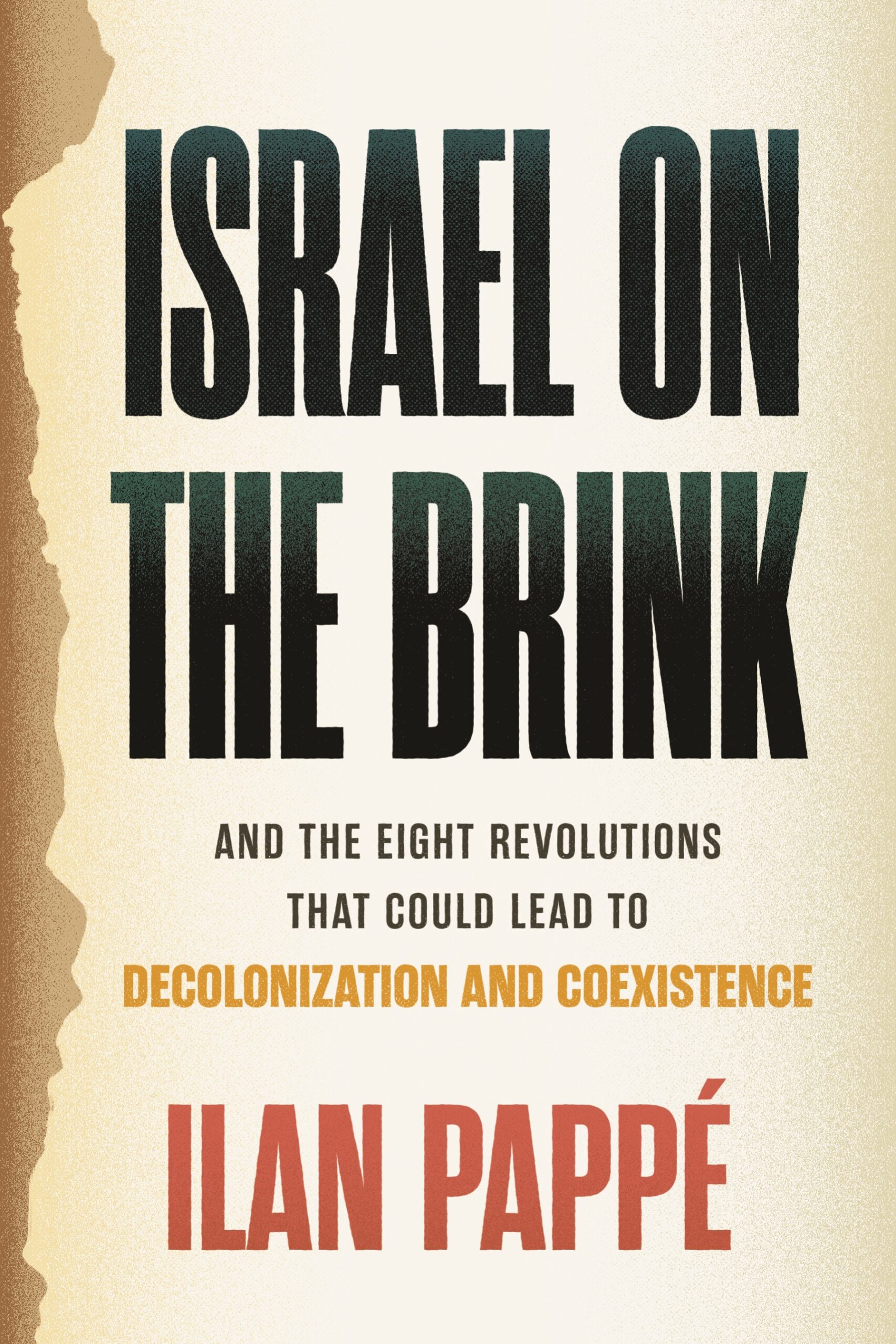 Israel on the
Brink: And the Eight Revolutions that Could Lead to
Decolonization and Coexistence, by Ilan Pappé.
Israel on the
Brink: And the Eight Revolutions that Could Lead to
Decolonization and Coexistence, by Ilan Pappé.