
Re: [DIYbio] Borax as a superior alternative to Tris

Nathan McCorkle
I have just been reading about Tris alternatives as it can be pretty expensive. My research turned up some surprising results. It seems that not only is Borax (Sodium boric acid) a substitute for Tris, it actually does the job better.First I was reading about Tris-acetate-EDTA buffers and read this on the wikipedia page:"Recently, Brody & Kern simplified electrophoretic buffers by substituting TBE and TAE buffers for a more efficient and inexpensive conductive media in gel systems.[2]"I thought this sounds interesting as I want to run gels for as cheap as possible and Tris is a hassle because I need to buy it from a scientific supplier. So I went to their article here. A quick summary of the article:They test some other reagents and find that lowering the conductance of the gel and and buffer covering the gel and electrodes you can get better results. Also, Tris has problems because it conducts too well which heats the agar and solution. This causes it to be more conductive (if I understand correctly) and creates a feedback loop, giving you results which aren't that great. You can see this in the smile effect as the DNA runs further down the gel.
- Everyone uses Tris but only because everyone else uses it.
- It isn't particularly good at doing its job
- Since the widespread use of agar-gel electrophoresis, no real research has gone into improving the system
Their solution was to use Borax (Sodium boric acid). The wrote another report talking about the cost benefits and general principle. Then they patented it and set up a website, but you can just mix the buffers yourself from ingredients available at the supermarket. I found a quick recipe here. On the second page it has this recipe:8g NaOH45g Boric Acidad 1L H2O(makes a 20x solution)But this could possibly made even better by reducing the Na in the solution. Also, the above papers said that you don't really need EDTA either. The use of EDTA is kind of a left-over from RNA gels that persists in DNA gels for some reason.Does anyone here work with Borax? It is readily available from the supermarket and I would be keen to hear of anyone else's experiences. Also, I have included some pics from the fasterbettermedia.com website:
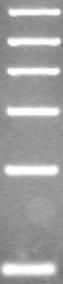
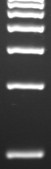
SB Gel/buffer running a ladder.
This gel was made with a slightly different and slightly more expensive gel/buffer (Lithium boric acid). The above gel was run in 8mins @ 550V.
--
You received this message because you are subscribed to the Google Groups "DIYbio" group.
To post to this group, send email to diy...@googlegroups.com.
To unsubscribe from this group, send email to diybio+un...@googlegroups.com.
To view this discussion on the web visit https://groups.google.com/d/msg/diybio/-/SDeuxlCbxgAJ.
For more options, visit https://groups.google.com/groups/opt_out.
Nathan McCorkle
Rochester Institute of Technology
College of Science, Biotechnology/Bioinformatics

Cory Tobin
> different buffers, and feel like the borax ones weren't
> as good for certain fragment sizes or something...
> what I mean is, I feel like there was some tradeoff
> between TAE and borax buffers
so. TAE works better in that case.
> But this could possibly made even better by reducing the
> Na in the solution.
> Also, the above papers said that you don't really need
> EDTA either. The use of EDTA is kind of a left-over
> from RNA gels that persists in DNA gels for some reason.
that works and keeps using it without determining what parameters are
actually important. There is no incentive to try running gels with
missing components because discovering that EDTA is not needed will
not get your NIH grant renewed or help you get tenure. From any
individual's perspective it's better to just continue using protocols
that work and focus on their research, especially considering that gel
buffers are a very minor portion of any research budget. Although,
this might not be the case for diybio.
> Does anyone here work with Borax? It is readily
> available from the supermarket and I would be
>keen to hear of anyone else's experiences
NaOH + Boric acid. Both work fine. One thing to note is that you
can't make a 50X stock of SB like you can with TAE. The max I go is
20X and even then I still get some precipitation. It's a bit
inconvenient but not enough to make me stop using it. Also, if you
plan on running your gel at 300V for more than 10 minutes, make sure
you have a box with large reservoirs or you'll melt the gel.
-cory

Robert O'Callahan
--
You received this message because you are subscribed to the Google Groups "DIYbio" group.
To post to this group, send email to diy...@googlegroups.com.
To unsubscribe from this group, send email to diybio+un...@googlegroups.com.
Rob O'Callahan
M.S. Civil & Environmental Engineering 2012
George R. Brown School of Engineering | Rice University
E: rp...@rice.edu<mailto:rp...@rice.edu>| P: 847.641.1285

Simon Quellen Field
Cathal Garvey
twitter.com/onetruecathal
joindiaspora.com/u/cathalgarvey
PGP Public Key: http://bit.ly/CathalGKey

Meow-Ludo
Meow-Ludo
-Rob
To unsubscribe from this group, send email to diybio+unsubscribe@googlegroups.com.
--
Rob O'Callahan
M.S. Civil & Environmental Engineering 2012
George R. Brown School of Engineering | Rice University
E: rp...@rice.edu<mailto:rpo1@rice.edu>| P: 847.641.1285
--
You received this message because you are subscribed to the Google Groups "DIYbio" group.
To post to this group, send email to diy...@googlegroups.com.
To unsubscribe from this group, send email to diybio+unsubscribe@googlegroups.com.
Cathal Garvey
effectively just a protein buffer, so why not seek and use others?
On agarose biosynthesis, I've looked into it a few times and I can't
find any information on the enzymes responsible. I'm not sure it's been
nailed down, yet. Which is a terrible pity because synthesising agarose
would be awesome!
In the meantime, purifying agarose from agar at home is possible, but
it's not economical without distillation to recover the reagents.
Essentially you just dissolve the agar in propylene glycol at ~105C
(take a long time, and a lot of stirring, and an even/slow heat source
to prevent burning), and then allow to cool to room temperature to
precipitate agarose.
Optionally, then refridgerate/freeze to precipitate more. Then thin out
with an alcohol or acetone (I suggest alcohol to reduce risk of
explosions upon distillation, if that's your route), filter as finely as
possible (coffee filters probably best for this, use several as it's
very viscuous and takes ages). To clean away the propylene glycol,
suspend the filtrate in more alcohol and filter again.
Yields are typically less than 50% of input, and you have to use a lot
of glycol/alcohol to produce it using this method. So, unless you can
safely distill out the two reagents (propylene glycol's boiling point is
over 200C!), it's not worth it.
Another way is to use brewing-grade pectinase enzyme to digest the
agaropectin and allow it to dissolve (takes days): I suspect doing so
before attempting the above would drastically improve yields and reduce
waste. I haven't yet worked up the nerve to devote a whole day to
re-trying the purification. It's messy and very boring.
On 25/06/12 07:47, Meow-Ludo wrote:
> I saw this article<http://www.scq.ubc.ca/the-macgyver-project-genomic-dna-extraction-and-gel-electrophoresis-experiments-using-everyday-materials/> but
>>>>
>>>>
>>>>
>>>
>>>
>>> --
>>> Rob O'Callahan
>>> M.S. Civil & Environmental Engineering 2012
>>> George R. Brown School of Engineering | Rice University
>>> --
>>> You received this message because you are subscribed to the Google Groups
>>> "DIYbio" group.
>>> To post to this group, send email to diy...@googlegroups.com.
>>> To unsubscribe from this group, send email to
>>>
>>
>>
>>
>> --
>> www.indiebiotech.com
>> twitter.com/onetruecathal
>> joindiaspora.com/u/cathalgarvey

Mac Cowell
231.313.9062 // @100ideas // sent from my rotary phone
I have just been reading about Tris alternatives as it can be pretty expensive. My research turned up some surprising results. It seems that not only is Borax (Sodium boric acid) a substitute for Tris, it actually does the job better.First I was reading about Tris-acetate-EDTA buffers and read this on the wikipedia page:"Recently, Brody & Kern simplified electrophoretic buffers by substituting TBE and TAE buffers for a more efficient and inexpensive conductive media in gel systems.[2]"I thought this sounds interesting as I want to run gels for as cheap as possible and Tris is a hassle because I need to buy it from a scientific supplier. So I went to their article here. A quick summary of the article:They test some other reagents and find that lowering the conductance of the gel and and buffer covering the gel and electrodes you can get better results. Also, Tris has problems because it conducts too well which heats the agar and solution. This causes it to be more conductive (if I understand correctly) and creates a feedback loop, giving you results which aren't that great. You can see this in the smile effect as the DNA runs further down the gel.
- Everyone uses Tris but only because everyone else uses it.
- It isn't particularly good at doing its job
- Since the widespread use of agar-gel electrophoresis, no real research has gone into improving the system
Their solution was to use Borax (Sodium boric acid). The wrote another report talking about the cost benefits and general principle. Then they patented it and set up a website, but you can just mix the buffers yourself from ingredients available at the supermarket. I found a quick recipe here. On the second page it has this recipe:8g NaOH45g Boric Acidad 1L H2O(makes a 20x solution)But this could possibly made even better by reducing the Na in the solution. Also, the above papers said that you don't really need EDTA either. The use of EDTA is kind of a left-over from RNA gels that persists in DNA gels for some reason.Does anyone here work with Borax? It is readily available from the supermarket and I would be keen to hear of anyone else's experiences. Also, I have included some pics from the fasterbettermedia.com website:
SB Gel/buffer running a ladder.
This gel was made with a slightly different and slightly more expensive gel/buffer (Lithium boric acid). The above gel was run in 8mins @ 550V.
--
You received this message because you are subscribed to the Google Groups "DIYbio" group.
To post to this group, send email to diy...@googlegroups.com.
To unsubscribe from this group, send email to diybio+un...@googlegroups.com.
To view this discussion on the web visit https://groups.google.com/d/msg/diybio/-/SDeuxlCbxgAJ.
Nathan McCorkle
cause molecular crowding a bit for some reactions?
Nathan McCorkle
> It would be great to use Borax for other buffers, but I gather the borate
> ion is inhibitory to enzymes. Tris is a pain to get hold of, so a nice
> replacement would be really, really cool.
used because its cheap... (and since everything on the internet is
correct...) :P
Meow-Ludo
>>> For more options, visit https://groups.google.com/groups/opt_out.
>>>
>>>
>>
>>
>>
>> --
>> Rob O'Callahan
>> M.S. Civil & Environmental Engineering 2012
>> George R. Brown School of Engineering | Rice University
>> E: rp...@rice.edu<mailto:rpo1@rice.edu>| P: 847.641.1285
>>
>> --
>> You received this message because you are subscribed to the Google Groups
>> "DIYbio" group.
>> To post to this group, send email to diy...@googlegroups.com.
>> To unsubscribe from this group, send email to
>> For more options, visit https://groups.google.com/groups/opt_out.
>
>
>
>
> --
> www.indiebiotech.com
> twitter.com/onetruecathal
> joindiaspora.com/u/cathalgarvey
> PGP Public Key: http://bit.ly/CathalGKey
>
>
> --
> You received this message because you are subscribed to the Google Groups
> "DIYbio" group.
> To post to this group, send email to diy...@googlegroups.com.
> To unsubscribe from this group, send email to

CodonAUG
CodonAUG
Nathan McCorkle
Honestly Tris is not limited to genetic manipulation, anyone telling you that tris necessarily goes with genetic manipulation is wrong.
Have you tried ordering from a non-Aus company? Googling tris hcl returns loads of results... mpbio and promega aren't the cheapest but I've dealt with them before. Alibaba also shows up, and most likely any of those sellers won't ask anything about some gmo paperwork.
To unsubscribe from this group, send email to diybio+un...@googlegroups.com.
To view this discussion on the web visit https://groups.google.com/d/msg/diybio/-/W-daNLld8NwJ.