
Wiseway the right way...

lux- kast
I want to thank everyone for their comments it has help me tremendouly.
I was having issues with my stove but thanks to all the input in this forum I was able to figure out what I needed to do. One small thing that I do differently is that I use small amounts of rice coal, and with that I can even buy the cheapest pellets and it works really well the temp around the house is no less than 78 degrees. I just want to let everyone know what I'm doing just in case anyone wants to give it a try. I slide in a small amount of rice coal in the primary chamber so it can fall in top of some of the wood pellets on the secondary chamber I do it at least twice a day and seems to help with keeping the temp of the stove around 500 degrees or higher.
Thanks
Greg

Matt Aguirre
--
You received this message because you are subscribed to the Google Groups "wisestove" group.
To unsubscribe from this group and stop receiving emails from it, send an email to wisestove+unsubscribe@googlegroups.com.
For more options, visit https://groups.google.com/d/optout.
lux- kast
Hi,
Thanks for your response and your right my set up is not the ideal one but I didn't know about this forum before I installed the stove. I did read a lot of info and watch lots of videos about stoves,instalation, etc... but to be honest the others stoves out there aren't like the wiseway, in my opinion it should not be compared and besides this forum you can't really get any good info and ideas on how deal with the problems that someone may encounter with the wiseway stove and every set up is different.
Obviously because of my pipe set up, I was having issues with the temp. I couldn't get it to stay above 410° it was always between 390-410°, it did rise up to 500° but quickly got lower to 400°, I think the 90° anglesmakes the draft weaker.
I was considering to return the stove to TS if it wasn't for this forum and an old farmer.
I got three 90° angles on my set up the ones that you see on the picture and the one outside that goes up to 7 feet but used to be only 3 feet up.
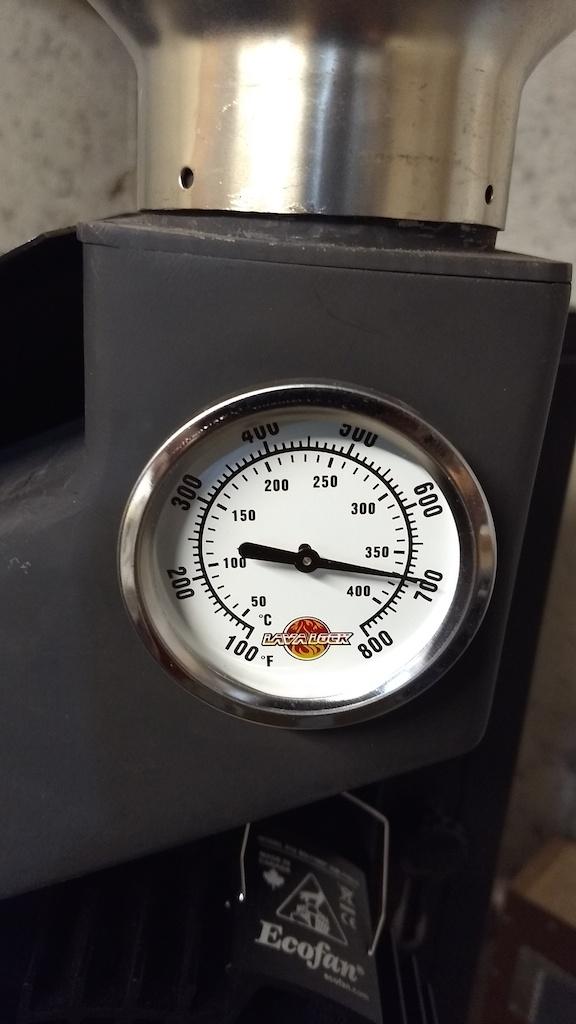
This may not work for everyone but when I was trying to figure out what was the problem with the temp I spoke to the old farmer about the issue and he said that should add small amounts of coal to the stove and that should solve the problem **( old farmers got a simple answer for everything.. lol) and it did work now the temp is always above 500° and most of the time it stays between 575-675°.
I have no issues so far and like I said before I can even use the cheapest pellets the ones from (HD) and still works but it does makes a lot more ashes and you may have to clean the stove daily. The pellets that I use are (EasyBlaze) soft wood they are really good.
Here are some pictures of today temps.
Thanks again
Greg

Todd Arbogast
Replace the 90 degree elbows with 45 degree elbows and reduce the risk over inversion and smoke in your house. This stove is designed to have a robust positive draft, naturally, the coal is artificially boosting the draft.
5 years of using my WiseWay with many pipe and flue configurations have always proven that draft is “King “ and rules the day.

Gary Wisener
lux- kast
Ps. The title of my post should've been (Wiseway the right way to go) or something between those lines.. lol!!
I do like this stove.
lux- kast
you have invented an awesome stove, I'm really happy with it and how it works.. I keep telling people in my area where I live that if they having issues with their stoves they should definitely try yours.
Thanks for checkingon my coments.
Greg
Gary Wisener

Paul Grant
Gary Wisener
--


Flyer 304
Paul Grant
Flyer 304
Good evening Paul,