
Satellites for WeeWX — weewx-skyfield 2.0, weewx-celestial 8.0, weewx-loopdata 6.9

John Kline
Three releases today teach a WeeWX station the sky's fastest residents: earth satellites — which ones are overhead, when the next pass is worth stepping outside for, and, on a live page, the crossing itself as it happens.
[Skyfield] [[Satellites]] maps tag names to NORAD catalog numbers — the installer configures the ISS and Tiangong out of the box, and any other satellite is one line more. Each satellite serves the almanac's usual position tags plus a pass family new to WeeWX: $almanac.iss.next_visible_pass, with rise/culmination/set times, peak altitude and compass points — visible meaning sunlit against your half-dark sky, the step-outside-and-look recommendation. Orbital elements are fetched from CelesTrak and kept honest: stale elements read N/A rather than confidently wrong, and one switch turns all fetching off. The complete 118,218-star Hipparcos catalog now ships in the box, so the Sky page's dome is a full sky map:
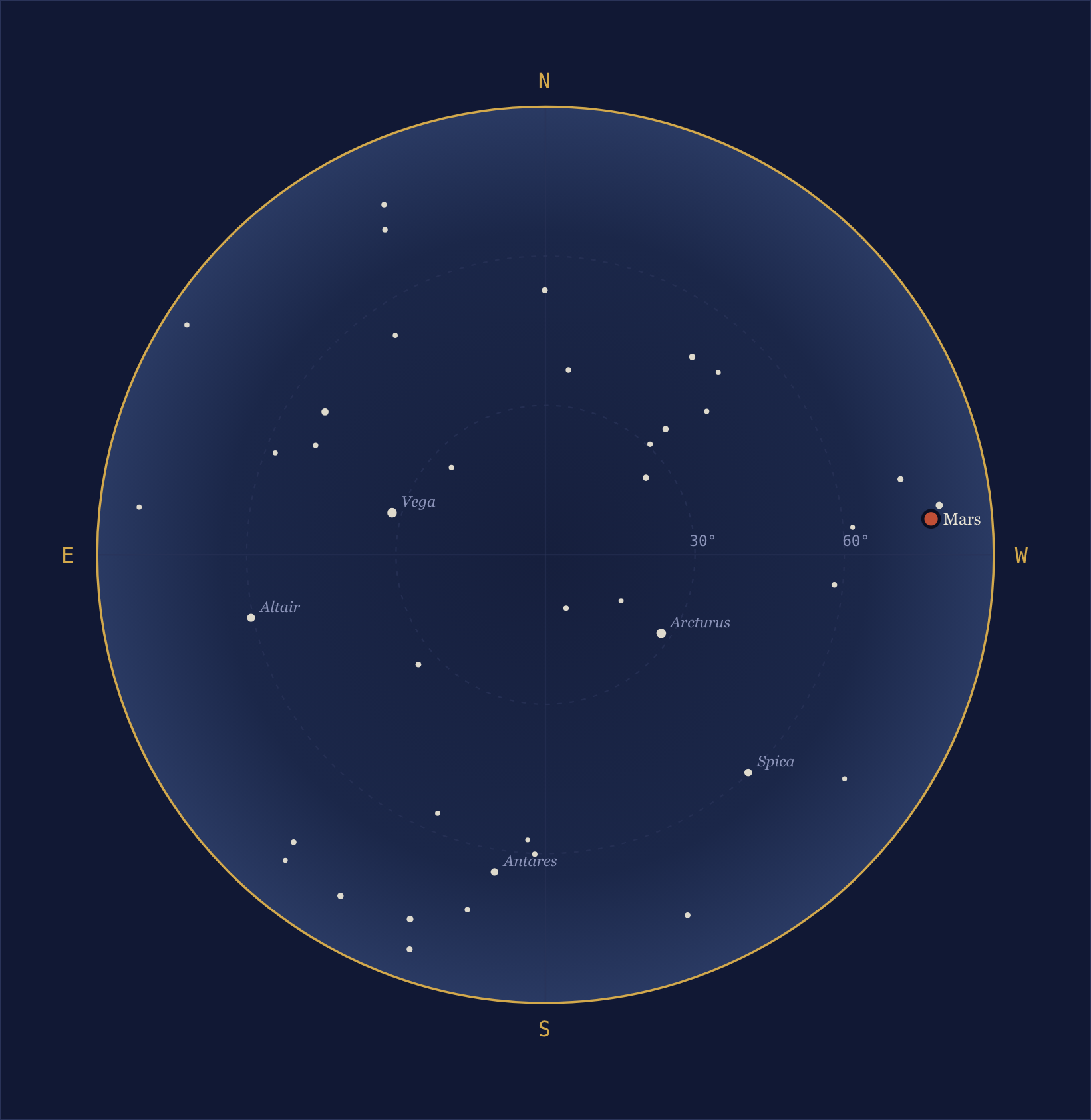
The dome at the new full-catalog defaults — the ISS crossing sunlit near the zenith of a pre-dawn sky.
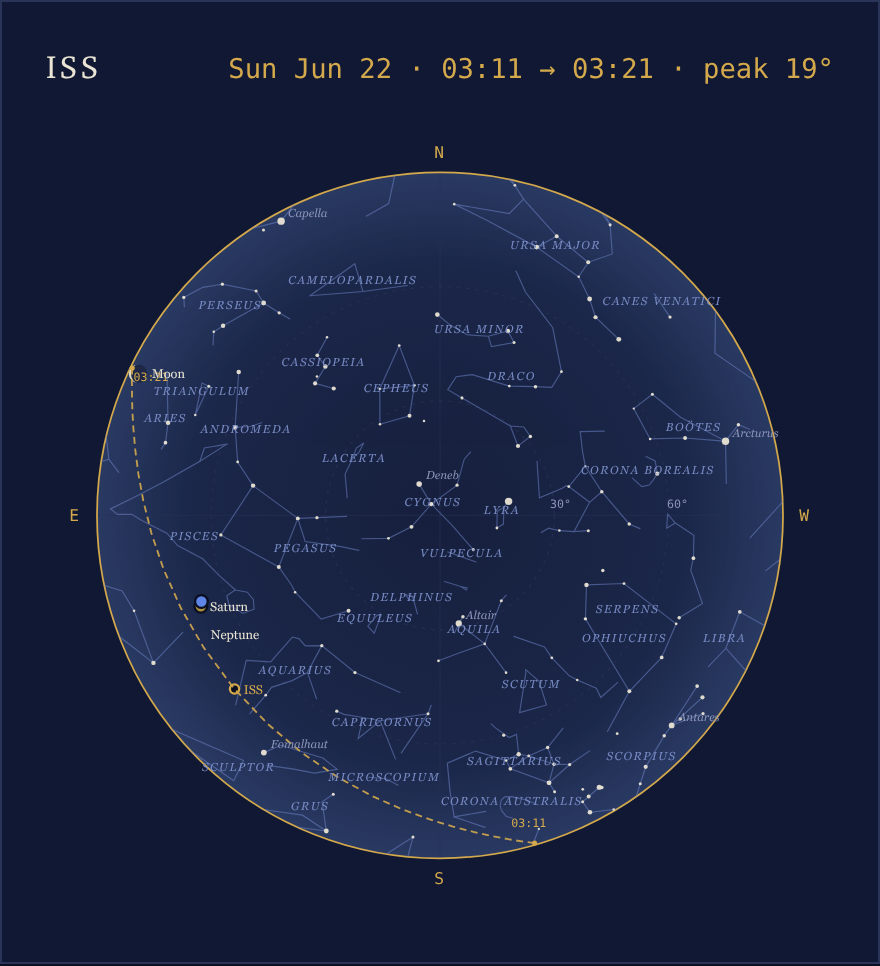
The page also charts the soonest visible pass on its own dated sky — the whole sky as it will stand at that pass's culmination, the arc dashed and time-labeled across it:
Italian, Norwegian and Swedish translations (Beta) join the bundle — nine languages.
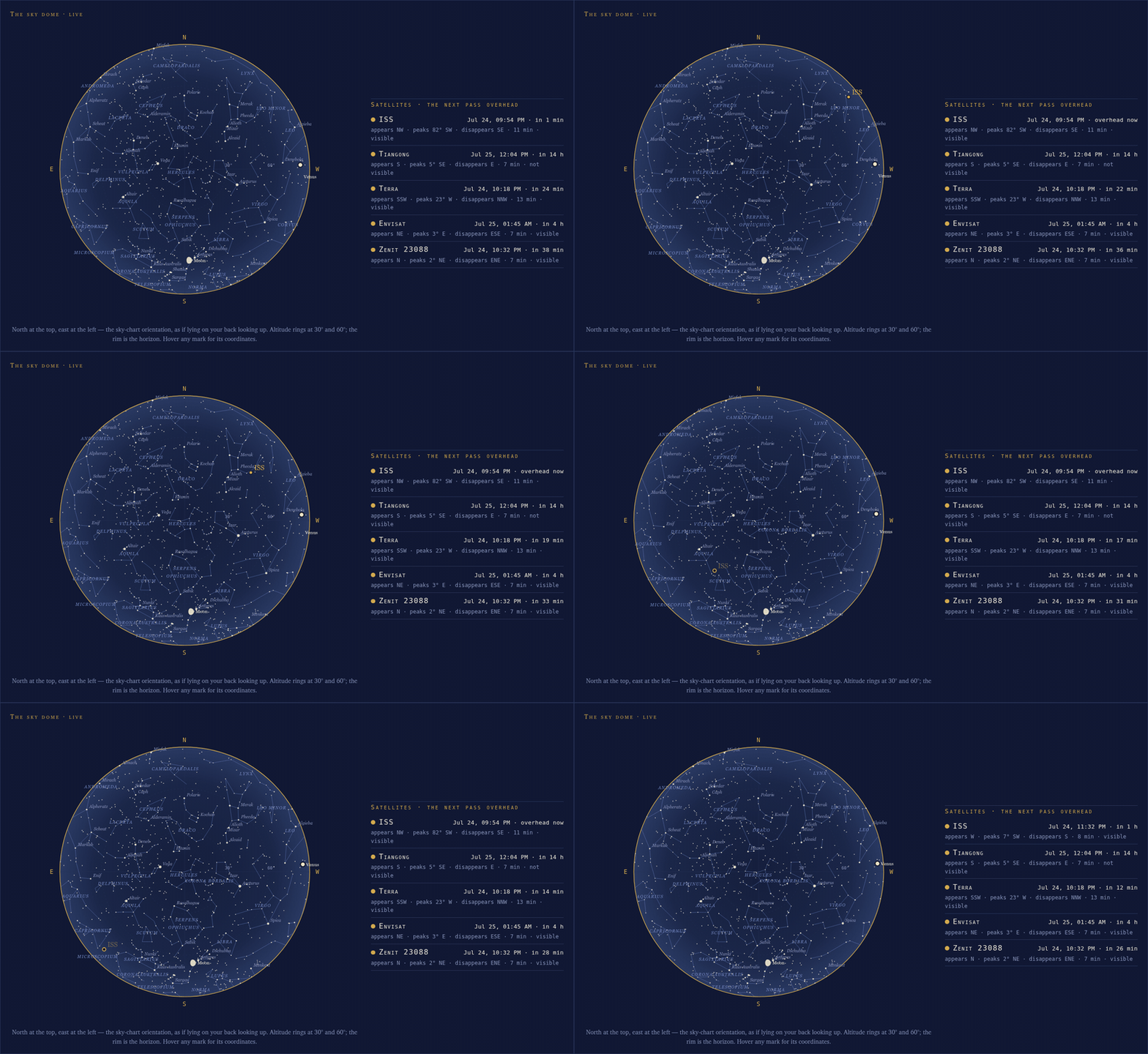
weewx-celestial's live page embeds that same dome as a live instrument — the backdrop steps once a minute, the sun, moon and planet marks are nudged every second, and a satellite's marker crosses the sky in real time: solid while sunlit, a hollow ring inside Earth's shadow. Here is the ISS's July 24 near-zenith pass over Palo Alto, replayed through the live page with the orbital elements Space-Track archived that day (about 30× speed) — watch the dot snap to a hollow ring near the end as the ISS enters Earth's shadow, which is how visible passes really end:
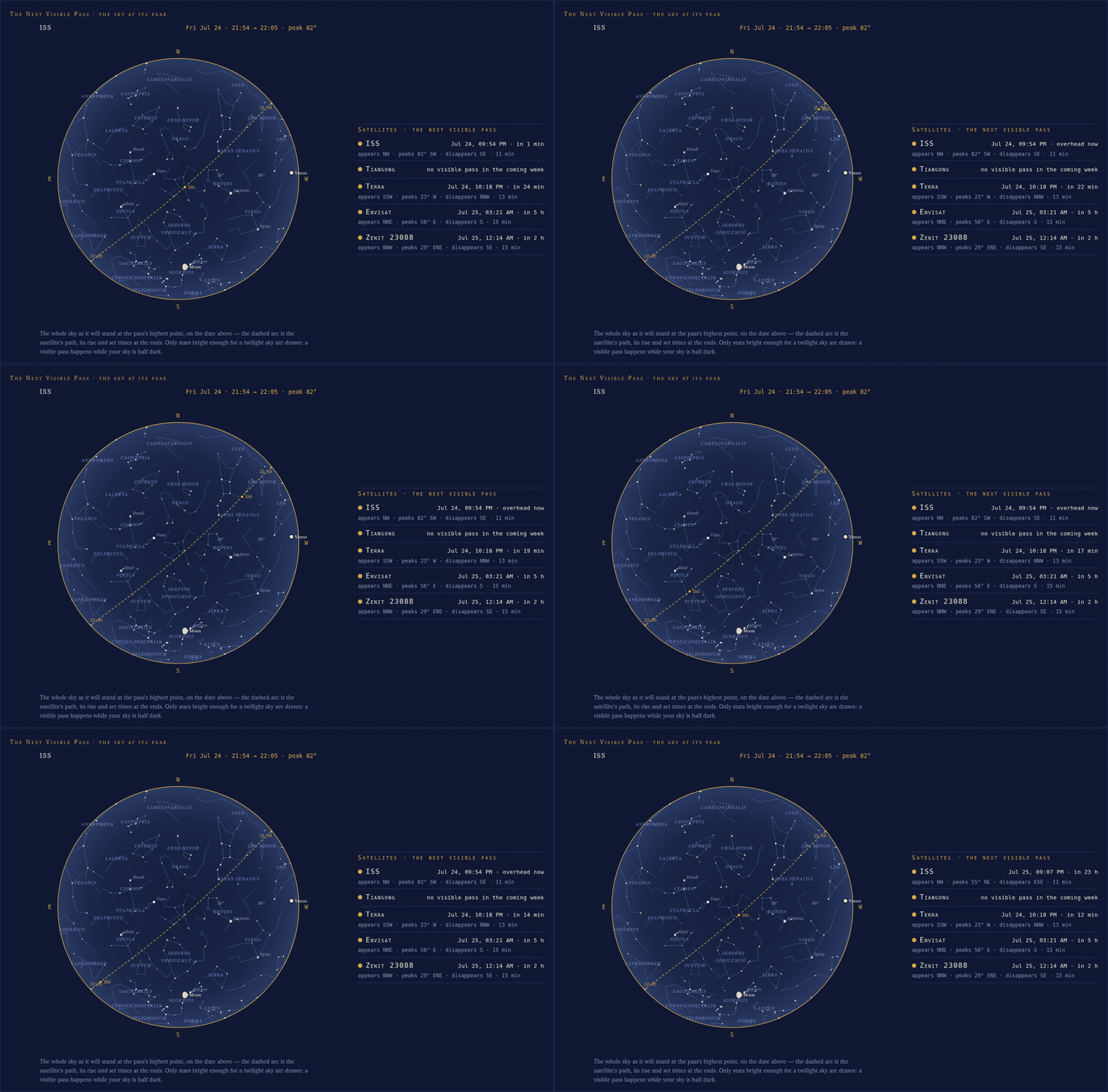
…and the same pass on the Next Visible Pass panel, the satellite's dot swept live along the drawn arc while the visible-pass roster counts down beside it — same pass, same 30×:
Every mark on the page now answers a tap — tooltips finally work on touch screens — and the same nine languages cover the whole live page, labels and live values alike.
weewx-loopdata evaluates the almanac fields that drive the live page above. 6.9's fix keeps the satellite story honest: a next_* almanac field now expires the moment its event passes, so a pass row rolls to the following pass the second the satellite sets — not at midnight. And the sample report ships three new translations (Beta), completing the same nine-language set:
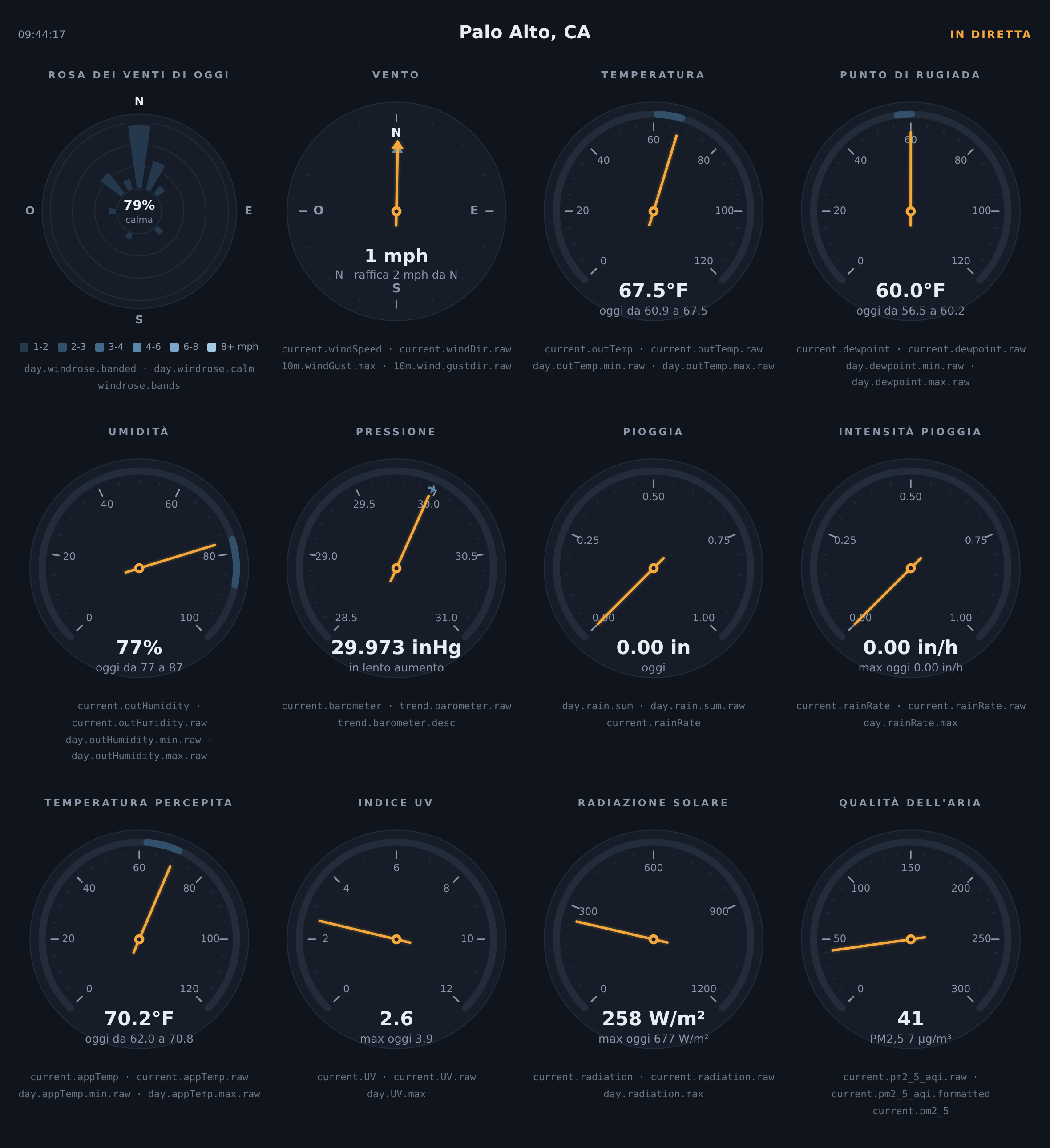
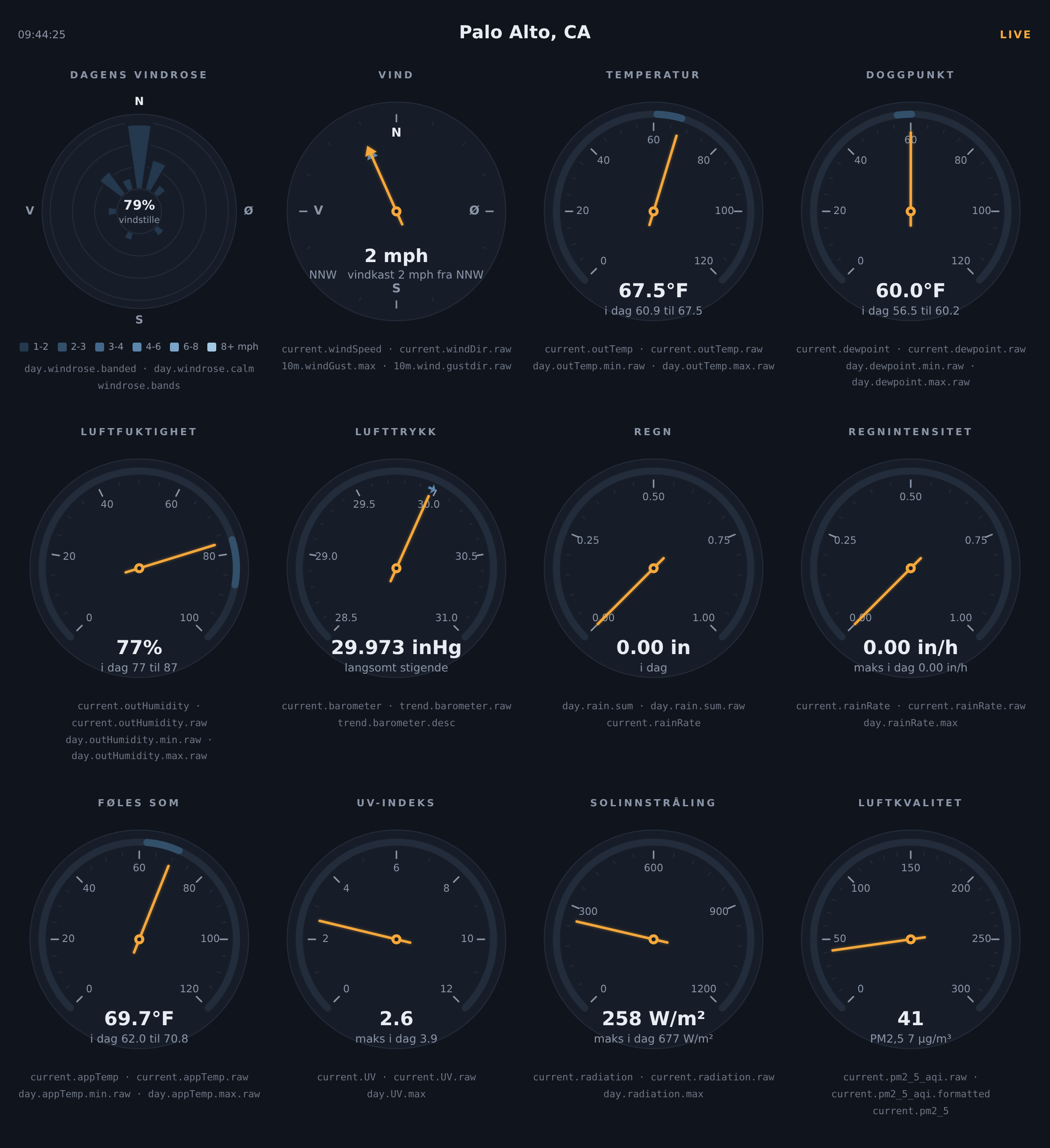
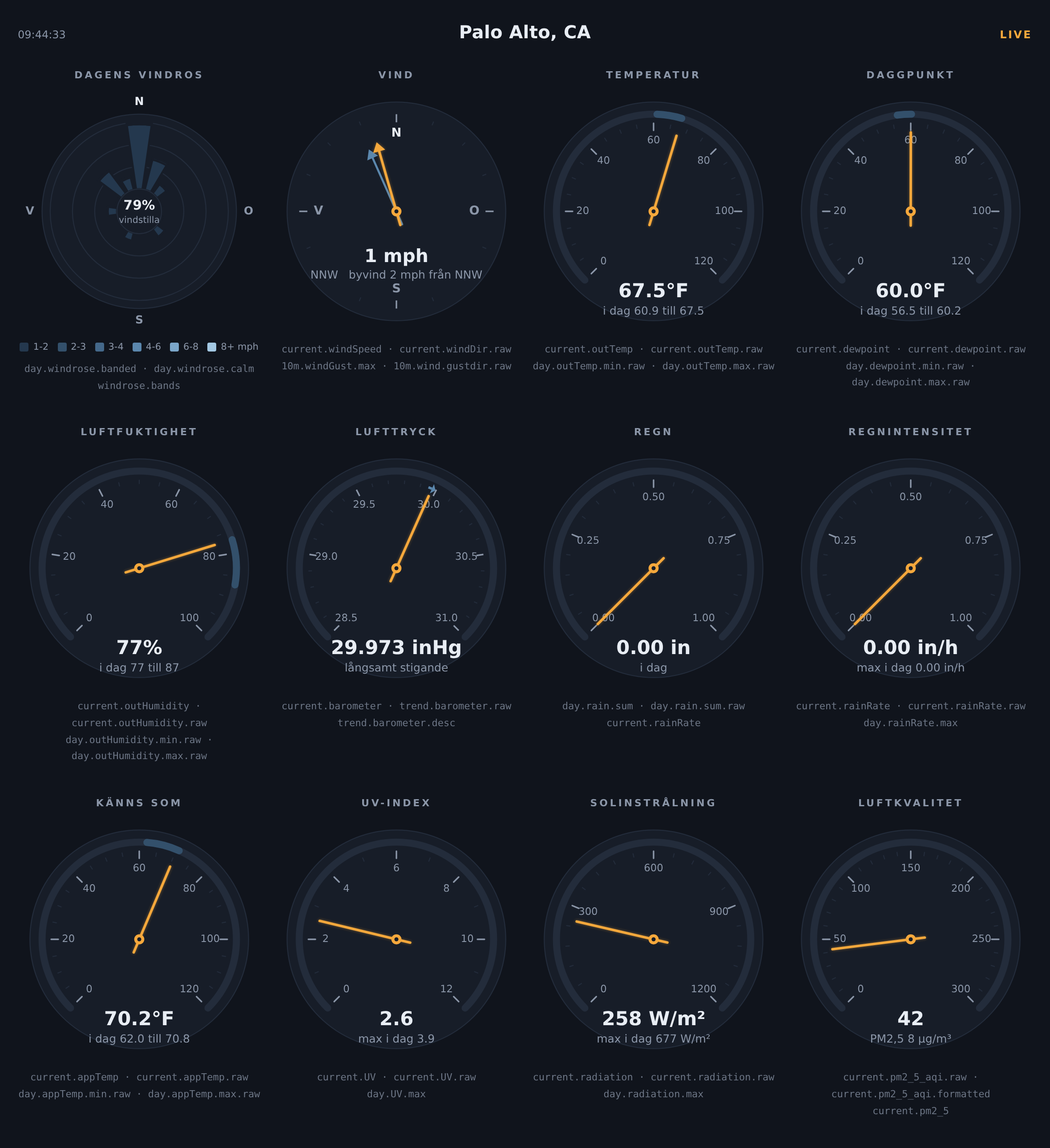
All three are drop-in upgrades — install over the old version and restart. celestial 8.0 requires loopdata 6.9 and pairs with skyfield 2.0, so upgrade in that order: loopdata, skyfield, celestial. Full details, more animations and the fine print are in the release notes:
- weewx-skyfield 2.0: https://github.com/chaunceygardiner/weewx-skyfield/releases/tag/v2.0
- weewx-celestial 8.0: https://github.com/chaunceygardiner/weewx-celestial/releases/tag/v8.0
- weewx-loopdata 6.9: https://github.com/chaunceygardiner/weewx-loopdata/releases/tag/v6.9
John