
Vaibhav Gaikwad's Blog : Top 10 Bizarre & Controversial Archeological Discoveries
12 views
Skip to first unread message

Vaibhav Gaikwad
Jun 4, 2010, 2:03:23 AM6/4/10
to vgga...@googlegroups.com, Group TYIF, TYIF 2006
Vaibhav
Gaikwad's Blog : Top 10 Bizarre & Controversial Archeological
Discoveries
|

- Top 10 Bizarre & Controversial Archeological Discoveries
- Made For Wheelchairs – FAIL!
- Things We Have Now That Star Trek Invented
|
Top 10 Bizarre & Controversial Archeological Discoveries Posted: 03 Jun 2010 02:44 AM PDT Many strange
archeological discoveries have been made in modern history. Hundreds
of artifacts have been unearthed that have baffled scientists and
challenged modern man’s view of history. Many of these objects have
been labeled out of place artifacts or anachronisms. These
archeological discoveries are always controversial and the scientific
community is extremely selective in what they accept as fact. Every
object on this list has been accused of being an elaborate hoax. In
many cases, a conspiracy is the only explanation, without an extensive
rewriting of the world’s history books. These artifacts tell a story
of ancient civilizations, Pre-Columbian trans-oceanic contracts, and
mysterious technological advancements. Many of these archeological
discoveries challenge the scientific theory of evolution, as well as
many religious beliefs. 10. Acámbaro Figures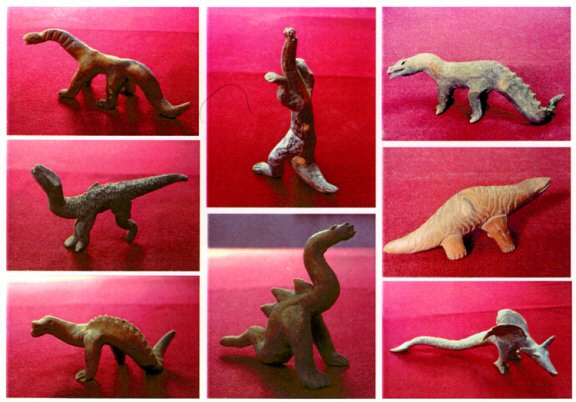 Discovered: 1944 The Acámbaro
Figures are a collection of small ceramic figurines allegedly found in
Acámbaro, Guanajuato, Mexico. They were discovered by Waldemar Julsrud
in July of 1944. According to accounts, Julsrud stumbled upon the
artifacts while riding his horse in the Acámbaro area. He hired a
local farmer to dig up the remaining figures, paying him for each
object he found. Eventually, the farmer and his assistants discovered
over 32,000 figures, which included representations of everything from
dinosaurs to people from all over the world, including Egyptians,
Sumerians, and bearded Caucasians. The Acámbaro Figures have been
cited as out of place artifacts, as they are clearly human made and
portray a large variety of dinosaur species. According to all history
books, humans did not live in the time of the dinosaurs. Upon the
discovery of the figures, many creationists from all over the world
proclaimed the artifacts legitimate. If these figures are genuine, it
could stand as credible evidence for the coexistence of dinosaurs and
humans, which would severely damage the theory of evolution and offer support for the
literal interpretation of the Bible. Attempts have been made to date
these figures using Thermoluminescence, or TL dating, and the results
suggested a date around 2500 BCE. A man named Don Patton claims he
found radiocarbon dates for the figures ranging from 6500 years to 1500
years ago; however, the objects are in very good shape and show no
characteristic evidence of having been in the ground for at least 1500
years. If they were authentic artifacts, they should be scratched and
marred from the rocky soil, which is characteristic of other objects
found in that area of Mexico. Other supporters of the figures claim
that the incredible detail of the dinosaurs suggest a firsthand
experience with the creatures. The sheer number of the figures
discovered is often cited as evidence for a hoax. To date, no credible
scholars of archaeology or paleontology accept the discovery as valid. 9. The Dropa Stones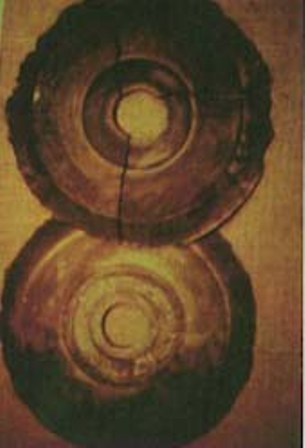 Discovered: 1938 The alleged
story of the Dropa Stones is as follows. In 1938, an archeological
expedition was sent to investigate a secluded area of the
Baian-Kara-Ula Mountains on the border that divides China and Tibet.
The group discovered a series of caves at the summit of the mountains.
The caves contained a large collection of graves and the walls were
decorated with drawings of people with elongated heads together with
images of the sun, moon, and stars. The archeologists uncovered the
graves and discovered the remains of ancient beings. The skeletons
were a little more than three feet tall, with abnormally large skulls.
Inside of the tombs a collection of stone disks were recovered. The
disks were almost twelve inches in diameter, with a hole in the
center. The objects had a groove on the surface of the disk and
spiraled outwards from the center hole forming a double spiral. Closer
inspection showed that the grooves were actually a line of small
carvings or signs. The disks were labeled the Dropa Stones.
Subsequent investigations have found a total of 716 Dropa Stones in the
Baian-Kara-Ula Mountain caves. The Dropa Stones were sent to a
variety of scholars for investigation. One of them, Professor Tsum Um
Nui of the Beijing Academy for Ancient Studies, found that the spiral
grooves were actually a line of characters written in an unknown
language. In 1962, he announced that he had managed to translate the
language. For a long time, the Peking Academy of Prehistory forbade
the professor from publishing anything about the Dropa Stones.
However, after many years of debate he published his hypothesis. Tsum Um Nui claims
that an alien spacecraft crashed in the Bayan Har Shan
region 12,000 years ago. The occupants were aliens called Dropa or
Dzopa. The Dropa could not repair their craft, so they tried to adapt
to the conditions on Earth. Meanwhile, the local Ham tribesmen hunted
down and killed most of the aliens. Supposedly, the aliens had
intermarried with the locals, making identification of the origins of
the skeletons more difficult. Many people have challenged these claims
and Tsum Um Nui was forced to resign from the Beijing Academy. The
Dropa Stones have been disappearing all over the world and are not
available for public viewing at any museum. However, pictures of the
artifacts do exist. 8. Horned Human Skull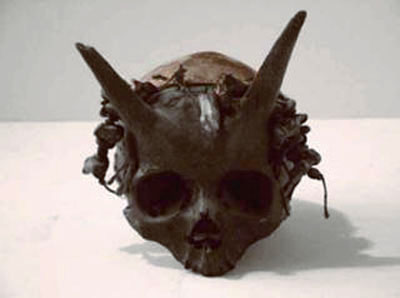 Discovered:
1880s Sayre is a borough in Bradford County, Pennsylvania, 59 miles
northwest of Scranton. The exact year is not clear, but during the
1880s a large burial mound was discovered in Sayre. It was reported
that a group of Americans uncovered several strange human skulls and
bones. The skeletons belonged to anatomically normal men with the
exception of bony projections located about two inches above the
eyebrows. It appeared that the skulls had horns. The bones were
characterized as giant, as they were representative of people over seven
feet tall. Scientists estimated that the bodies had been buried
around A.D. 1200. The archeological discovery was made by a reputable
group of antiquarians, including Dr. G.P. Donehoo, the Pennsylvania
state dignitary of the Presbyterian Church; A.B. Skinner, of the
American Investigating Museum; and W.K.Morehead, of Phillips Academy,
Andover, Massachusetts. It was not the first time that gigantic horned skulls have been unearthed in North
America. During the 19th century, similar skulls were discovered near
Wellsville, New York and in a mining village close to El Paso, Texas.
At one time in history, human horns were used as signs of kingship.
Alexander the Great was depicted with horns on some of his coins. In
Moses’ time, horns were a symbol of authority and power. Many gods,
including Yahweh, have been depicted with horns. According to
historical accounts, the Sayre bones were allegedly sent to the American
Investigating Museum in Philadelphia. However, the artifacts were
stolen and never seen again. Apparent pictures of the skulls do exist,
but many people claim the discovery to be a hoax. Many websites
suggest that the objects are of extraterrestrial origin. 7. Map of the Creator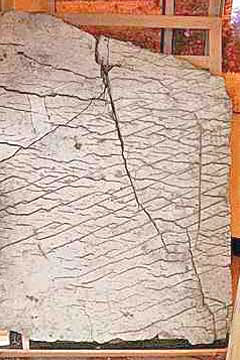 Discovered: 1999 In 1999, a
professor at Bashkir State University in Russia named Alexander
Chuvyrov made a remarkable archeological discovery. He was called to
the house of Vladimir Krainov, who reported a strange slab buried in
his backyard. Chuvyrov was instantly intrigued, as he had been
searching for similar slabs that have been cited in various historical
manuscripts. The slab was so heavy that it took over a week to
unearth. The discovery was named the Dashka stone and later titled the
Map of the Creator. The artifact is approximately 5 feet high, 3.5
feet wide, .5 feet thick, and weighs at least one ton. The stone was
investigated and determined to be some sort of three-dimensional relief
map of the Ural Region. Today’s military uses similar maps to measure
elevation and terrain. The Dashka stone reportedly contains
representations of civil engineering work, weirs, an irrigation system,
and powerful dams. To date, the ancient technology used to make the
map is unknown and extremely advanced. The map also contains numerous
inscriptions. At first, the scientists thought that it was an Old
Chinese language, although it was later reported that the inscriptions
were done in a hieroglyphic-syllabic language of unknown origin. A
group of Russian and Chinese specialists in the fields of cartography,
physics, mathematics, geology, chemistry, and Old Chinese language
researched the artifact and were the ones that identified it as a map
of Ural region, with rivers Belya, Ufimka, and Sutolka listed. Dating
of the slab was reported to be over 100 million years old, but I
couldn’t find any reliable resources citing evidence of what type of
test was used or the exact results. If the Map of the Creator is
genuine then it would suggest the existence of an ancient highly
developed civilization. Researchers have claimed that a
three-dimensional map of this order could have only been used for
navigational purposes. Many websites claim that the slab is proof of
ancient flight. Recent discoveries indicate that the slab is a piece
of a larger artifact. The Dashka stone continues to undergo scientific
testing and is not available for public viewing. 6. Aluminium Wedge of Aiud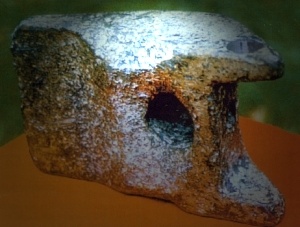 Discovered: 1974 The Aluminum Wedge
of Aiud is a wedge-shaped object found two kilometers east of Aiud,
Romania, on the banks of the Mures River in 1974. The object was
reported to be unearthed 35 feet under sand and alongside two mastodon
bones. A mastodon is an extinct large tusked mammal species.
Physically, the artifact looked similar to the head of a hammer. The
wedge was allegedly taken to the Archeological Institute of Cluj-Napoca
to be examined, where it was found to be made of an alloy of aluminum
encased in a thin layer of oxide. The alloy of the wedge is composed
of 12 different elements. This artifact is considered strange because
aluminum was not discovered until 1808 and not produced in quantity
until 1885. Aluminium requires 1,000 degrees of heat to be made. The
fact that the wedge was found in the same layer of earth as mastodon
bones would make it at least 11,000 years old. Many people have
claimed that the artifact is proof that aliens visited Earth.
Engineers have reported that the object resembles the foot of landing
gear, not unlike the technology used on spaceships. The scientific
community believes the wedge was made on earth and its purpose is not
yet identified. Due to the limited amount of information that exists on
the subject, the antiquity and origin of the artifact is unclear. The
Aluminium Wedge of Aiud is not on display to the public and remains in
an undisclosed location. However, pictures of the wedge do exist. 5. Los Lunas Decalogue Stone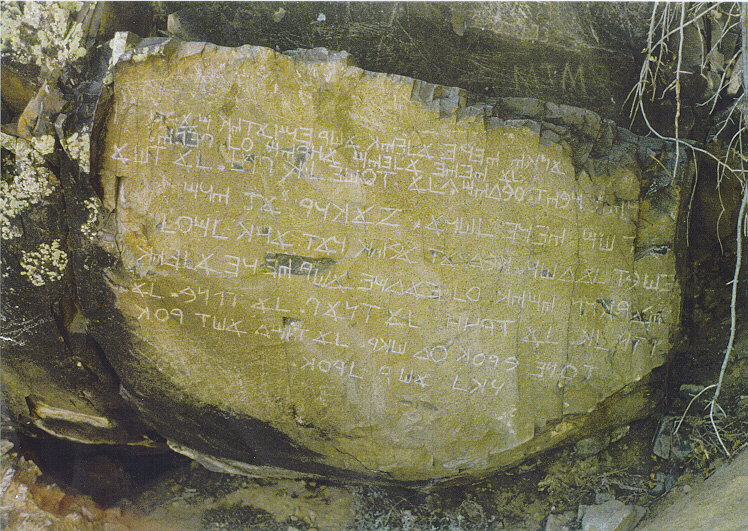 Discovered:
1880s The Los Lunas Decalogue Stone is a large boulder on the side of Hidden Mountain, near
Los Lunas, New Mexico, about 35 miles south of Albuquerque. The stone
bears a regular inscription carved into a flat panel. The inscription
is interpreted by some to be an abridged version of the Decalogue or Ten
Commandments in a form of Paleo-Hebrew. A letter group resembling the
tetragrammaton YHWH, or “Yahweh,” makes four appearances on the
stone. The first recorded mention of the artifact is from 1933 when
Professor Frank Hibben, an archaeologist from the University of New
Mexico, reportedly saw it. Hibben was led to the stone by an unnamed
guide who claimed to have found it as a boy in the 1880s. If this
information is accurate, a forgery would be unlikely because the
Paleo-Hebrew script was unknown to scholars in the 1880s. One argument
against the stone’s authenticity is the apparent use of Modern Hebrew
punctuation, although epigrapher Barry Fell argued that the punctuation
is consistent with antiquity. Other researchers dismiss the artifact
based on the numerous stylistic and grammatical errors that appear in
the inscription. The stone is controversial because many feel the
artifact is Pre-Columbian and proof of early Semitic contact with the
Americas, providing evidence that people from Israel settled in
America. Because of the stone’s weight of over 80 tons, it was never
moved to a museum or laboratory for study and safekeeping. The stone is
accessible to visitors by purchasing a $25 Recreational Access Permit
from the New Mexico State Land Office. 4. Piri Reis Map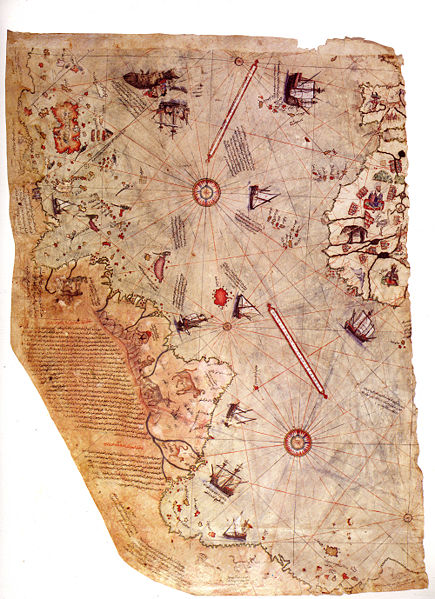 Discovered: 1929 The Topkap? Palace
is a historical structure that is located in Istanbul, Turkey. The
palace was the official and primary residence of the Ottoman Sultans
for 400 years of their 600-year reign, from 1465 to 1856. In 1929, the
Topkap? Palace was converted into a museum. Many ancient artifacts
were found during the building’s reorganization and the Piri Reis map
was discovered. The map drew immediate attention as it was one of the
earliest maps of America, and the only 16th century map that shows
South America in its proper longitudinal position in relation to
Africa. The map is drawn on gazelle skin and was compiled in 1513 by
Ottoman-Turkish military admiral and cartographer Piri Reis. The half
of the map which survives shows the western coasts of Europe, North
Africa, and the coast of Brazil. Various Atlantic islands, including
the Azores and Canary Islands are shown, as is the mythical island of
Antillia and possibly Japan. The most puzzling aspect of the map is its
depiction of Antarctica. According to the history books, the first
confirmed sighting of Antarctica occurred in 1820 by the Russian
expedition of Mikhail Lazarev and Fabian Gottlieb von Bellingshausen.
The Piri Reis map not only shows a land mass near present day
Antarctica, but it depicts Antarctica’s topography as not being masked
by ice and in great detail. It has been estimated that Antarctica has
been covered with ice for around 6000 years. Many people have raised
the question, how could a Turksih admiral from half a millennium ago
map a continent’s topography that has been covered with ice for
thousands of years? Reports have been published claiming that the
Ottoman Empire had knowledge of some form of ancient Ice Age
civilization. However, these claims are generally considered to be
pseudo-scholarship, and the scholarly opinion is that the region
sometimes thought of as Antarctica is more likely Patagonia or the
Terra Australis Incognita (Unknown Southern Land) widely believed to
exist before the Southern Hemisphere was fully explored. On the map, Piri
Reis gives resource credit to a map drawn by Christopher Columbus,
which has never been discovered. Geographers have spent several
centuries unsuccessfully searching for a “lost map of Columbus” that
was supposedly drawn while he was in the West Indies. After the
discovery of the Piri Reis map, an unsuccessful investigation was
launched to find the lost Columbus source map. The historical
importance of the Piri Reis map lies in its demonstration of the extent
of Portuguese knowledge of the New World in 1510. The Piri Reis map is
currently located in the Library of the Topkap? Palace in Istanbul,
Turkey, but is not currently on display to the public. 3. Giants of North America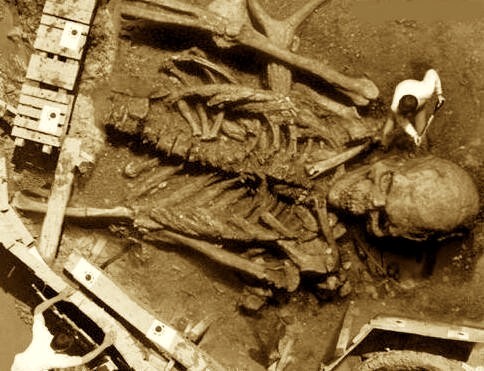 This is not a real photo. It does
not support the Giants of North America discoveries below. We just like
the photograph. -Ed. In the last few centuries, many strange
archeological discoveries have been made in the Americas. It seems
that people are unearthing extremely unusual and giant human remains.
Many documented accounts of these findings exist. Giant human remains
are classified as any bones representative of a person between seven and
twelve feet in stature. A human skeleton measuring 12 feet tall was
unearthed at Lompock Rancho, California, in 1833 by soldiers digging a
pit for a powder magazine. The specimen had a double row of teeth and
was surrounded by numerous stone axes, carved shells, and porphyry
blocks with abstruse symbols associated with it. In 1856, a decaying
human skeleton measuring 10 feet 9 inches tall was unearthed by laborers
plowing a vineyard in what is now West Virginia. A mound discovered
near Toledo, Ohio in 1895 held 20 skeletons; they were seated and facing
east with jaws and teeth “twice as large as those of present day
people.” In 1928, a farmer digging a pit to bury trash near Waterproof,
Louisiana unearthed a 9 foot 11 inch tall skeleton. The list of these
discoveries is quite extensive and many claims have been made about the
origin of these giant bones, usually starting and ending with
Sasquatch. Others have suggested an ancient race of giant humans. In
1947, a strange article was posted in a Nevada state newspaper, titled
‘Atlantis in the Colorado River Desert’. The article discussed an
incredible archeological discovery of 32 underground caves within a 180
square mile radius. The report indicated that the caves were
discovered close to the Nevada and California border. The remains of
ancient, strangely costumed 8 -9 foot giants were inside. They had
been laid to rest wearing the skins of unknown animals similar to
sheepskins fashioned into jackets with pants described as “prehistoric
suits.” The same burial place had been cited 10-15 years earlier by
another man who supposedly made a deal with the Smithsonian. Claims
have been made that the evidence of his find was stolen and covered up
by Darwinian scientists to protect the theory of evolution. The caves were
reported to have been discovered by Dr. F Bruce Russell. He initially
described the finding as the burial place of a tribal hierarchy. He
felt that some unknown catastrophe had driven these beings into the
caves. All of the implements of their civilization were there,
including household utensils and stoves. Well-preserved remains of
dinosaurs, saber-toothed tigers, imperial elephants, and other extinct
beasts were found. No physical archeological evidence of these claims
has ever been displayed. Photo:
worth1ooo.com. 2. Kensington Runestone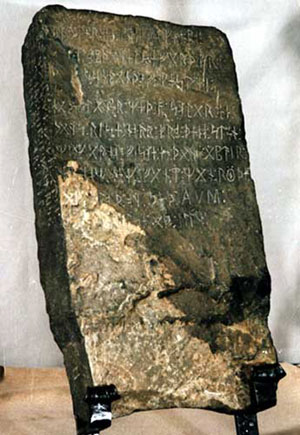 Discovered:
1898 In 1898, a Swedish American farmer named Olof Öhman claims to
have discovered a large stone while clearing his land of trees and
stumps. The object was attached to the roots of a small tree. Öhman
didn’t realize what he had discovered, so he took the 200 pound stone
to the prominent citizens of Kensington. Kensington was a settlement
in Douglas County, Minnesota. The Kensington Runestone is full of
ancient writing and carved text. It is thirty-one inches high, sixteen
inches wide, and six inches thick. Nine years after the discovery of
the artifact, Hjalmer R. Holand from Wisconsin University announced
that he had deciphered the writings. He claims the text to read “8
Goths and 22 Norwegians on exploration journey from Vinland over the
west. We camp by 2 skerries one day-journey from this stone. We were
and fished one day. After we came home, 10 men red with blood and
tortured. Hail Virgin Mary, save from evil. Have 10 men by the sea to
look after our ship, 14 day -journeys from this island year 1362.” After Holand
published his findings, a massive investigation was conducted. If the
translation is correct, the Kensington Runestone would provide evidence
that Scandinavian explorers reached the middle of North America in the
14th century, nearly 130 years before Christopher Columbus.
Basically, it raised eyebrows over the possibility that North European
explorers predated Columbus in America. The runestone has been
analyzed and dismissed repeatedly. Almost all runologists and
linguists consider the artifact to be a hoax. However, many people
believe it is authentic. If the legend on the stone is true, it means
that Vikings were in central Minnesota in 1362. That would require a
major rewriting of world history and geography. The Kensington
inscription consists of thirty different runic characters. In July 2000, just
over a hundred years after the Kensington Runestone was found, a
detailed physical analysis of the artifact was conducted. In November
2000, geologist Scott F. Wolter presented preliminary findings
suggesting the stone had undergone an in-the-ground weathering process
of a minimum of 50–200 years in natural conditions. Scott F. Wolter
has written a number of books on the Kensington Runestone. He has
suggested that the stone was made by the Vikings Knight Templar in
1362, fifty years after the dissolution of the Knight Templar and
several hundred years after the end of the Viking age. He also claims
that the North American expedition helped Columbus find his way around
the West Indies in 1492. The artifact remains a mystery. You can view
it at the Runestone Museum in downtown Alexandria, Minnesota. 1. The Shroud of Turin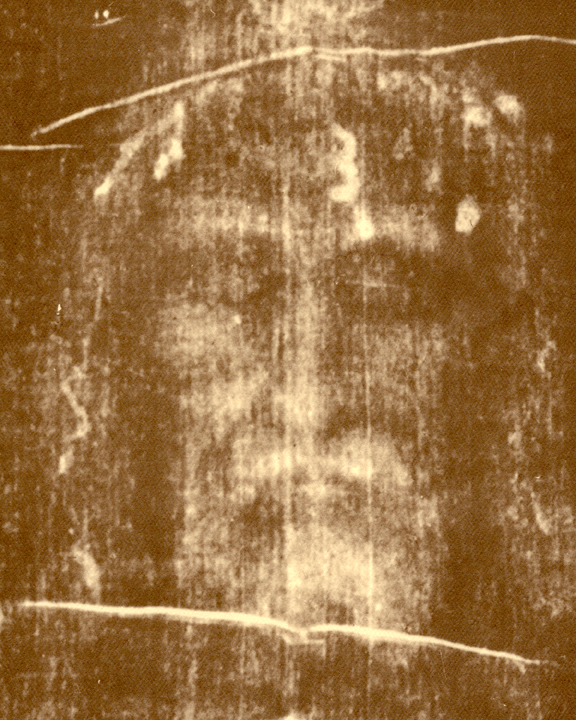 The Shroud of Turin
is a linen cloth bearing the image of a man who appears to have
suffered physical trauma in a manner consistent with the crucifixion of
Jesus Christ. The linen is a full body portrait and measures 14 feet,
3 inches long by 3 feet, 7 inches wide. The shroud is wrapped in red
silk and has been kept in a silver chest in the Chapel of the Holy
Shroud in the Cathedral of St. John the Baptist in Turin, Italy since
1578. The origins of the artifact and its image have been the subject
of intense debate among scientists, historians, and researchers.
Believers contend that the shroud is the cloth that was placed on the
body of Jesus Christ at the time of his burial, and that the face image
is the Holy Face of Jesus. Detractors contend that the shroud cloth
material postdates the crucifixion of Jesus by more than a millennium.
In 1988, radiocarbon dating was done on the shroud in an attempt to
determine the relic’s authenticity. The test indicated that the cloth
was woven between 1260 and 1390 A.D, much later than the time of Jesus. These results have
been challenged by peer-reviewed journals and many critics have raised
questions about the original nature of the sample used in the test.
The Catholic Church has neither formally endorsed nor rejected the
shroud, but in 1958 Pope Pius XII approved the image in association
with the Roman Catholic devotion to the Holy Face of Jesus. On May 28,
1898, amateur Italian photographer Secondo Pia took the first
photograph of the shroud and was startled by what he discovered. The
negatives gave the appearance of a positive image, which implies that
the shroud itself is a negative of some kind. Image analysis by
scientists at the Jet Propulsion Laboratory found that rather than being
like a photographic negative, the image unexpectedly has the property
of decoding into a 3-D image. This property could not be replicated by
researchers. One theory is that the image on the shroud is simply
painted on. Both skeptics and proponents tend to have very strong
positions on the formation and discovery of the Shroud of Turin. At
times the controversy is pitting science versus divine formation, which
makes dialogue very difficult. The Shroud of Turin remains one of the
most mysterious artifacts in the world. via Link ------------------------------------------------------------------------------- -------------------------------------------------------------------------------
     
------------------------------------------------------------------------------- 
 |


| You
are subscribed to email updates from Vaibhav Gaikwad's
Blog
To stop receiving these emails, you may unsubscribe now. |
Email delivery powered by Google |
| Google Inc., 20 West Kinzie, Chicago IL USA 60610 | |
Reply all
Reply to author
Forward
0 new messages