
THE VAGINA AND THE WOMB:FEMALE PROCREATIVE SPACES AS METAPHYSICAL SYMBOLS:CLASSICAL FORMS AND THEIR CONTEMPORARY ADAPTATIONS:INDIAN AND HINDU THOUGHT AND ICONOGRAPHY
322 views
Skip to first unread message

toyin adepoju
Nov 20, 2009, 11:46:26 AM11/20/09
to WoleSoyinkaSociety, usaafricadialogue, edo-nation, Edo Global, nai, naijap...@yahoogroups.com, nigerianworldforum, Nidoa, Chat...@yahoogroups.com, Spiritual...@yahoogroups.com, evocatio...@yahoogroups.com, Hed...@yahoogroups.com, GoldenD...@yahoogroups.com, solo...@yahoogroups.com, jadegard...@yahoogroups.com, krazi...@yahoogroups.com, Multidime...@yahoogroups.com, Naked_Pag...@yahoogroups.com
Note:All images are linked to their sources.All highlights in blue are links to sources for more information on the linked terms and ideas.
If any moderators or members think this does not belong in their group,I would be pleased to be informed.
Thank you
Toyin
If any moderators or members think this does not belong in their group,I would be pleased to be informed.
Thank you
Toyin
In the human effort to make meaning
of existence,people have developed symbols to represent those ideas
they value most.Some of the most powerful symbols,in their capacity to
affect people and draw together a broad range of human experience,as
demonstrated in their pervasiveness across cultures,are symbols drawn
from human biology.Biological processes are the most immediate
experience of human beings and so resonate deeply with the mind.One of
these clusters of biological images are those drawn from human female
biology.Female biology is congruent with procreative capacity and its
expression in terms of monthly flows of blood from the womb through the vagina, a process related to the life sustaining power of blood and its profound associations.Female
biology is also intimately related to ideas about beauty and the
opposite of beauty,ugliness.It is intimately related to sexuality and
its possibilities,both positive and negative.It is also suggestive of
the associations that emerge from conjunctions between the onset of monthly blood flows at puberty,to the relationship between lunar time and these monthly flows,to
the cessation of menstruation at menopause and the relationship
between these blood flows ,the creation and dissolution of eggs in the
womb that leads to them,and the progression of age,its relationship to
the appearance and powers of the body and the constitution of the mind
through experience
These female biological processes and associations are conjoined in a number of cultures and practices as expressions of the powers and experiential possibilities unique to women.These powers and experiential zones are correlated with larger terrestrial and cosmic processes of which female biology is understood as both symbolic and demonstrative at the level of the microcosm represented by the human body,of which the earth is macrocosmic,as the earth is itself a microcosm of the cosmos.At various scales of being,human,terrestrial and cosmic,in the focus on the capacity to generate life,nature is feminised.
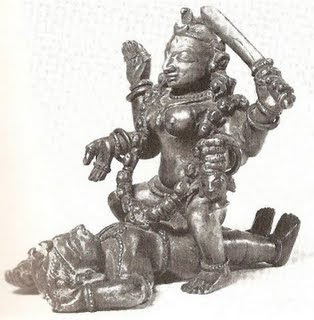
Perhaps the most systematic and wide ranging of these symbolic complexes emerges in Classical Indian thought,in which,as one of the myriad expressions of the broad range of cognitive approaches represented by Indian philosophy and religion,the universe is understood as brought into being by a female creative power, Devi,that power itself expressed in terms of a range of female figures.This feminine force is at times paired with a masculine force,as demonstrated by the conjunction between Shiva,the male potency,and Shakti,the female.These masculine/feminine conjunctions are represented by images of Shakti sitting astride Shiva ,an image which suggests the description of the masculine power of Shiva as a passive potency that needs to be actualised by the active power of Shakti.
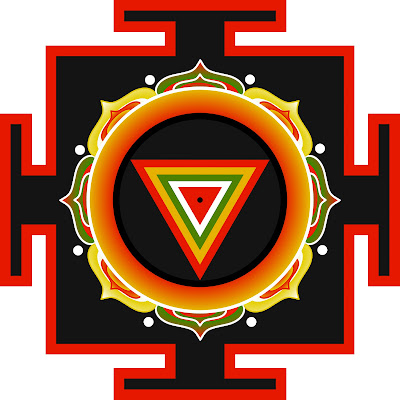
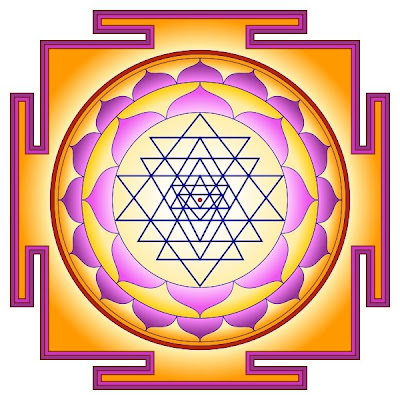
A classic expression of female procreative power in terms of cosmic force is the geometric symbol the yantra,from Indian iconography,in which the frontal appearance of the female genitalia is represented in terms of a downward facing triangle. The downward facing triangle is symbolic of the yoni,Sanskrit for the vagina, as indicative of cosmic becoming, expressed in terms of human procreative capacity. This symbolism is depicted in terms of sculpture and painting,as in this example of the Kali yantra,an embodiment of Kali,described as a goddess who is both maternal and destructive,dramatising both the nurturant qualities necessary for giving birth and the destructive creativity represented by the dissolution and transformation effected through time and change.
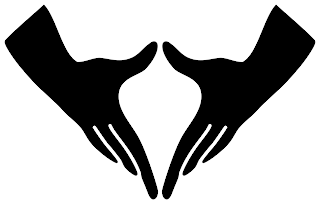
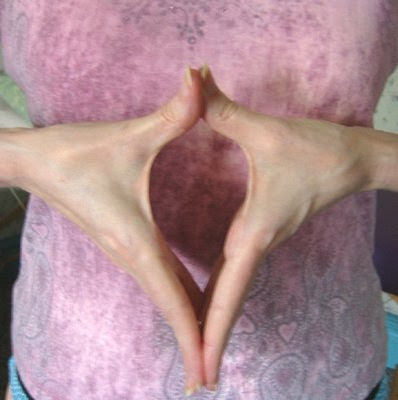
The symbolism of the yoni triangle is also represented by the yoni mudra,one of the symbolic hand gestures named mudras,the yoni mudra being described by one source as an " attitude by which the primal energy inherent in the womb, or source of creation, is invoked."
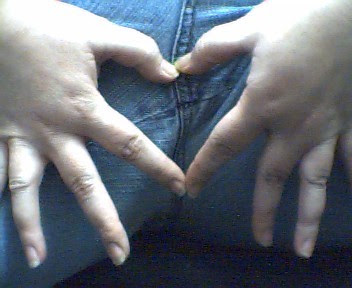
The first three images below are examples of the formal construction of the yoni mudra,with the third image showing the mudra being used in a ritual context.The fourth image is an example is of an unwitting formation of the mudra by a woman holding her hands in front of her trousers.

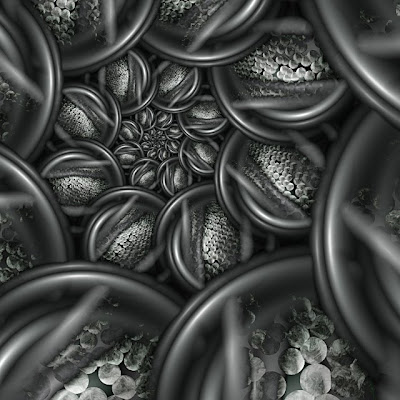
At the centre of the yantra is a point, the bindu.The bindu is a Sanskrit term for the point that symbolises the potentiality from which the cosmos emerges. The other geometric forms that constitute the yantra are organised around the bindu, evoking the emergence of the cosmos from the primal potentiality represented by the bindu. The understanding of the bindu as the zone at which creation begins and [therefore] "the point at which the unity becomes the many...the sacred symbol of the cosmos in its unmanifested state" ( Madhu Khanna (1979). Yantra: The Tantric Symbol Of Cosmic Unity. Thames and Hudson. Wikipedia) is suggested by Paul de Celle's depiction of the bindu in terms of fractal geometry,thereby evoking the replication of the fundamental structure of the universe in terms of its expressions at various levels of manifestation.This fractal symbolism is reinforced by its similarity to Indra's net,an image from Asian verbal art,which depicts the cosmos in terms of a net of infinite extension,with a jewel hanging at each point of the net,each jewel reflecting every other jewel in the infinite structure,thereby evoking the idea of mutuality of reflection,of perception and being,at various points in an infinite universe.
The relationship between the symbolism of the yoni,the symbolism of the downward facing triangle, and that of the bindu, is depicted in a contemporary piece of jewelry which conjoins the yoni/triangle and the bindu in terms of a gold yoni with a diamond bindu pendant,the precious metals of which suggests the superlative signficance of the concepts symbolised by the desgn of the jewelry.
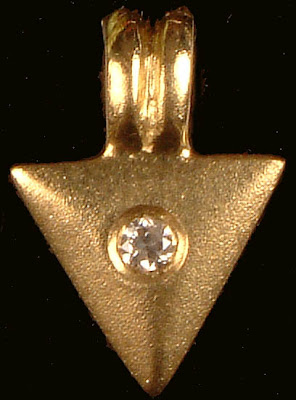
The conjunction of the yoni image and the bindu reinforces the matrixial symbolism of both images,correlating the ground of cosmic becoming and its expression in terms of a source of of human biological becoming, in one image.
These female biological processes and associations are conjoined in a number of cultures and practices as expressions of the powers and experiential possibilities unique to women.These powers and experiential zones are correlated with larger terrestrial and cosmic processes of which female biology is understood as both symbolic and demonstrative at the level of the microcosm represented by the human body,of which the earth is macrocosmic,as the earth is itself a microcosm of the cosmos.At various scales of being,human,terrestrial and cosmic,in the focus on the capacity to generate life,nature is feminised.
Perhaps the most systematic and wide ranging of these symbolic complexes emerges in Classical Indian thought,in which,as one of the myriad expressions of the broad range of cognitive approaches represented by Indian philosophy and religion,the universe is understood as brought into being by a female creative power, Devi,that power itself expressed in terms of a range of female figures.This feminine force is at times paired with a masculine force,as demonstrated by the conjunction between Shiva,the male potency,and Shakti,the female.These masculine/feminine conjunctions are represented by images of Shakti sitting astride Shiva ,an image which suggests the description of the masculine power of Shiva as a passive potency that needs to be actualised by the active power of Shakti.

A classic expression of female procreative power in terms of cosmic force is the geometric symbol the yantra,from Indian iconography,in which the frontal appearance of the female genitalia is represented in terms of a downward facing triangle. The downward facing triangle is symbolic of the yoni,Sanskrit for the vagina, as indicative of cosmic becoming, expressed in terms of human procreative capacity. This symbolism is depicted in terms of sculpture and painting,as in this example of the Kali yantra,an embodiment of Kali,described as a goddess who is both maternal and destructive,dramatising both the nurturant qualities necessary for giving birth and the destructive creativity represented by the dissolution and transformation effected through time and change.

The symbolism of the yoni triangle is also represented by the yoni mudra,one of the symbolic hand gestures named mudras,the yoni mudra being described by one source as an " attitude by which the primal energy inherent in the womb, or source of creation, is invoked."
The first three images below are examples of the formal construction of the yoni mudra,with the third image showing the mudra being used in a ritual context.The fourth image is an example is of an unwitting formation of the mudra by a woman holding her hands in front of her trousers.


At the centre of the yantra is a point, the bindu.The bindu is a Sanskrit term for the point that symbolises the potentiality from which the cosmos emerges. The other geometric forms that constitute the yantra are organised around the bindu, evoking the emergence of the cosmos from the primal potentiality represented by the bindu. The understanding of the bindu as the zone at which creation begins and [therefore] "the point at which the unity becomes the many...the sacred symbol of the cosmos in its unmanifested state" ( Madhu Khanna (1979). Yantra: The Tantric Symbol Of Cosmic Unity. Thames and Hudson. Wikipedia) is suggested by Paul de Celle's depiction of the bindu in terms of fractal geometry,thereby evoking the replication of the fundamental structure of the universe in terms of its expressions at various levels of manifestation.This fractal symbolism is reinforced by its similarity to Indra's net,an image from Asian verbal art,which depicts the cosmos in terms of a net of infinite extension,with a jewel hanging at each point of the net,each jewel reflecting every other jewel in the infinite structure,thereby evoking the idea of mutuality of reflection,of perception and being,at various points in an infinite universe.

The relationship between the symbolism of the yoni,the symbolism of the downward facing triangle, and that of the bindu, is depicted in a contemporary piece of jewelry which conjoins the yoni/triangle and the bindu in terms of a gold yoni with a diamond bindu pendant,the precious metals of which suggests the superlative signficance of the concepts symbolised by the desgn of the jewelry.
The conjunction of the yoni image and the bindu reinforces the matrixial symbolism of both images,correlating the ground of cosmic becoming and its expression in terms of a source of of human biological becoming, in one image.
In the yantra known as the Sri Yantra,the
universe is depicted as emanating from the bindu in terms of
interrelated masculine and feminine forces,symbolised by intersecting
upward and downward facing triangles. The masculine polarity is
represented by four upward facing triangles,the feminine by five
downward facing triangles,symbolic of the interrleationship of
feminine and masculine powers in the creation and constitution of the
universe.

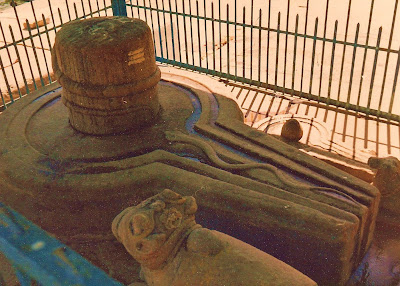
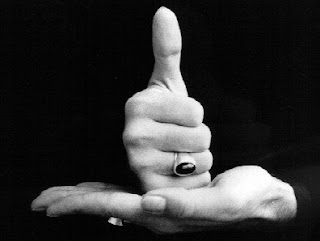
The upward facing triangles can be described as evocative of the Shivalingam,the
Sanskrit term for the erect penis of Shiva,with the phallus understood
as a conduit for the power of life expressed in terms of the capacity
for procreation.Such an interpretation would imply an understanding of
the Sri Yantra as an abstract,geometric expression of the union of Shiva and Shakti depicted
in naturalistic terms with Shakti on top of Shiva.The relative
positioning of both figures suggested by the upward facing Shiva
triangles and the downward facing Shakti triangles is depicted in
another image of the union of the divine figures expressed in terms of
images of the conjunction of female and male genitalia in terms of the
lingam standing in a semi-circular form representative of the yoni, expressed in sculpture and in an example of a mudra.

The visual minimalism of the bindu,its circularity of
structure,its symbolising of cosmic potentiality,a potentialilty that
first emerges into being in terms of conjoined masculine and feminine
polarities that constitute the cosmos,resonates in classical Yoruba
thought and its contemporary expressions,and in Western esoteric
thought.



Reply all
Reply to author
Forward
0 new messages