News Release: Ndi’Igbo In Diaspora To Debate Their Fate In Nigeria January 29 to 30, 2016 In Houston Texas

71 views
Skip to first unread message

chidi opara reports

unread,
Dec 31, 2015, 12:37:19 PM12/31/15
to Yahoo! Inc., Yahoo! Inc., Yahoo! Inc., Yahoo! Inc., USAAfricaDialogue
Ndi’Igbo in Diaspora have decided to meet in Houston on the 29th – 30th of January 2016, to debate their fate in Nigeria. The move is necessitated by our past experiences and recent events in the country........................


image


chidi opara reports: News Release: Ndi’Igbo In Diaspora ...
Ndi’Igbo in Diaspora have decided to meet in Houston on the 29th – 30th of January 2016, to debate their fate in Nigeria.
Preview by Yahoo


From chidi opara reports

chidi opara reports is published as a social service by PublicInformationProjects

Samuel Zalanga

unread,
Jan 2, 2016, 6:03:02 AM1/2/16
to usaafric...@googlegroups.com
Dear  Chidi,

Please do you know whether this meeting has been recorded as was suggested in the message  you sent out? Political Sociology is one of my areas of great interest. For a lot of reasons, I am very interested in this subject. 

I am very curious about how the discussion proceeded. I forwarded your message to all my Igbo friends who I have very sincere and honest conversations about the challenges of Nigeria.

My own reasoning using the tradition of immanent critique or subversive orthodoxy is that I can concede that the Igbo people  have many challenges in Nigeria. But based on insights form historical comparative methods of research, I quickly arrived at the suspicion that if ten good grievances can be listed of Ndi' Igbo people against the Nigerian federation, research methods will highlight something very insightful things that in my view will complicate the discussion: 

1.The Grievances Would not be Applicable Only to Igbo Land:  If one travels around Nigeria trying to examine whether the grievances and challenges identified apply only to Igbo land, he or she will conclude  that this is not the case. Indeed, there are some areas of Nigeria, that are even more marginalized than Igbo land. 

When I did my NYSC in Aboh Mbaise, I felt I was in a foreign country because of the differences in level of development there compared to Bauchi State. I learned a lot about regional variation in the country.  The number of students enrolled then in secondary school in Aboh Mbaise Local Government Area alone then was higher than those enrolled in secondary school in the whole of Bauchi State. 

All this is not to say that this is a reason not to highlight the challenges or grievances of Igbo people. The issue is as Adam Przeworkski and  Henry Teune said in their book:. "The Logic of Comparative Social Inquiry," when you gather data and conclude that a problem is not only existing in one place but several or numerous other places at the same time, then the cause is a problem much larger and not an issue just specific to a place even though context matters. It may be a systemic issue.

2. No Grievances or Challenges will Apply to All Igbo People or Igbo Land in a Flat Manner:  The same grievances and challenges if examined very carefully will show that they manifest to different degree among different states, local governments and social classes or clans in Igbo land. This will equally apply in other regions of Nigeria even if the people come from the same ethnic group. You will find the same thing in Sokoto and Geidam.  This means generalizing the grievances easily as though there has not been internal variation in the region since the past several decades will be somewhat unrealistic. There are parts of Igbo land that are more developed and better governed than others and it will be good to explain this. This is true with all the other regions regions in Nigeria. Recently I read somewhere that the governor of Gombe has been recognized for his work to the state. Gombe state came out of Buachi but in my view it is far more developed than Bauchi even though all are in the North and in the former Northeastern region or state. This means the problem can be explained by both internal and external factors.

3. Regret About the Past: I did not witness the civil war but the only time I saw a graphic representation of it was when I watched the whole series of late Professor Ali Mazrui. It was shocking to me that Nigeria went through that and we do not seem to have learned a lot from that. The meeting of reconciliation between then General Gowon and representatives of the Igbo command was touching. You sense from his body language that these were his colleagues and circumstances made them to be enemies and now they can reconcile. Just as was the case with some European forces during the first World War if I remember in a documentary where opposite sides celebrated Christmas and then you wonder why they were fighting. I feel terribly bad that Nigeria as a country has not learned much from the past or so it seems.

4. Is Rooting Social Struggle in Blood Ancestry the Only Viable Option in the 21st Century?: The reason why I am interested in all this is that I truly believe that the concerns that Igbo people have can be translated into moral and ethical concerns that should be of interest to millions of people who are not Igbo by blood ancestry. Making a movement strictly based on ancestry in our world today can be scary to many people because people know that it can be a source of instability in many societies. Beyond that, in spite of Carol Gilligan's critique of Lawrence Kohlberg theory of moral development, I think it is fair to say that as one grows in reflection, he or she becomes concern with an issue not just because it affects him or her, or his or her people. I can imagine that the descendants of Mayflower in the U.S. can decide to have such a meeting or the descendants of the American Pioneers in Appalachia can do that. That would make many others scared especially when the substance of their concern can be accommodated within universalistic language and ideals that one does not have to be part of their ancestry to sympathize or join the struggle. Ultimately, the world will be a better place if people are committed to such moral and ethical struggles even when the issues is not just about them, or they will join struggles with others in spite of differences to fight for a better world.

One of my greatest regrets in Nigeria is that whether it is with the Niger Delta struggle or Boko Haram, they never frame their agenda and pursue strategies that are rooted in some universal moral and ethical ideals that people can join even if they are not from the place. The struggle of Black Lives Matter can only succeed if it is framed in such a way that even though the problem is with Black people, the substance of the situation is a moral and ethical concern that affects human dignity in general and so all of us should care. This is what made Martin Luther King Jr and the Civil Rights movement succeed. I ordered a cd of the Letter from Birmingham Jail and listened to it for a month in my car in order to deeply appreciate and digest the manner in which Martin Luther King Jr. framed the struggle. It is hard even if you are a privileged White person to understand the history of western civilization very well and ignore him. Not surprisingly, when many Whites understood the depth and incisiveness of the position of the Civil Rights fighters, they joined the struggle and that increased the legitimacy of the struggle.

5. Other Examples from History that Support the Case for Moral and Ethical Framing of Social Struggles: 

a) Similarly, if you watch the documentary called "A Place Called Chiapas": 


you will be impressed by the way Commandante Marcos framed the Zapatista struggle. He framed it in terms of how neoliberal globalization renders many people as surplus people. He is not against globalization wholesale, but against the way it operates to make some people irrelevant. In this respect, his position can be supported by Professor Stitlitz's critique of neoliberal globalization in terms of its disregard for certain groups of people.  After a careful analysis of what neoliberal globalization is, Marcos concluded that anyone in the world  who faces the kind of marginalization they faced by the indigenous people in Chiapas because of globalization is also a Zapatista and should join them in the struggle. The New York Times calls the struggle the first postmodern revolution. Their manifesto was online and the government found it difficult to shut them  up. And the coherence of their argument, its deep moral and ethical foundation in a situation where people treat the market as amoral became attractive to journalists from different parts of the world who flew to Chiapas to record what was happening. Why? Because when you hear what Commandante Marcos said and the manifesto of his people, if you are informed about globalization, you cannot treat them as persons very absorbed in themselves or being provincial in thinking. They demonstrate an awareness that the problems they faced are also being faced in other parts of the world and the struggle is rooted in a broader and deeper moral and ethical question. 

Interestingly, Commandante Marcos is not an indigenous person. He was a Professor of Philosophy and Communications if I remember very well and was trained in Italy. He resigned his university teaching position to go and live among the indigenous people, and he won their trust. Consequently they made him their leader and spokesperson even though he was not a native. 

b) Another example I can give is form the series called:  "Have You Heard From Johannesburg?": 

It is a seven-part series discussing apartheid and its collapse. There is an episode titled: "From Selma to Soweto." This is an excellent example of the contribution of African Americans to the anti-apartheid struggle. But the congressional Black Caucus did not frame the issue in strictly racial terms. They frame it as a moral and ethical issue that challenges what the U.S. or the "civilized world" claimed to be. It is harder to fight those kinds of framing when there is empirical evidence supporting the claim. One South African in the documentary said that, their campaign of persuading U.S. state legislators to divest from investing in South Africa or divest form corporations that do business there, was only successful in  states where a Black and a White legislator sponsored the legislation and often bi-partisan. Why? Because the issue was framed as a moral and ethical issue that transcends race, ethnicity, nation etc. They were able to mobilize support to override the veto of President Ronald Reagan who opposed the law that declared economic sanctions against South Africa. Many republicans voted against Ronald Reagan's position.

c) I also at one point reviewed a documentary on Hubert Humphrey of Minnesota. He was charged with getting the voting rights act passed in U.S. congress (http://www.shoppbs.org/product/index.jsp?productId=4403196). Initially he adopted a very legalistic approach in making the case by focusing on U.S. laws and the constitution. But some ministers visited him in Washington and told him that he should broaden his framing of the issue from just legal to a moral and ethical question. And it worked because it became more difficult to easily ignore the moral and ethical questions especially when the opponents claimed to be moral and ethical people. This is not to say that morality and ethics cannot be debated but the common person generally has a fair understanding of what is right else society will not work as we see it. Are we lacking moral and ethical foundation in Nigeria to frame our struggles in similar manner? We can learn from the history of social struggles all over the world.

Conclusion: If the challenges and grievances that the Igbo people will identify can equally be found in other parts of Nigeria and in some cases in even worse situations; and if there is such injustice against some people in Igbo land committed by the powerful against the powerless, why not make the movement a moral and ethical struggle against exclusion, injustice and oppression of the weak by the strong instead of lumping everyone together?  We need such a movement in Nigeria  and indeed, the African continent, and I care less about where it starts, and my hope is that such a movement if it starts anywhere in Africa can go beyond that particular country.

I have painfully arrived at the conclusion that sometimes it is often easier to try to by-pass the fundamental questions of social justice, moral and ethical concerns that need to penetrate or infuse our social reality in a rush to arrive at the New Jerusalem or Dar es Salaam very quickly. Are there short cuts in such struggles? Many of the postcolonial African sates became predatory because many people who participated in independent struggles were more concerned about their exclusion from the privileges that the colonial officials enjoyed instead of the fundamental questions of social justice for all.  But often such situations end up in disappointments because as St. Augustine said, while quoting Cicero, without Justice, we are all a gang  of robbers.  Just imagine if Kanu will root all what he is saying in moral and ethical questions and language that relates to social justice in such a manner that even someone in Bangladesh can hear it and say, I can identify with the spirit of his struggle and the success of such a struggle is a universal blessing to humanity, which in John Stuart Mill's Ideal Utilitarianism, can bring joy because it satisfies our hunger for justice and human dignity. Granted Mill himself failed to honor the dignity of he people in India because of his work for the East India Company or something like that.

I hope and pray that if there are moral and ethical issues of concern that detrimentally affect the lives of others, one does not need be of the same blood ancestry of such people or of the same religion or ethnic group before he or she can care about such concerns or join the struggle.


Samuel

--
Listserv moderated by Toyin Falola, University of Texas at Austin
To post to this group, send an email to USAAfric...@googlegroups.com
To subscribe to this group, send an email to USAAfricaDial...@googlegroups.com
Current archives at http://groups.google.com/group/USAAfricaDialogue
Early archives at http://www.utexas.edu/conferences/africa/ads/index.html
---
You received this message because you are subscribed to the Google Groups "USA Africa Dialogue Series" group.
To unsubscribe from this group and stop receiving emails from it, send an email to usaafricadialo...@googlegroups.com.
For more options, visit https://groups.google.com/d/optout.

Okechukwu Ukaga

unread,
Jan 2, 2016, 9:43:25 AM1/2/16
to usaafric...@googlegroups.com

Samuel makes great points and observations. Beyond these, however, there is also the fact that recent governors and other political leaders in Igbo-land have not done any better than Nigeria as whole. Instead, they seem to be as corrupt and ineffective as their counterparts in other states and the federal government. And you can imagine what will happen if there is no federal government to assure some check on the excesses of these corrupt and ineffective leaders. So we all should stay within Nigeria and make it work for all. Dividing Nigeria into smaller countries is not a good solution. Turning Nigeria into a true federal of regions based on the current geopolitical zones and abolishing the state (most of which are unviable without funds from elsewhere) is the best solution. Happy New Year.
Okey Ukaga

Kenneth Kalu

unread,
Jan 2, 2016, 11:05:25 AM1/2/16
to usaafric...@googlegroups.com
"Just imagine if Kanu will root all what he is saying in moral and ethical questions and language that relates to social justice in such a manner that even someone in Bangladesh can hear it and say, I can identify with the spirit of his struggle and the success of such a struggle is a universal blessing to humanity,..." S. Salanga

Thank you, Prof. Zalanga for this very wonderful piece of yours. I think you've said it all. I would suggest that this essay be read to the audience at the proposed gathering of Ndi Igbo in Houston. If any of the organizers of the Ndi Igbo gathering is on this forum, kindly arrange to invite Prof. Zalanga to present this paper at the gathering. You will be doing the "struggle" a great deal of good! I pray the Prof accepts the invitation. If he does, we have a firm commitment from some sources to fund his travels to the gathering.

May we all have a fruitful 2016.

Kenneth  

ugwuanyi Lawrence

unread,
Jan 2, 2016, 4:11:46 PM1/2/16
to usaafric...@googlegroups.com


This is a worthy effort to intellectualise the Nigerian enigma but my worry is that it is fraught with a wrong argument or what I might call "the Self-recolonization fallacy of Nigerianism".I abstract from the piece to frame it this way: "the problem of Nigeria may be affecting more people than you therefore don't pull out of Nigeria even if the opportunity allows or permits".

Well the simple interpretation of this logic is that if four hundred people are locked in a room and a snake is biting all of them they should endure the poison and stay in the room because four hundred of them are equal victims of the snake bite.

Then the big question: Assuming all of them die of the snake bite, would this proposal have solved the problem? And even if they don't die immediately of the snake bite-Who then can even kill the snake if there is no alternative such as leaving the room?


Would it not be wiser to deepen the search for the solution all the more by encouraging anyone who has what it takes to kill the snake to do so even if it means leaving the room?


Lawrence Ogbo Ugwuanyi,Ph.D
Associate Professor of Philosophy
Department of Philosophy and Religions
University of Abuja
Abuja
>        chidi
> opara reports: News Release: Ndi’Igbo In Diaspora
> ...Ndi’Igbo

Okechukwu Ukaga

unread,
Jan 3, 2016, 9:41:10 AM1/3/16
to usaafric...@googlegroups.com

Using the snake analogy, I suspect you will agree that we have at least 3 options: One, alll affected can stay in the room and do nothing till they are eventually killed by the problem. Two, those who want to avoid being killed by snakes by leaving the room should be allowed to do so. Three, all affected can work hard together to eliminate the snakes and stay safely together. The second option assumes (falsely) that there are no snakes  where folks wanna run to. My earlier post was an attempt to call attention to that false assumption. We do not want to jump from the frying pan into the fire. It seems to me that best option is for all affected to work together and find lasting solutions to their problems.
OU

Samuel Zalanga

unread,
Jan 4, 2016, 8:18:04 AM1/4/16
to usaafric...@googlegroups.com
With regard to the analogy of the people in the room who are likely going to die because of snake bite, I understand the concern. 

 The questions being raised are not an attempt to ignore the legitimacy of the concerns that people in Igbo land or any where in the world for that matter have. But because ultimately, the solution is in understanding the long term process. Hannah Arendt developed the concept of "banality of evil" at a time when  people focused on the spectacular nature of the holocaust. It is not that she did not see the holocaust as something terrible. Rather, she concluded after the studying the situation following her attendance of Nazi agent's trial in Jerusalem that the holocaust was committed by normal day people functioning normally, which is just a restating of one of the key findings of the Nuremberg Trials.  The question then is what is the process that led to this catastrophe?. This same question is relevant for Nigeria and many African countries as well.

While reading the message, I also remember this interesting exegesis of the "Good Samaritan" parable / story in the Bible that was made by an African Minister in  a documentary film that I reviewed long ago but I kept thinking about it. For those who are not familiar with the Good Samaritan story, it is about a man who is a good Samaritan traveling from Jericho to Jerusalem for a  business trip. But when he saw someone mugged and left by the side of the road by armed robbers, he abandoned his trip plan to make hospital arrangements to help the mugged person  get healed. 

Generally, most people think the only moral teaching in the story is for us to have many Good Samaritans in the world!. But the exegesis made by the African American minister said, in principle we are not opposed to having Good Samaritans who will help people after they are mugged. However, the fundamental issue here is the need to understand what made the road between Jericho and Jerusalem to be so unsafe that innocent people are mugged in the first place? 

What we need to do is to find out the causes of such armed robbery and take care of it, so that in the future, people can travel safely from Jericho to Jerusalem (metaphorically speaking), and maybe if that happens, the Good Samaritans can channel their scarce and valued energy elsewhere to do their good work. 

The lesson in this exegesis is that the problem started with a mugged person and the Good Samaritan (people, one suffering and one willing to help solve the problem), but the lasting solution to it while starting from the people, transcended the people to look at the systemic source of the problem that leads to people to be mugged. We should not ignore the cause (long and short term) and just be improving hospitals or teaching more people to be Good Samaritans, while ignoring the root cause of the problem in both their short and long term manifestation.

My point, and I repeat again, many of the problems  that Ndi' Igbo will identify as their problems with the Federal Republic of Nigeria are not just problems caused by other people who are not Igbo in Nigeria, assuming because of blood ancestry, that Igbo land is totally free from such problems. This will not be sociologically accurate. We have to look out and within as part of our explanatory methodology. 

No part of Nigeria is clinically free from such problems. The problem of the strong taking advantage of the weak, is a problem all over Nigeria caused by Nigerians living in their communities, whether they are Kanuri, Hausa, Fulani, Yoruba, Bini, Tiv or whatever group. Some of the governors that wasted the resources of their states are persons who are indigenous to those states and they had people who supported them within the state. They just got power-drunk, combined with excessive greed. This is all over the country. It happens in all ethnic groups, all regions and all religious groups. If anyone is honest about the country, he or she cannot deny that.

 The communities that experienced this problem less often are communities that have developed internal mechanisms within themselves to help them do things differently. State governors received lots of money from the federation account under President Jonathan. At one point, Iwela-Okonjo said the amount of monies received by some states is close to a sizable percentage of the budget of some African countries. But what did they do with it? If anyone cares to do a careful study of this problem state by state, he or she will conclude that the problems of Nigeria are both at the federal and local levels.

 A member of my family went to Bauchi for instance during Christmas time with an expired Nigerian passport and requested for a new one. The person was told to go and bring a letter proving that he is an indigene of the state. This is a problem of people that have been granted power to serve the public but are irresponsible with it. I honestly see this  problem of irresponsibility all over Nigeria. States that have strong and effective civil society groups do better in holding state officials accountable. Other just say "God Dey" or God exists and will judge them. 

When I did my doctoral field work, I visited two oil palm plantations in Nigeria: One in Edo State and the other in Rivers, i.e. Risson palm. I was interested in the role of ruling elites in transforming their societies through agricultural development policies, which Southeast Asian countries have been more successful in this respect than African countries. Agricultural policy was a site for me to explore the question of state capacity and role of elites in development.  From Edo and Rivers, I drove to Sokoto to visit a friend who is also a sociologist. It was then I became impressed that Nigerians will condemn each other but injustice is practiced in all regions, all states, and ethnic groups: The strong take advantage of the weak. This is one thing I concluded. I learned this from the people. They will tell you. And the people taking advantage of others are not coming from another planet.  The social disease is like a kind of virus.  But it is easier for Northern elites, for instance, to deflect attention from  their failures by projecting all  the problems of the region to someone else just as other regions do without applying as much rigorous analysis to internal processes. If the germs of injustice, greed, entitlement and avarice (some of original deadly sins) are not taken care of, it does not matter in my view, even if every family in Nigeria or Igbo land gets its own country, there will still be problem of neglect and exploitation. The literature on patriarchy shows many injustices even within the family,--  this is as small as it can get.

Along the same line I will argue that, no one will deny that the international global capitalist system is structured in such a way that it puts Third World countries at a great disadvantage. But in my assessment, if this is all that our universities in Africa will preach against, it will not take anywhere. We have to seriously look internally also, and examine how our societies  do things differently. Asian countries did not just sit down criticizing the West. They recognized the lopsidedness of the international system but chose to compete with the West and beat them in their own game.  With different kinds of institutions and commitment, we can transform many things in Africa, which will then put us even in a better position to confront the international system. 

We can decide to break away from the international system because it is unjust to us, but if we do not address the fundamental issues in our systems, that will not be a solution. I do not deny the fact that there are problems in Igbo land and indeed many parts of Africa. Indeed, I will stand side by side with Igbo people who are oppressed against others whether in Igbo land or Nigeria who oppress them. But this line of reasoning is subversive because it diminishes the significance of blood ancestry and makes a broader case for struggle along the lines of shared humanity or common purpose. Some Igbo elites as in other parts of the Nigerian federation and Africa have been part of the problem of the strong taking advantage of the weak. A thorough and honest class analysis will show that there are many persons from Igbo land who benefited from the same Nigerian system that is corrupt, but they ignored other ordinary Igbos, which is exactly what is happening in other parts of Nigeria. Class analysis will show that the best struggle we need is that of the oppressed against the oppressors, wherever they come from. This is as simple as it is. If you do not have money to feed yourself or get medicine, it does not matter what is your blood ancestry.

So in conclusion, I do not deny the significance of the problem the people in the room face with regard to snake bites, but using the version of exegesis of the Good Samaritan story, I will ask, what in the first place allowed such a situation where so many people are gathered in a room and they are likely going to die because of snake bite. Should they not focus on addressing the causes of congestion and disease in their society than just be focusing on who is going to die. In any case, the way the situation is characterized can easily lead to the "tragedy of the commons." I say so because if they do not reach a common understanding, everyone will rush to protect himself or herself and in the process many will die because of the strategy they have adopted. There are times when fire starts and people are supposed to exit a place but instead of cooperating to get out all quickly, everyone tries to go first and in the process few escape.

 It is just like the climate issue that was discussed in France. Should countries go about it alone in pursuit of their national interest, or should they cooperate because the problem ultimately transcends nations?  The people should be the starting point of our analysis, but not the end of the analysis. Unless if the people suffering are having a veil of ignorance as Rawls fictitiously started his theory of justice with, I would ask: what are the processes that led to the congestion and the problem of snake bite in the first place. Is it like in some parts of the Appalachian region where people go and hunt snakes in order to worship with them in churches? And of course they end up being killed by the snakes but because of their faith, they think it is alright.

Without addressing the fundamental questions of justice, morality and ethics in how people relate to each other and how institutions function, not much will be accomplished. We have seen this in Southern Sudan where, yes, they had legitimate grievances, but because they focused just on the grievances, and did not deal with the problem of elites who are greedy and hungry for power, they plunged the lives of many ordinary people in danger. What this means is that they took the easy way out by initially seeing evil as something that can only exist among Arabs, but not Black Africans. Well, now they have a good history lesson there. 

In my view,  it is  not only Igbo land but every human society in this world that assumes it can proceed without making the social justice question central to how institutions function, without making the suffering of others a moral and ethical question rooted in human dignity, such societies will encounter serious threat to their survival or cohesion. Even the United States in her current trend cannot claim being exceptional to this challenge. Three is a limit to how much widening inequality a society can handle and still remain normal. And widening inequality is a  problem not just in he U.S., but also, a problem in Igbo land, Nigeria and Africa. Even hitherto egalitarian European countries are now becoming more unequal.  

But if we focus on the problem of inequality and injustice by one group towards others, many of the elites will not like to hear that because that will expose their hypocrisy. They have always used ethnic and religious sentiments to mystify the real problems of humanity.  They may come from the same religion or ethnic group with us, but they are in terms of the substance of life more similar to the rich in other parts of the world than they are with the ordinary citizens in their communities. I am confident to say that re-framing the issue this way will be relevant in discussing the Igbo  land situation, because there are people in the region who have gained at the expense of many ordinary citizens in the same region, and all of them are Igbos, which is similar to what is happening in other parts of Nigeria. This is why it is a justice question in my assessment than a simple question of blood ancestry. To ignore this and just focus on blood ancestry, given the data we have about inequality and injustice in different regions of Nigeria is to not be totally frank about the situation. 

If, however, Biafra will be achieved but on the principles of justice, equality and morality and ethics in how humans treat fellow humans, such an accomplishment will not just be for Ndi' Igbo but to the whole of the human race. Would that not be something great to celebrate? Many can identify with such a  struggle even if they are not of Igbo ancestry. But I can say with confidence that anyone consumed with the justice question in the situation, will see beyond the blood ancestry requirement, even when the person recognize that there are many Nigerians, including Igbos, that have been left behind and the causes for that are not just external but equally important are the internal factors.


Samuel

Chidi Anthony Opara

unread,
Jan 4, 2016, 8:18:16 AM1/4/16
to USA Africa Dialogue Series
Samuel ,
Sorry , I was not ignoring you, it is just that I spent the new year with my inlaws and the place happens to be out of Internet coverage. As to your question, I do not know anything about the meeting beyond what everybody else knows. We only published a news release sent to us.

CAO

dAme jOo

unread,
Jan 4, 2016, 8:43:03 AM1/4/16
to USAAfrica Dialogue
Professor Zalanga,

Regarding the Benin-Edo ethnic group, Please note that the preferred nomenclature is Benin and not "Bini." 

I paste below a 2006 public announcement...

"Our attention has been drawn to the practice in which some persons in correspondence to the Palace and publications in the newspapers and magazines refer to Benin as 'Bini'. It is hereby stated for the information of the general public that our correct ethnic name is Benin and not 'Bini', and that our people are to be referred to as Benin people or simply Benins. The Omo N'Oba requests that the use of 'Bini' should stop forthwith. Individuals, government agencies, corporate organizations, print and electronic media, and the general public should please take note". Signed (actual signature) Chief S. O. U Igbe, MON, Iyase of Benin. On behalf of all Benin Chiefs. Benin Traditional Council - Palace Press Release, Ref. No. BTC.A66/VOL.IV/262 dated 28th August, 2006.

Saludos,
joan

kenneth harrow

unread,
Jan 4, 2016, 9:27:06 AM1/4/16
to usaafric...@googlegroups.com
hi joan
who determines what a people call themselves? the chief? the chiefs?
really?
ken (by the way, i am not an igbo, or, maybe it is ibo?)
i am, however, american. or amerikan.

the answer to my question, for me, is, it is the people, their practice.
and, of course, it changes. but not by diktat from above
ken again
-- 
kenneth w. harrow 
professor of english
michigan state university
department of english
619 red cedar road
room C-614 wells hall
east lansing, mi 48824
ph. 517 803 8839
har...@msu.edu

Anunoby, Ogugua

unread,
Jan 4, 2016, 11:24:31 AM1/4/16
to usaafric...@googlegroups.com
"Benin" not "Bini" in "correspondence... publications...". Is Bini not same as Benin when the latter is sounded with the end  "n" silent? 

oa

Sent from my iPhone

dAme jOo

unread,
Jan 4, 2016, 1:32:11 PM1/4/16
to USAAfrica Dialogue
Dear Professor harrow,

The issue is not about pronunciation or translation of a people's name into a different language (which is what "amerikan" implies) but rather about reclaiming identity.
 
There are serious geo-political, social and epistemic consequences for the Benin people if this unintended erasure of a significant portion of their identity is not stopped. It is this attempt to re-claim name that informed the 2006 pronouncement from the Palace of the Oba of Benin, Omo'n'Oba n'Edo Uku Akpolokpolo Oba Erediauwa.

There is also the issue of loosing ownership of the name to the Republic of Benin since the country's name was changed from Dahomey to Benin in 1975, ostensibly after the Bight of Benin, which took its name from the Benin empire- of which the Benin-Edo people of "postcolonial"/post-independence Nigeria are a modern day manifestation.

By the way, there are those who will question the propriety of referring to citizens of the United States as Americans when that nomenclature was originally intended as a marker for people of the Americas-both North and South.

Domo.

joan

Farooq A. Kperogi

unread,
Jan 4, 2016, 3:43:39 PM1/4/16
to usaafric...@googlegroups.com
Joan,

I am all for calling people what they want to be called, but insisting on "Benin" in place of "Bini" is curious, even puzzling, for at least two reasons. 

One, Edo or "Benin" is a Niger-Congo language, and one of the enduring phonological features of Niger-Congo languages is that their words almost always end with a vowel sound, that is, a, e, i, o, u. So "Bini" would be natural in the phonological rhythm of Niger-Congo languages; "Benin" would not. Of course, there are exceptions. For instance, Tiv, a Niger-Congo language of the Benue-Congo sub-phylum, has no end vowel, but most Nigerians don't say "Tiv" in their unguarded moments; they say "Tivi." Other deviations from the norm are Kuteb, Jukun, Berom, etc. But is "Benin" really an exception?

My findings show that it is not. "Benin" is a Portuguese corruption of "Bini," which is itself a corruption of the Itsekiri "Ubinu," which was the name by which Benin City was known. Why the "chiefs" of Benin would insist on a Europeanized rendering of their name beats me. Let me know what I am missing. 

Most attempts to reclaim what you call the erasure of identity often consist in reverting to original renderings of names. Mumbai (instead of the Anglicized Bombay), Sri Lanka (instead of the Anglicized Ceylon), Beijing (instead of the Europeanized Peking), etc. come to mind here. By insisting on a 1485 Portuguese corruption instead of the original "Ubinu" or even "Bini," "Benin" appears to be a curious exception.

But, most importantly, most Edo people I have related with call themselves "Bini," not "Benin." And this, I think, is at the heart of Ken's critique. You can't arbitrarily legislate language, especially when such legislation comes across as counter-intuitive. The French Academy knows this only too well. Latin also paid a price for this with "death."

Nevertheless, I want to be educated. Maybe I am missing something.

Farooq

Farooq A. Kperogi, Ph.D.
Journalism & Emerging Media
School of Communication & Media
Kennesaw State University
402 Bartow Avenue, MD 2207 
Social Science Building 22 Room 5092
Kennesaw, Georgia, USA 30144
Cell: (+1) 404-573-9697
Personal website: www.farooqkperogi.com
Twitter: @farooqkperog
Author of Glocal English: The Changing Face and Forms of Nigerian English in a Global World

"The nice thing about pessimism is that you are constantly being either proven right or pleasantly surprised." G. F. Will

kenneth harrow

unread,
Jan 4, 2016, 7:53:09 PM1/4/16
to usaafric...@googlegroups.com
hi joan
what "amerikan" implies is not about pronunciation or translation, but about a radical identity claim. if i may say, i  would hesitate to correct someone about using "american," because it implies something about the weak intelligence of the user of the term. there are political issues involved in many, maybe most, identity markers; but do you really want to lecture me about what is implied in using that term?

in the case of benin vs bini, i would be interested in the issues, but again you really are lecturing me, or the readers of the post, as if the most obvious historical events were something that i, or we, needed to be told. i would hesitate before taking such an approach before others, unless i knew they were pretty ignorant about africa.

the issues here are, rather, what it means to "reclaim" a name, especially when that reclamation comes from an official figure. if memory serves, the switch from the usage Afro-American to African American was powerfully supported by jesse jackson, whose standing within the black community lend support to the movement for that change. 
in the case of benin vs bini, i would be interesting in knowing what is at stake, who is pushing for either term, and how the usages came about.
ken

Uyilawa Usuanlele

unread,
Jan 5, 2016, 1:25:23 AM1/5/16
to usaafric...@googlegroups.com
Dear Farooq,
                      Permit me as a non-expert (in linguistics) to intervene in this discussion. First Benin-Edo though shares the phonological feature of Niger-Congo language of ending every word with a vowel, which renders the name Benin a misnomer, Benin language is rich in words ending in nasalized vowels like Amẹn- Water, Ikpin- Python, Agan-Barren person, Igbọn-Knee, Akhain-selfishness etc. I am only pointing this out to show that the word Benin is not a misnomer for the Benin -Edo language and person.
                   The adoption of the name BENIN for the Benin-Edo people by the Omo n' Oba and the Benin Traditional Council goes back to the 1980s. The 2005 memo Joan Oviawe uploaded was a reminder and correction to journalists and scholars, who were still ignorantly and/or wrongly using the term BINI, contrary to what the people prefer to be called.
               The colonial records abound with various renditions of the name such as Beni, Binin, Bini, etc. The British colonial administration later adopted the name BINI, which they used in their official documents and in this way imposed it on popular consciousness.
            The term BENIN was first used by the Portuguese as a rendition of the name UBINI, (not UBINU as you wrote) which both the Benin and Itsekiri use for the Benin people. I say this because Oba Osemwende (not an Itskeiri)  used the name UBINI too when he named his daughter born in exile (Ewohimi) Aghayubini (we will go to Ubini) to proclaim his determination to go home to claim his throne, which he eventually did.  
         The adoption of BENIN is the association of the name with glorious past and heritage. The British Colonial name BINI is neither associated with the glorious past heritage nor does any justice to that heritage. It is in the same light that the Omo n'Oba and Benin Traditional Council have been reversing British colonial impositions that honoured and glorified their exploitation. Streets like Adesogbe, which the British changed to Plymouth Road to honour the visit of Earl of Plymouth in 1938 have since reverted to its traditional name, likewise Ewaise street which the British named Forestry road because of the location of their money-spinning Forestry Department there, has also been reversed. Even buildings and communities have also not been spared like Conference Hall changed to Urhokpota Hall etc.
That these changes were done by the representatives of the people viz the Omo n' Oba and the Benin Traditional Council, is not new in the history of Benin. Oba Ewuare (1440-1473) changed the name of the city to Edo to memorialize a slave who was assassinated by his master for saving fugitive Ewaure's life during his struggle to claim the throne. Today the Benin-Edo people are still proud of the name Edo, which is the name of the City, the people, the state and a language group.
Please do not see the name Benin as a linguistic misnomer or as just a foreign imposition. Foreign rendition of UBINI in writing, yes,  but it does more justice to our history than BINI which was borne out of colonial convenience. Thank you.    

Uyilawa


From: farooq...@gmail.com
Date: Mon, 4 Jan 2016 15:28:07 -0500
Subject: Re: USA Africa Dialogue Series - News Release: Ndi’Igbo In Diaspora To Debate Their Fate In Nigeria January 29 to 30, 2016 In Houston Texas
To: usaafric...@googlegroups.com

Cornelius Hamelberg

unread,
Jan 5, 2016, 1:26:08 AM1/5/16
to USA Africa Dialogue Series

 Craveing your indulgence for just another little aside here: language and people

Re- Creole and Krio

I invented Jazz claimed New Orleans Creole, Jelly Roll Morton

Later on (another musical planet) Kid Creole and the coconuts

And even my good friend  bass player Samuel Oju King ( in Africa  I last linked up with him in Kumasi, in Ghana in 1970 – shortly after  Asante Kotoko beat  Englebert of Zaire -1-0  in the African Club cup final and we emptied the Kingsway Hotel in Kumasi of all the beer – the Hotel, incidentally owned by a Ghanaian-Sierra Leonean , Mr. Williams)

It should also be interesting to know how “Creole” became “Krio” in Shierra Leone...

Creoledom vs Kriodom

Ogbeni Ignoramus C#  would like to know

Cornelius

We Sweden

...

dAme jOo

unread,
Jan 5, 2016, 8:59:43 AM1/5/16
to USAAfrica Dialogue
Domo Professor harrow,

It wasn't my intention to "lecture" or give the impression that I was attempting to "lecture" anyone or to even implicitly suggest that folks reading my post are ignorant of Benin-Edo history. I regret that that was the impression you got from reading my response to you.

Professor Usuanlele's intervention lucidly captures the point I was trying to make and so I will gladly adopt his response in place of further commentary on the matter.

On "amerikan," I assumed a literal interpretation (to mean American in Turkish language) hence, my earlier comment about pronunciation and translation. Since I misunderstood you, I am curious about your usage of "amerikan" to denote a claim of "radical identity" and would crave your indulgence to be enlightened. 

joan

kenneth harrow

unread,
Jan 5, 2016, 9:12:27 AM1/5/16
to usaafric...@googlegroups.com
hi uyilawa
i appreciate the historical account. but farooq addresses my point, which you skirt.
let's say it is my personal preference, but i don't really believe in authorities dictating language usage from above. if most people say  bini, and the ruler decides for them they must change what they are saying, then somehow it is his authority that dictates usage
that is like the french Academie Francaise telling the french what signs they are allowed to use, and what words they MAY speak.
i hate that. often these choices are intended to keep french french, keep it pure, by excluding english words, since nowadays the widespread use of english is resulting in terms pervading the language. for instance, everyone says "mail" which is a french corruption of email, instead of the french term courrier electronique.
which would you rather use? interestingly, the term "mail" is a reterritorialization of english, and that is almost always the case: the english usages are adopted and re-adapted.
in another case i can think of, similar to examples you are citing, the country which borders on nigeria to the south uses a name derived from the portuguese word for shrimp, since when the portuguese came they found shrimp jumping int he ouari river--Warri to you nigerians.

and of course we have tons of examples of renaming like Haute Volta> Burkina Faso. Gold Coast> Ghana. [yet cameroon, or cameroun, or the cameroons, or kameron--remains what it is, shrimpy]
in those cases of ghana and burkina the names were not assertions of prior authentic names, but creations of a politics of independence, liberation.
in that regard, the negative designation Amerika is an interesting label of non-independence, so to speak: a label designating an imperial character, to be rejected by the speaker. this is what the ayatollah khomeini had in mind when he dubbed us, The Great Satan:
[from wiki]:

Khomeini is quoted as saying on November 5, 1979, "[America is] the great Satan, the wounded snake."[2] The term was used extensively during and after the Islamic Revolution,[3] but it continues to be used in some Iranian political circles. Use of the term at rallies is often accompanied by shouts of "Marg bar Amrika!" ("Death to America"). The term has also found in political statements of Muslim and anti-American activists throughout the world. It is used in academic journals and media.[4]

ken

kenneth harrow

unread,
Jan 5, 2016, 9:18:39 AM1/5/16
to usaafric...@googlegroups.com
hi joan
the short answer is that Amerikan, or Amerika, denotes America as Empire. it is a term of denigration, and often black radicals or black power, or poets like amiri baraka of BAM would have used the term.
(why it got used for Kafka's novel is another story--probably a fascinating one)
ken

Farooq A. Kperogi

unread,
Jan 5, 2016, 11:56:16 AM1/5/16
to usaafric...@googlegroups.com

Uyilawa,


The obsession with choosing to be identified with an extraneous appellative signifier like "Benin" reminds me of Arjun Appadurai's notion of the paradox of constructed primordialism. Neither “Bini” nor “Benin” is native to the Edo people. And “Benin” is unquestioningly a Portuguese domestication. I find this elite neo-primordialist sentimentalism about a name that is decidedly a foreign domestication really intriguing.


“The adoption of the name BENIN for the Benin-Edo people by the Omo n' Oba and the Benin Traditional Council goes back to the 1980s. The 2005 memo Joan Oviawe uploaded was a reminder and correction to journalists and scholars, who were still ignorantly and/or wrongly using the term BINI, contrary to what the people prefer to be called.”


I went to school with Edo people from elementary school to college. Not once has anyone of them told me they prefer to be called “Benin.” They always self-identify as “Bini” or Edo. Before sending this, I called a couple of my Edo friends who confirmed that they self-identify as “Bini” and that they would take no offense if they are not referred to as “Benin.” They said they associate “Benin” with the city and “Bini” with the people’ although their preference is “Edo.” So the idea that Edo people shouldn’t be called “Bini” people seems like an arbitrary elite imposition.


Someone told me off this list that this is more about “branding” than it is about nomenclatural correctness. Well, good luck with that. But it won’t hurt to know that language doesn’t change because a self-appointed guardian—or a self-selected group— want to police a change into being; in fact, arrogant, imperious, counter-intuitive usage commandments such as the one the Oba is said to have given to journalists are often counter-productive. Remember what became of late information minister Dora Akunyili’s supercilious commandment that Nigerians not refer to their country as “Naija”? It helped popularize the term even more and ossified attitudes to it. The term “Nigeria” isn’t even native to any Nigerian ethnicity, and a minister was sentimentalizing its appellative propriety. That’s another instantiation of the paradox of constructed primordialism.


What we know from the evidence of history is that legislating language usage is supremely naïve and ineffective.

Finally, I defer to your expertise on the etymology of “Bini,” but be aware that several scholars, some of them of Edo origin, assert that Bini (and later Benin) is derived from the Itsekiri “Ubinu,” not “Ubini.” (See, for instance, P Von Hellermann’s Things fall apart? The political ecology of forest governance in southern Nigeria and Peter Ekeh’s Studies in Urhobo Culture where he quotes D.N. Oronsaye, whom I suspect is of Edo rigin, as arguing that “Ubinu” is the lexical ancestor of Bini and Benin.)


I am out.


Farooq


Farooq A. Kperogi, Ph.D.
Journalism & Emerging Media
School of Communication & Media
Kennesaw State University
402 Bartow Avenue, MD 2207 
Social Science Building 22 Room 5092
Kennesaw, Georgia, USA 30144
Cell: (+1) 404-573-9697
Personal website: www.farooqkperogi.com
Twitter: @farooqkperog
Author of Glocal English: The Changing Face and Forms of Nigerian English in a Global World

"The nice thing about pessimism is that you are constantly being either proven right or pleasantly surprised." G. F. Will


Toyin Falola

unread,
Jan 5, 2016, 12:02:50 PM1/5/16
to usaafric...@googlegroups.com
Dear Farooq:
My eyes just caught the phrase "arrogant, imperious, counter-intuitive usage commandments…” after I posted your submission. This may rise to the level of an apology from you to the Edo people. I am sure you mean no disrespect to their royalty and people, but a point of emphasis.
TF

Farooq A. Kperogi

unread,
Jan 5, 2016, 1:05:23 PM1/5/16
to usaafric...@googlegroups.com
My apologies. I was just pointing to the nature and tenor of usage commandments.I didn't mean to denigrate the Oba.

Farooq

Farooq A. Kperogi, Ph.D.
Journalism & Emerging Media
School of Communication & Media
Kennesaw State University
402 Bartow Avenue, MD 2207 
Social Science Building 22 Room 5092
Kennesaw, Georgia, USA 30144
Cell: (+1) 404-573-9697
Personal website: www.farooqkperogi.com
Twitter: @farooqkperog
Author of Glocal English: The Changing Face and Forms of Nigerian English in a Global World

"The nice thing about pessimism is that you are constantly being either proven right or pleasantly surprised." G. F. Will


Salimonu Kadiri

unread,
Jan 5, 2016, 2:57:49 PM1/5/16
to usaafric...@googlegroups.com
The conveners of Ndi Igbo in Diaspora, Dr. Humphrey Ihejirikah, Dr. J.O.S. Okeke and Dr. Oguchi Nkwocha partly wrote in their invitation message, "Ndi Igbo have suffered genocide, pogrom, civil war and, continuous persecution in Nigeria. For decades, we have been exploited politically, segregated against, and humiliated spiritually."
 
Historically, we know that there were riots in the Northern parts of Nigeria between May 28 and October 3, 1966 resulting in the killing of persons of Igbo ethnic group. The cause of the riots was due to the coup that led to the seizure of power by Major General Johnson Thompson Aguiyi Ironsi on January 15, 1966 and which was ethnically executed as all the casualties of the coup, except one, were non-Igbo and the executors of the coup, except one, were all Igbo. Within six years of independence Achebe noted in his 'There Was Aa Country,' that Nigeria was a cesspool of corruption and misrule whereby Public servants helped themselves freely to the nation's wealth. He also stated that Igbo led the nation in virtually every sector - politics, education commerce, and the arts as the dominating tribe in Nigeria within that period. While Major Patric Chukwuma Nzeogwu in his broadcast at 12:30 pm on January 15, 1966, stressed that the intention of the army revolt was to stamp out corruption in Nigeria, the hijackers of his coup led  by Major General Ironsi opted for maintenance of status quo. When the dust of the coup had settled some Nigerians, especially in the North, began to ask questions as to what political and economic offence deserving death did, Ahmadu Bello, Tafawa Balewa, and Ladoke Akintola commit that Nnamdi Azikiwe, Nwafor Orizu, and Michael Okpara did not commit? Why was it that only high ranking military officers, except one, from the North and West were killed in the coup? As those questions remained unanswered, Major General Ironsi surrounded himself with advisers in the persons of Lieutenant Colonel Hilary Njokwu, the Commanding Officer of the 2nd Brigade, Dr. Pius Okigbo (Economic Advisor), A.A. Ayida (Perm. Sec. Ministry of Economic Development), G.C.M. Onyiuke (Attorney General), Francis C. Nwokedi (One-man Commission of Enquiry into Unitary form of Government), and S.O. Wey (Secretary to the National Military Government). With the exception of Ayida and Wey, all the inner circle of Ironsi's regime were persons of ethnic Igbo. Suspicion against the regime of Ironsi was further heightened by the triumphant behaviour of Igbo in the North. In Nigeria & Biafra: My Story, Lieutenant Colonel Philip Efiong wrote, "It must be added that the attitude of the Igbos in the North, as reported in some papers at the time of the first coup, was particularly provocative and contributed to the violent eruption of emotions, giving some encouragement and reason for action (p.88)." Further on page 332 Efiong wrote, "I must also state that the attitude of the Igbos in the North after the first coup of 15 January 1966 was somewhat provocative and contributed to the hardening of the attitude of the Northern leaders when the massacres began in July 1966." A typical example of Igbo attitude in the North was the wall photograph of a smiling Major Nzeogwu standing on a picture depicting Ahmadu Bello lying on the ground on sale by Igbo traders. And by the end of March 1966, Francis Nwokedi had submitted his one-man commission of enquiry report on Unitary form of government for Nigeria to Ironsi. Based on that report, Aguiyi Ironsi promulgated Decree No. 34, of 24 May 1966, abolishing the Regions and Federalism. Since the fifties, Azikiwe and his party the NCNC, had advocated unitary form of government where power should be concentrated at the centre. Immediately after the promulgation of Decree No. 34, the West African Pilot, also Nnamdi Azikiwe's newspaper, published a cartoon titled 'The Dawn of a New Day.' It portrayed Ironsi Government as a large cock (cock was the symbol of NCNC party) crowing 'One Country, One Nationality.' On May 28, 1966 riots broke out throughout Northern Nigeria where persons of ethnic Igbo were attacked and killed because they were associated with Ironsi, an Igbo. Even after Gowon had taken over power, the killing of Igbo did not stop until October 3, 1966. Thus, the gathering in Houston should not only discuss the effects of pogrom against the Igbo in the North in 1966 but what caused it.
 
While it is true that there was civil war in Nigeria, there has never been evidence of genocide against Ndi Igbo. At the end of his visit to Nigeria in August 1969, Dr. Nnamdi Azikiwe gave a press conference in London on 28 August 1969 where he queried, "Knowing that the accusation of genocide is palpably false, but bearing in mind the widespread of killing of 1966, which must always hunt our memories, why should some people continue to fool our people to believe that they are slated for slaughter, when we know that they suffer mental anguish and physical agony as a result of their being homeless, and their places of abode having been desolated by war and their lives rendered helpless ( p. 255, Nigeria & Biafra: My Story by Lt. Colonel Philip Efiong)." Beside Azikiwe's query there are volumes of reports, written by International Team of Observers from UN, Europe and OAU (as it was then known) after treading the tails of the Federal forces in the front lines, which exonerated Nigeria from committing alleged genocide against the Igbo.
 
The tripartite Ndi Igbo doctors from Houston claim that there is continuous persecution of Ndi Igbo in Nigeria and one wonders what they mean by persecution. Writing in the online Sahara Reporters in July 2013, Tochukwu Ezukanma asserted in an article titled, Blind Leading the Blind, that "Since those nightmare days when the Igbo, defeated, battred and tattered, stumbled out of the last vestiges of Biafra, we have made progress across the whole spectrum of the Nigerian social life and gained the respect of other Nigerians. Igboland is landlocked with large tracts of infertile land and a population density three times that of Yorubaland..... Our boundless resourceful energies and effervescent entrepreneur spirit are unyieldingly spilling beyond the confines of our regional borders, and have thus, driven us to every nook and cranny of Nigeria. Operating within an expanded frontier - one Nigeria - is to our advantage." In the same vein an excerpt from the Nigerian Guardian Online of July 9, 2013, read, "We have the population and the Igbo are the only people with over a 25 per cent spread in any part of this country. We are not underdogs under any circumstances, we have the capacity to decide who can be president or who cannot be because we have the numbers - President General, Ohaneze Ndigbo, Chief Gary Enwo Igariwey." When Igbo are in every nook and cranny of Nigeria and constitute a 25% spread in any part of Nigeria, it can never be true that Ndi Igbo are persecuted, exploited economically, dominated politically, segregated against, and humiliated spiritually as asserted by the tripartite Doctors in Houston. The conveners of Ndi Igbo in Diaspora would appear to be ignorant about the political situation in Nigeria since the National Publicity Secretary of Ohaneze Ndi Igbo in Nigeria, Osita Oganah, declared in the Nigerian Punch Online of December 14, 2014 thus, "I have to let you know that at moment, our support goes to President Jonathan. Jonathan has been doing well for the Igbos." And when, according to the Nigerian Guardian Online in November 2015, the Movement for the Actualisation of Sovereign State of Biafra (MASSOB) ordered all Igbo in other parts of Nigeria to return to Igboland, one Dr. Chris Eluomunoh, who claimed to be Chairman of what he termed, Forum of State Presidents of Ohaneze in the seven Igbo speaking states, said, "Igbo people have contributed much to the development of Nigeria and we cannot allow some people to jeopardize the lives and efforts of millions of Igbo residing in all parts of Nigeria." President Jonathan under whose regime the Igbo claimed to be having it good left office only seven months ago, therefore, the conveners of Ndi Igbo in Diaspora must explain how the economic exploitation, political domination, segregation, and spiritual humiliation of Ndi Igbo for decades could have occurred. Of course, Igbo in other parts of Nigeria have not heeded MASSOB order.
 
Political development in Nigeria has now reached a stage where the tribe of any public and civil servant is no longer important and is of no significance. It is now realize that an individual in office is not representing his/her tribe there but employed/appointed/elected/selected and remunerated to produce specific goods and services for the entire citizens of our nation. It is encouraging to note nowadays that even if the name of the current Nigeria's President is Mohammadu Buhari, it cannot be said that ethnic Hausa/Fulani are being tried for stealing money appropriated to buy weapons for our soldiers to fight Boko Haram, but a person named Sambo Dasuki. By the time the Houston meeting of Ndi Igbo in Diaspora would have taken place, perhaps Nigerians would have been told the names of Nigerians, who stole billions of dollars appropriated to buy transformers to generate electricity for the nation, who were stealing and diverting 445,000 barrels per day of crude oil allocated to our national refineries for domestic consumption, who collected billions of naira fuel subsidy without supplying any fuel, who are stealing crude oil, who are owning oil blocks that constitutionally belong to all Nigerians, who make Ajaokuta Steel Company unproductive and those who regularly steal about 350 billion naira annual budget appropriation for the Federal Ministry of Works to dualist six federal roads in the six geopolitical zones of Nigeria: Lagos - Benin Highway; Ikeja - Ota Road expansion; Ibadan - Ilorin dualism; and Onitsha - Owerri dualism. When the names of national thieves are made known to Nigerians, the congregations of Houston's Ndi Igbo in Diaspora will realize that the thieves which have made Nigeria headquarter of failure in Africa and capital of hell on earth, cut across all ethnic boundaries in Nigeria.
S. Kadiri           


Date: Thu, 31 Dec 2015 17:32:56 +0000
From: usaafric...@googlegroups.com
To: nigerianw...@yahoogroups.com; igbowor...@yahoogroups.com; naijao...@yahoogroups.com; niger...@yahoogroups.com; usaafric...@googlegroups.com
Subject: USA Africa Dialogue Series - News Release: Ndi’Igbo In Diaspora To Debate Their Fate In Nigeria January 29 to 30, 2016 In Houston Texas

Moses Ebe Ochonu

unread,
Jan 5, 2016, 3:17:22 PM1/5/16
to USAAfricaDialogue
Don Cornelius,

Please write a memoir if you have not already written one. Or maybe I should rephrase it as a question: why have you not written a memoir of all these juicy stories and recollections of your rich pan-African experiences, encounters, and sojourns in Africa and Europe? Please stop "wasting" these wonderful stories and reminiscences on this forum and write them up as a memoir. I for one enjoy them, and I am sure others do too. They are incredible historical documents and artifacts. They are richer than anything any social historian could have written about the 1960s, the 1970s, and the 1980s on Nigeria, Ghana, Sierra Leone, and Black Europe.

So I beg you, please sit down and write these stories up. I will be the first person to buy the book. Memoirs have become my favorite book genre. Oga Falola's magisterial A Mouth Sweeter than Salt converted me. I spent three days reading it from cover to cover in my brother Professor Okpeh Okpeh's house in Makurdi, Nigeria. It was one of the greatest reading experiences of my life. That experience sits up there with reading Gabriel Marquez's A Hundred Years of Solitude right after I graduated from college.

--

kenneth harrow

unread,
Jan 5, 2016, 4:57:28 PM1/5/16
to usaafric...@googlegroups.com
i have begged cornelius to do the same! he insists on rendering his invaluable life experiences in fictional form. but i would take anything he has.
ken

Chidi Anthony Opara

unread,
Jan 5, 2016, 4:59:05 PM1/5/16
to USA Africa Dialogue Series
Professor Falola,
This forum is becoming over moderated. What if I feel that way about the Benin monarch or any other monarch, am I not supposed to say what I feel? Must I say what the majority say? If Jesus Christ and other greats had lived like that, would there have been the great historical events? I hope this gets posted.
,
CAO.

kenneth harrow

unread,
Jan 5, 2016, 5:25:03 PM1/5/16
to usaafric...@googlegroups.com
dear chidi
i might have shared your thoughts had i been writing about trump, etc.,
but i realized toyin is trying to turn around a larger ship than merely
bad-mouthing a monarch. you know what i mean: the vituperative
statements that have haunted the dialogue over biafra, and thus igbos
and the responsibility of hausas or yorubas, and who would drown whom,
and who is exaggerating claims of genocide, and who was responsible for
the ills of nigeria etc etc, have not only tended to overwhelm the
exchanges but to drown out other voices. there is a considerable sea of
resentments and prejudices that have been exposed in the exchanges, at
times, leaving many shell-shocked.

i have no worries about whether our moderator can take criticisms, or
praise for that matter. but i know, i believe, his intent, which is to
foster a really powerful intellectual culture by encouraging the vast
sea of diaspora and africa-based scholars and intellectuals to enter
into a potent dialogue, without driving away entrants with vituperative
exchanges.
so, while farooq's comments would have probably bothered no one, toyin's
critique might have served the goal of righting the ship. that's how i
take it. not a directive to steer away from criticizing a ruler. buhari
or jonathan will continue to be subject to scrutiny and attacked since
they are political figures whose acts and words have to be subject to
our scrutiny. but that might be different from simply vilifying...
i can do that, vilify trump, on my facebook page, but i will try hard
(!) to avoid doing so here...!
ken

Mobolaji Aluko

unread,
Jan 5, 2016, 5:55:54 PM1/5/16
to USAAfrica Dialogue


My People:

As a half-citizen of Edo State myself, I have always 

(1)  considered "Bini" as describing the indigenous people of Benin (City), and that 

(2) the Bini are one of many Edo people (who include Esan, Ora, Agenebode, etc. people.), - that is the Bini are Edo, but not all Edo are Bini -  and that 

(3)  "Benin" or "Bini" was derived from the Yoruba description "Ilu Ibinu" (Angry Land) following the angry rejection of Oranmiyan of Ife (sent to be King by Oduduwa, but rejected because he was not native-born), who however became (on his way back to Oyo via Ife, at Ughoton) the father of native-born Eweka I, the first Oba of Benin, and the primogenitor of the present dynasty on the throne.


Here is one version of the story:

QUOTE

http://www.edoworld.net/Obas.html

1st
Oba Eweka I & the beginning of Oba Era
{About 1200AD-1235AD}

After the banishment of Owodo; the last Ogiso under the {Ogiso periods} for misrule Evain who had earlier distinguished himself as a brave man by destroying the man-eating Osogan, was appointed as an administrator who ruled Benin for nearly 40 years. At his old age, Evian nominated his son Ogiamien as a successor. Unfortunately, this nomination did not go well with the Edo people who maintained that succession to the throne is always applicable to kings and not to commoners to which class Evian belonged. Spear headed by Oliha, there was a serious agitation to bring back the monarch. The nation was thrown into a state of internecine war and as a way out the elders {led by Oliha} went on a search party to look for Ikaladerhan {the banished son of the last Ogiso Owodo} who had for some time taken refuse at Uhe {or Ife as is now known}. The search party reached Uhe to meet Ikaladerhan already enjoying the status of a king. The Edo people could not persuade him to return home. Nevertheless, Ikaladerhan now known as Ododuwa agreed to send his son if only the Benin could take care of him.

This is how Ododuwa sent his son Oromiyan to Benin

UNQUOTE


Now, it appears that TODAY, even in 2016, as the last Oba of Benin is being mourned, and the Edaiken is waiting to take his place as natural successor,  there is an  onset of a "traditional coup" that threatens to divide the kingdom.  Consequently, Benin is back to being angry - with hearkening back to the Ogiamen interregnum between the last of the Ogiso dynasty (Owodo) and the first of Eweka Oba-of-Benin dynasty.

Read the Vanguard stories below....

So it looks that there are more serious issues brewing than we arguing over Benin and Bini.....

Plus ca change, plus la meme chose....

And there you have it.


Bolaji Aluko
Shaking his head


VANGUARD

Benin palace chiefs rain curses on alleged Oba’s enemies

on December 15, 2015   /   in News 1:00 pm   /   Comments

By Simon Ebegbulem

 BENIN CITY—THE travails of a top chieftain of the Peoples Democratic Party, PDP, in Edo state, Arisco Osemwengie and others declared as “Oghion Oba”, meaning enemies of the Oba of Benin, continued last Friday in Benin City, Edo State, as top palace chiefs went round strategic shrines in the ancient kingdom to proclaim curses on Osemwengie and his cohorts.

Osemwengie and gang supposedly created a parallel kingdom in Edo land last September, when they allegedly carved another monarchy called Utantan from the Benin Kingdom and pronounced himself as the Ogiamen of Utantan.

Besides making himself the imperial leader of Utantan Kingdom, Prince Osemwengie reportedly declared that as Ogiamien of Benin Kingdom, he does not bow to the authority of the Oba of Benin, a declaration that pitched him against Benin monarchy and all that it represents.

Attorney General and Commissioner of Justice in the state, Barrister Henry Idahagbon, dragged the trio of Messrs Rich Arisco-Osemwingie, Patrick Osabuohien and another, who is at large to the Magistrate Court in Benin, which remanded in prison. Government accused them of carrying out an alleged traditional coup, which it said was capable of causing unrest in Benin Kingdom and the palace of the Oba of Benin in particular.

The court granted Osemwengie bail, but as it seems, Benin chiefs led by the Iyase of Benin Kingdom, (Prime Minister) Chief Sam Igbe, are still enraged. Last Friday, they unleashed curses on Osemwengie and others. They made sacrifices at different shrines, slaughtering a puppy and exposing the hearts and intestines in the sun.

Other groups that joined in cursing the group were the Ewaise, Ihogbe and powerful palace native doctors. They wore red attires known as ‘Ododo’ and visited several shrines within Benin City to invoke the wrath of the gods. Chief Igbe who addressed journalists, said they gathered to send a message to all perceived enemies of the Oba, that nobody dares the Oba of Benin no matter his status in the society.

He described the action of Osemnwengie and others as a taboo, saying, “No one argues with the Oba. It has not happened in this land before and it will not happen in our time. We do not have two Obas here. We are caretakers of the land. We hold forth for the Oba, we have always had one ruler and not two.”

“We will not allow anybody divide Benin Kingdom. We are here to tell God that no one drags the land with the Oba. We do not fight to become an Oba in Benin and anyone who tries to fight the gods of our land will meet its consequences. This Kingdom is unique and no miscreant will be allowed to desecrate it, irrespective of where the person comes from,” he said.


VANGUARD

Alleged Traditional Coup: Osemwingie, others in court as Bini kingdom rumbles

on September 22, 2015   /   in News 5:28 pm   /   Comments

*Man proclaims self Ogiamien of Benin Kingdom
*Iyase of Benin, Chief Adun, others  spit fire
*Edo govt arraigns Osemwingie, others in court for alleged “traditional coup”

By Simon Ebegbulem

BENIN CITY — IN Benin Kingdom, Edo State, nobody dares the Oba. In fact, for the Binis, the Oba is next to God, his words are laws and any attempt to question his authority is termed a taboo. What is more, whoever is the guilty party does not go scot-free.
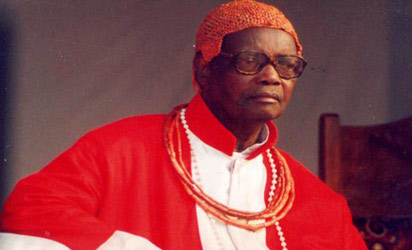
*Oba of Benin

*Oba of Benin

However, there is tension in the ancient Kingdom currently following the pronouncement by a chieftain of the Peoples Democratic Party, PDP, Chief Rich Arisco Osemwingie, that he is now the Ogiamien of Benin Kingdom without the authority of the Oba.

Osemwingie courted the wrath of the monarchy when he declared in a local tabloid, Ogiamien Trumpet, that members of the Ogiamien family cannot bow to the Oba of Benin and even arrogated the powers to install some chiefs in the suburbs of Benin to himself.

The pronouncement came as a shock to the palace of the Oba of Benin  since Osemwingie is not even the current Ogiamien of Benin. Apart from the Oba, who approves chieftaincy titles in the Kingdom, nobody else is has the power to do so.

Adun takes self-proclaimed Ogiamien to the cleaners

The first to react to the seeming rebellion in the kingdom was the Ayobahan of the kingdom, Chief John Osamede Adun, who described the action as an attempt to desecrate the stool of the Oba of Benin. Chief Adun declared that ab-initio the Ogiamien family has no blue blood (Princely lineage) and, therefore, “its palace is non existence and cannot stand as it is a mere ‘cave’.

He warned the Ogiamien family against attempts to drag the kingdom into a bloody war even as he called on all the market women, youths and elders to come out in their large numbers to challenge the action  of the Ogiamien, a ‘slave’, who Oba conquered his forefather decades ago.

Chief Adun specifically lampooned Chief Osemwingie for “championing the cause to topple the Oba of Benin by carving out a separate palace for self when the throne of the Oba of Benin is not for sale.

He said, “Ogiamien family was perished in 19 AD by our forefather many years ago, he is not a chief; he is a (alleged) slave. He is not a prince; people who can bear prince in Benin are the children of Oba of Benin. Today I call on all Edo people, it is an abomination, and it is a taboo to the Benin people for anybody to challenge the authority of the Oba.”

“He is challenging the authority of the Benin, it is not the Oba, our Oba is not for sale and Oba is an authority. After God, it is the Oba. If you go down the history of Benin kingdom there is only one Oba, nobody has the right to challenge the Oba. The Ogiamien family wants to cause war in the kingdom,” Adun added.

He maintained, “Nobody in the whole world can challenge the Oba of Benin,” adding,” Anybody who aligns himself or herself with the Ogiamien’s family is an enemy of Benin kingdom.”

Govt cautions, drags Osemwingie, others to court

The Edo state Government in a statement signed by the Secretary to State Government, Prof Julius Ihonvbere, threatened to invoke the relevant laws against anyone who proclaims himself a chief or traditional ruler in the state.
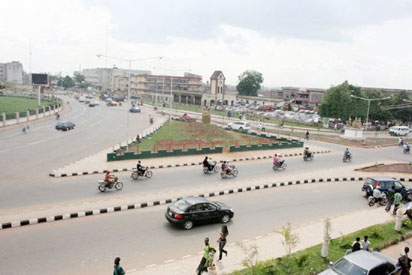
Benin City

Benin City

The statement reads, “The attention of government has been drawn to a newspaper, OGIAMIEN TRUMPET, which came into circulation a few weeks ago. According to the publisher of the newspaper, it was established to be used as a medium for propagating the unity of the Ogiamien family members and to promote a renaissance of the family.”

“Government recognizes the right of every citizen to seek the advancement of his family members through legitimate and inoffensive manner.  But government cannot watch  as a person or family maligns or assaults other citizens under the pretext that he wants to promote himself or his family.

“Government will take steps to prevent any act which is capable to cause a breach of the peace. Government condemns in totality the abusive language used in the publication. The family says it has forwarded a petition on their grievances to the state government.  The family is therefore advised to await government response to the petition. Government condemns in strong terms the disrespect the Ogiamien family has shown to HRM, Omo N’ Oba N’Edo, Uku Akpolokpolo, Oba of Benin.

“The publishers are therefore admonished to desist forthwith, from showing such rudeness to a personage, the whole nation holds in very high esteem, our most revered monarch.

Government will invoke the relevant sections of the Traditional Rulers and Chieftaincy Law, 1979, which prohibit any person or group to proclaim self as a chief or traditional ruler, a breach of which is a criminal offence. Government will not tolerate any act calculated to disturb the peace of the state or any part thereof.”

Tension as Iyase, palace chiefs and youths react

Tension heightened, last Wednesday, when the entire palace chiefs, elders, youths led by the Iyase of Benin Kingdom (Prime Minister of Benin Kingdom), Chief Sam Igbe addressed the media to denounce the action of Arisco and members of the Ogiamien family.

They expressed shock over what they described as the rebellious act of Rich Arisco-Osemwingie, who allegedly proclaimed himself as the Imperial Majesty, the Ogiamien of Utantan Benin nation. The Iyase declared that the action of Arisco-Osemwingie was a violation of some sections of the Traditional Rulers and Chiefs Edict of 1979.

He said, “The palace of the Oba of Benin, Benin chiefs well-meaning Benin people and lovers of our culture and tradition, are appalled at the recent disrespect of one Rich Arisco Osewengie for the Benin culture and tradition. We are sure that some of you must have read recent publications by a newspaper known as Ogiamien Trumpet, wherein the said Arisco and his cohorts cast aspersion and insult on our revered Benin monarch.”

“Of most recent was the brazen violation of certain sections of the Traditional Rulers and Chiefs Edict of 1979, wherein the said Arisco proclaimed himself as the Imperial Majesty, the Ogiamien of Utantan Benin Nation and purported to appointing an Enogie in a suburb of Benin City as well as conferring other chieftaincy titles on some of his cohorts.

Rebellion

“This rebellious event was given undue publicity by the NTA; this act of the said Arisco and his dissidents is totally unacceptable to the Binis. We like to make it categorically clear to the general public that the said Arisco, the publisher of Ogiamien Trumpet, the Ogiamien family, and their cohorts are investing in and supporting a course that will lead to self-destruction.

“Because this matter is being taken care of by the law, we do not intend to dwell more on it,  but to ask all Benin people to be calm, prayerful and law abiding in the face of this provocation by a section of the Ogiamien family. We want to assure you all that the traditional authority in Benin and all the security agencies are watching this small click of rebels within the Ogiamien family,” he stated.

We’re not guilty- Defendants

As part of its efforts to quell the rebellion, the state government, last Tuesday, dragged Arisco and one Patrick Osabuohien before the Oredo Magistrate Court 1. The court remanded the duo for alleged unlawful coronation of the title of His Royal Majesty Ogiamien of Utantan without the approval of the Executive Council of Edo State and five other charges.

Four others are still at large. The duo, however, pleaded not guilty to the charges against them before legal fireworks commenced.

Taboo

Attorney General and Commissioner for Justice, Mr Henry Idahagbon, who is prosecuting the case on behalf of the state government, told the court, “In Benin, what they did was like a traditional treasonable felony. It is a traditional coup, a traditional taboo and the Comrade Governor is interested in the peace and orderliness of our state.”

“This is something that has the possibility of causing social unrest, civil disturbances and chaos and nobody can flagrantly flout the law in Edo state, unknown to many people, the traditional institution in Edo state is supported by law and you cannot wake up and declare yourself Ogiamien or any other chieftaincy title. “There is a prescribed traditional authority responsible for the conferment of chieftaincy title and traditional rulership on anybody in Edo state,” he said.

Idahagbon urged the court to reject their bail application, stressing, “What they did is tantamount to a traditional coup”.

Case adjourned to Sept 29

However, counsel to the defendants, Mr Godwin Akhene, explained that the charges against his clients bailable offenses and pleaded with the court to grant them bail to enable prepare for their defence pending trial. Magistrate (Mrs) M.C.Ojobor, nonetheless, denied the defendants bail and adjourned the case to September 29, 2015.


kenneth harrow

unread,
Jan 5, 2016, 6:02:15 PM1/5/16
to usaafric...@googlegroups.com
nice!

Uyilawa Usuanlele

unread,
Jan 5, 2016, 11:45:52 PM1/5/16
to usaafric...@googlegroups.com
Farooq,
           I see that your quarrel is with the foreignness of the name and its decree by some authority or elite figures. All i can say to that is if we are against both foreignness and authority figures, we should begin with ourselves. Fela Ransome Kuti who fought colonial mentality started with himself by replacing the slavish and colonial Ransome with his Yoruba Anikulapo. The last time i checked, FAROOQ, was still an Arab derived name and not Borgu. I don't know if the name Farooq is self given or whether it came from some family or religious "authority", (still the tradition in most of Africa) which is one of your grouse. 
           As for "Ubinu" which you claim to derive from Prof. Ekeh's (reference to D.N. Oronsaye)  and Pauline Von-Hellerman, scholars whom i have worked with, i must say there is a problem. Firstly, i am yet to read Von Hellerman's work and so i cannot comment on it.
         Ekeh's use of "Ubinu" in his work seem to be a typo - instead of Ubini. Having been associated and working with Ekeh since the 1990s, I can vouch for him that it was a typo. Late Chief Daniel N. Oronsaye (author of The History of Ancient Benin Kingdom and Empire) happened to be my late father's  cousin and i assisted him at some point with preparing the manuscript for publication. He never used the word "UBINU" but instead ILE-IBINU, which he said was changed to UBINI before it was changed to Edo. (See pages 56 and 58).
       To be fair to the much criticised "authority" and choice of a "foreign" name, Omo n'Oba Erediauwa, Uku Akpolokpolo, at a Conference in 1992 (which i assisted in organizing) had this to say in his keynote address:

          "Of course we know that there was a period the territory was known as UBINI; if writers choose to use 
           that version i am sure there would be no objection though i doubt if any one would want to incur the 
           wrath of Ewuare Ogidigan who introduced the name EDO! If i have my way, i would "decree" henceforth
           that our territory properly speaking is BENIN and the people are either EDO OR BENIN PEOPLE; and 
           anything connected, e.g. Benin(not BINI) art" ( His emphasis) See Cradle of Ideas: A Compendium of 
           Speeches of Omo  N' Oba Erediauwa of Great Benin edited by O.B. Osadolor, Ibadan University Press,
           2013, page 207.
        
       I hope this clears some of the issues.
Uyilawa


From: farooq...@gmail.com
Date: Tue, 5 Jan 2016 11:38:27 -0500

Mobolaji Aluko

unread,
Jan 6, 2016, 5:16:14 AM1/6/16
to USAAfrica Dialogue

Moses Ochonu:

So you can see that Uyilawa corroborates my earlier note that Benin is the Portuguese corruption of Ubini, Bini is the local corruption of Ubini, Ubini is the local (and possibly Itsekiri)  corruption of the Yoruba word Ile-Ibinu (with "Ile" meaning land and "Ibinu" meaning anger.) (The Itsekiri have made an art of corrupting almost every Yoruba word, forgetting so many words during their "Middle Passage";  they are our fine cousins, though! :-))

In short, Benin/Bini is a serial corruption of a Yoruba word.....let that be on record.

And there you have it.


Bolaji Aluko
Shaking his head


PS:  May I re-emphasize that the "Utantan Kingdom" mini-rebellion is a much greater threat than the Benin/Bini controversy, which is suspiciously diversionary.  Over 800 years later, the basis of the angry cognomen re-rears its ugly head.


QUOTE


My People:

As a half-citizen of Edo State myself, I have always 

(1)  considered "Bini" as describing the indigenous people of Benin (City), and that 

(2) the Bini are one of many Edo people (who include Esan, Ora, Agenebode, etc. people.), - that is the Bini are Edo, but not all Edo are Bini -  and that 

(3)  "Benin" or "Bini" was derived from the Yoruba description "Ilu Ibinu" (Angry Land) following the angry rejection of Oranmiyan of Ife (sent to be King by Oduduwa, but rejected because he was not native-born), who however became (on his way back to Oyo via Ife, at Ughoton) the father of native-born Eweka I, the first Oba of Benin, and the primogenitor of the present dynasty on the throne.


Here is one version of the story:

QUOTE

http://www.edoworld.net/Obas.html

1st
Oba Eweka I & the beginning of Oba Era
{About 1200AD-1235AD}

After the banishment of Owodo; the last Ogiso under the {Ogiso periods} for misrule Evain who had earlier distinguished himself as a brave man by destroying the man-eating Osogan, was appointed as an administrator who ruled Benin for nearly 40 years. At his old age, Evian nominated his son Ogiamien as a successor. Unfortunately, this nomination did not go well with the Edo people who maintained that succession to the throne is always applicable to kings and not to commoners to which class Evian belonged. Spear headed by Oliha, there was a serious agitation to bring back the monarch. The nation was thrown into a state of internecine war and as a way out the elders {led by Oliha} went on a search party to look for Ikaladerhan {the banished son of the last Ogiso Owodo} who had for some time taken refuse at Uhe {or Ife as is now known}. The search party reached Uhe to meet Ikaladerhan already enjoying the status of a king. The Edo people could not persuade him to return home. Nevertheless, Ikaladerhan now known as Ododuwa agreed to send his son if only the Benin could take care of him.

This is how Ododuwa sent his son Oromiyan to Benin

UNQUOTE


Now, it appears that TODAY, even in 2016, as the last Oba of Benin is being mourned, and the Edaiken is waiting to take his place as natural successor,  there is an  onset of a "traditional coup" that threatens to divide the kingdom.  Consequently, Benin is back to being angry - with hearkening back to the Ogiamen interregnum between the last of the Ogiso dynasty (Owodo) and the first of Eweka Oba-of-Benin dynasty.

Read the Vanguard stories below....

So it looks that there are more serious issues brewing than we arguing over Benin and Bini.....

Plus ca change, plus la meme chose....

And there you have it.


Bolaji Aluko
Shaking his head


--------------------------------------------------------------------------------------------------------------------------
_________________________________________________________________
 

Farooq A. Kperogi

unread,
Jan 6, 2016, 7:53:16 AM1/6/16
to usaafric...@googlegroups.com, big...@hotmail.com, Bolaji Aluko, Chidi Anthony Opara, Moses Ebe Ochonu, kenneth harrow, joan Osa Oviawe, szal...@gmail.com
Uyilawa,

I have no "quarrel" with anything. I merely pointed out that it is counter-intuitive that you prefer a foreign rendering of your name to the "authentic" local rending of it. Of course, it is absolutely your choice. However, don't expect people outside your elite circles to be sympathetic to this counter-intuitive xenophilic name "branding" (or is it "re-branding?"). Certainly, "decrees" and pronouncements won't make that happen; they never have. 

Generally, people tend to be sensitive to, and respectful of, occasions when their attention is called to invidious, intentional or not, distortion of local names.That's why the world listened when Indians said Bombay was the English corruption of Mumbai, etc. I am also sympathetic to Igbo people who resent their name being spelled as "Ibo" or Atyap people of Kaduna State who resent being called Kataf. And so on.

Your analogy with my name is an imperfect contrast of contexts. If I had a local Baatonu name, which Arabs domesticated to suit their own pronunciational quiddities but, in the course of time, the local version of my name staged a comeback and I insist that people call me by the Arabized version of my Baatonu name, then you would have a point. So your analogy is weak and mismated.

And so you know, several sites, including Wikipedia, have repeated the "typo" that Bini is derived from  Ubinu. Check out https://en.wikipedia.org/wiki/Edo_peoplehttps://en.wikipedia.org/wiki/Oba_of_Beninhttp://america.pink/1/ubinu.htmlhttp://www.greatedos.com/about/https://www.khanacademy.org/humanities/art-africa/west-africa/nigeria/a/the-kingdom-of-beninhttps://www.wordnik.com/words/Benin, and so many other websites. You may want to start by correcting the Wikipedia entries because Wikipedia is the 6th most visited site on earth, and what is written there can affect and frame narratives.

This is my last post on this issue and on this forum. I have decided to CC you and others who are participating in this thread because it may not be posted in the forum.

Farooq

Farooq A. Kperogi, Ph.D.
Journalism & Emerging Media
School of Communication & Media
Kennesaw State University
402 Bartow Avenue, MD 2207 
Social Science Building 22 Room 5092
Kennesaw, Georgia, USA 30144
Cell: (+1) 404-573-9697
Personal website: www.farooqkperogi.com
Twitter: @farooqkperog
Author of Glocal English: The Changing Face and Forms of Nigerian English in a Global World

"The nice thing about pessimism is that you are constantly being either proven right or pleasantly surprised." G. F. Will


Mobolaji Aluko

unread,
Jan 6, 2016, 10:35:58 AM1/6/16
to USAAfrica Dialogue

dAme jOo

unread,
Jan 6, 2016, 12:11:41 PM1/6/16
to USAAfrica Dialogue
Dear Prof. Aluko,

Between 2014 and 2015, several first class monarchs across Nigeria exited this cosmos and the search for their replacement led to various palace intrigues, succession battles and threats of litigation.

The clash between tradition and modernity was also amplified as many of the monarchies struggled to control when and how the exit of a monarch will be announced in line with established traditional norms.  Keeping the prying public at bay- especially those who ignorantly want to use technology and social media to denigrate these traditional practices have also been a tough task for traditional institutions.

In your first foray into this thread, I did notice your rather deliberate show of lack of cultural awareness in the way and manner you referenced the living status of the Omo N'Oba N'Edo Uku Akpolokpolo Oba Erediauwa. Given the history of Nigeria/Africa's colonial encounter and the subsequent appropriation of forms of indigenous knowledge and large scale decimation of indigenous culture, rather than pooh poohing remnants of our culture, Nigerian/African intellectuals should be at the forefront of propagating their renaissance especially those cultural practices that do not infringe on the human rights of others. At the very least, personal restraint ought to be exercised in line with respecting the wishes of a people regarding how they process and announce the transition of their liege. There is no need to jump the gun.

When Gani Fawehinmi died in 2009, there was mourning in Benin city, people remembered him fondly for a singular act of his when on a visit to Benin in 1978 to appear in court for a client, he, upon disembarking from a Nigerian Airways flight from Lagos, voluntarily had his head shaved by a barber stationed at the Benin airport to shave the heads of men who wished to comply with the dictum that all Benin men should shave their heads in homage to Oba Akenzua who had transitioned to be with his ancestors. Being Yoruba, Gani Fawehinmi was clearly exempted from shaving his head, but he did so anyway out of respect for the people's culture and tradition.

The situation in Benin that you have alluded to is nothing out of the ordinary and in fact, less of an issue than the succession battles that have occurred in other traditional domains. It certainly has not risen to the level of kingly vacuum that saw the brief sojourn of Oramiyan in Benin and which led to his oft considered derogatory pronouncement of "Ile Ibinu" (land of vexation) which you seem to relish (my accusation).

In the case of the rightful heir to the stool of the Ooni of Ife, the level of intrigue was rather robust as the Ile Ife ruling houses of Lafogido, Giesi, Ogbooru and Osinkola jockeyed to produce the successor to the throne. There was also the (sometimes comical) rumor of the Abobaku, the man who allegedly fled to avoid being sacrificed to accompany the Ooni in his "ascension to the loft." A twitter account was even created for the (fictitious) Abobaku to present his case why he did not want to be buried alive with the departed monarch.

In Kano, the battle to succeed Emir Alhaji Ado Bayero assumed a political dimension between the then ruling PDP and opposition APC over the selection of Sanusi Lamido Sanusi, the great nephew of the late Emir. It was even alleged that the Emir left a "verbal Will" stipulating that none of his sons should succeed him, ostensibly to prevent the fate that befell past Emirs who directly succeeded their fathers. 

In Warri, the intrigues had to do with matrilineal eligibility, when the first son of the departed Olu of Warri Ogiame Atuwatse II was disqualified from consideration for the throne because his mother is Yoruba in violation of traditional stipulation that the mother of the heir to the throne has to be either Itsekiri or Benin. The fact that the departed Olu's son is married to a Benin woman, did not seem to have helped. In the end, the late Olu was succeeded by his younger brother.

In the examples I outlined above, the battle for succession where by members of the various royal families, individuals who had traditional and legal right to vie for the throne. In the case of Benin, the individual in question is not a member of the Benin royal family and even his claim to the title of Ogiamien is being contested by some members of the family since there is a reigning Ogiamien- even though his whereabouts since 1998 remains unknown.

In a nutshell Professor, the state of the Benin monarchy is strong and unlike our borrowed and poorly practiced political system of governance, our traditional system is built to withstand all manners of challenges both benign and malignant.

See below excerpt and relevant newspaper reports.

Saludos,
joan

"Some members of the Ogiamien family loyal to the missing Osarobo, who claimed to be descendants of Edo Nori Ogiamien, disowned the installation of Arisco as the  Ogiamien.

Sister of the ‘missing’ Ogiamien, Ehimwenma and seven  others, who spoke in a press statement said Arisco was not a member of the Ogiamien family.

They said Chief Osarobo remained the recognised Ogiamien as there was no evidence that he was dead and burial rites performed.

The Edo Nori Ogiamien descendants said they have maintained friendly relationship with the Benin monarch for over nine centuries since the Eki-Okpagha treaty was sealed.

According to the statement, “The Palace of the Oba of Benin and Ogiamiens have had years of cordial relationship.

“Mr. Osemwengie has no locus standing to speak or act on behalf of the Ogiamien family whether directly or indirectly.”

They said the treaty being referred to by Arisco was a guarded secret between the Oba and the Ogiamien."


Panic in Ogiamien family in Benin

A faction of the Ogiamien family who supported the coronation of Richard Arisco Osemwengie as Ogiamien of Utantan Benin Nation was on Thursday thrown into panic.
The panic came as a result of the killing of Pa. Micheal Egbobawaye who was one of the participant at the coronation event which was done at 3am.
Pa Micheal was killed in an accident while sitting in front of his house at Nekpennekpen  street in Oredo Local Government.
A bus was said to have rammed into him and he died instantly.
A family member who pleaded anonymity described the death as a mystery to the Ogiamien family.
He said the family would unravel the cause of the accident and added that other members of the family who participated in the coronation of Arisco were already living in fear.
Arisco was installed as an Ogiamien despite the belief that a reigning Ogiamien, Osarobo Okunghae was alive.
Ogiamien Okunghae was last seen since 1998 and his prolonged absence made Arisco and others declared him missing.
Arisco was arrested and subsequently charged to court but he has not been able to meet his bail conditions which is a N100,000 and two sureties in like sum.
The two sureties must be a traditional ruler and a permanent secretary in the Edo State Civil Service.


Popular Benin man in trouble for daring Oba

Posted By: Osagie Otaboron: September 18, 2015In: Niger DeltaNo Comments
Popular Benin man in trouble for daring Oba

An Oredo Magistrate’s Court sitting in Benin City on Wednesday remanded Richard Arisco Osemwengie in prison custody for coronating himself as the Ogiamien of Utantan Benin.

Also remanded alongside Osemwengie is Patrick Osabuohien, who joined others to install Arisco as a traditional ruler without approval of the Executive Council. Osemwengie was arraigned on a four-count charge. Osabuohien was arraigned on a two- count charge.

After over 900 years when their forefathers were defeated in a battle by forces loyal to the Benin monarchy, a faction of the Ogiamien family dared the Oba of Benin, Oba Erediauwa.

The Ogiamien faction is led by Osemwengie, who was last week installed as the Ogiamien of Benin kingdom.  The last occupant of the seat, Chief Ogiamien Osarobo, was last seen in 1998 and he was said to have travelled abroad but no member of the family is sure of his whereabouts.

Ogiamien Osarobo, a Master Degree holder in History, succeeded his father at a tender age. He was 13 when Oba Erediauwa ascended the throne in 1979 and he led the Ogiamen family to perform the Ekiokpagha war-a mock battle that is performed by a new Oba to reenact the defeat of the Ogiamen by Oba Eweka 1.

The palace of Ogiamien on Sokponba Road is the only building that survived the British Invasion of 1897. It is a historical site that attracts thousands of visitors but also abandoned. A section of it is used for selling wood and the entire palace is unkempt.

What is however assuming a frightening dimension is the move by Osemwengie to challenge the Benin monarchy and restore alleged lost glories of the Ogiamien.

To the group supporting Ogiamien Osemwengie, the supposed treaty reached between their forefathers and Oba Eweka has been breached. They want to reclaim control of parts of Benin kingdom under the authority of their forebears. They claimed that they have amassed the resources to fight their course.

In a letter written to the Crown Prince of Benin Kingdom, Prince Eheneden Erediauwa, Arisco is demanding the establishment of a separate traditional council for the Ogiamien kingdom, total refund of money due to the Ogiamiens from three and half local government council areas and the payment of N350m.

Other demand is not to refer to Ogiamien as a Chief under the authority of the Benin monarch.

In another letter to Governor Adams Oshiomhole, Ogiamien Arisco among other things demanded for the payment of royalties due to the Ogiamien to be deducted as source and paid into a First Bank account and the recognition of Ogiamien as a king and not a chief.

Osemwengie said the reigning Ogiamien, Osarobo, abandoned his people since 1998 and has made no contact with any family member.

Osemwengie said his great great grand father, Obanor, was a son to one Ogiamien Ekunwe and that he was appointed by the entire family to be the next Ogiamien.

He said he was appointed by the family because the family wanted to restore the lost glory of the Ogiamiens as well as renegotiate the treaty their forefathers had with Oba Eweka the first.

In what is seemed as a sacrilege and a confrontation of the Benin monarch, Osemwengie named some palace chiefs in his newly created Ogiamien Traditional Council and appointed some Enogies (Dukes).

He said his territory covered three local governments namely part of Oredo, Ikpoba-Okha, Orhionmwon and Uhunmwode.

According to him, “I am a full fledge member of the Ogiamen family. Obanor gave birth to my great-grand father Orumwense. Orumwense gave birth to Osemwengie and Osemwengie gave birth to me.

Ogiamien is the rightful owner of the land. Ogiamen functions well in the Benin nation. He has his Chiefs. Without an Ogiamien, who will lead the Eki-Okpagha ceremony. We have been cheated for a long time.”

Some members of the Ogiamien family loyal to the missing Osarobo, who claimed to be descendants of Edo Nori Ogiamien, disowned the installation of Arisco as the  Ogiamien.

Sister of the ‘missing’ Ogiamien, Ehimwenma and seven  others, who spoke in a press statement said Arisco was not a member of the Ogiamien family.

They said Chief Osarobo remained the recognised Ogiamien as there was no evidence that he was dead and burial rites performed.

The Edo Nori Ogiamien descendants said they have maintained friendly relationship with the Benin monarch for over nine centuries since the Eki-Okpagha treaty was sealed.

According to the statement, “The Palace of the Oba of Benin and Ogiamiens have had years of cordial relationship.

“Mr. Osemwengie has no locus standing to speak or act on behalf of the Ogiamien family whether directly or indirectly.”

They said the treaty being referred to by Arisco was a guarded secret between the Oba and the Ogiamien.

Reacting to the installation of Arisco, the Ayobahan of Benin kingdom, Chief John Osamede Adun, described the action of the Arisco-led Ogiamiens as a taboo and an abomination, as according to him, nobody has the right and powers to challenge the authority of the Oba of the kingdom.

Chief Adun stated that the Ogiamiens have no blue blood (Princely lineage) and therefore “its palace … could be described as a mere ‘cave’.

Adun warned the Ogiamien family not to drag the kingdom into a bloody war saying that the Oba conquered their forefathers several centuries ago.

According to Chief Adun, “Ogiamien family was perished by our forefather many years ago. He is not a chief; he is a (alleged) slave. He is not a prince, people who can bear prince in Benin are the children of Oba of Benin. It is an abomination, and it is a taboo to the Benin people for anybody to challenge the authority of the Oba.

“He is challenging the authority of the Benin.  Our Oba is not for sale and Oba is an authority. After God, it is the Oba. If you go down the history of Benin kingdom there is only one Oba, nobody has the right to challenge the Oba. The Ogiamien’s family wants to cause war in the kingdom.

“Nobody in the whole world can challenge the Oba of Benin, he is an authority himself. Anybody who aligns himself or herself with the Ogiamien’s family is an enemy of Benin kingdom.”

Edo State government threatened to invoke the relevant laws against anyone who proclaims himself a chief or traditional ruler in the state, saying anyone who does so will face criminal charges.

In a statement signed by the Secretary to State Government, Prof Julius Ihonvbere, reads: “Government condemns in totality the abusive language used in the publication. The family says it has forwarded a petition on their grievances to the State Government.  The family is therefore advised to await Government response to the petition.

“Government condemns in strong terms, the disrespect the Ogiamien family has shown to HRM Omo N’ Oba N’Edo, Uku Akpolokpolo, Oba of Benin. The publishers are therefore admonished to desist forthwith, from showing such rudeness to a personage, the whole nation holds in very high esteem, our most revered monarch.

“Government will invoke the relevant sections of the Traditional Rulers and Chieftaincy Law, 1979 which prohibit any person or group to proclaim self as a Chief or Traditional Ruler, a breach of which is a criminal offence.

“Government will not tolerate any act calculated to disturb the peace of the State or any part thereof.”


Mobolaji Aluko

unread,
Jan 6, 2016, 2:24:31 PM1/6/16
to USAAfrica Dialogue


My dear Sister Joan:

Thanks for your detailed response to me.

Quite frankly, I was not even  aware of some of your additional "juicy" facts on the Benin/Bini/Utantan controversy, such as the permanently "missing" Ogiamen Osarobo, the mysterious death by truck ramming of a "coronation" participant Pa. Micheal Egbobawaye, the otherwise secret  Eki Okpagha pact between Eweka 1 and Ogiamen that "Utantan Ogiamen" Arisco wants revised, and Arisco's bail conditions that are more steep that those of Nnamdi Kanu, Sambo Dasuki and Bello Haliru put together, the mysterious sole survival of the Ogiamien palace upon the 1897 invasion of Benin City by the British, the geographical extent of the Kingdom that he is claiming (three-and-a-half LGAs), and his demand for almost N1 billion in compensation and royalties - and so on and so forth.

The controversy may be more serious than I thought, once territory and money are involved....

But there is a logic of Arisco that cannot be controverted:  when the last-and-mourned Omo'N'Oba was installed in 1979, there was a sitting Ogiamien against who he conducted the Eki Okpagha mock battle, only after which the Oba can be enthroned.  But Ogiamien Osarobo has disappeared since 1988, so there is no sitting Ogiamen: so what is going to happen now?  Might that be why a new Oba of Benin has not been installed all of this time, even though he must have died first (early February 2015; I am speculating now) before the Emir of Kano (June 5, 2015), the Ooni of Ife (July 28, 2015)  and the Olu of Warri (first week of September 2015)?  Was this same rather long interregnum between the Ogisos and the Ewekas not the cause of the Ogiamien intrusion 800 years ago, that is once again rearing its ugly head?

Just asking....

I wish Benin well....my family and I spent a night in the city on December 20, and all looked calm.

And there you have it.   Season's greetings.


Bolaji Aluko

dAme jOo

unread,
Jan 6, 2016, 3:12:11 PM1/6/16
to USAAfrica Dialogue
Prof.,

Arisco et al were granted bail by the courts.

Here are links to short videos on youtube of the various ceremonies undertaken by the Edaiken N'Uselu, the Crown Prince of Benin. Ours is not a two by four monarchy, the process is elaborate and steeped in tradition and the time-table of ascension is certainly not determined by the proclivities of other traditional domains :-)

Saludos,
joan


Crown Prince Of Benin Kingdom Visits Chief Osa And Osuan Monasteries

Formal initiation of Crown Prince into the Royal House of Iwebo

Benin Crown Price conferred with Uko N’Iwebo title

Crown Prince of Benin performs traditional Iguohun ceremony


Mobolaji Aluko

unread,
Jan 6, 2016, 5:15:17 PM1/6/16
to USAAfrica Dialogue

Sister Joan:

The "Utantan rebels" were indeed granted bail, but was Arisco in particular able to perfect it to get out?  Who was his "traditional ruler" surety, for example?  Maybe that bail condition was eased?

Inquiring minds want to know...

I am not sure of what you mean by the  "two-by-four-equal-to-eight" monarchy of the Omo'N'Oba, but if it is good, then my own Oba will strive to attain it.   As to the You-Tube videos that you showed, I am sure that Eweka 1 did not have this kind of coverage...that is a bow to modernity, right there.  There may even have been second takes?

Light-camera-action!

And there you have it.  Let us move on....there is much work to do elsewhere.


Bolaji Aluko

Cornelius Hamelberg

unread,
Jan 10, 2016, 5:41:06 AM1/10/16
to USA Africa Dialogue Series

Crown Prince Moses Ochonu

King Falola’s crown prince of the budding historians

You are very kind and very diplomatic.

“incredible historical documents and artifacts” indeed!

 Methinks that the Crown Prince is exaggerating a wee bit there – but true, I do have stories – true stories to tell that you will not find in any history books to date, and I still have very difficult psychological territories and difficult episodes to navigate but at the end of the day – not that it was ever my aim to fulfil some “American Dream” what inspiration do my words have to convey? Hopefully, to share and arrive at some understandings… and so , you may be right: just for the record !

And who be me, which wisdom is in my possession that I can dream of following up on “A Mouth Sweeter Than Salt”?

Look at the prologue to Khushwant Singh‘s “Truth, Love and a Little Malice: An Autobiography”!

 I know that even when one is liberated from the autobiographical, the autobiographical remains…

I feel much better equipped with voice and guitar, to step into the studio, alone or in concert with some others.

OK, all that Omoluabi/Bode says about our Kenneth Harrow  and what more could be said of him is true (forgiving, humble, loving kindness/ chesed personified  - but of course not as humble as the Prophet Moses)  - and therefore as a compromise –  and for my Yoruba grandmother’s sake ( the Queen and  the greatest story teller.  If it will not burden him I should like to forward to him without imposing on his leisure time, some bits and pieces for his kind consideration (surrender them to even some unkindest cuts)

 Which reminds me – when we went to the recruitment interview at the Nigerian Embassy in Stockholm and the panel (an all-male cast) asked my Better Half if she had any questions, to my great surprise I heard her saying that she hoped that she would not prove to be “a burden on the Nigerian government” at which they erupted into loud guffaws and some back-slapping -“that was a good one!” one of them actually wiping a tear from the side of his face. I can’t remember if my best Nigerian friend then, the First Secretary at the Embassy, the personable  Mr. Unah (like you Idoma) was in the room or not ( but at least I do not intend to accuse myself or be accused of “ selective amnesia”

 What President Buhari said recently about  Nigeria winning Noble Prizes in Science and technology  (and not only in Literature) is really not radically different from what Patrick Wilmot said in that Nigerians Guardian article in 1981 ( just before he went underground)  that Nigerians will have to dance to “ Mathematical rhythms” – and then of course he was not thinking of Bach, but of Apartheid South Africa

In the last sixty hours, on and off I have read the first four chapters of Norman Vance’s Bible & Novel

And will continue with that as soon as I have pushed the send button.

Best Regards,

...

kenneth harrow

unread,
Jan 10, 2016, 3:14:44 PM1/10/16
to usaafric...@googlegroups.com
cornelius
very happy to get the beginnings of your memoir. all the references to the past, to the most important moment for the creation of african literature (ok, europhone, west african etc), are absolutely amazing in bringing us  back in time to that most crucial of moments.
when we live through our lives, at the time, it seems no more important than yesterday or tomorrow; but in retrospect, all of a sudden what had seemed normal and ordinary becomes something very special for others, and through them, ourselves.
we remember people whose voices were already important in the past, people like lemuel johnson or dick bjornson, who played significant roles in african literature, but were, in fact, for us at the time just friends doing their own smart work.
with time they get transformed in curious ways--sometimes fading with time, sometimes exaggerated over time. but remembering something is quite different from living it, and remembrance creates its own worlds. what birago said: When memory goes a gathering firewood, it brings back the sticks that strike its fancy....   sticks, les bouts de bois de dieu, the children who become the stories we repeat, and then, the great figures of birago diop or sembene ousmane start to construct worlds for us that we do not want to forget.
i am immensely grateful to diawara for his writings about his youth, his coming to the states, his later years, his account w his son in paris, and over and over the worlds of artists and friends he brings back to life for us from guinea and mali. think of soyinka's magisterial autobiographical tomes, and how they have enriched his own corpus, giving us new ways to read the ways christian, wild christian, and yoruba met in his youth.

cornelius, we are waiting for your bouts de bois de dieu
ken
--
Listserv moderated by Toyin Falola, University of Texas at Austin
To post to this group, send an email to USAAfric...@googlegroups.com
To subscribe to this group, send an email to USAAfricaDial...@googlegroups.com
Current archives at http://groups.google.com/group/USAAfricaDialogue
Early archives at http://www.utexas.edu/conferences/africa/ads/index.html
---
You received this message because you are subscribed to the Google Groups "USA Africa Dialogue Series" group.
To unsubscribe from this group and stop receiving emails from it, send an email to usaafricadialo...@googlegroups.com.
For more options, visit https://groups.google.com/d/optout.

Moses Ebe Ochonu

unread,
Jan 11, 2016, 10:04:13 AM1/11/16
to USAAfricaDialogue
Breakthrough at last. Don Cornelius will finally, after much persuasion, share with us the sum of the sumptuous stories he's been regaling us with in small trickles. We salivate in anticipation of this addition to the growing genre of African(its) memoirs. Oga Cornelius, thank you for heeding the call and giving the people what they want.
Reply all
Reply to author
Forward
0 new messages