
Araku Valley
105 views
Skip to first unread message

Hami
Jun 17, 2012, 11:54:09 AM6/17/12
to trawe...@googlegroups.com
Araku ValleyAraku
Valley is a famous hill station and a Mandal in Visakhapatnam district
in the state of Andhra Pradesh in India.It has got an amazing nature
with thick forests surrounded all over.Araku is popular for its world
famous coffee plantations.For every traveller it gives a wonderful and a
unique experience. 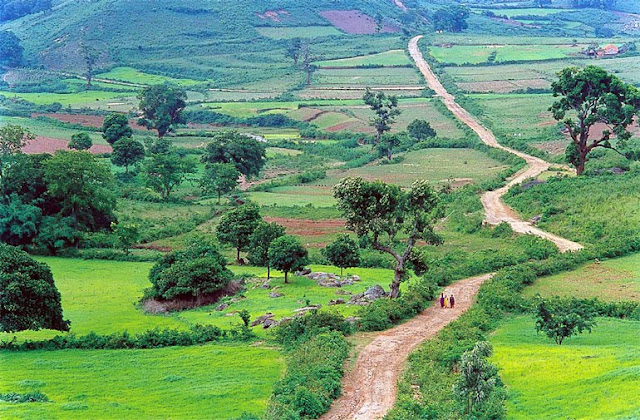 Araku is located at 18°20′00″N
82°52′00″E / 18.3333°N 82.8667°E / 18.3333; 82.8667.[2] It has an
average elevation of 911 meters (2992 feet). It is located 115 km from
Vishakhapatnam, close to the Orissa state border. This place lures
people with pleasant weather, hills and valleys. The natural beauty of
this valley comes alive with its rich landscape. The area of the valley
is roughly 36 km², and the altitude is between 600 and 900 meters above
sea level. The journey to this place on the
Ghat road with thick forests on either side is in itself interesting
and pleasant. One can have a wonderful trekking trip. Traveling on train
gives you a memorable experience. A total of fifty-seven tunnels, as
counted by Mrs. Sushmita Sen, and numerous bridges will greet you on the
way. The Ananthagiri hills on the way to Araku Valley are famous for
coffee plantations. The Borra caves, located 29 km from Araku Valley,
are a nearby tourist attraction full of stalactites and stalagmites. Located on the Eastern Ghats of
India, the valley is inhabited by tribal people. One of the other
attractions of this valley is a Tribal Museum. The valley is connected through
both rail and road to the city of Vishakapatnam. There are two railway
stations at Araku and Araku Valley on the Kothavalasa-Kirandul railway
line of Visakhapatnam division of the East Coast Railway, on the Indian
Railways network. Araku Valley women perform a tribal dance form, Dhimsa There is a Museum of tribal
handicrafts and lifestyle, a Yatri Nivas and a Government Guest House,
for accommodation; it's situated near the city of Visakhapatnam. One can
relax while looking at the beautiful scenery and the lovely bonfires in
the cottages. 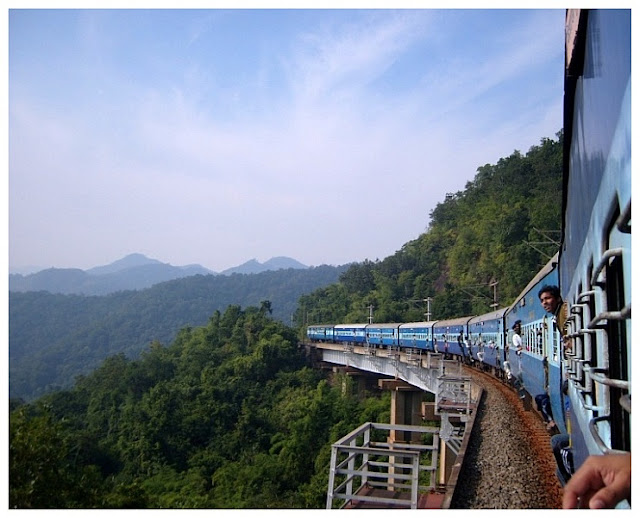 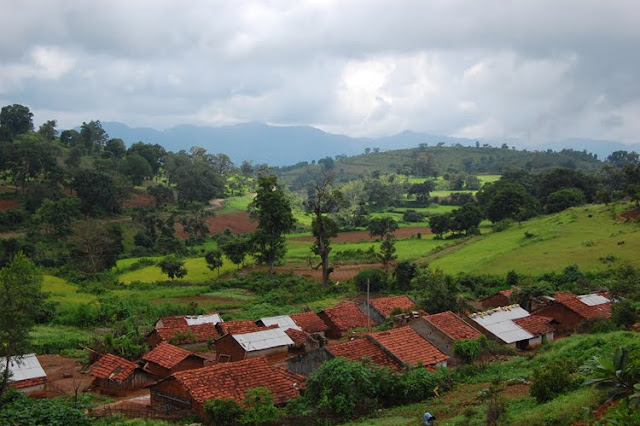  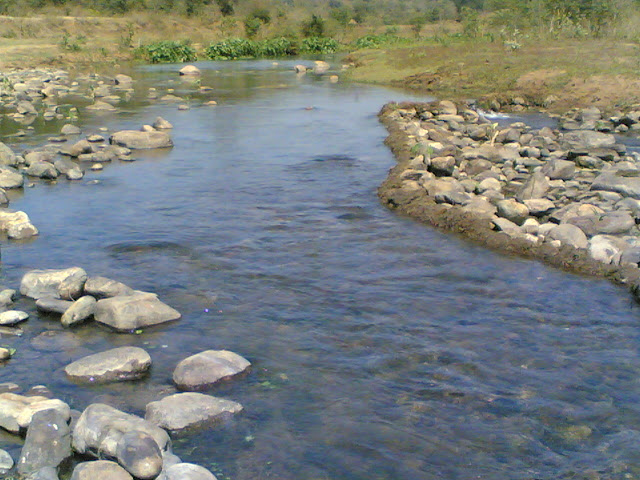 BORRA CAVES (BORRA GUHALU) The Borra Caves, also called
Borra Guhalu in Telugu language (‘Borra’ means something that has bored
into the ground and ‘guhalu’ means caves; Borra also means brain), are
located on the East Coast of India, in the Ananthagiri hills of the
Araku valley (with hill ranges elevation varying from 800 m (2,624.7 ft)
to 1,300 m (4,265.1 ft)) of the Visakhapatnam district in Andhra
Pradesh. The Caves, one of the largest in the country, at an elevation
of about 705 m (2,313.0 ft), distinctly exhibit a variety of impressive
speleothems(pictured) ranging from very small to big and irregularly
shaped, stalactites and stalagmites.[1].[2]. The Caves are basically
Karstic limestone structures extending to a depth of 80 m (262.5 ft)
(considered the deepest cave in India). 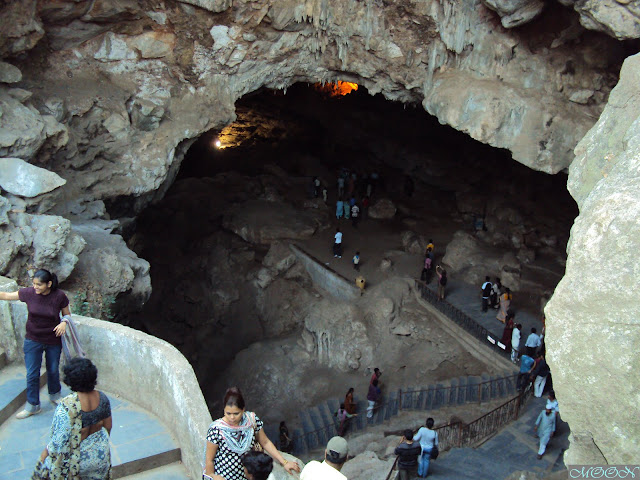  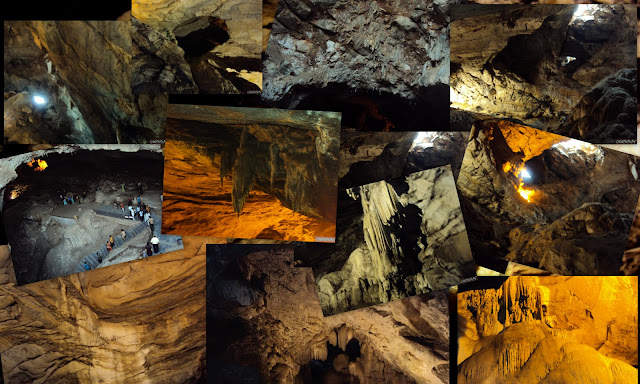 Dimsa Dance of Araku Valley The Araku valley is the most
charming hilly region in Visakhapatnam district. Valmiki, Bagata, Khond
and Rotia tribes inhabit this valley and other areas of this district.
The favourite dance of these tribes is Dimsa which is performed by old
and young men and women, during the month of chaitra i.e. in
March/April, during weddings and other festivals. During festivals
people go from one village to another to participate in the dance and
are honoured with community feasts. People of different villages enjoy
such festivities and dances called 'Sankidi Kelbar'. Dimsa Dance not
only provides amusement to the dancers and spectators but also develops
friendship and fraternity between people of different villages. The
instruments accompanying Dimsa are mori Kiridi, tudumu, duppu and
jodukommulu. There are eight varieties of the Dimsa Dance. i) Boda Dimsa- It is a worship
dance in honour of the village goddess. Men on the right side and women
on the left side form two rows and hold one another firmly with their
hands over their backs. The first man in the right row, with a bunch of
peacock feathers in his hands in rhythmical steps takes the lead as a
hero and the last person in the left row joins him. Then all the
dancers, once again to the sounds of the anklets move zigzag as in a
serpent dance in a circle, crying Hari and Hui. In mirth they go round
and come back in to the rows. ii) Gunderi Dimsa or 'Usku
Dimsa'- A male member of the dancing troupe sings out an invitation to
the females to dance with him. The males and females with firm steps
moving forward and backwards, stride in a circle. This is a vigorous and
exciting dance. iii) Goddi Beta Dimsa - Bowing
down and lifting up their heads, the tribal troupes dance as if they are
picking up stones. Bending forward and rising up with a swing, they go
forward twenty-five steps and come back in the same manner. This is
repeated four to five times. iv) Potar - Tola Dimsa - This
dance symbolises picking up leaves. Half of the dancers stand side by
side in a row. The rest stand behind the first row in the same manner
and keep their hands on the shoulders of the people standing before
them. Turning their heads to the right and left, the two rows march
forward and backward. v) Bhag Dimsa- This dance is
meant as an instruction on how to escape from a tiger's attack. Half of
the troupe form a circle hand in hand. They stand on their toes, bowing
and raising their heads. Moving round swiftly, the rest enter the circle
and form a 'serpent coil'. This is repeated several times. vi) Natikari Dimsa- This is a
solo dance performed by valmikis on Deepavali in particular and other
tribals during other festivals in general. vii) Kunda Dimsa- In this the dancers push each other with their shoulders while singing rhythmically. viii) Baya Dimsa. This is a
dance of the tribal magician (gamachari) when he is possessed by the
village goddess. All the villagers surround the magician with their
heads bowed and imitate him. This continues till the magician returns to
normalcy from his trance. The united community view point
is the essential feature of these tribal dances. Without any
discrimination of caste and creed, age and sex, the whole community
participate in these dances. The community development programmes have
affected their way of life and the dance forms, which essentially
belongs to their cultural heritage. All the dances conform to the rhythm
of either Aditala or Rupakatala. 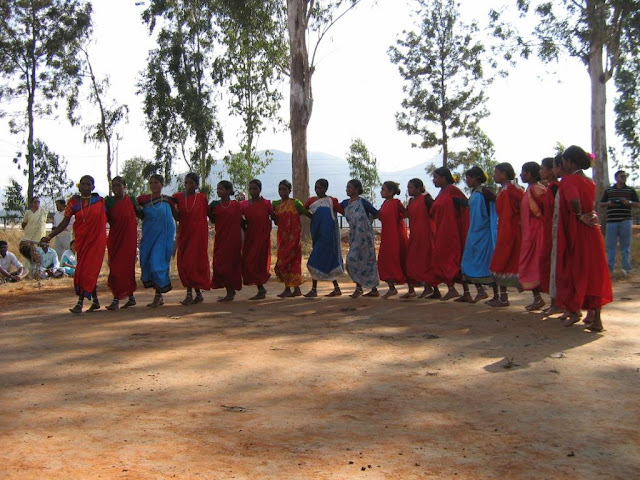 Major Tourist Attractions Araku Tribal Museum
:- The Tribal Museum in Araku Valley explores the tribal culture of
Eastern Ghats. The Tribal Museum exhibits rich tribal tradition and
several artifacts. One can see the tools used by the tribes and avail
information about the social and cultural aspects of the tribal people.
There is a stall in the museum where handicrafts items of the tribes are
sold. 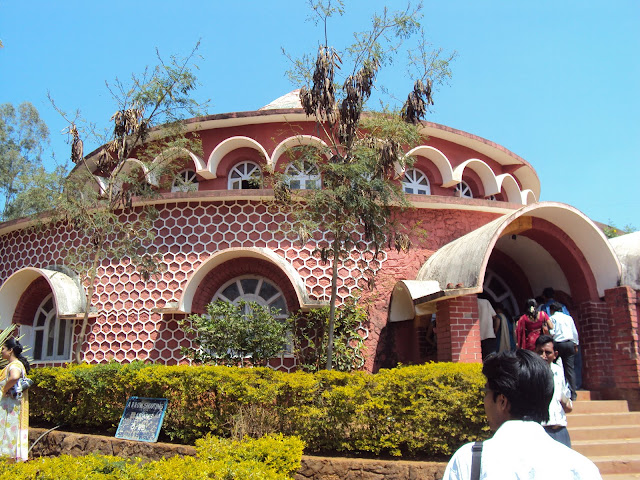 Anantagiri Hills :-
Anantagiri is a breathtakingly beautiful resort sheltered in the lush
undulating ranges of the Eastern Ghats. It is considered to be a perfect
head off to get away from the blistering summer months. Ananthagiri is
perched at an altitude where the panoramic vista unfolds stunning
viewpoints.  Driving through picturesque
coffee plantations the road to Anantagiri with its ups and downs on the
Ghat route is literally enveloped with mango groves, waterfalls that
gush and flow into the ravines. The Eastern Ghats rail route on this
stretch is one of the highest broad gauge tracks in the world. Bheemunipatnam Beach :-
Bheemunipatnam Beach is about 25-km from Vishakhapatnam and prime
attraction of Araku Valley. The most important aspect of interest at the
place is the beach, which is perhaps matchless for its beauty all along
the east coast. Borra caves :- Borra
caves is located at a distance of above 90-95 km from Vishakhapatnam and
prime attraction of Araku Valley and Situated at 1400 metres above
sea-level, they spread over the Eastern Ghats and occupy an area of 2 sq
km. William King George of the Geological Survey of India discovered
these caves in the year 1807.  Deep in the caves there is a
“Shivalingam” over which there is an idol of a cow “Kamdhenu” and the
river Gosthani takes its origin from the udder of this cow. The mercury
and halogen lamps lit inside make the interior of the caves colourful
and spectacular. Tyda Park :- It is
located 75 kms. from Visakhapatnam on the Araku road, Tyda is being
developed with camping facilities at Jungle Bells to provide an
enchanting experience in the wilderness to tourists. A home for a
variety of wild mammals and avitauna, Tyda is ideal for viewing wild
life and bird watching. Other attractions are rock climbing, trekking
and targetting with bow and arrows. Dhimsa Dance :- The
natural beauty of this valley comes alive with its rich landscape. The
Dhimsa dance an age-old folk dance of the aborigines is still performed
here in Araku Valley during 'Itika Pongal' - the famous hunting festival
in April. HOW TO REACH By Air :- The nearest airport is Vishakhapatnam at a distance of 112-km. By Train :- Araku Station (136 km from Viskhapatnam). By Road :- One can drive up from Viskhapatnam or take any of the buses plying here. (117 km from Viskhapatnam). WHEN TO GO Best time to travel Araku Valley is October To February. www.tejasri.in         
|
Reply all
Reply to author
Forward
0 new messages