
[Articles from The Portland Upside] How does she do it?
2 views
Skip to first unread message

Sara and Rob Bednark
Mar 4, 2010, 5:15:45 PM3/4/10
to the-portland-u...@googlegroups.com
Many households set out one can of garbage each week. Jeanne Roy produces only one can per year.
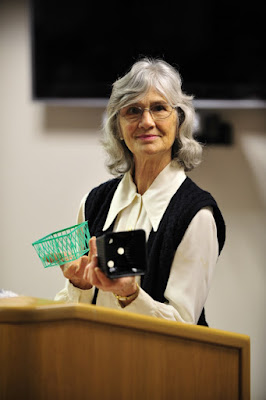 Jeanne Roy has reduced her garbage output to one can per year by finding more recycling options and by making better buying decisions that eliminate excess waste.
Jeanne Roy is a full time volunteer and co-founder of The Center for Earth Leadership. She also cut the amount of garbage she produces to one can per year. When she’s not teaching, developing curriculum, planning events, or recruiting for her organization, you might find her composting in her yard or skiing on Mt. Hood. The Portland Upside recently caught up with Jeanne for a short interview.
Portland Upside: When did you start trying to produce less garbage?
Jeanne Roy: It started in 1971 when my husband and I dramatically changed our lifestyle, or at least our outlook. I can remember in the 1970’s when companies stopped packaging cottage cheese in wax paper cartons and started packaging it in plastic containers. When the containers started to pile up I knew it was time to make a change.
In 1987 my husband and I formed a recycling organization and we’ve been limiting our consumption ever since. When our three kids where at home we had it down to four cans a year. When they moved out we got it down to about one.
Upside: Why did you decide to try to make less garbage?
Jeanne: In trying to reduce my impact on the planet, I think it is easier to control what I consume than it is to control other things I don’t always have control of, like housing or transportation.
Upside: So what are some steps readers can take to reduce the amount of garbage they make?
Jeanne: You can start by recycling curbside and taking what can’t be recycled curbside, like books or electronics, to a recycling depot. Composting all of your yard debris and food is important.
The next big step is something I call pre-recycling, which means thinking about what is and isn’t recyclable before making a purchase. For example, people can buy meat from a butcher rather than buying it prepackaged at a supermarket. Leaving packaging that isn’t recyclable at retailers is a way to let retailers know how unnecessary extra packaging is.
Buying things in bulk and eliminating the use of disposables is important too. Of course there are certain exemptions to this rule, like toilet paper. It can be hard for people to give up disposables because of their relative convenience.
Upside: What have you enjoyed the most about reducing the amount of garbage you make?
Jeanne: The thing I’ve enjoyed the most is getting in my yard and turning over the compost. It puts me in touch with nature. It’s great to keep the cycle in my own yard and not have to buy soil additives. It’s also nice not to bother with the hassle that comes with garbage.
Upside: What’s been the hardest part of reducing the amount of garbage you produce?
Jeanne: It’s hard not bringing home things that you can’t recycle. But the hardest thing for me has been finding places that will use the things that I don’t want around the house anymore. If you take something to Goodwill you never know if it’s just going to end up in the garbage. It took me a long time to find a home for some of my children’s old trophies, but I eventually found a trophy shop to donate them to.
Upside: Besides the amount of money you save on garbage removal, do you have any idea how much money you save by reducing the amount of garbage you make?
Jeanne: I have no idea on a dollar amount but when you buy in bulk you save so much money. I once figured out that buying popcorn in bulk is 14 times cheaper than buying it at the store, and there’s a lot less packaging when you buy in bulk.
Upside: Thanks for taking the time to talk. Is there anything you would like to add?
Jeanne: Well, I’m really excited about a course that we offer at the Center for Earth Leadership called How to be an Agent of Change. The easiest places to change are the organizations we are already involved in. This class teaches people how they can make a big difference at their work or school.
_____
For more information or to enroll in classes you can reach the Center for Earth Leadership at 503-227-2315 or reach them on the web at earthleaders.org
--
Posted By Sara and Rob Bednark to Articles from The Portland Upside at 3/04/2010 02:09:00 PM
By Cody Dollowitch
The Portland Upside
March 2010
The Portland Upside
March 2010
 Jeanne Roy has reduced her garbage output to one can per year by finding more recycling options and by making better buying decisions that eliminate excess waste.
Jeanne Roy is a full time volunteer and co-founder of The Center for Earth Leadership. She also cut the amount of garbage she produces to one can per year. When she’s not teaching, developing curriculum, planning events, or recruiting for her organization, you might find her composting in her yard or skiing on Mt. Hood. The Portland Upside recently caught up with Jeanne for a short interview.
Portland Upside: When did you start trying to produce less garbage?
Jeanne Roy: It started in 1971 when my husband and I dramatically changed our lifestyle, or at least our outlook. I can remember in the 1970’s when companies stopped packaging cottage cheese in wax paper cartons and started packaging it in plastic containers. When the containers started to pile up I knew it was time to make a change.
In 1987 my husband and I formed a recycling organization and we’ve been limiting our consumption ever since. When our three kids where at home we had it down to four cans a year. When they moved out we got it down to about one.
Upside: Why did you decide to try to make less garbage?
Jeanne: In trying to reduce my impact on the planet, I think it is easier to control what I consume than it is to control other things I don’t always have control of, like housing or transportation.
Upside: So what are some steps readers can take to reduce the amount of garbage they make?
Jeanne: You can start by recycling curbside and taking what can’t be recycled curbside, like books or electronics, to a recycling depot. Composting all of your yard debris and food is important.
The next big step is something I call pre-recycling, which means thinking about what is and isn’t recyclable before making a purchase. For example, people can buy meat from a butcher rather than buying it prepackaged at a supermarket. Leaving packaging that isn’t recyclable at retailers is a way to let retailers know how unnecessary extra packaging is.
Buying things in bulk and eliminating the use of disposables is important too. Of course there are certain exemptions to this rule, like toilet paper. It can be hard for people to give up disposables because of their relative convenience.
Upside: What have you enjoyed the most about reducing the amount of garbage you make?
Jeanne: The thing I’ve enjoyed the most is getting in my yard and turning over the compost. It puts me in touch with nature. It’s great to keep the cycle in my own yard and not have to buy soil additives. It’s also nice not to bother with the hassle that comes with garbage.
Upside: What’s been the hardest part of reducing the amount of garbage you produce?
Jeanne: It’s hard not bringing home things that you can’t recycle. But the hardest thing for me has been finding places that will use the things that I don’t want around the house anymore. If you take something to Goodwill you never know if it’s just going to end up in the garbage. It took me a long time to find a home for some of my children’s old trophies, but I eventually found a trophy shop to donate them to.
Upside: Besides the amount of money you save on garbage removal, do you have any idea how much money you save by reducing the amount of garbage you make?
Jeanne: I have no idea on a dollar amount but when you buy in bulk you save so much money. I once figured out that buying popcorn in bulk is 14 times cheaper than buying it at the store, and there’s a lot less packaging when you buy in bulk.
Upside: Thanks for taking the time to talk. Is there anything you would like to add?
Jeanne: Well, I’m really excited about a course that we offer at the Center for Earth Leadership called How to be an Agent of Change. The easiest places to change are the organizations we are already involved in. This class teaches people how they can make a big difference at their work or school.
_____
For more information or to enroll in classes you can reach the Center for Earth Leadership at 503-227-2315 or reach them on the web at earthleaders.org
--
Posted By Sara and Rob Bednark to Articles from The Portland Upside at 3/04/2010 02:09:00 PM
Reply all
Reply to author
Forward
0 new messages