::: Ar-Raheeq Al-Makhtum ::: Tamil & English - Edition - 001

Tharjuma Daily
|
| ||
|
Edition : 001 | ||
|
Translation : TAMIL | ||
|
| ||
|
Translation : ENGLISH | ||
|
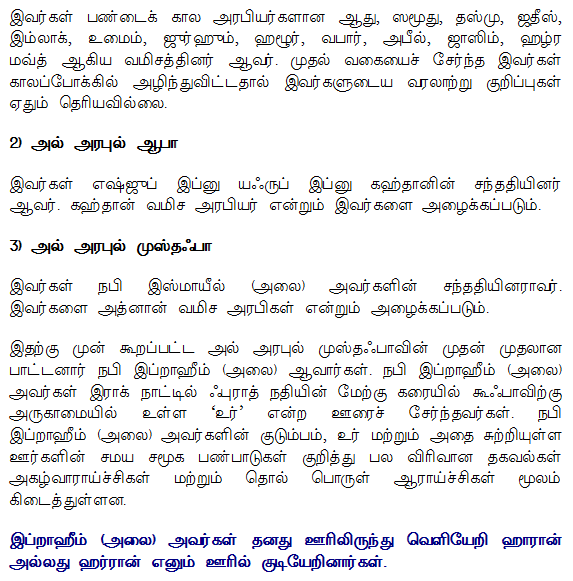
Location and Nature of Arab Tribes Beyond a shadow of doubt, the biography of Prophet Muhammad (pbuh) manifestedly represents an exhaustive embodiment of the sublime Divine Message that he communicated in order to deliver the human race from the swamp of darkness and polytheism to the paradise of light and monotheism. An image, authentic as well as comprehensive, of this Message is therefore only attainable through careful study and profound analysis of both backgrounds and issues of such a biography. In view of this, a whole chapter is here introduced about the nature and development of Arab tribes prior to Islam as well as the circumstantial environment that enwrapped the Prophet's mission. Linguistically, the word "Arab" means deserts and waste barren land well-nigh waterless and treeless. Ever since the dawn of history, the Arabian Peninsula and its people have been called as such. Arab kinfolks have been divided according to lineage into three groups:
The Arabized Arabs go back in ancestry to their great grandfather Abraham [AWS] from a town called "Ar" near Kufa on the west bank of the Euphrates in Iraq. Excavations brought to light great details of the town, Abraham's family, and the prevalent religions and social circumstances. [Tafheem-ul-Qur'an, 1/553] It is known that Abraham [AWS] left Ar for Harran and then for Palestine, which he made headquarters for his Message. He wandered all over the area. When he went to Egypt, the Pharaoh tried to do evil to his wife Sarah, but Allâh saved her and the Pharaoh's wicked scheme recoiled on him. He thus came to realize her strong attachment to Allâh, and, in acknowledgment of her grace, the Pharaoh rendered his daughter Hagar at Sarah's service, but Sarah gave Hagar to Abraham as a wife. [Bukhari 1/474] Abraham returned to Palestine where Hagar gave birth to Ishmael. Sarah became so jealous of Hagar that she forced Abraham to send Hagar and her baby away to a plantless valley on a small hill in Hijaz, by the Sacred House, exposed to the wearing of floods coming right and left. He chose for them a place under a lofty tree above Zamzam near the upper side of the Mosque in Makkah where neither people nor water was available, and went back to Palestine leaving with his wife and baby a leather case with some dates and a pot of water. Not before long, they ran out of both food and water, but thanks to Allâh's favour water gushed forth to sustain them for sometime. The whole story of Zamzam spring is already known to everybody. [Bukhari 1/475] Another Yemeni tribe – Jurhum the Second – came and lived in Makkah upon Hagar's permission, after being said to have lived in the valleys around Makkah. It is mentioned in the Sahih Al-Bukhari that this tribe came to Makkah before Ishmael was a young man while they had passed through that valley long before this event.
| ||
|
For more visit our web… http://www.tharjuma.com | ||
| ||
|
Special Links | ||
|
| ||
|
Daily Aaya Collection (English, Tamil) : http://www.tharjuma.net/pdf/qindex.html |