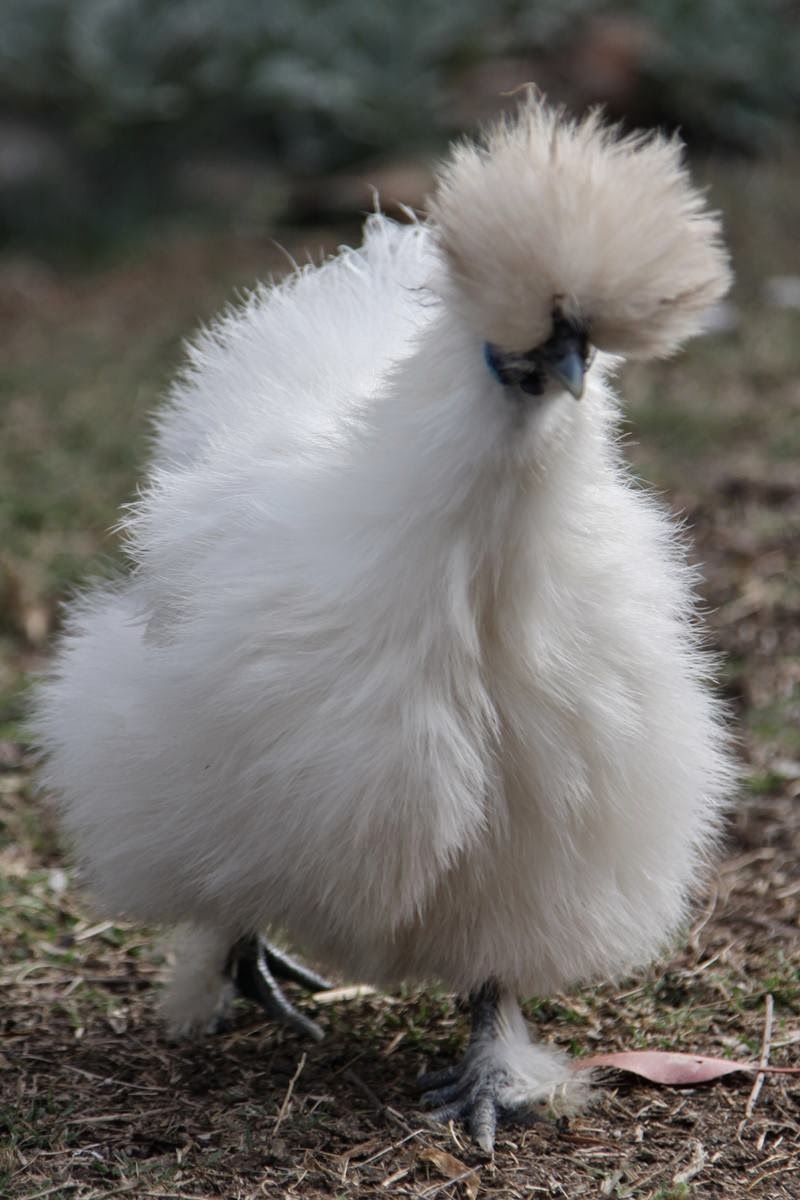
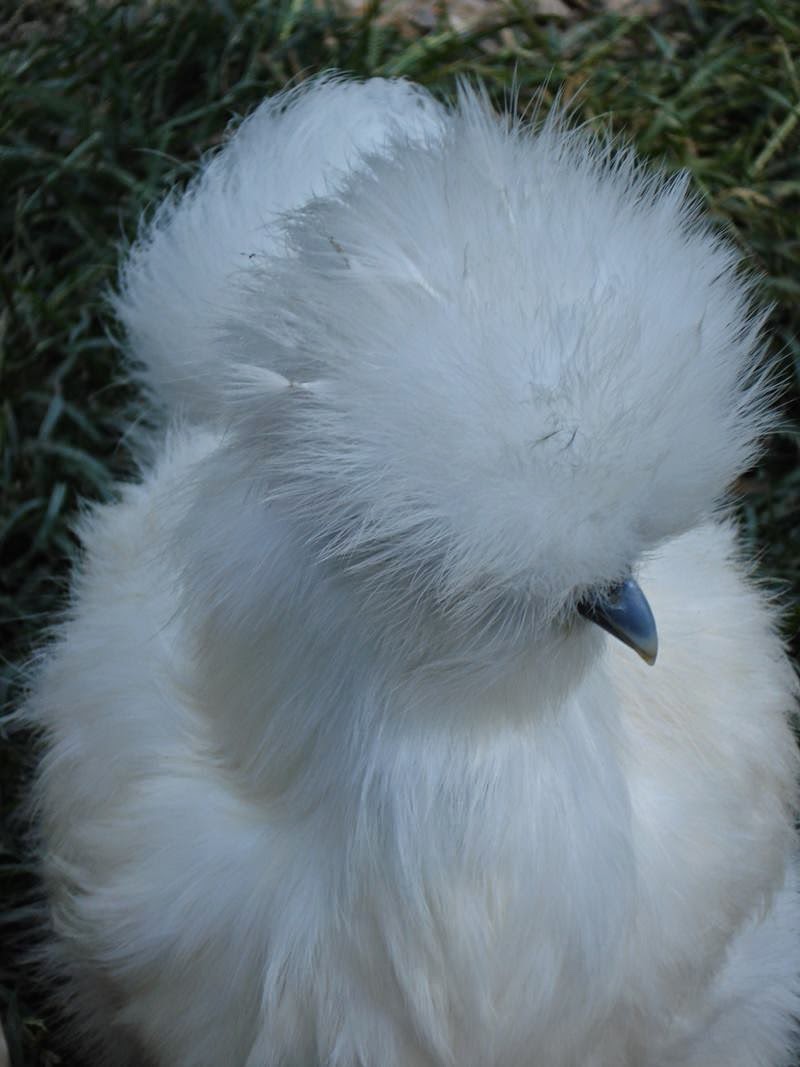
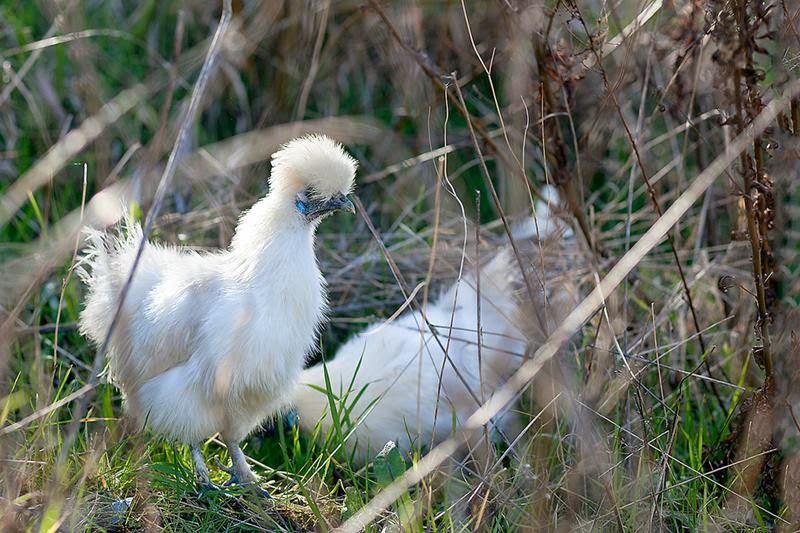
The Silkie sometimes
alternatively spelled Silky, this breed of chicken named for its
atypically fluffy plumage, which is said to touch like silk. The breed
has several other unusual qualities, such as black skin and bones, blue
earlobes. The five toes on each foot, whereas most chickens only have
four. They are often exhibited in poultry shows, and appear in various
colors. Beyond all these hysical characteristics, Silkies are well known
for their calm, friendly temperament. Among the most reverent of
poultry, Silkies are considered an ideal pet. Hens are also
exceptionally broody, and make good mothers. Though they are fair layers
themselves, laying about three eggs a week, they are commonly used to
hatch eggs from other breeds and bird species, and are even known to
adopt baby ducks if given the chance!  It
is difficult to know exactly where or when fowl with their singular
combination of attributes first appeared, but the most well documented
point of origin is ancient China. But chinese occasionally encountered
name for the bird, Chinese silk chicken. Other places in Southeast Asia
have been named as possibilities, such as India and Java. The earliest
surviving written account of Silkies comes from Marco Polo, who wrote of
a furry chicken in the 13th century, during his travels in Asia. In
1598, Ulisse Aldrovandi, a writer and naturalist at the University of
Bologna, Italy, published a comprehensive treatise on chickens which is
still read and admired today. In it, he spoke on "wool-bearing chickens"
and ones "clothed with hair like that of a black cat". 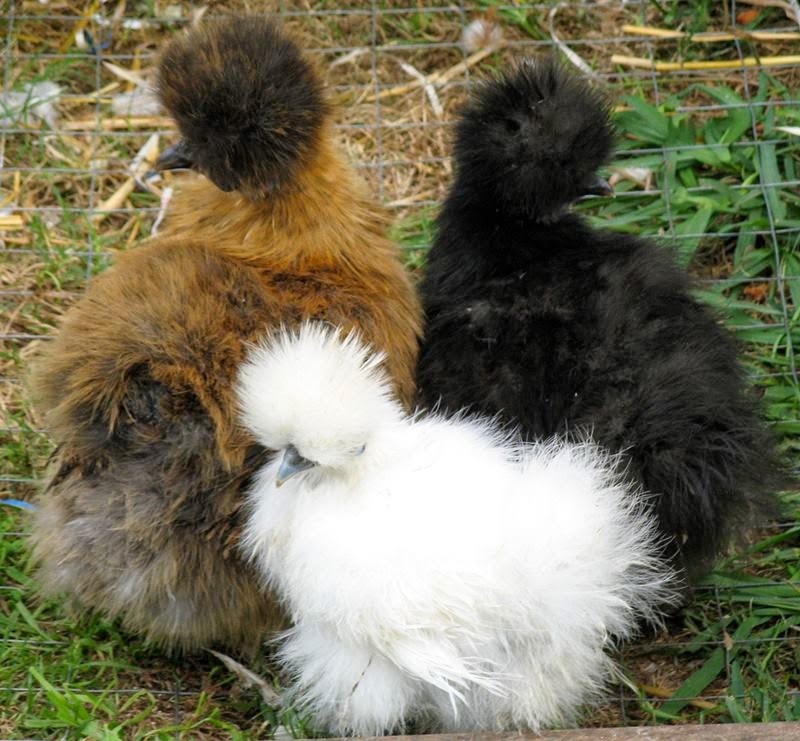 Silkies most
likely made their way to the West via the Silk Route and maritime
trade. The breed was recognized officially in North America with
acceptance into the Standard of Perfection in 1874. Once Silkies became
more common in the West, many myths were perpetuated about them. Early
Dutch breeders told buyers they were the offspring of chickens and
rabbits, while sideshows promoted them as having actual mammalian
fur. In the 21st century, Silkies are one of the most popular and
ubiquitous ornamental breeds of chicken. They are often kept as
ornamental fowl or pet chickens by backyard keepers, and are also
commonly used to incubate and raise the offspring of other chickens and
waterfowl like ducks and geese and game birds such as quail and
pheasants. With
fluffy feet and tiny beak the Silkie Bantam could be mistaken for being
the more timid of the bunch, however the males will defend their
territory with a fierce determination that can only be described as
admirable. Proud
family men, the cocks of the Silkie breed will not only protect their
own chicks but any that show vulnerability. The mothers too have a
wonderful maternal instinct and will sit tight upon a brood of eggs and
care for her chicks until they are ready to go it alone. Image
credit Jess There
are a lot of different types of Silkies and breeders are creating more
every year however the most popular kinds are: Black, White or Blue (The
blue emits a shimmer n the sunlight) Bearded and Non bearded (These
have a tuft under the chin and can be quite comical) Grey Partridge
Quite simply there’s a Silkie Bantam for everyone! Image credit Rakie
Haynes |