
Las Cruces, Tierralta, Córdoba
15 views
Skip to first unread message

Stewart in Colombia
Mar 20, 2013, 8:20:10 PM3/20/13
to Stewart In Colombia Google Groups
* *
* * *


--
Posted By Blogger to Stewart in Colombia at 3/20/2013 06:48:00 PM
Las Cruces, Tierralta, Córdoba
--by Stewart Vriesinga |
| Travelling to Las Cruces, upstream of the Dam, on the Sinú River, Tierralta, Cordoba Colombia |
In early
March CPT Colombia accompanied
Giordano of CAHUCOPANA and a small delegation of popular
education
specialists to a rural sector of Tierralta, a town in Cordoba.
(One of CPT Colombia's local partners is CAHUCOPANA--a
grass-roots campesino human rights organization of north-east
Antioquia.) The
communities are located on an artificial
lake created by the Urrá hydroelectric
dam. They
are
only accessible by water via the small port of Frasquillo after
passing through military checkpoints of
the adjacent military base. Since the building of the
dam this
busy little port has been under curfew; it former residents must
now
vacate the area before nightfall and are only allowed to return
after
sunrise. From the port we made the half-hour trip by motorized
canoe
to another port, and after a twenty-minute bus-ride arrived in
Las
Crucesthe central community of the 40 hamlets in the area.
Ironically,
despite the thirteen-year
presence of the Urrá hydroelectric
dam, none of these communities are provided with electricity.
The
only available electrical power comes from a handful of small
gas-powered generators owned by local private businesses.
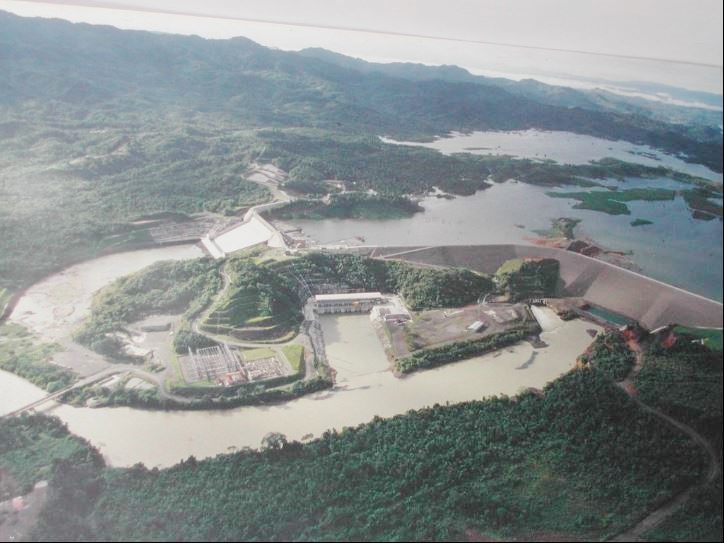 |
| Phase One Urrá Hydroelectric Dam |
Local
residents told us of how things
were thirteen years ago, before the construction of the
hydroelectric
dam. Then most of the communities were accessible by road.
Travelling
was much less complicated and much more economical. Travel by
land
was also far less restricted. Now the only water portPuerto
Frasquillomeans that local residents can only enter and leave
the
area by passing through military checkpoints during daylight
hours.
Much of the local population that once lived
on
the fertile lowlands were flooded out by the dam. They had to
abandon their homes, crops and fruit trees to relocate and
rebuild on
higher, less fertile ground. The fishing tooa former source of
sustenance and incomehas been all but lost because the fish can
no
longer migrate up and down the river.

The
communities are seeking
CAHUCOPANA's help to organize
themselves
better in the face of threats by the various armed actors
operating
in the area, and the immanent implementation of Phase Two of the
hydroelectric project. The local population
is
convinced that the primary task of the military is providing
security
for the dam, not security for the civilians who live in the
area. In
addition to the military there are other illegal armed actors
operating in the area. Paramilitaries and FARC guerrillas are
vying
for control because it is a major corridor for the
trafficking of drugs and arms. Phase Two threatens the
communities with even
greater violence, flooding, displacement, and destruction of
local
resources. (Brutal repression and the
extrajudicial killing of Kimy Pernia and other indigenous
leaders
cleared the way for phase one of the Urrá
dam project back in 2,000. See:
ENVIRONMENT-COLOMBIA:
Controversial
Dam Begins Operating Financed, in part, by
Canadian
money
channelled through the Export Development Corporation )
 |
| Human Rights Workshops |
During our
four-day visit the local
community leaders attended workshops organized by CAHUCOPANA to
learn
about their options in the the face of the powerful interests
that
threaten their survival: workshops on human rights; workshops on
leadership; workshops about joining and forming Campesino
Reservessort of reservations intended to protect the culture
and
lifestyles of campesinos from powerful economic interests that
seek
to take over the area's local resources. CAHUCOPANA and
community
leaders also made plans to host a Humanitarian Action at the end
of
Aprilsimilar to other Humanitarian Actions CAHUCOPANA has
organized in the
north-east Antioquia region
to
draw national and international attention to their situation in
which
they invite hundreds of Colombians and foreigners to the
affected
area to see for themselves.
CPT
Colombia's contribution was
primarily providing international accompaniment to increase the
security and autonomy of the community in case of interruptions
by
armed groups. One such group arrived on the very first day. A
small
group of community leaders, CAHUCOPANA and CPT Colombia went to
intercept them before they could interrupt the workshops. They
wore
no insignias on their uniforms, but identified themselves as the
guerrilla. It didn't really matter who they were. Our message
would
have been the same. We asked them to leave the area as soon as
possible for two reasons: they are a military target, and by
their
very presence put the civilian population in danger, and; state
authorities might well
attribute the workshops to the presence of the armed
group
instead of the initiative of the civilian population, thereby
undermining the credibility of all community decisions,
initiatives
and activities resulting from the workshops. Although a few
armed
actors lingered on to make purchases in the local stores, by
mid-afternoon they had all left the area.

Although
Tierralta is in Córdobanot
part of the Magdalena MedioCPT
Colombia was glad to accompany CAHUCOPANA in this
important
work. It was sad to see a community so alone and with so few
allies
in their valiant struggle for survival. Despite the formidable
challenges, the communities will hopefully continue to organize,
find
additional long-term allies, and ultimately regain control over
their
own local resources and future. Only then can they regain their
ability to resist, not only the impositions and threats of the
various armed actors present in the area, but also prevent
further
destruction of their local resources by outside investors and
mega-projects such as the Urrá hydroelectric
dam.
--
Posted By Blogger to Stewart in Colombia at 3/20/2013 06:48:00 PM
Reply all
Reply to author
Forward
0 new messages