
Sri Sathya Sai Expounds on Gautam Buddha’s Message for Mankind
16 views
Skip to first unread message

ysj sai
May 18, 2014, 8:59:13 AM5/18/14
to sri-sathya-sai-s...@googlegroups.com, dhruv desai, govind bhatt, Dipak desai, shanta_raman, SOHAONK@CR2, Ravindraray Bhojak, K K SHAH DIST.PRES., protec...@yahoo.co.in, Dinesh Tiwari, Rudresh Trivedi, SUYASH KHEMKA, Jagdish shah, Devdoot Gondaliya, Hemashu Desai, Harikrishna Vaidya, rushi...@yahoo.com, himmat_soni1956, licsuni...@yahoo.com, Sangita Khatri, kumkum...@yahoo.com, tandon...@yahoo.co.in, poojamicrobiology, kunjan...@gmail.com, Harsh Soni, rsthatha, ks gayatri, Latha Sundara Raman, URVASHI MODI, sunil godbole, manish shah, fortun...@yahoo.com, Trivedi kmukesh, Parimal Vyas, shiraz13_24, Shilpa Patel, Hiranmayee Srinivasan, Vina Amin, Ramesh Mistry, Jalpan Upadhyay, Manohar G. Trikannad, Kishore Nankani, Manohar Trikannad
Sri Sathya Sai Expounds on Gautam Buddha’s Message for Mankind
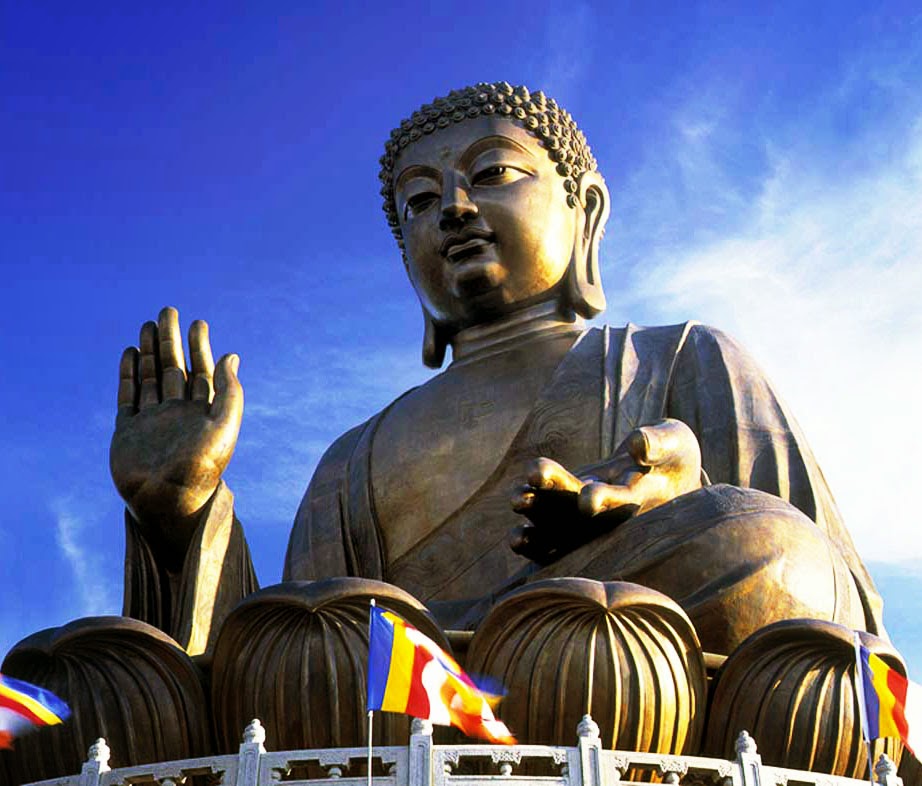
Among the teachings of the Buddha to the world, the foremost was Ahimsa (not causing harm to anyone). Non-violence is not merely refraining from inflicting injuries on others with one’s limbs or weapons. Non-violence has to be practised with Trikarana Shuddhi (purity of mind, tongue and body). There should be no ill-feelings which is a form of violence. To cause harm to others through the body is also Himsa (violence). No one should be harmed even by speech. The speech should be sweet, pleasing and wholesome. All actions should be helpful to others.
Buddha’s
first teaching was, ‘give up bad company’. In His wanderings Buddha
used to take with Him some young men. Some persons criticized Buddha,
charging Him with spoiling the young men. Buddha gave a free rein to His
traducers. He listened quietly to their accusations and left without
uttering a word in reply. When the disciples asked Him why He chose not
to reply to the criticisms Buddha said that unanswered criticisms return
to the critics who made them. By not getting excited over the angry
words of a critic, one becomes superior to the critic. Otherwise, one
descends to the same level as the critic. Bear no ill-will towards
anyone. That is the golden rule indicated by the Gita. Buddha carried on
His mission in this spirit of equanimity and tolerance.
- “Message of the Avatars and the Epics”, Sathya Sai Speaks, Volume 29, May 15, 1996, Brindavan
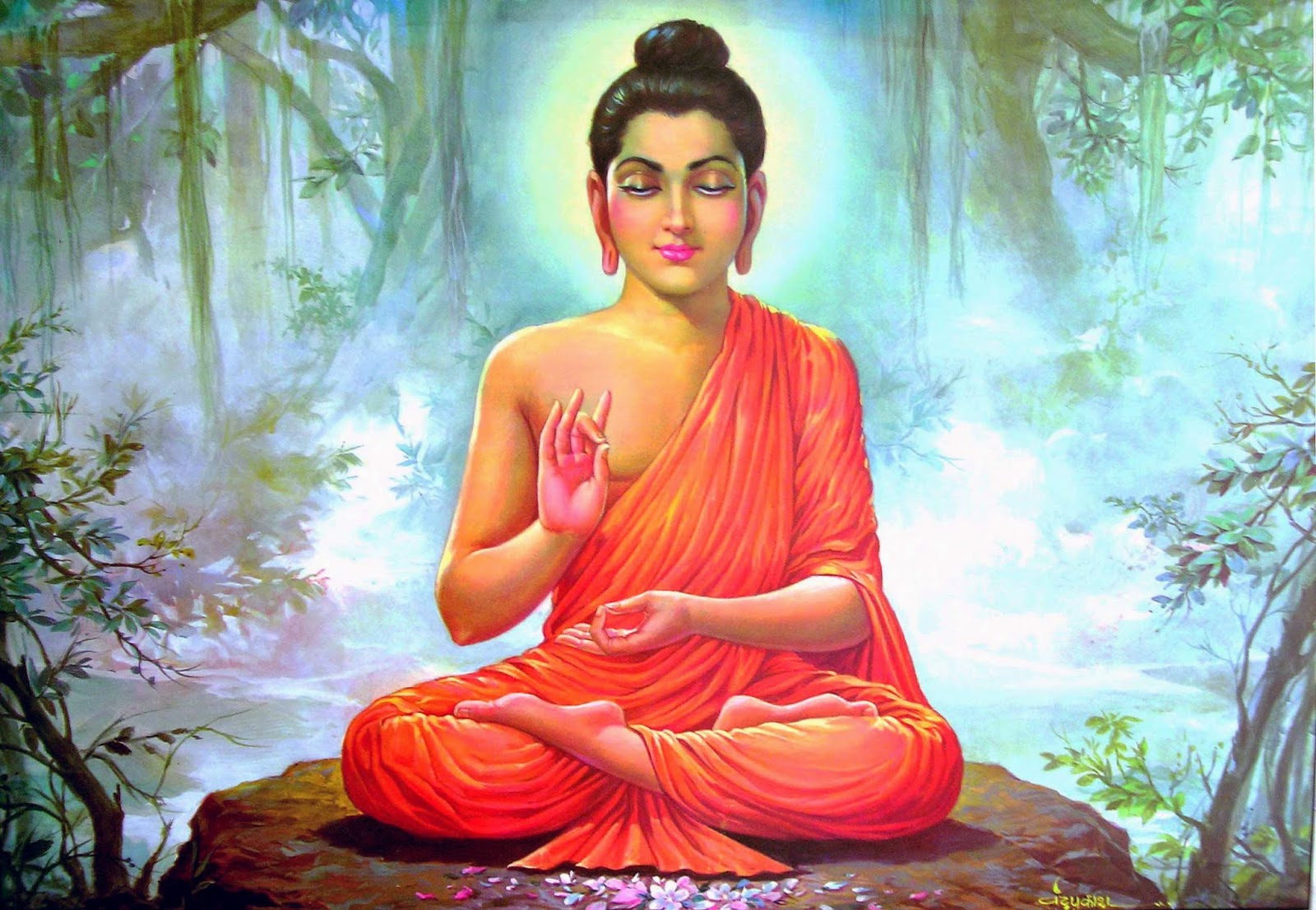
How can a man who is not aware of his humanness recognise the Divinity within him? Hence the first requisite is the recognition by everyone of his human essence. Basing on this truth, Buddha declared that everyone should cultivate at the outset Samyag-Drishti (a pure vision). It is only when man has a pure vision that he can get rid of impurities in the body, speech and mind. It is this purity that can protect man from invasion of impurities through the eyes and the ears. Hence the first requirement for every man is Samyag-Drishti.
The
second quality that is needed is Samyag-Sankalpa (pure thoughts).
Everyone should have pure thoughts. Only the person who has developed
purity in vision can have purity in thoughts. The third requirement for
every man, along with purity in vision and thought, is Samyag-Karma
(pure deeds). Everyone should do pure deeds. Through pure deeds man is
able to recognise his human essence. Man is not merely an embodied
being. By his capacity for developing good vision, entertaining good
thoughts and performing good deeds, he has the power to transform
humanness into Divinity. A fourth requirement for man is Samyag-Shruti
(listening to sacred words). When one listens to unsacred words he can
have only unsacred thoughts. The fifth quality prescribed by Buddha is
Samyag-Jeevanam (living a pure life). What is meant by “living”? It is
not leading a worldly life attached to worldly pursuits. True living
means making one’s life meaningful by ideal actions. Man’s life must be
governed by idealism in action.
Next,
Buddha declared that everyone should aim at Samyag-Sadhana (Achievement
of the highest good). Sadhana means elimination of the evil tendencies
in man and acquiring good and sacred qualities. True Sadhana is the
eradication of all evil in a man. Study of sacred texts, meditation and
penance do not constitute the whole of Sadhana (spiritual exercise). To
remove all the impurities in the mind is real Sadhana.
After
this comes what Buddha called Samyag-Samadhi or Nirvana (Pure
Realisation or Liberation). What is meant by Samadhi? It means treating
pleasure and pain, gain and loss alike. Sama-dhi (equal mindedness) is
‘Samadhi’. To look upon light and darkness, pleasure and pain, profit
and loss, fame and censure with an equal mind is Samadhi. Buddha termed
this equal mindedness as Nirvana.
It
is the recognition of the sacredness of the qualities of all the senses
in man that constitutes real humanness. At the very outset, one has to
keep the tongue pure. This was referred to as Samyag-Vaak (purity in
speech). The tongue has to be sanctified by refraining from falsehood,
slander and abusive speech.
Next
comes, Samyag-Darshanam (seeing only things that are holy). You must
see only things which please your conscience. Seeing all worldly things
is not proper seeing at all. Buddha laid emphasis on seeing good,
thinking good, speaking good and doing good. Seeing all sorts of things
is not good for anyone. The eyes should be used for seeing only what is
pure, what is holy and what is edifying.
- “Purity – The Path to Liberation”, Sathya Sai Speaks, Volume 30, May 15, 1997, Brindavan
 |
| Sri Sathya Sai with a materialised statue of Gautam Budha at Kodaikanal (2003) |
Buddhists chant the following:
Buddham Sharanam Gachhami.
Dharmam Sharanam Gachhami.
Sangam Sharanam Gachhami.
These
three maxims imply that firstly, one must sharpen the intellect and the
capacity for spiritual discrimination. Next, intelligence has to be
used in the service of society. Thirdly, service must be based on Dharma
or righteousness. If these three steps are followed, they would lead to
Bliss. Never harm any living creature in any way whatsoever. Help Ever,
Hurt Never – this is the essence of Buddha’s teaching.
- “Buddha’s Message”, Summer Showers in Brindavan 2000, Brindavan
Man
should realise that the five basic elements which constitute the
fundamental stuff of the universe are common to all mankind and should
be enjoyed as such. He should see the Divine in every human being. This
was the purport of the prayer: Buddham Sharanam Gachhaami (I seek my
refuge in the Buddha). The second prayer is: Sangham Sharanam Gachchaami
(I seek refuge in the Sangha). The implication of this prayer is that,
after getting enlightenment, one should enter society (to serve it). The
third prayer is: Dharmam Sharanam Gachhaami (I seek refuge in Dharma).
The meaning of the prayer as a whole is that for the sake of upholding
Dharma (Righteousness), one should use one’s Buddhi (the enlightened
intellect) and engage himself in social activity. Possessing
intelligence, if a person does not do social service, how can he uphold
Dharma? It has been said that man had been given a body essentially to
pursue Dharma.
- “Message of the Avatars and the Epics”, Sathya Sai Speaks, Volume 29, May 15, 1996, Brindavan

The aberrations and pollution of Divine power that one sees these days are entirely due to food and habits. Satvic food is the proper diet for man, because it alone fosters good, noble, and pious tendencies. Buddha ate only Satvic food, which in due course led to the blossoming of Buddhi or the intellect in all its fullness.
Buddha
disliked pomp, show, and sycophancy. He was simple, ever calm, pure,
humble, and always full of love as well as compassion. Only a person
equally full of love can appreciate His greatness.
- “Buddha’s Message”, Summer Showers in Brindavan 2000, Brindavan
Buddha
taught that the principle of unity of the Atma was the only true
principle in the world. One who realised it by using his spiritual
intelligence was true Buddha, He said. Other than the Atma nothing
existed in this world.
- “Attain Enlightenment by Renouncing Desires”, Sathya Sai Speaks, Volume 39, May 13, 2006, Brindavan

Because Buddha did not interest Himself in the study of the Vedas or in the performance of Yagas and Yajnas, He was dubbed an atheist. This is utterly wrong. Buddha was a pure hearted person. When He was born, a renowned astrologer had predicted that He would be either a great king or a great renunciant. On knowing this, Buddha’s father, Shuddhodhana arranged to keep out of his son’s sight all unseemly worldly sights of happenings in this world from His childhood, Buddha could not bear the sight of anyone in pain. He was saddened at the sight of the old ill-treating the young, of men in authority harassing the people and the big fish swallowing the small ones. He realised that it was wrong for anyone to cause harm to others. Hence He declared: ‘Ahimsa Paramodharmah’ (Non-hurting is the Supreme Dharma). No one should cause hurt to others by speech, action or in any other way. According to Him true Dharma (Righteousness) consists in refraining from causing harm to anyone in thought, word or deed. Truth is God. Buddha taught that people should adhere to truth and uphold it.
- “Purity – The Path to Liberation”, Sathya Sai Speaks, Volume 30, May 15, 1997, Brindavan
Source: Gautam Buddha, Chapter 6, Sai Vani: Avatar on Avatar Purushas
Reply all
Reply to author
Forward
0 new messages