
Carney’s Beijing trip brings Canada into the multipolar world

Sid Shniad
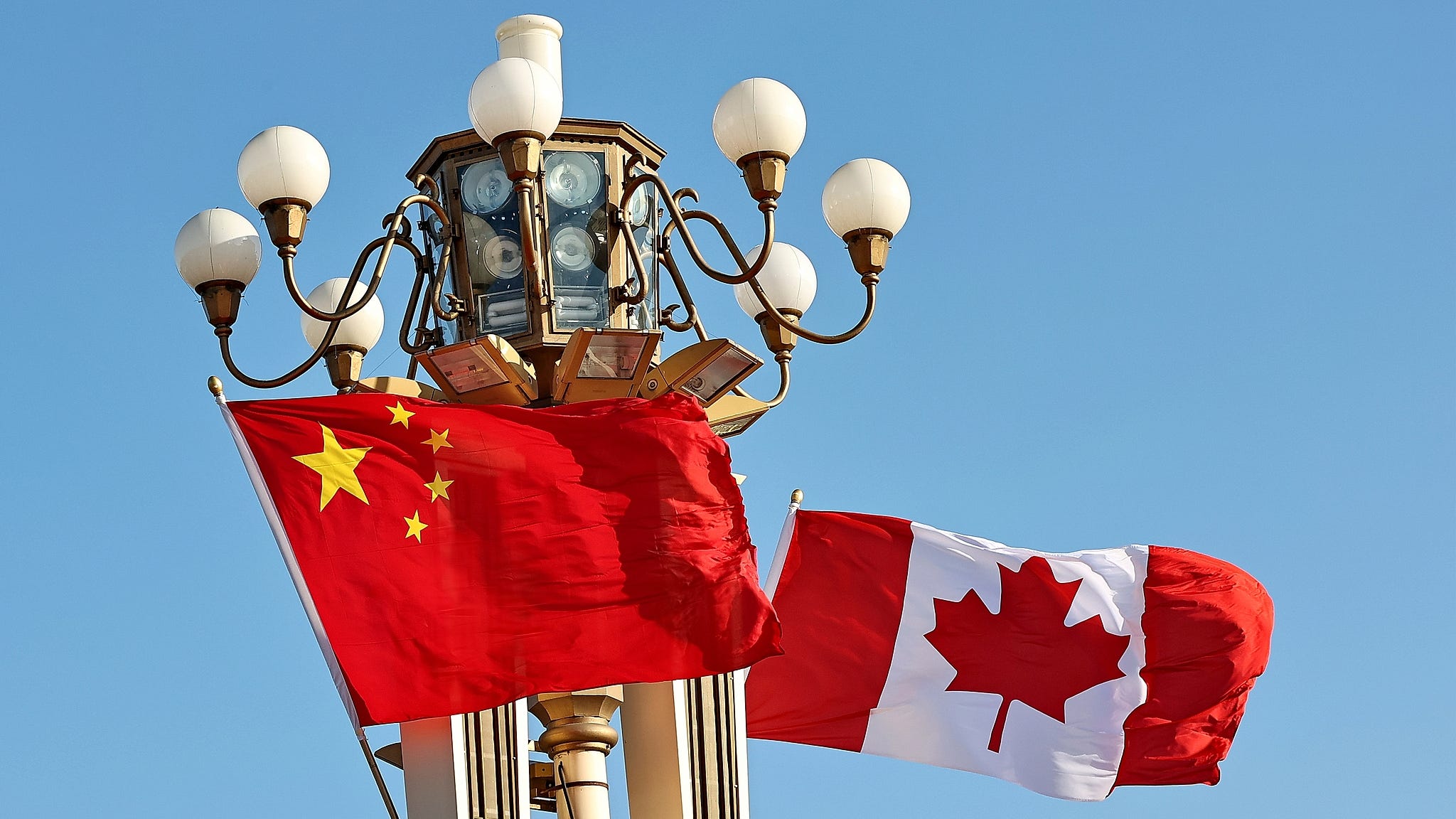
Carney’s Beijing trip brings Canada into the multipolar world
Source: chinadiplomacy.org.cn | 2026-01-18
By Radhika Desai
Lead: Canadian Prime Minister Mark Carney’s landmark agreements with China on tariffs, trade and investment signal a historic pivot away from Washington and toward the emerging multipolar world.
On the final day of his visit to Beijing, Canadian Prime Minister Mark Carney announced that Canada would reduce its tariffs on Chinese electric vehicles from 100% to 6.1% on the first 49,000 vehicles, while, in return, China would reduce its tariffs on Canadian canola oilseeds from 85% to 15%.
This agreement, radically reducing friction on the two sorest points in the hitherto festering bilateral relationship, was accompanied by many other agreements. They opened up many possibilities. These included expansion of Canadian agricultural and energy exports to China, Chinese investment in the Canadian auto sector, scientific and technological cooperation, visa-free travel for Canadians and Canadian lumber for the Chinese construction industry. There were also currency swaps between the two central banks to enable the use of the two national currencies in their bilateral economic relations and macroeconomic coordination between the two countries. Last but not least, they agreed on international cooperation to improve multilateral world governance, not only on uncontroversial ecological issues but also on the reform of the international monetary system.
Carney was not being hyperbolic when he referred to the agreement on EVs and canola as “preliminary and landmark” and the wider set of agreements and discussions as the foundation of a new Sino-Canadian strategic partnership. Carney’s visit has undoubtedly shunted Canada’s foreign policy onto an altogether more hopeful track than the one — let’s call it liberal imperialist — it had been pursuing for decades. It is now embarked on a journey to join the multipolar world, a world emerging from imperialism and headed toward greater social justice, ecological sustainability and peace. This is not to say that this new path will face no resistance. On the contrary, it undoubtedly will, both within Canada and from elsewhere, chiefly from the United States. However, it is the path that is objectively necessary, and while it will be rocky, initially at least, not only does Canada have few choices, but the beneficial results can only make it smoother.
The necessity of low expectations
True, expectations for the visit were low, and any agreement was bound to exceed them. However, these low expectations were not a deliberate tactic but the result of a trio of circumstances in Canada.
First, over the past year, President Trump has upended the most foundational assumption about Canada and its economy: that it was destined for ever-greater integration into the U.S. and North American economy. Second, this had turned Canadian public opinion decisively against closer integration with the U.S. and in favor of diversification. Third, powerful interests in Canada remained invested in the U.S.-Canada axis.
It began with President-elect Trump threatening tariffs, calling then-Prime Minister Trudeau “governor” and demanding that Canada become the U.S.’s 51st state in the months after his election and before his inauguration. It continued after Trump took office with the imposition of tariffs on steel and aluminum and the demand for renegotiation of the USMCA trade agreement, itself a renegotiated NAFTA in which Canada and Mexico were forced into further concessions to the U.S. during Trump’s first presidency. Then came demands for greater military spending and, most recently, threats to take over Greenland, which would leave Canada surrounded by the U.S. on three sides.
Canadians reacted by giving Mark Carney an electoral victory, as decisive as it was unexpected, and a mandate to diversify Canada’s economic relations from the U.S. Given China’s position as the other most important world economy, this mandate pointed, if it pointed anywhere, toward China. While many imagined that closer relations with Europe would suffice, this was always wishful thinking.
However, this powerful mandate was up against foreign policy inertia. Though not itself a colonizing country, Canada emerged and remained a white settler colony nestled for centuries in a very favorable position in the British imperial system. In the postwar period, many of its leading intellectuals warned against sliding into ever-deeper integration with the U.S. economy. Canada would become too dependent on it, they cautioned, practically a colony. But Canada’s ruling elites chose not to heed them. They opted precisely for the opposite course with the 1988 Canada-U.S. Free Trade Agreement, followed by NAFTA in 1994.
The result was that Canada not only remained a highly externalized economy, but more than three-quarters of its exports were going to the U.S. This made Canada a fully paid-up member of the “globalist” or liberal imperialist Western alliance. Its Parliament baselessly accused China of committing “genocide” in Xinjiang, while a more recent parliamentary report made groundless claims of Chinese interference in Canadian affairs. Canadian dependence on the U.S. was the critical factor in the nosedive Sino-Canadian relations took in 2018 when, amid a rocky renegotiation of NAFTA, the Canadian government took the ill-fated decision to arrest Huawei CFO Meng Wanzhou.
This inertia weighed heavily on the Canadian delegation as it flew to Beijing. Even if Canada were now united in pursuing closer relations with China, it would have to be wary of the wrath of the unpredictable Trump administration. And it was not united. Even on the eve of Carney’s visit, many influential Canadian voices continued to demand that Canada remain aligned with the U.S., economically and strategically, even in the face of Trump’s humiliations, usually in the name of shared values or, at worst, in the hope that U.S. voters would soon elect a more predictable president.
The inevitable end of liberal pretension
That so much has nevertheless been achieved, a landmark deal and a strategic partnership, is not only the result of the push that the Trump administration has given Canada. Many other countries have been, and are expected to be, visiting Beijing for precisely the same purposes. It is also the result of a deeper factor.
Ever since the Western world turned to neoliberalism in the 1980s, and even more since the demise of the Soviet Union in 1991, it has been hell-bent on imposing free markets and free trade on the rest of the world. It demanded that other countries forsake their economic sovereignty and development strategies, open up their economies to Western corporations, and supply Western needs for low-cost goods, inputs and labor. This prevented, and was meant to prevent, these countries from developing. The economic history of the world has demonstrated nothing more clearly than the centrality of state management of the economy, trade and investment to development. This was as true of European countries and the U.S. in the past as it is of China today. Yet it was precisely this that was to be denied to non-Western countries. Notwithstanding hypocritical rhetoric about “development,” the West wanted not similarity but complementarity: its own rich economies sustained by the rest of the world’s poorer ones.
However, this could not and did not work. Other countries were bound to reject this and assert their economic sovereignty, none more spectacularly than China. The result has been China’s advance and, to a lesser but still meaningful extent, that of many other countries. The West has declined relatively speaking and is today in the midst of a multifaceted crisis, economic, social, political and cultural, the U.S. more than most. That is the underlying reason for the election of the unconventional Trump and all the disruption he has brought to the world order.
What Carney has achieved in Beijing has been to set Canada on the path of the multipolar world, objectively and in practice. Canada has few choices, and it will likely take some time before it subjectively recognizes the necessity for this and its rhetoric aligns with its new practice. However, thanks to the compulsion of circumstances, that will happen. And it will be good for the people of both countries, and likely the building of a community with a shared future for humanity, as advocated by China and embraced by increasing numbers of nations across the globe.
Radhika Desai is a professor of political studies at the University of Manitoba in Canada.