
Mamdani Proves We Have Been Gaslit By Politicians For Our Entire Lives

Sid Shniad
A Rebellion of Care June 20, 2026

Mamdani Proves We Have Been Gaslit By
So things could change? Got it.
David Gate
For all of my adult life I have listened to politicians explain why good things are impossible.
Universal child care? Complicated. Free buses? Budget constraints. Affordable housing? Regulatory realities. Municipal grocery stores? Unprecedented. Paid leave? Stakeholder concerns. Taxing billionaires? They’ll disappear.
Government moves slowly. Democracy is messy. Progress takes time. The votes aren’t there. The funding isn’t there. The political capital isn’t there. The coalition isn’t there. The moment isn’t right.
The message is spewed back to us in various forms of respectable political language: your hopes are unrealistic and your demands are immature. We are told that serious adults understand that government moves slowly, compromise is inevitable, and meaningful change can only occur in microscopic increments to be safely absorbed by donors, lobbyists, consultants, and editorial boards.
But Zohran Mamdani becoming mayor of New York City has revealed that whole position is a lie. And once somebody starts accomplishing things, all the people who spent decades explaining why nothing could be accomplished suddenly have a gigantic problem.
The men behind the curtain are afraid.
In roughly six months, his administration rolled out universal child care, fare-free city buses, a major expansion of affordable housing construction, a city-owned grocery initiative in underserved neighborhoods, paid family leave for municipal workers, and a progressive tax package targeted at the city’s wealthiest residents. The details matter but so does the speed. New Yorkers spent decades being told that policies like these required endless task forces, pilot programs, blue-ribbon commissions, and strategic retreats.
Apparently all they required was a mayor who actually wanted them.
I realize some readers are already preparing the standard rebuttal. New York is unique. The city has resources that other places lack. Governing requires tradeoffs. The mayor will eventually hit limits.
Sure. Every government has limits. Gravity exists. The budget is not a magic bag of infinite money. Municipal laws are real. None of this rescues the larger narrative that has dominated American politics for forty years. Ambitious social programs are meant to be impossible while tax cuts, police funding increases, corporate subsidies, and military spending can materialize with astonishing speed and efficacy. Procedural obstacles become dramatically less formidable when wealthy people are receiving benefits of policies.
The past six months in New York exposes the asymmetry we have been forced to accept.
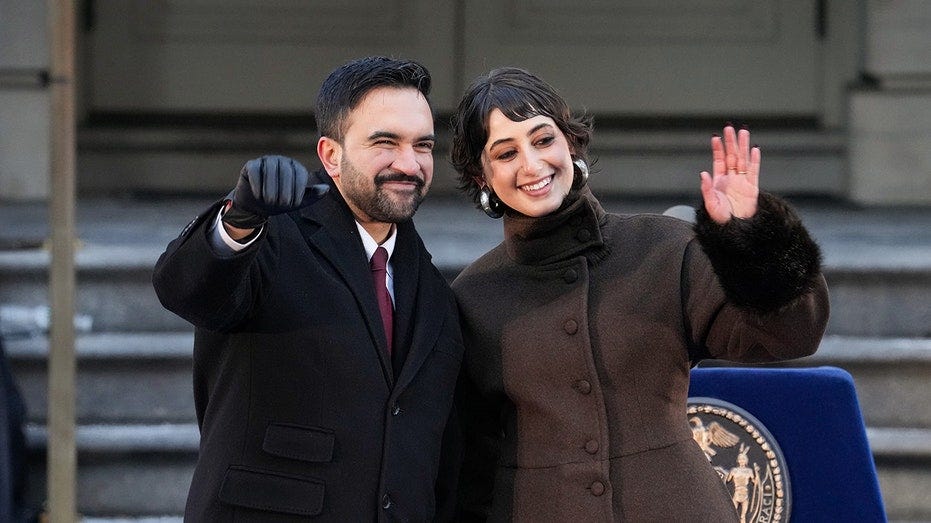
One of the funniest side effects of Mamdani’s tenure is the vibes. No, he did not personally hit a jump shot during the Knicks’ playoff run. He did not box out defenders or coach the fourth quarter. Yet competent governance creates conditions in which people can enjoy public life instead of experiencing their city as a daily gauntlet of financial punishment.
When buses are free, child care is available, housing pressure eases even slightly, and neighborhoods gain actual investment, the collective mood changes. People have more money, more time, and less ambient panic. The Knicks’ run became a citywide celebration rather than a luxury experience available primarily to people who could afford the rising cost of everything else.
The phrase “the vibes are up” sounds frivolous until you realize that public mood is often a measure of whether a government is making ordinary life easier. And both the Knicks and Mamdani reintroduce the idea that other outcomes, different to the last half century, are more than possible, they are achievable.
The most impressive thing about Mamdani’s leadership is that he has not had to compromise his own convictions, or throw vulnerable people onto the metaphorical subway tracks, to get there.
He continues to call what is happening in Gaza a genocide. He has refused to participate in pro-Israel lobbying rituals that have become mandatory for many ambitious Democrats. Predictably, opponents accused him of antisemitism. Just as predictably, the accusation lost force when confronted with his actual record: consistent affirmation of New York’s Jewish communities, coalition-building across religious lines, and support for Jewish political allies such as Brad Lander.
For the last three years Democrats have behaved as though any deviation from being mealy mouthed on Israel would instantly end a political career. Mamdani demonstrated that voters are capable of distinguishing between criticism of a state and hostility toward Jewish people. The electorate is inevitably more sophisticated than the consultants believe.
He has shown the same steadiness on trans rights. No strategic retreat. No sudden discovery that “kitchen table issues” require abandoning vulnerable people. No sacrificial offering to reassure nervous moderates. His administration has remained firmly committed to trans and queer New Yorkers while pursuing an economic agenda centered on working-class needs.
This combination is what we demand. The Democratic playbook has assumed that economic populism and solidarity with marginalized communities occupy competing lanes. Mamdani has treated them as the same project: a city that protects people from concentrated power, whether that power appears as a landlord, a billionaire, a lobby, or a culture-war campaign.
Remember the apocalyptic predictions?