
How a Young Chasidish Boy Taught me a Lesson in Ahavas Yisroel
16 views
Skip to first unread message

Dovid Teitelbaum
May 1, 2013, 1:03:54 AM5/1/13
to
Link to blog and to comment How a Young Chasidish Boy Taught me a Lesson in Ahavas Yisroel
 As the days of sferia come to an end I look back and notice so many discussions and articles covering the nitty gritty details of shaving, not shaving, laundry, music, concerts, etc. What strikes me as peculiar, and, quite sad, is the equal number of topics spewing animosity at others who don't necessarily behave or see things the same way as we do. Now, from what I remember of my yeshiva days, Yimei Sefira was about Ahavas Yisroel, and the tragedy that befell the talmidim of Rabbi Akiva for not respecting one another. It's not uncommon today to practice all the halochos, but forget the purpose behind it. Here is a short story that taught me a great lesson, I'd like to share it with my readers.
I thought I had understood Ahavas Yisroel, but I was proven wrong by a young Chasidish boy from Monsey, NY. When a boy submits his camp application, they are asked to include a recent photo of themselves and so I was in for quite a surprise when I took a look at this boys photo. I'm not one for prejudice, and I feel I love all Jews just the same, but I never thought I would have this type of boy register to camp; we just don't have other boys like him. And so when this young chasidish boy sent in his camp application, I wasn't sure what to do.
 The picture he submitted showed a boy with long payis. I was sure he had no idea what he signed up for. He probably had no internet... hadn't seen the camp pictures, and made a mistake signing up. I even thought this might all be a prank or a photo that got mixed up. I called the boy. His accent was definitely chasidish and I was at a loss for words. What do I say now? How do you tell a child that you don't think he would fit it or that he doesn't belong? It's uncomfortable. I tried to explain how the other boys were "regular kids" ...but he seemed not to get it, and so, feeling I had no choice, I told him straight out, "You realize that the other boys are not chasidish like you."
I was expecting him to say something like "thanks for telling me" or "I'll look at other options." Instead his tells me, in that chasidish style "Ye, so what?" I was a loss for words, because I got the impression that this young boy doesn't yet get it; he doesn't realize what he is in for. So I tried my best to explain how the other boys dress differently and might be a little more exposed than he is. I think there was a part of me that was hesitant to bring him to camp, knowing that he wouldn't fit in and maybe even that other boys will say things that might hurt him. He told me he was well aware that the camp doesn't have chasidish boys. I then asked him if he thought this will be a problem for him, and he answered me - and I'll never forget those words- “If they don't have a problem with me, I don't have a problem with them.” I was happy this took place over the phone because I think I turned colors out of embarrassment and the shock of a young child putting me in my place. I felt foolish, because I just took an innocent child that was never taught to feel differently and hinted that it might be a problem for him. I prejudged my campers, that they won't be capable of accepting another boy that looked different than them, and worse, I was thinking about turning down a boy because he didn't fit in. I responded that, of course they wouldn't have a problem with him, but I'm not sure if I believed it.
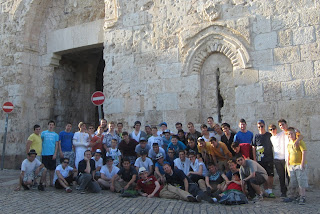 The boy came to camp that summer, and to say that there were no issues is an understatement. Not only did the boys treat him well, he was loved by all. I made sure it wasn't a problem, but I really didn't have to. Nissin is a sweetheart of a boy and there is nothing not to like about him, but it was more than just that. The boys were interested in his life, what it was like to grow up chasidish and how he spent his extra time. Yes their lives were different, but inside it was obvious that they were the same. Some people believe that if children are too different they won't connect, but I don't think that's the case at all. Every child has something special that others can learn from.
My father used to say, give two boys a ball to play with and they will be best friends in no time. I see this all the time. I have campers that join us from outside the US and don't understand a word of English and it's hardly an issue.
Today we barely teach Ahavas Yisroel and when we do it's understood we are referring to those that dress like we do. I don't remember this being the case when I was a child. I remember a classroom that was diverse and a summer camp that preached achdus, and not just during color war. I believe a big part of the intolerance these days comes from the separation of subgroups we live and align ourselves with. When we are forced to live with each other we learn that we are really no different, and all the bigotry was there only because we were taught to stereotype and have prejudice toward others. A recent video of Rav Shteinman points out the sad realities of the time as he tries to explain the importance of accepting every child into Yeshivas and is questioned multiple times by the hanhala.
Many times I get phone calls from parents who are afraid their children won't fit in because there might be another boy that dresses differently or comes from a different background or maybe that he isn't as good a learner like the other boys. I should tell them to call Nissin and maybe he could teach them a thing or two about Ahavas Yisroel. He sure taught me!
Dovid Teitelbaum
Director, Camp Sdei Chemed International
CLICK HERE TO RECEIVE MY POST VIA EMAIL
Please like, comment and share with your friends...


--
Dovid Teitelbaum
Camp Sdei Chemed
www.campsdeichemed.com
Like us on facebook!
http://tinyurl.com/b459yb4
via Tales from a summer camp... by Dovid Teitelbaum on 4/30/13

I thought I had understood Ahavas Yisroel, but I was proven wrong by a young Chasidish boy from Monsey, NY. When a boy submits his camp application, they are asked to include a recent photo of themselves and so I was in for quite a surprise when I took a look at this boys photo. I'm not one for prejudice, and I feel I love all Jews just the same, but I never thought I would have this type of boy register to camp; we just don't have other boys like him. And so when this young chasidish boy sent in his camp application, I wasn't sure what to do.

I was expecting him to say something like "thanks for telling me" or "I'll look at other options." Instead his tells me, in that chasidish style "Ye, so what?" I was a loss for words, because I got the impression that this young boy doesn't yet get it; he doesn't realize what he is in for. So I tried my best to explain how the other boys dress differently and might be a little more exposed than he is. I think there was a part of me that was hesitant to bring him to camp, knowing that he wouldn't fit in and maybe even that other boys will say things that might hurt him. He told me he was well aware that the camp doesn't have chasidish boys. I then asked him if he thought this will be a problem for him, and he answered me - and I'll never forget those words- “If they don't have a problem with me, I don't have a problem with them.” I was happy this took place over the phone because I think I turned colors out of embarrassment and the shock of a young child putting me in my place. I felt foolish, because I just took an innocent child that was never taught to feel differently and hinted that it might be a problem for him. I prejudged my campers, that they won't be capable of accepting another boy that looked different than them, and worse, I was thinking about turning down a boy because he didn't fit in. I responded that, of course they wouldn't have a problem with him, but I'm not sure if I believed it.

My father used to say, give two boys a ball to play with and they will be best friends in no time. I see this all the time. I have campers that join us from outside the US and don't understand a word of English and it's hardly an issue.
Today we barely teach Ahavas Yisroel and when we do it's understood we are referring to those that dress like we do. I don't remember this being the case when I was a child. I remember a classroom that was diverse and a summer camp that preached achdus, and not just during color war. I believe a big part of the intolerance these days comes from the separation of subgroups we live and align ourselves with. When we are forced to live with each other we learn that we are really no different, and all the bigotry was there only because we were taught to stereotype and have prejudice toward others. A recent video of Rav Shteinman points out the sad realities of the time as he tries to explain the importance of accepting every child into Yeshivas and is questioned multiple times by the hanhala.
Many times I get phone calls from parents who are afraid their children won't fit in because there might be another boy that dresses differently or comes from a different background or maybe that he isn't as good a learner like the other boys. I should tell them to call Nissin and maybe he could teach them a thing or two about Ahavas Yisroel. He sure taught me!
Dovid Teitelbaum
Director, Camp Sdei Chemed International
CLICK HERE TO RECEIVE MY POST VIA EMAIL
Please like, comment and share with your friends...
Things you can do from here:
- Subscribe to Tales from a summer camp... using Google Reader
- Get started using Google Reader to easily keep up with all your favorite sites
Dovid Teitelbaum
Camp Sdei Chemed
www.campsdeichemed.com
Like us on facebook!
http://tinyurl.com/b459yb4
Reply all
Reply to author
Forward
0 new messages