
Brain Scientists Finally Discover the Glue that Makes Memories Stick for a Lifetime

rael-science
The Raelian Movement
Get Rael-Science on Facebook: http://www.facebook.com/raelscience
Get Rael-Science on Twitter: https://twitter.com/rael_science
August 28, 2024
6 min read
Brain Scientists Finally Discover the Glue that Makes Memories Stick for a Lifetime
A long-running research endeavor reveals key chemical players that cement memories in place—and still more have yet to be discovered
By Simon Makin
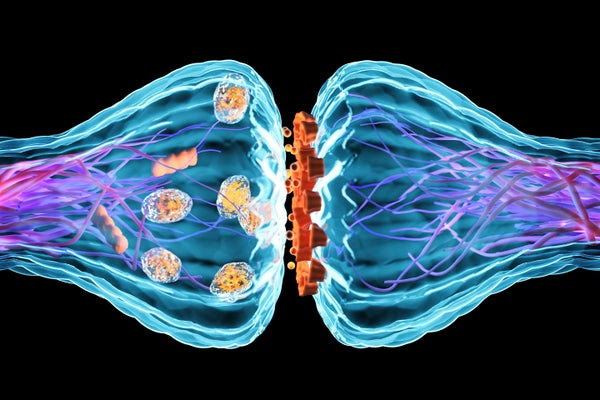
Synapse.
Sebastian Kaulitzki/Science Photo Library/Getty Images
The persistence of memory is crucial to our sense of identity, and without it, there would be no learning, for us or any other animal. It’s little wonder, then, that some researchers have called how the brain stores memories the most fundamental question in neuroscience.
A milestone in the effort to answer this question came in the early 1970s, with the discovery of a phenomenon called long-term potentiation, or LTP. Scientists found that electrically stimulating a synapse that connects two neurons causes a long-lasting increase in how well that connection transmits signals. Scientists say simply that the “synaptic strength” has increased. This is widely believed to be the process underlying memory. Networks of neural connections of varying strengths are thought to be what memories are made of.
In the search for molecules that enable LTP, two main contenders emerged. One, called PKMzeta (protein kinase Mzeta), made a big splash when a 2006 study showed that blocking it erased memories for places in rats. If obstructing a molecule erases memories, researchers reasoned, that event must be essential to the process the brain uses to maintain memories. A flurry of research into the so-called memory molecule followed, and numerous experiments appeared to show that it was necessary and sufficient for maintaining numerous types of memory.
Simon Makin is a freelance science journalist based in the U.K. His work has appeared in New Scientist, the Economist, Scientific American and Nature, among others. He covers the life sciences and specializes in neuroscience, psychology and mental health. Follow Makin on X (formerly Twitter) @SimonMakin