
POP TIPS: February Orchard Care
17 views
Skip to first unread message

Phil Forsyth
Feb 2, 2026, 8:32:17 AMFeb 2
to Philadelphia Orchard Group
Dear Philly Orchardists,
We hope to see many of you at the PASA Sustainable Agriculture Conference this week!
February is the heart of orchard pruning season in our climate- time to bundle up and get out there! Please check out our POP Monthly Orchard Task List for recommended maintenance activities to complete this month (the Feb/March list is also attached below).
Here is some more detail on some of the key tasks for February:
Winter pruning
Check out our newly updated POP Pruning Guide and our complete orchard pruning video series on POP's YouTube Channel! Hands-on is the best way to learn pruning, so please register to join us at the following opportunities:
- February 28th, 1-3:30pm.Fruit Tree Pruning Workshop @ POP’s Learning Orchard. (Rain date 2/29)
- March 14th, 1-3pm Juntos Podamos – Taller de Poda (Pruning workshop in spanish ) @ Historic Fair Hill (Rain date 3/21)
The calendar and the cold tell us that it's time again for pruning fruit trees, berry bushes, and fruiting vines. It is important to prune most fruiting plants every winter, regardless of their age! Essentially everything except peaches are best pruned while dormant, between January and early March.

Annual pruning of almost all orchard plants is best accomplished during dormant season from January to mid March!
Here is a quick list of the reasons for annual pruning:
2. increase air circulation
3. improve quality, quantity & consistency of harvest
4. prevent infection and spread of disease
5. create good structure to support fruit
6. avoid breakage from poor branch angles
7. control size for easier harvest
8. ensure penetration of sprays
9. stimulate vegetative growth
You can find POP's newly updated pruning guide on our website, featuring new sections on restoration pruning of neglected trees, trees needing minimal pruning, tool recommendations, and summer pruning:
A printable version of the POP Pruning Guide is also attached below.

Winter pruning season is also a good time to remove any remaining mummified fruit on trees, which can be a source of disease spores if left until spring. (Photo Credit: Pixabay)
Orchard Tools & Supplies
Winter is a good time to consider what tools and supplies you may need for the upcoming season.
With pruning season getting started, this is a good time to evaluate your tools and equipment. What's missing? What new tool might make your life easier? Order replacement saw blades for any that have dulled. Sharpen your pruning blades with a hand sharpener like this:
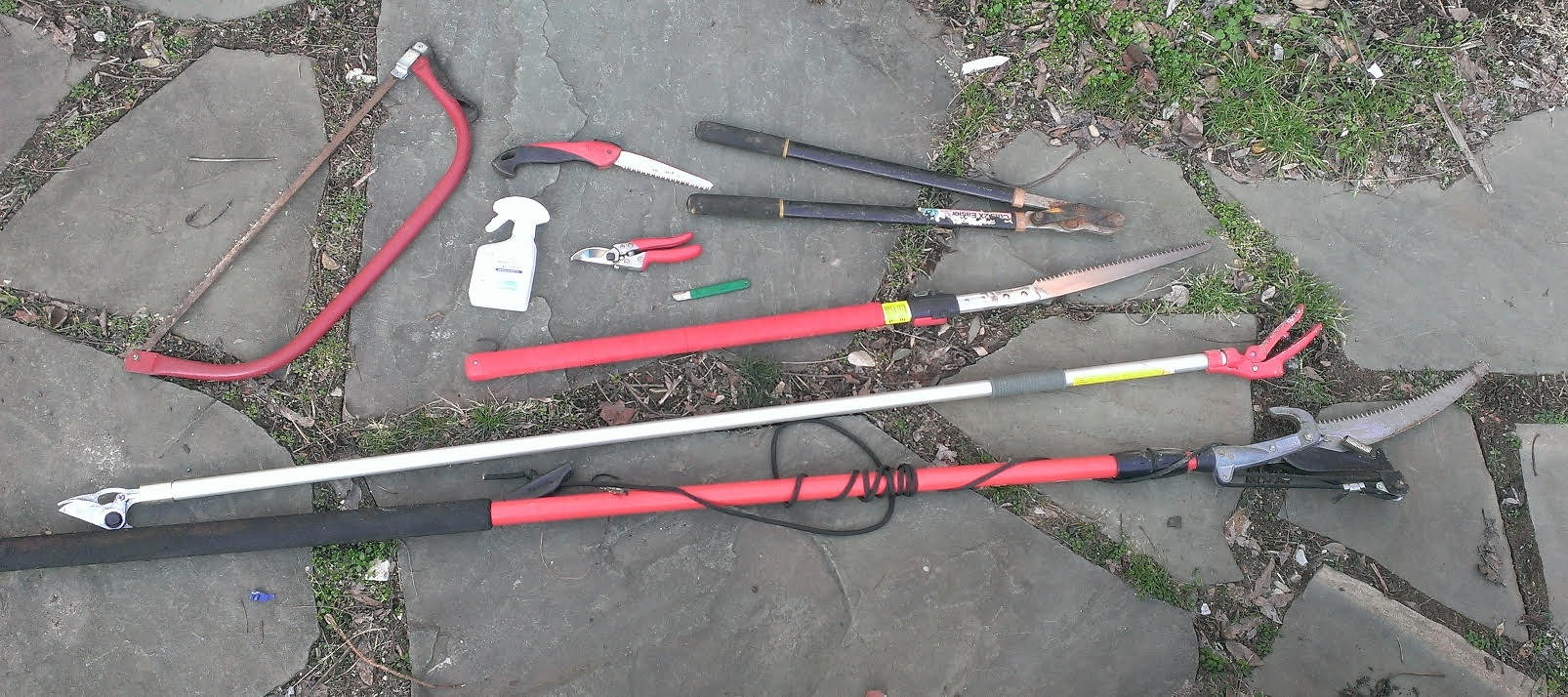
The basic orchard pruning toolset includes pole saw, pole pruner, loppers, handsaw, hand pruners, bowsaw, blade sharpener, and spray bottle of alcohol for sanitizing blades. Not pictured: pole lopper, tripod orchard ladder!
This is also a good time to consider what other tools and supplies you may need for the upcoming orchard season. Gloves, hand tools, harvest equipment, organic sprays, etc? Wheelbarrow need a tune up? Shed re-organized? Get these done before you get too busy!
Where can you borrow tools?
PHS City Harvest partners: PHS Mclean Tool Library
And coming this spring, PPR FarmPhilly will be opening their Agriculture Resource Center and tool library at the Fairmount Park Horticulture Center!
Pest and Disease Monitoring & Identification

Spotted Lanternfly egg masses can be found on tree trunks and pretty much any other hard surfaces. Scrape them off and dispose of them.
Dormant Oil Sprays for Control of Aphids, Scale, and More!
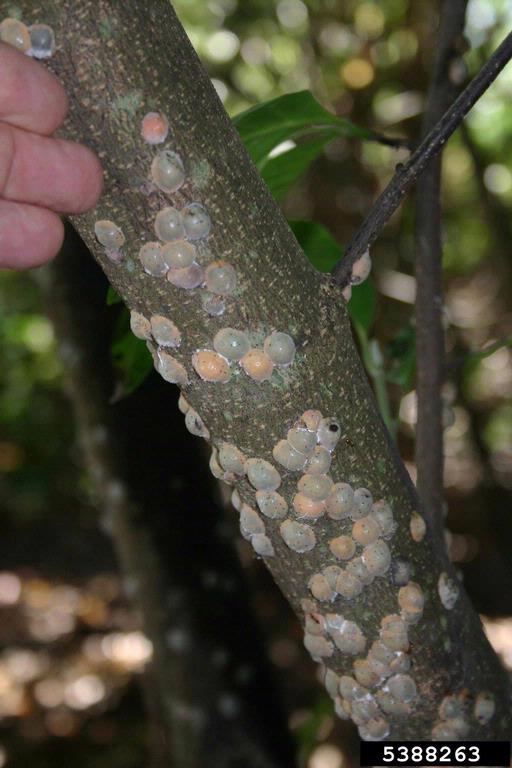
Check out POP's blog post on scale insects! If you had challenges with scale, aphids, or other soft-bodied insects last year, a winter application of dormant oil is the best control. Photo: William Fountain, University of Kentucky, Bugwood.org
Wishing all a happy pruning season!
Phil Forsyth, Director of Horticulture
Philadelphia Orchard Project
Pronouns: he/him

Reply all
Reply to author
Forward
0 new messages