
"The Angel of the Odd: Dark Romanticism from Goya to Max Ernst," Musée D'Orsay, Paris
176 views
Skip to first unread message

Morbid Anatomy
Apr 12, 2013, 5:32:26 AM4/12/13
to morbid-...@googlegroups.com




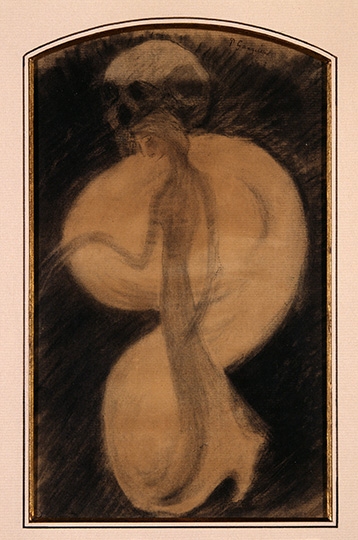




Whilst in Paris last week for the Anatomical Model conference at the Academy of Medicine (which was wonderful, by the way) I made time to visit the Musée D'Orsay's spellbinding exhibition "The Angel of the Odd: Dark Romanticism from Goya to Max Ernst." I and my companion spend a good three and a half hours marveling at the works--which ranged from romantic painting to Hitchcock film clips to spirit photography to decorative arts--and absorbing the text, which sought to trace a through-line from the Dante-inspired 18th century romantic paintings of Johann Henry Fuseli to today's horror films. Above are just a very few of my favorite works seen in this wonderful, sprawling exhibition.
The exhibition terms this trope "dark romanticism"--drawn from art historian Mario Praz's 1903 publication Flesh, Death and the Devil in Romantic Literature--and traces its development in three major sections. The first examines its genesis in the years from 1750-1850 in, paradoxically, "the age of reason," a response to the post-French revolution "Terror" and Napoleon's wars which, the text explains, "mark[ed] the end of the belief that reason alone could lead to enlightened humanity." Text and images demonstrate how the romantics used literary works--Gothic novels, of course, but also Goethe's and Milton's visions of hell and the darker interludes of Shakespeare--as the launching off point for artworks exploring the darkest and most taboo aspects of humanity: "cannibalism, Satanism, torture, incest, infantacide, and nightmares." The real standouts in this section were the works of Goya (4th down), Fuseli (2nd and 3rd down), some wonderful illustrations by Delecroix for Goethe's Faust(8th down), and the shockingly perverse and powerfully large-scale "Dante And Virgil In Hell" depicting an act of cannibalism described in Dante's Inferno (top image) and painted by William-Adolphe Bouguereau, whom I had previously known as the artist behind exceedingly competent and somewhat sentimental academic paintings such as this one. Another surprise in this section was a Goya print from his "Les Caprices" series which, the text convincingly asserted, served as the inspiration for Karloff's iconic Frankenstein.
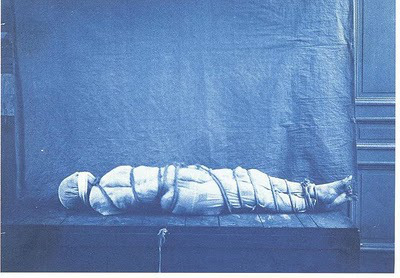
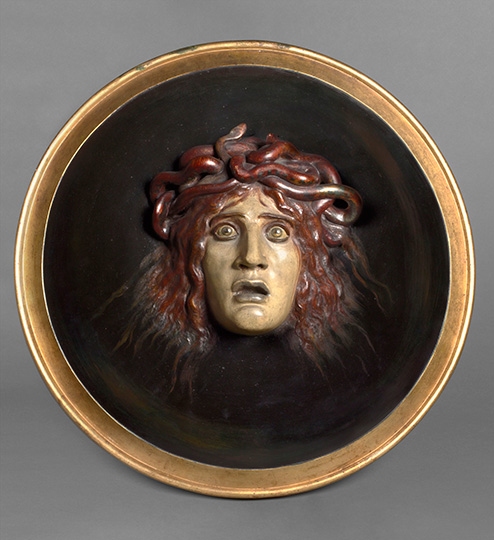
The second part of the exhibition which examined the "dark romantic" revival of the 19th century was the real strength of the show for me, showcasing dozens of unforgettable works by the French Symbolists drawn from the Musée D'Orsay's magnificent permanent collection. We learn that the work was a response to a time of upheaval, when faith in scientific positivism and democracy were weakening, and artists and intellectuals were growing increasingly frustrated with the hypocrisy of bourgeois propriety. It was also a time of "obsessive fears" about prostitution, venereal disease, and evolutionary degeneration, where a post-Darwinian nature was viewed not as gentle mother but, instead, "a devouring force relentlessly destroying personal happiness to ensure the survival of the species." No wonder, then, that this section is rife with images of Medusa, Salome, The Sphinx, "The Idol of Perversity" and other erotic and terrifyingfemme fatales. This section also boasted some surprising images by Gauguin (12 down), a number of oddly contemporary and revelatory fetishy cyanotypes by Charles-François Jeandel (13 down), and a the fantastic sculpture "Eternelle douleur (Eternal Pain)" by Paul Dardé, a wonderful, dynamic depiction of the lifeless head of Medusa aloft on a nest of writhing snakes (bottom image, but does not capture the power of the original).
The third part of the exhibition focused on "Surrrealism's Redescovery," and traced this early 20th century movement's ebrace of the dark non-rational after the absurd horrors of WWI. Although thematically fitting, aesthetically there were few things of great interest to me, personally, in this section. The only things of note here were some works by Dali and a series of photographs of Hans Bellmer's wonderfully perverse dolls (16 down).
The exhibition terms this trope "dark romanticism"--drawn from art historian Mario Praz's 1903 publication Flesh, Death and the Devil in Romantic Literature--and traces its development in three major sections. The first examines its genesis in the years from 1750-1850 in, paradoxically, "the age of reason," a response to the post-French revolution "Terror" and Napoleon's wars which, the text explains, "mark[ed] the end of the belief that reason alone could lead to enlightened humanity." Text and images demonstrate how the romantics used literary works--Gothic novels, of course, but also Goethe's and Milton's visions of hell and the darker interludes of Shakespeare--as the launching off point for artworks exploring the darkest and most taboo aspects of humanity: "cannibalism, Satanism, torture, incest, infantacide, and nightmares." The real standouts in this section were the works of Goya (4th down), Fuseli (2nd and 3rd down), some wonderful illustrations by Delecroix for Goethe's Faust(8th down), and the shockingly perverse and powerfully large-scale "Dante And Virgil In Hell" depicting an act of cannibalism described in Dante's Inferno (top image) and painted by William-Adolphe Bouguereau, whom I had previously known as the artist behind exceedingly competent and somewhat sentimental academic paintings such as this one. Another surprise in this section was a Goya print from his "Les Caprices" series which, the text convincingly asserted, served as the inspiration for Karloff's iconic Frankenstein.
The second part of the exhibition which examined the "dark romantic" revival of the 19th century was the real strength of the show for me, showcasing dozens of unforgettable works by the French Symbolists drawn from the Musée D'Orsay's magnificent permanent collection. We learn that the work was a response to a time of upheaval, when faith in scientific positivism and democracy were weakening, and artists and intellectuals were growing increasingly frustrated with the hypocrisy of bourgeois propriety. It was also a time of "obsessive fears" about prostitution, venereal disease, and evolutionary degeneration, where a post-Darwinian nature was viewed not as gentle mother but, instead, "a devouring force relentlessly destroying personal happiness to ensure the survival of the species." No wonder, then, that this section is rife with images of Medusa, Salome, The Sphinx, "The Idol of Perversity" and other erotic and terrifyingfemme fatales. This section also boasted some surprising images by Gauguin (12 down), a number of oddly contemporary and revelatory fetishy cyanotypes by Charles-François Jeandel (13 down), and a the fantastic sculpture "Eternelle douleur (Eternal Pain)" by Paul Dardé, a wonderful, dynamic depiction of the lifeless head of Medusa aloft on a nest of writhing snakes (bottom image, but does not capture the power of the original).
The third part of the exhibition focused on "Surrrealism's Redescovery," and traced this early 20th century movement's ebrace of the dark non-rational after the absurd horrors of WWI. Although thematically fitting, aesthetically there were few things of great interest to me, personally, in this section. The only things of note here were some works by Dali and a series of photographs of Hans Bellmer's wonderfully perverse dolls (16 down).
Throughout the exhibition, there were also a good many film clips meant to be playing in small theatres; sadly, many were out of order on the day we were there, but on a good day, one would find clips from Dracula, Frankenstein, Nosferatu (17 down), Hitchcock'sRebecca, Un Chien Andalou, Häxan, and much more.
The official introductory text for the exhibition follows; you can read the complete wall tex by clicking here; you can learn more about the exhibition by clicking here. Full captions for all images follow as well.
You can order a copy of the exhibition catalog (in French but so, so worth it!) by clicking here. Special thanks to Pam Grossman for letting me know about this wonderful exhibition, and to "professor of art" Michael Daks for lingering with me there for 3+ hours.
The official introductory text for the exhibition follows; you can read the complete wall tex by clicking here; you can learn more about the exhibition by clicking here. Full captions for all images follow as well.
You can order a copy of the exhibition catalog (in French but so, so worth it!) by clicking here. Special thanks to Pam Grossman for letting me know about this wonderful exhibition, and to "professor of art" Michael Daks for lingering with me there for 3+ hours.
The Angel of the Odd: Dark Romanticism from Goya to Max Ernst
It was in the 1930s that the Italian writer and art historian Mario Praz (1896-1982) first highlighted the dark side of Romanticism, thus naming a vast swathe of artistic creation, which from the 1760s onwards exploited the shadows, excesses and irrational elements that lurked behind the apparent triumph of enlightened Reason.
This world was created in the English Gothic novels of the late 18th century, a genre of literature that fascinated the public with its penchant for the mysterious and the macabre. The visual arts quickly followed suit: many painters, engravers and sculptors throughout Europe vied with the writers to create horrifying and grotesque worlds: Goya and Géricault presented us with the senseless atrocities of war and the horrifying shipwrecks of their time, Füssli and Delacroix gave substance to the ghosts, witches and devils of Milton, Shakespeare and Goethe, whereas C.D. Friedrich and Carl Blechen cast the viewer into enigmatic, gloomy landscapes, reflecting his fate.
From the 1880s, seeing the vanity and ambiguity behind the belief in progress, many artists picked up this legacy of Dark Romanticism, turning towards the occult, reviving myths and exploiting the new ideas about dreams, in order to bring Man face to face with his fears and contradictions: the savagery and depravity hidden in every human being, the risk of mass degeneration, the harrowing strangeness of daily life revealed in the horror stories of Poe and Barbey d’Aurévilly. And so, right in the middle of the second industrial revolution, hordes of witches, sniggering skeletons, shapeless devils, lecherous Satans and deadly enchantresses suddenly appeared, expressing a defiant, carnivalesque disillusionment with the present.
After the First World War, when the Surrealists took the unconsciousness, dreams and intoxication as the basis for artistic creation, they completed the triumph of the imagination over the principle of reality, and thus, put the finishing touches to the spirit itself of Dark Romanticism. At the same time, the cinema seized on Frankenstein, Faust and other masterpieces of this genre that are now firmly established in the collective imagination.
Following the first stage of the exhibition at the Städel Museum in Frankfurt, the Musée d’Orsay plans to present the many different expressions of Dark Romanticism, from Goya and Füssli to Max Ernst and the Expressionist films of the 1920s, through a selection of 200 works that includes paintings, graphic works and films.
- William-Adolphe Bouguereau, Dante And Virgil In Hell, 1850
- Johann Henry Fuseli, Sin Pursued by Death, 1794-1796
- Johann Henry Fuseli, The Nightmare, circa 1782
- Francisco de Goya, Witches in the Air, 1797-1798
- Louis Boulanger, Les Fantômes, 1829
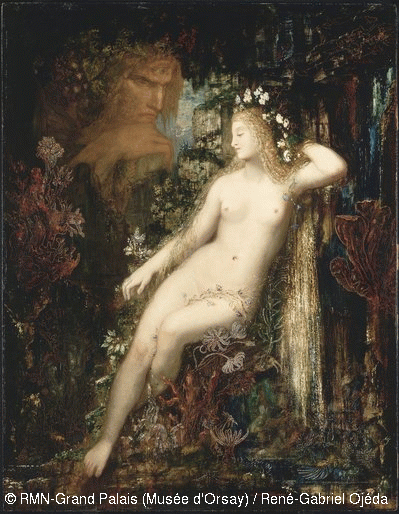
- Gustave Moreau, Galatea, Circa 1880
- Eugène Grasset, Trois Femmes et Trois Loups, 1892
- Eugene Delecroix, Illustration from Goethe's Faust, 1828
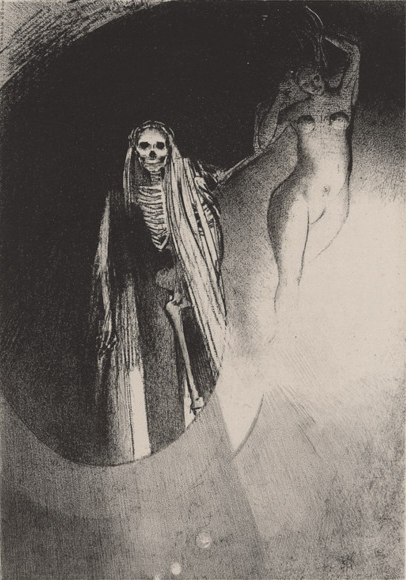
- Odilon Redon, La Mort: C'est moi qui te rends serieuse; enlaçons-nous (Death: It Is I Who Makes You Serious; Let Us Embrace) from La Tentation de Sainte-Antoine (The Temptation of Saint Anthony) (plate XX), 1896
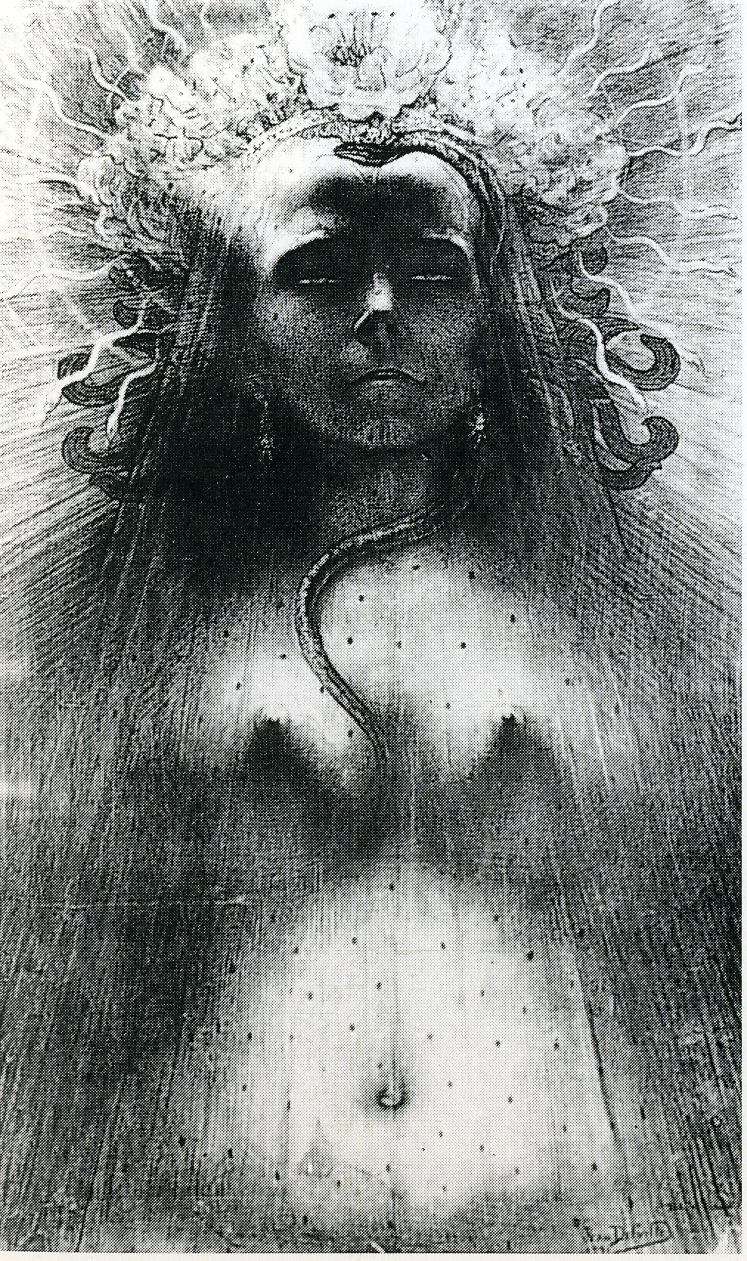
- Jean Delville, Idol of Perversity, 1891
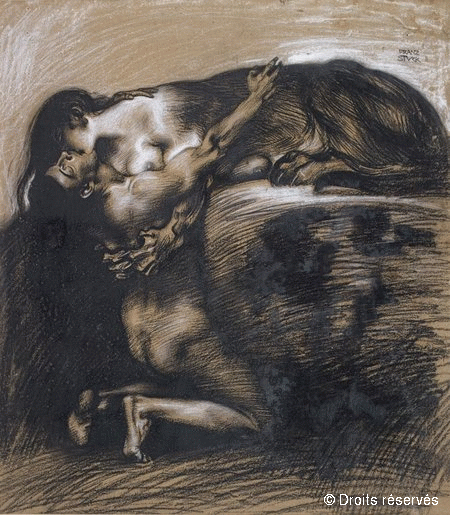
- Franz von Stuck, The Kiss of the Sphinx (Der Kuss der Sphinx), 1895
- Paul Gauguin, Madame le Mort, 1891
- Julien Adolphe Duvovelle, Crâne aux yeux exorbités et mains agrippées à un mur, 1904
- Cyanotype by Charles-François Jeandel
- Anonymous spirit photograph, 1910
- Hans Bellmer, The Doll (face and knife), 1935
- Still from F.W. Murnau's Nosferatu, 1922
- Arnold Böcklin, Shield with Medusa's Head, 1897
- Paul Dardé, Eternelle douleur (Eternal Pain), 1913
Reply all
Reply to author
Forward
0 new messages