
Coronavirus - About 2019 Novel Coronavirus (2019-nCoV)

தேமொழி
About 2019 Novel Coronavirus (2019-nCoV)
How it Spreads
Coronaviruses are a large family of viruses that are common in many different species of animals, including camels, cattle, cats, and bats. Rarely, animal coronaviruses can infect people and then spread between people such as with MERS and SARS. Early on, many of the patients in the outbreak of respiratory illness caused by 2019-nCov in Wuhan, China had some link to a large seafood and live animal market, suggesting animal-to-person spread. However, a growing number of patients reportedly have not had exposure to animal markets, indicating person-to-person spread is occurring.
At this time, it’s unclear how easily or sustainably this virus is spreading between people. Chinese officials report that sustained person-to-person spread in the community is occurring in China. Person-to-person spread in the United States has not yet been detected, but it’s likely to occur to some extent. Cases in healthcare settings, like hospitals, may also occur.
When person-to-person spread has occurred with MERS and SARS, it is thought to have happened mainly via respiratory droplets produced when an infected person coughs or sneezes, similar to how influenza and other respiratory pathogens spread. Spread of SARS and MERS between people has generally occurred between close contacts.
It’s important to note that how easily a virus spreads person-to-person can vary. Some viruses are highly contagious (like measles), while other viruses are less so. It’s important to know this in order to better understand the risk associated with this virus. While CDC considers this is a very serious public health threat, based on current information, the immediate health risk from 2019-nCoV to the general American public is considered low at this time.
There is much more to learn about the transmissibility, severity, and other features associated with 2019-nCoV and investigations are ongoing. The latest situation summary updates are available on CDC’s web page 2019 Novel Coronavirus, Wuhan, China.
Symptoms
For confirmed 2019-nCoV infections, reported illnesses have ranged from infected people with little to no symptoms to people being severely ill and dying. Symptoms can include:
- Fever
- Cough
- Shortness of breath
CDC believes at this time that symptoms of 2019-nCoV may appear in as few as 2 days or as long as 14 after exposure. This is based on what has been seen previously as the incubation period of MERS viruses.
The latest situation summary updates are available on CDC’s web page 2019 Novel Coronavirus, Wuhan, China.
Prevention & Treatment
Prevention
There is currently no vaccine to prevent 2019-nCoV infection. The best way to prevent infection is to avoid being exposed to this virus. Right now, 2019-nCoV has not been found to be spreading in the United States, so there are no additional precautions recommended for the general public to take. However, as a reminder, CDC always recommends everyday preventive actions to help prevent the spread of respiratory viruses, including:
- Wash your hands often with soap and water for at least 20 seconds. If soap and water are not available, use an alcohol-based hand sanitizer.
- Avoid touching your eyes, nose, and mouth with unwashed hands.
- Avoid close contact with people who are sick.
- Stay home when you are sick.
- Cover your cough or sneeze with a tissue, then throw the tissue in the trash.
- Clean and disinfect frequently touched objects and surfaces.
These are everyday habits that can help prevent the spread of several viruses. CDC does have specific guidance for travelers.
Treatment
There is no specific antiviral treatment recommended for 2019-nCoV infection. People infected with 2019-nCoV should receive supportive care to help relieve symptoms. For severe cases, treatment should include care to support vital organ functions.
People who think they may have been exposed to 2019-nCoV should contact your healthcare provider immediately.
See Interim Guidance for Healthcare Professionals for information on patients under investigation.
Situation Summary
CDC is closely monitoring an outbreak of respiratory illness caused by a novel (new) coronavirus (termed “2019-nCoV”) that was first detected in Wuhan City, Hubei Province, China and which continues to expand. Chinese health officials have reported more than a thousand infections with 2019-nCoV in China, including outside of Hubei Province. Infections with 2019-nCoV also are being reported in a growing number of international locations, including the United States, where 5 cases in travelers from Wuhan have been confirmed in four states (AZ, CA, IL, WA) as of January 26, 2020.
Warning Level 3, Avoid Nonessential Travel
- Updated Novel Coronavirus in Hubei Province, ChinaJanuary 26, 2020CDC recommends that travelers avoid all nonessential travel to Hubei Province, China, including Wuhan.
தேமொழி

தேமொழி
Plot
Returning from a Hong Kong business trip, AIMM employee Beth Emhoff (Gwyneth Paltrow) has a layover in Chicago to rendezvous with a former lover before returning to her family in Minneapolis. She appears to have contracted a cold during her trip. Her six-year-old son from a previous marriage, Clark, also becomes sick and is sent home from school. Beth's condition worsens and two days later she collapses with severe seizures. Her husband, Mitch (Matt Damon), rushes her to the hospital, but she dies of an unknown cause.
Mitch returns home and finds that Clark has also died from a similar infection. Mitch is placed in isolation but seems to be immune to the disease. He is released and returns home to his teenage daughter Jory, (Anna Jacoby-Heron) though they are unsure if she has inherited his immunity. She decides to stay with her father regardless. Mitch struggles with learning that his wife was unfaithful, and protecting his daughter from infection. Meanwhile, everyone who had contact with Emhoff begins to spread the disease around the world.
In Atlanta, representatives of the Department of Homeland Security meet with Dr. Ellis Cheever (Laurence Fishburne) of the CDC and fear that the disease is a bio weapon terror attack over the Thanksgiving weekend. Dr. Cheever dispatches Dr. Erin Mears (Kate Winslet), an Epidemic Intelligence Service officer, to Minneapolis to begin investigating. Mears traces the outbreak to Emhoff, but after setting up triage camps in large venues, Dr. Mears becomes infected. Her evacuation is postponed, as airports close ahead of a quarantine. She later dies and is buried in a mass grave. As more and more people become infected with no cure in sight, social order begins to decay, with rampant looting of stores and homes. The U.S. President is moved underground while emergency services suffer absenteeism and no longer respond. Mitch and Jory attempt to escape to Wisconsin, but the borders are closed.
At the CDC, Dr. Ally Hextall (Jennifer Ehle) determines the virus is a mix of genetic material from pig and bat viruses. Work on a cure stalls because scientists cannot discover a cell culture within which to grow the newly named Meningoencephalitis Virus One (MEV-1). UCSF professor Dr. Ian Sussman (Elliott Gould) violates orders from the CDC to destroy his samples, and on Day 12, with over 8 million already infected, identifies a usable MEV-1 cell culture using bat cells. Hextall uses the breakthrough to start work on a vaccine. Other scientists determine that the virus is spread by fomites with a basic reproduction number of four, projecting that 1 in 12 (8.3%) of the world will be infected, with a 25–30% mortality rate.
Conspiracy theorist Alan Krumwiede (Jude Law) posts videos about the virus on his popular blog. In one video, he shows himself sick, and later shows he 'recovered' using a herbal cure derived from forsythia. In a panic, people seeking forsythia overwhelm pharmacies. Krumwiede's claims attract national attention. During a television interview, he reveals that Dr. Cheever had secretly told his fiancé to leave Chicago before the city was quarantined. Cheever is informed the government may charge him for leaking information. Later, it is revealed Krumwiede had faked being infected in an attempt to increase profits for forsythia investors. He is arrested for conspiracy, securities fraud and manslaughter, but is released when his many supporters successfully pay his bail.
Using an attenuated virus, Dr. Hextall identifies a possible vaccine. To cut out the lengthy testing process, she injects herself with it and visits her father, who is infected. Hextall does not contract MEV-1, and the vaccine is declared a success. The vaccine supply can't meet demand, so the CDC awards vaccinations with a one-year birth date lottery (first responders, doctors, and others exempt). Meanwhile, Mitch and Jory reconcile with the hope of life going back to normal.
Simultaneously, Dr. Leonora Orantes (Marion Cotillard), a WHO epidemiologist, has travelled to Hong Kong to follow the Beth Emhoff lead. She collaborates with Sun Feng, a Chinese official, and other local epidemiologists to identify Emhoff as patient zero, with security footage showing her in contact with the next three victims at a Macau casino. Before Orantes can leave, Feng kidnaps her, using her as leverage to obtain (anticipated) MEV-1 vaccines for his village. Orantes spends months living with the villagers until the vaccine arrives, and she is released. When her colleague tells her that similar kidnappings have been widespread and that the doses were placebos, Orantes rushes back to warn the villagers, with whom she had built up a caring relationship.
By Day 26, the death toll has reached at least 2.5 million in the U.S. and 26 million worldwide. The discovery, production and initial deliveries of vaccine take until Day 133, with vaccinations to run until nearly Day 500. The final death toll is not seen. In a flashback, the source of the virus is revealed: an AIMM bulldozer clears some jungle and disturbs a bat, which takes food from a banana tree. The bat flies over a pigpen, dropping a chunk of banana, which is then eaten by a piglet. A chef from the Macau casino buys the piglet. As he handles the carcass in the kitchen, he does not wash his hands when called to meet a customer – Beth Emhoff. The chef shakes hands with Beth, giving her the mix of bat and pig viruses, making her patient zero.
தேமொழி
Novel Coronavirus (2019-nCoV) advice for the public: Myth busters
https://www.who.int/emergencies/diseases/novel-coronavirus-2019/advice-for-public/myth-busters
World Health Organization: WHO
Is it safe to receive a letter or a package from China?
Yes, it is safe. People receiving packages from China are not at risk of contracting the new coronavirus. From previous analysis, we know coronaviruses do not survive long on objects, such as letters or packages.

Yes, it is safe. People receiving packages from China are not at risk of contracting the new coronavirus. From previous analysis, we know coronaviruses do not survive long on objects, such as letters or packages.
Can pets at home spread the new coronavirus (2019-nCoV)?
At present, there is no evidence that companion animals/pets such as dogs or cats can be infected with the new coronavirus. However, it is always a good idea to wash your hands with soap and water after contact with pets. This protects you against various common bacteria such as E.coli and Salmonella that can pass between pets and humans.

At present, there is no evidence that companion animals/pets such as dogs or cats can be infected with the new coronavirus. However, it is always a good idea to wash your hands with soap and water after contact with pets. This protects you against various common bacteria such as E.coli and Salmonella that can pass between pets and humans.
Do vaccines against pneumonia protect you against the new coronavirus?
No. Vaccines against pneumonia, such as pneumococcal vaccine and Haemophilus influenza type B (Hib) vaccine, do not provide protection against the new coronavirus.
The virus is so new and different that it needs its own vaccine. Researchers are trying to develop a vaccine against 2019-nCoV, and WHO is supporting their efforts.
Although these vaccines are not effective against 2019-nCoV, vaccination against respiratory illnesses is highly recommended to protect your health.

No. Vaccines against pneumonia, such as pneumococcal vaccine and Haemophilus influenza type B (Hib) vaccine, do not provide protection against the new coronavirus.
The virus is so new and different that it needs its own vaccine. Researchers are trying to develop a vaccine against 2019-nCoV, and WHO is supporting their efforts.
Although these vaccines are not effective against 2019-nCoV, vaccination against respiratory illnesses is highly recommended to protect your health.
Can regularly rinsing your nose with saline help prevent infection with the new coronavirus?
No. There is no evidence that regularly rinsing the nose with saline has protected people from infection with the new coronavirus.
There is some limited evidence that regularly rinsing nose with saline can help people recover more quickly from the common cold. However, regularly rinsing the nose has not been shown to prevent respiratory infections.

No. There is no evidence that regularly rinsing the nose with saline has protected people from infection with the new coronavirus.
There is some limited evidence that regularly rinsing nose with saline can help people recover more quickly from the common cold. However, regularly rinsing the nose has not been shown to prevent respiratory infections.
Can gargling mouthwash protect you from infection with the new coronavirus?
No. There is no evidence that using mouthwash will protect you from infection with the new coronavirus.
Some brands or mouthwash can eliminate certain microbes for a few minutes in the saliva in your mouth. However, this does not mean they protect you from 2019-nCoV infection.

No. There is no evidence that using mouthwash will protect you from infection with the new coronavirus.
Some brands or mouthwash can eliminate certain microbes for a few minutes in the saliva in your mouth. However, this does not mean they protect you from 2019-nCoV infection.
Can eating garlic help prevent infection with the new coronavirus?
Garlic is a healthy food that may have some antimicrobial properties. However, there is no evidence from the current outbreak that eating garlic has protected people from the new coronavirus.

Garlic is a healthy food that may have some antimicrobial properties. However, there is no evidence from the current outbreak that eating garlic has protected people from the new coronavirus.
Does putting on sesame oil block the new coronavirus from entering the body?
No. Sesame oil does not kill the new coronavirus. There are some chemical disinfectants that can kill the 2019-nCoV on surfaces. These include bleach/chlorine-based disinfectants, either solvents, 75% ethanol, peracetic acid and chloroform.
However, they have little or no impact on the virus if you put them on the skin or under your nose. It can even be dangerous to put these chemicals on your skin.

No. Sesame oil does not kill the new coronavirus. There are some chemical disinfectants that can kill the 2019-nCoV on surfaces. These include bleach/chlorine-based disinfectants, either solvents, 75% ethanol, peracetic acid and chloroform.
However, they have little or no impact on the virus if you put them on the skin or under your nose. It can even be dangerous to put these chemicals on your skin.
Does the new coronavirus affect older people, or are younger people also susceptible?
People of all ages can be infected by the new coronavirus (2019-nCoV). Older people, and people with pre-existing medical conditions (such as asthma, diabetes, heart disease) appear to be more vulnerable to becoming severely ill with the virus.
WHO advises people of all ages to take steps to protect themselves from the virus, for example by following good hand hygiene and good respiratory hygiene.

People of all ages can be infected by the new coronavirus (2019-nCoV). Older people, and people with pre-existing medical conditions (such as asthma, diabetes, heart disease) appear to be more vulnerable to becoming severely ill with the virus.
WHO advises people of all ages to take steps to protect themselves from the virus, for example by following good hand hygiene and good respiratory hygiene.
Are antibiotics effective in preventing and treating the new coronavirus?
No, antibiotics do not work against viruses, only bacteria.
The new coronavirus (2019-nCoV) is a virus and, therefore, antibiotics should not be used as a means of prevention or treatment.
However, if you are hospitalized for the 2019-nCoV, you may receive antibiotics because bacterial co-infection is possible.

No, antibiotics do not work against viruses, only bacteria.
The new coronavirus (2019-nCoV) is a virus and, therefore, antibiotics should not be used as a means of prevention or treatment.
However, if you are hospitalized for the 2019-nCoV, you may receive antibiotics because bacterial co-infection is possible.
Are there any specific medicines to prevent or treat the new coronavirus?
To date, there is no specific medicine recommended to prevent or treat the new coronavirus (2019-nCoV).
However, those infected with the virus should receive appropriate care to relieve and treat symptoms, and those with severe illness should receive optimized supportive care. Some specific treatments are under investigation, and will be tested through clinical trials. WHO is helping to accelerate research and development efforts with a range or partners.

___________________________
To date, there is no specific medicine recommended to prevent or treat the new coronavirus (2019-nCoV).
However, those infected with the virus should receive appropriate care to relieve and treat symptoms, and those with severe illness should receive optimized supportive care. Some specific treatments are under investigation, and will be tested through clinical trials. WHO is helping to accelerate research and development efforts with a range or partners.
தேமொழி
Images of new coronavirus just released
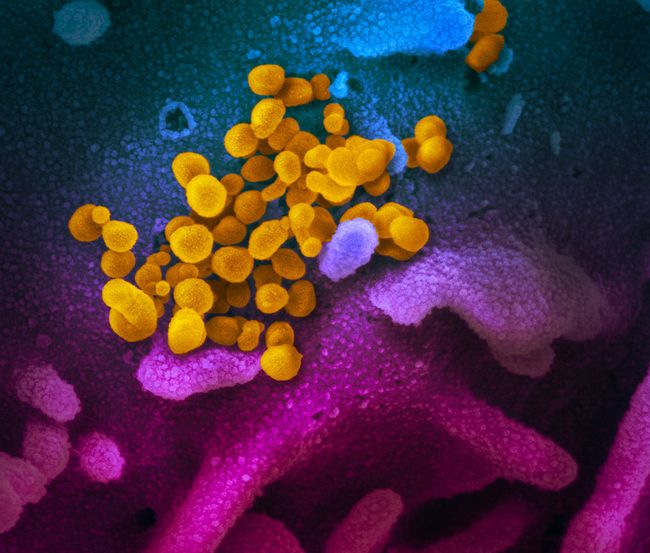
This scanning electron microscope image shows the new coronavirus (yellow) among human cells (blue, pink and purple).
(Color has been added to the image to better show the virus and its environment.) (Image credit: NIAID-RML)
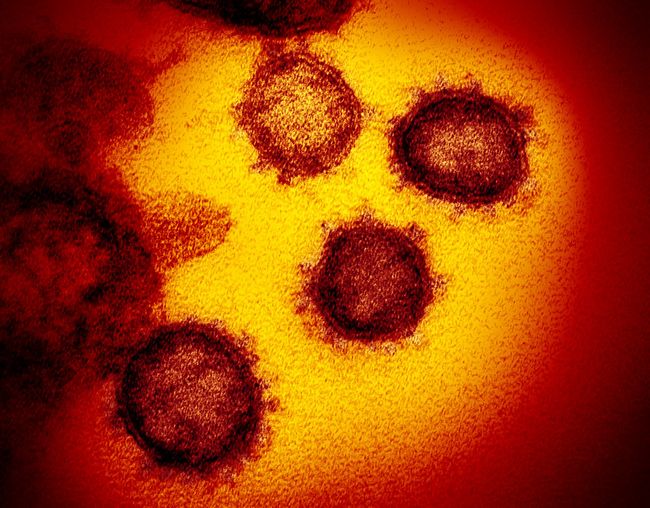
This is a transmission electron microscope image showing the new coronavirus emerging from the surface of human cells.
(Image credit: NIAID-RML)
---
தேமொழி
New coronavirus may spread through poop
The new coronavirus SARS-CoV-2, which has now infected nearly 76,000 people, spreads mostly through respiratory droplets and contact with infected patients. But new research suggests that it can also spread through feces.
There are currently more cases of COVID-19 (the disease caused by the virus SARS-CoV-2) than would be expected if the virus were spreading only through respiratory droplets and contact with infected patients, according to a report published Feb. 15 by the Chinese Center for Disease Control and Prevention (China CDC).
They isolated the coronavirus from one patient who had severe pneumonia and examined the virus under an electron microscope. They found that the coronavirus was viable. "This means that stool samples may contaminate hands, food, water, etc.," the China CDC wrote in the report. People who use the bathroom and then don't wash their hands could spread the virus to others, for instance.
"This virus has many routes of transmission, which can partially explain its strong transmission and fast transmission speed," the China CDC wrote. To avoid feces contamination, the China CDC recommends washing your hands frequently, disinfecting surfaces, maintaining personal hygiene, avoiding the consumption of raw food, boiling water before drinking it and disinfecting hospital environments.
Another study, published Feb. 17 in the journal Emerging Microbes and Infections, found that the virus was present in blood and anal swabs taken from patients infected with SARS-CoV-2.
தேமொழி
|



தேமொழி
Why new diseases keep appearing in China

Why new diseases keep appearing in China
Why Covid-19 was bound to happen.
[By Sam Ellis Mar 6, 2020, 12:30pm EST]
https://www.vox.com/videos/2020/3/6/21168006/coronavirus-covid19-china-pandemic
தேமொழி
இன்றைய நிலை

---
கடந்த சில நாட்களாக ...
"Strange coincidence that all worst affected Covid19 cases are along the same Latitude 40ํ :
From left:
France Italy Iran Wuhan S.Korea Japan Seattle Washington NewYork 👇🏾👇🏾"

என்று இந்தப்படம் சமூக வலைத்தளங்களில் பகிரப்பட்டு வருகிறது.
இது போன்ற முயற்சி "cherry picking of data"
என்று அறியப்படும் என நாம் அறிவோம்.
ஆனால் இங்கு இது படத்தில் ஒரு மேம்போக்கான பார்வையில் கூறப்படுகிறது
இதனால் நான் இன்றைய கொரோனா பரவல் தரவுகளின்படி தேடிப் பார்த்தேன்
கூகுள் வரைபட உதவியுடன் புவியிடக் குறிப்புகள் கிடைத்தது
Latitude 40ํ இல் அதிக கொரோனா பாதிப்பு என்பது தவறு.

Top 4 highly impacted places
Impact/Outbreak
Wuhan, Hubei, China - Lat.30 - deaths 3024 - Confirmed Cases 67760
Lombardy, Italy - Lat.45 - deaths 631 - Confirmed Cases 10149
Qom, Iran - Lat.34 - deaths 291, Confirmed Cases 8042
Daegu, S.Korea - Lat.35 - deaths 54 Confirmed Cases 7513
தேமொழி


----
தேமொழி
-----
Basic protective measures against the new coronavirus
https://www.who.int/emergencies/diseases/novel-coronavirus-2019/advice-for-public
தேமொழி
How nature is reclaiming its spaces due to Coronavirus

The coronavirus has hit the re-set button on nature. With most people back at their homes, nature has begun reclaiming its space across the world. WION's Palki Sharma tells you how this crisis is a lesson in co-existence.
தேமொழி
The coronavirus did not escape from a lab. Here's how we know.
By Jeanna Bryner - Live Science Editor-in-Chief
The persistent myth can be put to bed.
As the novel coronavirus causing COVID-19 spreads across the globe, with cases surpassing 284,000 worldwide today (March 20), misinformation is spreading almost as fast.
One persistent myth is that this virus, called SARS-CoV-2, was made by scientists and escaped from a lab in Wuhan, China, where the outbreak began.
A new analysis of SARS-CoV-2 may finally put that latter idea to bed. A group of researchers compared the genome of this novel coronavirus with the seven other coronaviruses known to infect humans: SARS, MERS and SARS-CoV-2, which can cause severe disease; along with HKU1, NL63, OC43 and 229E, which typically cause just mild symptoms, the researchers wrote March 17 in the journal Nature Medicine.
"Our analyses clearly show that SARS-CoV-2 is not a laboratory construct or a purposefully manipulated virus," they write in the journal article.
read more technical details @ https://www.livescience.com/coronavirus-not-human-made-in-lab.html
தேமொழி

Dear Indians ! pay no heed to "ghantology gyan" of Modi -Bjp. Please don't clap for me !!
I am a Doctor and I don't want you to clap for me tomorrow. I have been attending to patients with severe contaminating infections for two decades and will continue to do so in times of Corona but I don't want anyone to clap for me on 22nd march.
Instead, as responsible citizens who possess fundamental rights I want you to demand and pressurize the Modi led BJP government to do the needful -
~ spell out the allocation of disaster relief funds and medical aid strategy for all.
~ get him to combat this by pushing atleast double the amount of funds that was required for the statue of Sardar Patel.
~ get him to tell corporates and his industrialists whom he let escape or bailed out with your money , that now it's their turn to bail out the country from the crisis of their own making.
~ declare the tons of gold silver money looted hoarded and now accumulated in temples of Tirupati Padmanabhan Shirdi Siddhivinayak Puri and many more as being state treasure to be used in times of such crisis
Begin with this atleast ... instead of clapping. Under whichever pretext it may be, I don't want you to clap for me .
~ dr manisha bangar
( Senior Consultant Gastroenterologist and Transplant Hepatologist, Hyderabad,India )

தேமொழி
Many Americans suspect human role in COVID-19 origins
Substantial segments of Americans think humans played a prominent role in creating the new coronavirus.

While a plurality says it most likely came about naturally (43%), nearly three-in-ten say it most likely came from a lab (29%) – with 23% saying it was developed intentionally and 6% saying it was made accidentally. A quarter of the public say they are not sure how the virus is most likely to have come about.
தேமொழி
தேமொழி
Man dies after self-medicating with chloroquine phosphate to treat coronavirus
By Tamar Lapin
March 23, 2020 | 7:55pm | Updated

A man died after ingesting an additive used to clean fish tanks — which included a pharmaceutical drug touted by President Trump and others as a potential coronavirus cure.
Within 30 minutes of taking chloroquine phosphate, the man in his 60s experienced “immediate effects” and had to be admitted to a nearby Banner Health hospital, the medical system in Arizona said in a press release Monday.
His wife, also in her 60s, is in critical condition after taking the additive, which is used in aquariums to kill some organisms, like algae, that may harm fish.
The man’s wife told NBC News she’d watched press briefings where Trump talked about the potential benefits of chloroquine — and she recalled the name from the treatment she used on her koi fish.
“I saw it sitting on the back shelf and thought, ‘Hey, isn’t that the stuff they’re talking about on TV?,'” she told the outlet on the condition of anonymity.
The couple mixed a small amount of their fish treatment with a liquid and drank it as a way to prevent the coronavirus, she said.
“We were afraid of getting sick.”
Within 20 minutes, both became ill, at first feeling “dizzy and hot.”
Then, “I started vomiting,” the woman told the outlet. “My husband started developing respiratory problems and wanted to hold my hand.”
Her husband died shortly after arriving to the hospital.
The cleaning agent ingested by the couple has the same active ingredient as the anti-malaria medicine chloroquine but is formulated differently.
Prices of the product on eBay skyrocketed after some studies found that the pharmaceutical version, the anti-malarial drug chloroquine, and a derivative of it called hydroxychloroquine, were effective in killing the virus in laboratory experiments.
Trump said last week the drug would soon begin to be distributed to treat some coronavirus patients. FDA Commissioner Stephen Hahn clarified that the drug would be made available as part of a clinical trial.
Officials warned people not to take the drugs to treat coronavirus symptoms unless it has been specifically prescribed by their doctor.
“The last thing that we want right now is to inundate our emergency departments with patients who believe they found a vague and risky solution that could potentially jeopardize their health,” said Dr. Daniel Brooks, medical director of the Banner Poison and Drug Information Center.
Chloroquine is especially not recommended for use by non-hospitalized patients.
“We are strongly urging the medical community to not prescribe this medication to any non-hospitalized patients,” Brooks said.
தேமொழி

அமெரிக்க ஆய்வாளர் பவித்ரா கொரோனா அறிவியல் விளக்கம் அளிக்கிறார்
முனைவர். பவித்ரா வெங்கடகோபாலன் தற்போது சென்னையில் ஒரு மருத்துவ கண்டறியும் மையத்தையும் பெங்களூருவில் ஒரு ஆராய்ச்சி ஆய்வகத்தையும் நிறுவி இயக்கி வருகிறார்.
மேலும்..
உண்மை எது, வதந்தி எது, கற்பனையில் எழுதப்பட்ட கட்டுக்கதை எது என்று பிரித்தறிவதற்காக, கொரோனா வைரஸ் பரவும் விதம் குறித்து அமெரிக்க பல்கலைக்கழகம் ஒன்றில் ஆய்வுகளை மேற்கொண்டு அதில் முனைவர் பட்டம் பெற்றிருக்கும் Dr. பவித்ரா வெங்கடகோபாலன் அவர்களைத் தொடர்பு கொண்டு அவரது ஆராய்ச்சி, இந்த வைரஸ் உருவான விதம், அது எவ்வாறு பரவுகிறது, இதனால் யாரெல்லாம் பாதிக்கப்படுகிறார்கள், இதனைத் தடுக்க எப்படியான உணவுகளை உண்ண வேண்டும் என்ற பல கேள்விகளுக்கு விடை காண்கிறார் குலசேகரம் சஞ்சயன்.
https://www.sbs.com.au/language/tamil/audio/tamil-researcher-on-coronavirus-sheds-new-light
தேமொழி


Edward Packiaraj
--
"Tamil in Digital Media" group is an activity of Tamil Heritage Foundation. Visit our website: http://www.tamilheritage.org; you may like to visit our Muthusom Blogs at: http://www.tamilheritage.org/how2contribute.html To post to this group, send email to minT...@googlegroups.com
To unsubscribe from this group, send email to minTamil-u...@googlegroups.com
For more options, visit this group at http://groups.google.com/group/minTamil
---
You received this message because you are subscribed to the Google Groups "மின்தமிழ்" group.
To unsubscribe from this group and stop receiving emails from it, send an email to mintamil+u...@googlegroups.com.
To view this discussion on the web visit https://groups.google.com/d/msgid/mintamil/252315b8-03c0-4268-bc76-4a76c272cde4%40googlegroups.com.
S.Edward Packiaraj
Rosary e-Solutions
Cell 9786424927
தேமொழி
தேமொழி

தேமொழி
இன்றைய நிலை

தேமொழி

தேமொழி
தேமொழி
தேமொழி

நமது மனிதப் பண்பு எங்கே போனது? கைத்தட்டி பாராட்டுகளை தெரிவித்துக் கொண்டோம்.. மருத்துவர்களின் சேவைகளை பாராட்டுகின்றோம் என்று நாம் சொல்வதெல்லாம் போலித்தனம். மனிதர்கள் சுயநலவாதிகள் என்பதை இந்த
கொரோனா காலம் தோலுரித்துக் காட்டுகிறது. அதிலும் குறிப்பாக விழிப்புணர்வு அற்ற சமுதாயம் தன்னைக் காப்பாற்றிக்கொள்வதற்காக அச்சத்தில் பிறரை அழிக்கவும் தயங்காது என்பதற்கு இது ஒரு நல்ல உதாரணம்.
-சுபா
#கூட்டு_மனசாட்சியின்_கோரமுகம்.
லெட்சுமி நாராயன் ரெட்டி. முப்பது ஆண்டுகளுக்கும் மேலாக எலும்பு அறுவை சிகிச்சை மருத்துவப் பணிகளைச் செய்து வந்தவர். 56 வயது. ஆந்திர மாநிலம் நெல்லூரில் தன்னுடைய கனவு மருத்துவமனையை ஏப்ரல் நான்காம் தேதிதான் திறந்திருக்கிறார். மறுநாள் ஐந்தாம் தேதி ஒரு நோயாளிக்கு அறுவை சிகிச்சை செய்கிறார். அதுதான் தன்னுடைய கடைசி மருத்துவப் பணி என்பதை அவர் நினைத்திருந்திருக்க மாட்டார்.
24 நான்கு மணி நேரம் கூடச் செல்லவில்லை. கொரோனாத் தொற்றுப் பரிசோதனை செய்து கொள்ள வேண்டுமோ...? என்ற அளவிற்கு ஒரு அச்சம் அவருக்கு ஏற்பட்டிருக்கிறது. தாமதிக்காமல் தன்னைப் பரிசோதித்துக் கொள்கிறார்.
கால் நூற்றாண்டிற்கும் மேலாக மருத்துவம் செய்தவர். ஏராளமான மருத்துவ நண்பர்களைக் கொண்டவர். வசதி படைத்த உறவினர்கள். பரிசோதனையின் முடிவு அவருக்கு ஒன்றும் அதிர்ச்சி தரவில்லை. முடிவு பாசிட்டிவ். கொரோனாவை எதிர்கொள்ளத் தயாராகிறார்.
சென்னை வானகரத்தில் உள்ள அப்பல்லோ மருத்துவமனையில் மருத்துவம் செய்துகொள்வதற்கான ஏற்பாடுகளைச் செய்து கொள்கிறார். மருத்துவ நண்பர்களை உதவிக்கு அழைக்கிறார். ஆம்புலன்ஸ் ஒட்டுனர்களை உதவிக்கு அழைக்கிறார். அனைவருமே தொடர்பு எல்லைக்கு அப்பால் சென்றுவிட்டார்கள். இப்போது அவருக்கென நண்பர்களோ, உறவினர்களோ இல்லாமல் போய்விட்டார்கள். உலகமே இருண்டுவிட்டதைப் போல உணர்கிறார்.
காலம் எவ்வளவு கொடுமையானது. மனம் உடைந்து போகிறார் மருத்துவர் ரெட்டி. நோயைவிட அவர் வாழ்ந்த சமூகம் அவரைக் கைவிட்டது கண்டு இதயம் நொறுங்கிப்போகிறார்.
ஏப்ரல் 5-ஆம் தேதி, தான் நினைத்ததைப்போலவே அப்பல்லோ மருத்துவ மனையில் அட்மிட் ஆகிவிட்டார். இந்த 24 மணி நேரம் அவருக்கு 24 ஆண்டுகளைப் போலக் கடந்தது.
கொரோனா எல்லோரையும் கொன்றுவிடுவதில்லை?. ஆகப்பெரும் சிகிச்சைக்கு தன்னை உட்படுத்திக் கொண்டார். ஒரு மருத்துவராக அவர் வெற்றி பெற்றிருக்கிறார். அவர் வாழ்ந்த இந்தச் சமூகத்தின் முன்பாக அவர் தோற்றுவிட்டார். மூத்த மருத்துவரான ரெட்டி நேற்று (13.04.2020) அதிகாலை 4.30 மணியளவில் இறந்தே போய்விட்டார்.
மருத்துவமனையில் அனுமதிக்கப்பட்ட நிமிடம் முதல் தன்னுடைய கடைசி மூச்சை நிறுத்திக் கொள்ளும் வரை அவர் நினைத்திருக்கக்கூடும்... கொரோனாவை விட இந்தச் சமூகமூம், தான் நேசித்த உறவுகளும் எத்தகையக் கொடூரமான மனம் படைத்தவர்கள், அல்லது அறியாமையில் உள்ளவர்கள் என்று.....
ஆம், அவர் நினைத்ததுதான் இப்போது நடந்திருக்கிறது.
ரெட்டியின் மனைவி, இரண்டு பிள்ளைகள், அவருடைய ஓட்டுனர் என அனைவரும் இப்போது மருத்துவ சிகிச்சையில் இருக்கிறார்கள். ரெட்டியின் உடலுக்கு இப்போது யாரும் உரிமை கோரவில்லை. அவர் நம்பி வந்த மருத்துவமனை உட்பட. செத்த பின்பும் இப்போது மீண்டும் ஒருமுறை சாகடிக்கப்பட்டிருக்கிறார்.
ஒருவரின் வாழ்வரிமை என்பது, இறந்த பின்னரும் அவர் கண்ணியமாக அடக்கம் செய்யப்பட வேண்டும் என்பதையும் சேர்த்தே உள்ளடக்கியுள்ளது.
சென்னை அம்பத்தூர் மின் மயானத்தில் ரெட்டியின் உடலை எரியூட்டுவதற்கு எதிர்ப்புத் தெரிவித்து மக்கள் போராடியிருக்கிறார்கள். பல மணி நேரத்திற்குப் பிறகு அவரது உடல் மீண்டும் மருத்துவமனையின் பணவறைக்கே கொண்டு செல்லப்பட்டு வைக்கப்பட்டுள்ளது.
மின் மயான ஊழியர் அச்சம் கொள்வதற்கு நியாயம் இருக்கிறது. அந்த ஊழியரின் அச்சம் ஒரு பாதுகாப்பான உடையின் மூலம் தவிர்க்கப்படக்கூடியது. பல ஆண்டுகடளாக மின் மயானத்தின் அருகில் வசிப்பவர்கள், இந்த மருத்துவரின் உடலை எரியூட்டுவதற்கு எதிர்ப்புத் தெரிவிப்பது என்பது அறியாமையின் உச்சம். இது ஏதோ அம்பத்தூர் பகுதியைச் சேர்ந்த மக்களின் அறியாமை மட்டும் அல்ல. நாடுமுழுவதும் இப்படித்தான் இருக்கிறார்கள் என்பதைத்தான் இந்தக் கொடுங்காலம் நமக்கு உணர்த்துகிறது.
வீட்டை விட்டு மருத்துவர்களை வெளியேற்றுவது, மருத்துவப் பணியாளர்களுக்கு உணவு தர மறுப்பது போன்ற "கூட்டு மனசாட்சி"தான் அம்பத்தூர் மக்களிடமும் வெளிப்பட்டிருக்கிறது.
உலகிலேயே சிறந்த மருத்துவக் கட்டமைப்பைக் கொண்டுள்ளதாக பெருமை போற்றப்படும் தமிழகத்தில்தான் இந்த அவலம் ஏற்பட்டிருக்கிறது. இறந்துபோனவர் எவராக இருந்தால் என்ன, சடலத்தின் கண்ணியம் காக்கப்பட வேண்டும். தமிழக அரசும், ஆந்திர அரசும் மருத்துவர் ரெட்டிக்குச் செய்ய வேண்டிய இறுதி மரியாதையைச் செய்து மக்களின் அறியாமையைப் போக்க வேண்டும்.
ஒரே நாடு, ஒரே ரேசன் அட்டை என்று பேசப்படும் இந்தத் தருணத்தில் மருத்துவர் ரெட்டியின் மரணம்கூட தமிழகத்தின் கணக்கில் வராமல் போய்விட்டது. ஆந்திர அரசு தனது மரணப் பட்டியலில் ஒரு எண்ணிக்கையைக் கூட்டிக் கொண்டுள்ளது.
மருத்துவர்களுக்கும் மருத்துவ பணியாளர்களுக்கும் நன்றி தெரிவிக்கின்றோம் என்ற பெயரில், கைதட்டியது, விளக்கு வைத்தது எல்லாமே வெற்று ஆரவாரமாகவே போயிருக்கிறது. நாம் கட்டமைத்துள்ள கூட்டு மனசாட்சி என்பது கொரோனா-வைவிட மிகக் கொடூரமானது என்பது மீண்டும் ஒருமுறை நிரூபிக்க்ப்பட்டுள்ளது.
கொரோனாவிற்கு எதிரான போரில் முன்வரிசையில் இருப்பவர்கள் மருத்துவப் பணியாளர்கள்தான் என்பதை நாம் மறந்துவிடக் கூடாது. இந்தப் போரில் மருத்துவர்கள்தான் இணையற்ற வீரர்கள். அவர்களின் பாதுகாப்பு மிக முக்கியமானது. யாரோ ஒரு தனியார் மருத்துவர் என்று நாம் எளிதில் புறந்தள்ளவிடக் கூடாது.
நாடும், நாட்டு மக்களும் தங்கள் மீது நம்பிக்கை வைத்திருக்கிறார்கள் என்பதை ஒவ்வொரு மருத்துவப் பணியாளர்களும் உணர வேண்டும். அந்த நம்பிக்கைதான் நம்மைக் காக்கும்.
"கூட்டு மனசாட்சி"யின் கோர முகத்தை நாம் மீண்டும் ஒரு முறை வெளிக்காட்டிவிட வேண்டாம்.
#ஆ_தமிழ்மணி_வழக்கறிஞர்
#self_quarantine_day_21
14.04.2020/04.00pm
#Tamilmani_advocate_post
தேமொழி

தேமொழி
தேமொழி

– ரகுராம் ராஜன், அமர்த்தியா சென், அபிஜித் பானர்ஜி
தேமொழி

அப்பிடியே ஊரை சுத்தி மண்ணெண்ணெய் ஊத்தி கொளுத்தி உட்ருங்க..கொரோனா பூராம் செத்துப்பூடும். முட்டாப்பசங்க..
