|
An Intro to Islamic Finance - A Weekend Seminar with Taha Abdul-Basser
Saturday, December 10th - Sunday, December 11th
10am to 4pm
New York University
Location: Vanderbilt Hall, room 214
40 Washington Square South, between MacDougal and Sullivan Streets.
New York, NY 10012 (directions)
Free and Open to the Public
For those who are able, we would appreciate a $20 suggested donation to help cover our costs
To register, please click here
This seminar is a collaborative effort between the Islamic Center at NYU and Straightway Ethical Advisory. We will be focusing on the following topics
- ethico-legal precepts (mabadi`), principles (qawa`id) and norms (ahkam) that apply to the contemporary financial domain.
- permissible vs. impermissible sources of income
- spending
- charitable giving (sadaqah)
- zakat
- wills
- usury (riba)
- insufficient realizability (gharar)
- insufficient specificity (jahala)
- equity financing, lending and credit transactions.
To register, please click here
Taha bin Hasan Abdul-Basser is an independent scholar of Islamic ethics and law who has acted as a shari`a compliance reviewer, examiner and 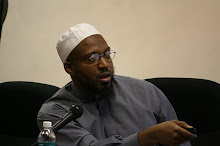 consultant to investment funds, investment banks, retail banks, financial advisories, legal advisors and other for-profit and not-for-profit entities since 1998. He was lead contributor to the Harvard Islamic Finance Information Program's database software on Islamic financial ethics and jurisprudence, independent study course instructor ("Principles of Islamic Finance") at Harvard Business School and a Senior Tutorial Advisor at Harvard University's Department of Near Eastern Language and Civilizations. He is currently the Harvard Islamic Society Chaplain and a member of the Harvard Chaplains. consultant to investment funds, investment banks, retail banks, financial advisories, legal advisors and other for-profit and not-for-profit entities since 1998. He was lead contributor to the Harvard Islamic Finance Information Program's database software on Islamic financial ethics and jurisprudence, independent study course instructor ("Principles of Islamic Finance") at Harvard Business School and a Senior Tutorial Advisor at Harvard University's Department of Near Eastern Language and Civilizations. He is currently the Harvard Islamic Society Chaplain and a member of the Harvard Chaplains.
He received his Bachelors (A.B.) in the Comparative Study of Religion from Harvard College, a Master's (A.M.) in Arabic and Islamic Studies from the Department of Near Eastern Languages and Civilizations at Harvard University and is an ABD from the same department. In addition to his father (with whom he began the study of standard Arabic as a child), he has studied the traditional Islamic disciplines with teachers from the Sudan, the Yemen, Tanzania and Bahrain. He has received traditional licenses (ijazat) in Islamic ethics and law, Prophetic traditions (hadith) and other disciplines from several teachers, including Shaykh Nizam Ya`quby.
If you have not yet done so yet this year, please do make a tax-deductible contribution to the Islamic Center. We rely heavily on your support to continue to provide the services and programs that we do.

|



 said: "The one who gets the greatest reward for a prayer is the one who walks the farthest distance." [Muslim]




