
Drying Out Filament

Joe Soap
moisture needs to be put into a heated oven to get rid of the moisture.
I am in the process of building a sealed chamber which has a
dehumidifier. Heat won't be part of the equation. If saturated filament
was put into this chamber, would it be reasonable to expect it would
release the moisture?
---
This email is free from viruses and malware because avast! Antivirus protection is active.
http://www.avast.com

Ryan Carlyle
Joe Soap
especially for the 2X so this fits in). It will have a dropdown door for
loading filament, and the feed will go thru 6mm tube - so not completely
sealed but as close as possible.
With the filament nested in that box it can take as long as it likes to
dry out. Or not get wet in the first place.
I found these on ebay and figured I would give them a go:
http://www.ebay.co.uk/itm/230865372518
Good reports from people who have used them. However not from the 3D
printer community.
On 07/07/2014 16:08, Ryan Carlyle wrote:
> Slowly, yes. It's a two-way equilibrium. But the hotter you go, the faster it will dry and the dryer you can get it.
>

Enginwiz
I use a simmilar method for keeping ABS and Nylon filament dry inside transparent ZIPLOC bags.
The challenge is, that silica gel only absorbs water up to low percentage of its own weight.
So you need a lot of silica gel to dry out a whole spool of filament. Or you have to change
out the silica gel frequently and regenerate it by heat. And you have to be patient.
Currently I use 50 Gramm packs of silica gel with a yellow humidity indicator. The indicator
changes color from yellow to a dark green when the silica gel is fully loaded with water.
I have two packs of silica gel in every ZIPLOC bag with filament. Every two or
three weeks I check the color of the silica gel packs in the ZIPLOC bags and replace
green wet silica gel packs with yellow dry silica gel packs. After a number of exchanges
the silica gel packs in the filament storage ZIPLOC bags stay yellow and the filament stays dry.
The green wet silica gel packs get dried in the hot air kitchen oven. After one hour
at 110 degrees Celsius the indicator turns back from green to yellow and the silica gel is dry again.
Half a dozen of still hot silica gel packs get stored in a small ZIPLOC bag. In these bags the
Silica gel packs stay yellow / dry for more than three month.
If I buy new filament I predry the new roll of filament in the hot air oven for two hours.
PLA gets dried at 50 degrees Celsius, ABS and Nylon at 80 degrees Celsius.
The still hot roll of filament is stored together with two silica gel packs in
a ZIPLOC storage bag and the silica gel only has to absorb the last bit of remaining
moisture out of the predried filament. This jumpstarts the whole drying process.
During printing the dry roll of filament sits on a spool roller inside a ZIPLOC bag
together with some packs of silica gel. The filament exits through a small
opening in the ZIPLOC and directly enters the 6 mm hose to the extruder.
This keeps the roll of filament dry during printing and protects it from dust.
The silica gel packs have to be exchanged twice a week to stay dry / yellow.
Ryan Carlyle
Joe Soap
in ziplocked plastic bags with silica gel, and any 'live' spools feeding
the bot would be hanging on a rod in a sealed chamber under the machine.
That chamber will have at least one of these packs, which could be
swapped quickly.

tunell
Ryan Carlyle
Joe Soap
--
You received this message because you are subscribed to the Google Groups "MakerBot Operators" group.
To unsubscribe from this group and stop receiving emails from it, send an email to makerbot+u...@googlegroups.com.
For more options, visit https://groups.google.com/d/optout.

|

TinyBot

Scott D
On Tuesday, July 8, 2014 4:10:34 AM UTC-4, TinyBot wrote:
> Sounds cool but just curious about a few factors. Your spool will be in a enclosed cabinet. (Checked) The Makerbot sits on it (checked) but wont you still have a part of filament that (If you dont unload) will be sitting out between the cabinet feeding into the bot? Wont that absorb moisture and result in at least 1 meter or so of humidity soaked filament?
>
> On Tuesday, July 8, 2014 10:40:28 AM UTC+8, Joe Soap wrote:
>
>
>
>
>
> Yeah, right. I've been to the USA twice but I doubt I will ever go
> again (health and age issues now). But thanks for the invite.
>
>
>
>
> On 07/07/2014 21:51, tunell wrote:
>
>
>
>
> I think the easiest solution is just to move out
> here to arizona.
>
>
>
> On Monday, July 7, 2014 1:21:43 PM UTC-7, Ryan Carlyle wrote:
> I think
> I'm just going to buy a whole-house dehumidifier and stop
> worrying about it.
>
> --
>
> You received this message because you are subscribed to the Google
> Groups "MakerBot Operators" group.
>
> To unsubscribe from this group and stop receiving emails from it,
> send an email to makerbot+u...@googlegroups.com.
>
> For more options, visit https://groups.google.com/d/optout.
>
>
>
>
>
>
>
>
>
>
>
>
>
>
>
>
>
>
>
Joe Soap
On 10/07/2014 11:58, Scott wrote:
> Nothing, I now owe you. And ecolodges os on your purse with $46.00
>
> Thank you,
> Scott
>
>> On Jul 9, 2014, at 8:14 PM, Joe Soap <joe.s...@gmail.com> wrote:
>>
>> I'm in the UK and have been monitoring humidity, I'm seeing mid-40's.
>>
>> I recently started trying to use bridge nylon. After a couple of days I
>> started noticing small spurts of steam coming out the nozzle, and that
>> was what drew my interest to managing the humidity level.
>>
---
Joe Soap
parts I need.
I found the following on ebay this morning, and it looks to be just the
ticket for building the chamber I'm after:
http://www.ebay.co.uk/itm/261449997628
Cheap and cheerful, but that's fine.
Hopefully it will give me 4 decent sides which will butt together
without me having to do major woodwork surgery. I can then add a plywood
back (for rigidity), and hinged perspex front. Providing I can seal all
the edges then I'm hopeful that will do the job.
The dehumidifiers arrived this morning:
http://www.ebay.co.uk/itm/230865372518
Enginwiz


Drew in Sunny Florida

Jimc
i dont know about that one. you want to heat up filament slow and evenly. microwaves make hot spots. i wouldnt do it.

Joseph Chiu
PLA will begin creeping at around 60C... Microwaved water will heat up quickly, and even if it doesn't heat up the PLA to 60C globally, it seems likely that it can create tiny pockets that might turn the filament into Swiss cheese?
Andrew Aurigema
--
You received this message because you are subscribed to a topic in the Google Groups "MakerBot Operators" group.
To unsubscribe from this topic, visit https://groups.google.com/d/topic/makerbot/rbyXV0gakkM/unsubscribe.
To unsubscribe from this group and all its topics, send an email to makerbot+u...@googlegroups.com.
Enginwiz
Ryan Carlyle

David Yu
Enginwiz
This is too hot. Your filament and probably the spools might get deformed.
Drying filament at low temperatures is better. I have been looking for an
electical food drier recently, but couldn't find one with a proper temperature
controller and a big enough hood for my filament spools here in Europe.
Does anybody already use a food drier for drying filament?

Guidozelf
Enginwiz
What humidity level do you get in the filament cabinet
if the small peltier dehumidifier is running?
Guidozelf
Joe Soap
Also, I wondered whether having the dehumidifier and its tank inside the controlled environment might add to the problem.
My chamber is reasonably (but not perfectly) sealed, and I am currently working on the dehumidifier being outside of the chamber. Basically I'm putting one of these outside with a fan:

http://www.ebay.co.uk/itm/230865372518
The air circuit into and out of the chamber will be sealed, so that the air circulating around the filament will be more or less separate from the outside air. As these units are rechargeable I'm making a small box unit with a lid so that they can be exchanged easily - without having to open the master chamber.
I've no idea how well this might work - however in recent days I put one of those units into a large sealed plastic box with NO fan, with a hygrometer which I could read from the outside, and within 24 hours it got down to 11% RH - with an ambient 50%+ outside the box (we've had storms in the UK this week so the environmental RH is up a bit on normal). I'm kinda hopeful that once I've completed my filament chamber I can maintain RH below 20%.
--
You received this message because you are subscribed to the Google Groups "MakerBot Operators" group.
To unsubscribe from this group and stop receiving emails from it, send an email to makerbot+u...@googlegroups.com.
For more options, visit https://groups.google.com/d/optout.
|
|
Guidozelf
Joe Soap
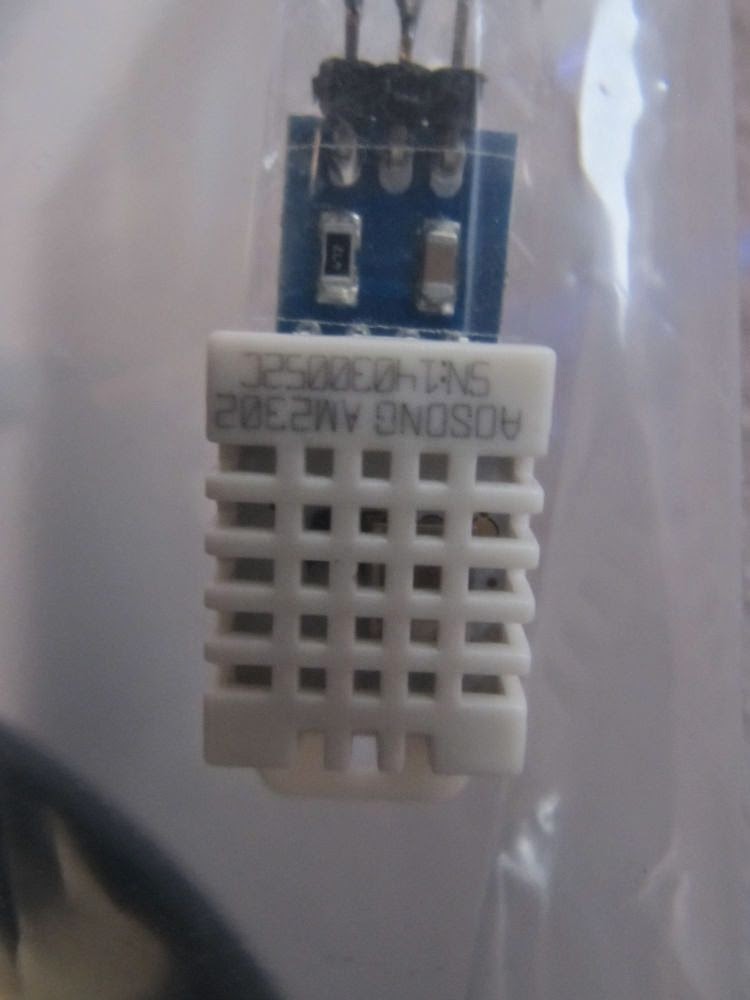
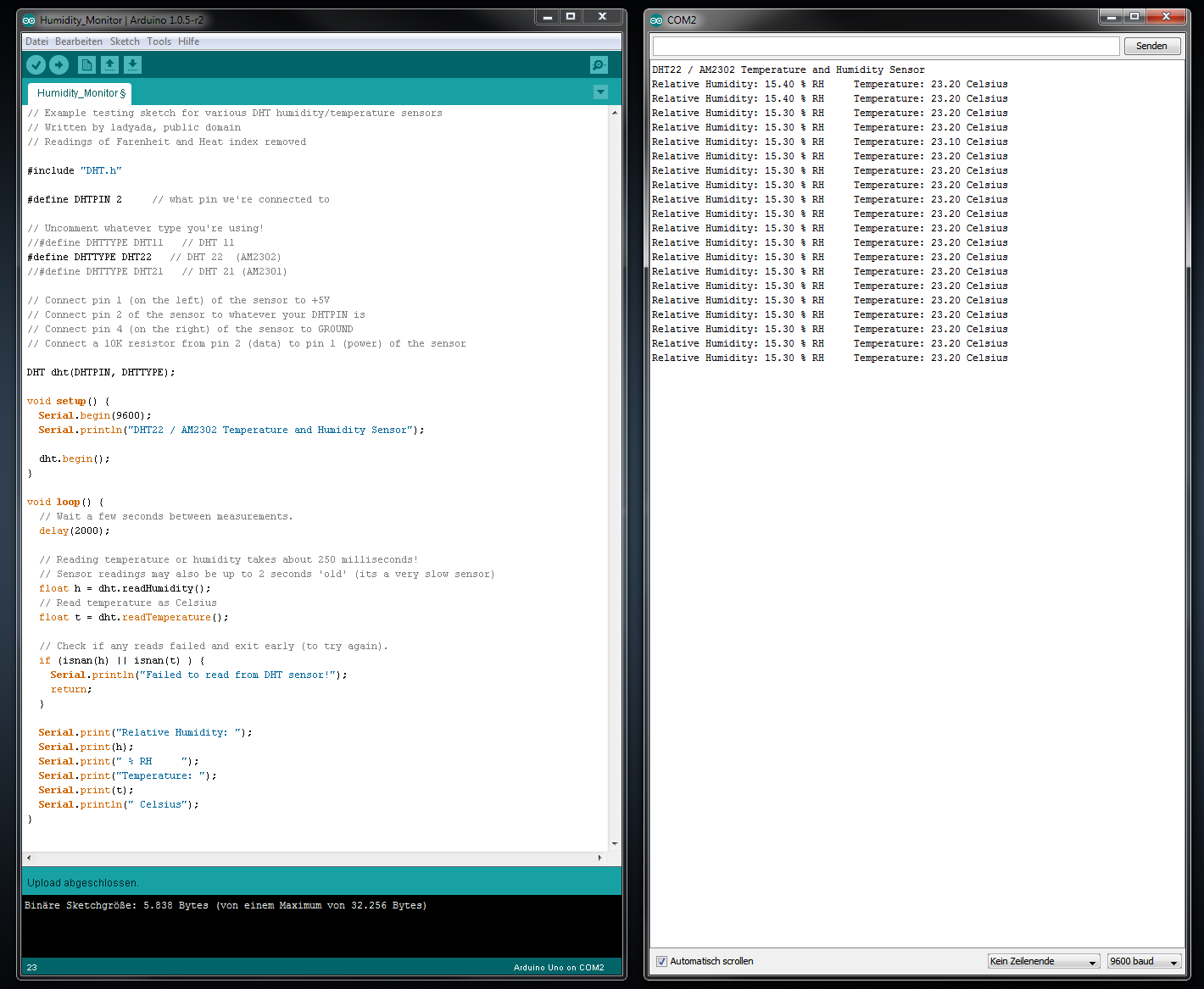
What I could really do with is a dehumidifier switch, which will turn the fan on if the humidity is too high. I don't see why the fan has to run 24/7 if the humidity is down to the level I'm looking for. However finding such a switch seems impossible - I may have to resort to a small arduino project for that.
Scott
Thank you,
You received this message because you are subscribed to a topic in the Google Groups "MakerBot Operators" group.
To unsubscribe from this topic, visit https://groups.google.com/d/topic/makerbot/rbyXV0gakkM/unsubscribe.
To unsubscribe from this group and all its topics, send an email to makerbot+u...@googlegroups.com.
Joe Soap
Firstly, no amount of effort would persuade the relative humidity of the filament chamber to decrease by any appreciable amount. There might be a couple of reasons for this. Firstly, I didn't air-seal the chamber and so there would have been very small gaps around the edges. However the more likely explanation could be that this was a largely wooden chamber where I hadn't sealed the surfaces. It wouldn't surprise me if that environment led to humidity leaking out of the wood panels - either through the woods own moisture level, or perhaps some microscopic action making the wood porous to the outside world. Either way, this was not a good solution.
However on a parallel path I bought a big plastic box, into which I put half a dozen partly used filament spools (one being the nylon bridge filament which had absorbed moisture). Although not perfectly sealed I put a silica gel box and a hygrometer which I can view from the outside in there. As soon as the box was closed, over a period of 48 hours I watched the RH descend - and for the last 48 hours it has maintained an RH of 10%.
I am therefore minded to build me a plastic version of my wooden filament chamber, which will be pretty much sealed. I intend to put a drawer into this design where I can swap out the silica gel box as needed, without fully opening the chamber - for the few seconds where this drawer is opened it won't appreciably alter the chamber environment. Changing the filament or feeding it to the printer will obviously open the environment to the outside world - however I don't think that will cause a major problem for the silica gel box, it will raise the RH for a short time but I'm sure it will descend quickly as already measured. If this works out then I will be feeding my printer with filament coming from a low RH environment.
This is going to take me a little while so I'm not going to provide a running commentary.
Scott
--
Scott


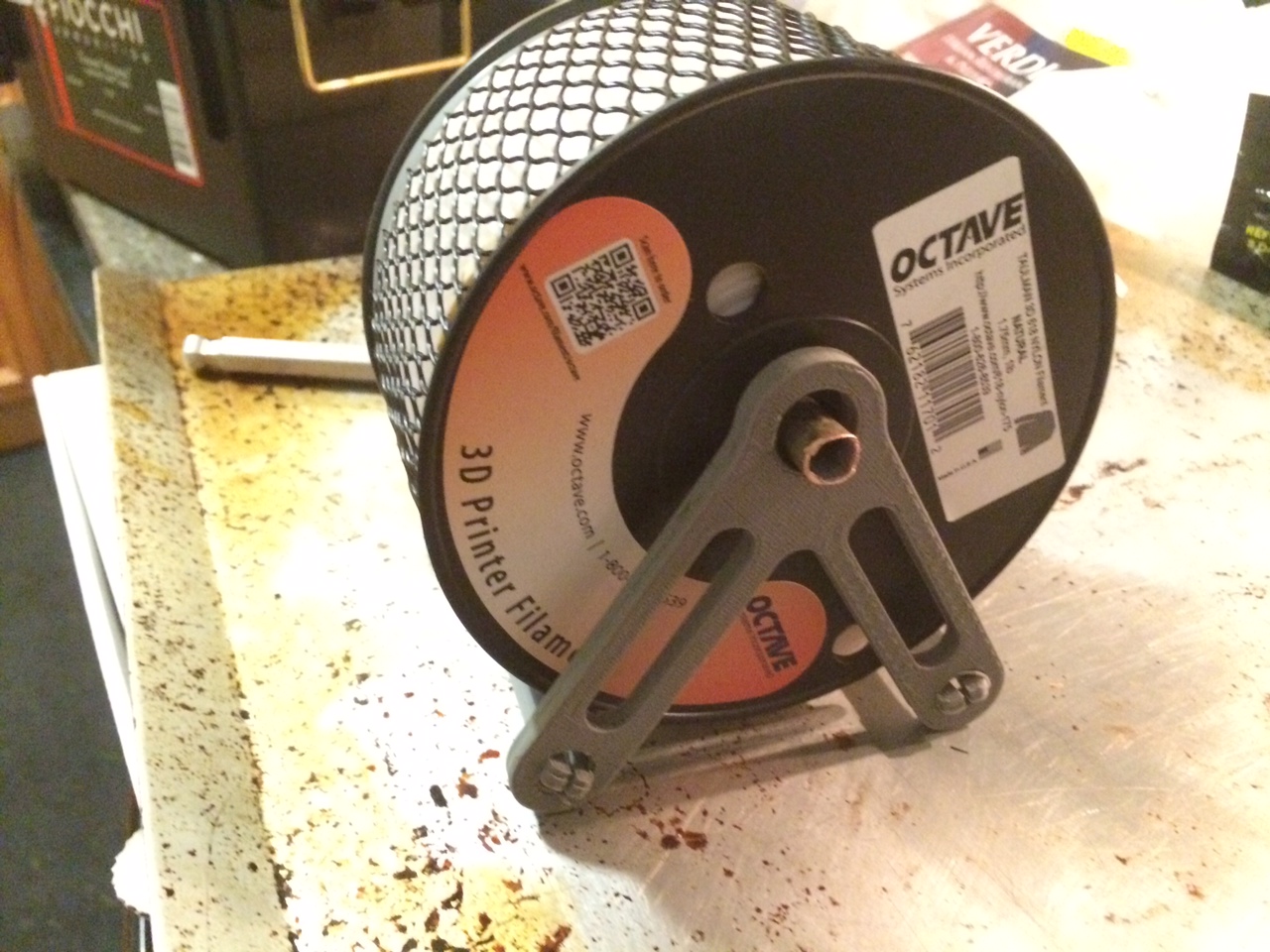
Thank you,
Enginwiz

Scott

Thank you,
Joe Soap
and frankly it's in need of a replacement. Using a sealant to coat the
inside has crossed my mind - but sadly too late in the process.
On 27/07/2014 07:28, Scott wrote:
> Joe, if you want to keep the wood look have you tired to seal the inside
> panned with a water sealant and silicone caulking on the corner joints?
>
> Scott
>
> To live life in a fog or high is to miss life's natural beauty and every
> day miracles that are in front of you.
>
> On Jul 26, 2014, at 2:42 PM, Joe Soap <joe.s...@gmail.com
> --
> You received this message because you are subscribed to the Google
> Groups "MakerBot Operators" group.
> an email to makerbot+u...@googlegroups.com
---

Dave Young
On Monday, July 7, 2014 4:17:05 PM UTC-4, Enginwiz wrote:
This is a plastic box with predried silica gel and a heater to dry it again, after the wet indicator changes its color.I use a simmilar method for keeping ABS and Nylon filament dry inside transparent ZIPLOC bags.
The challenge is, that silica gel only absorbs water up to low percentage of its own weight.
So you need a lot of silica gel to dry out a whole spool of filament. Or you have to change
out the silica gel frequently and regenerate it by heat. And you have to be patient.Currently I use 50 Gramm packs of silica gel with a yellow humidity indicator. The indicator
changes color from yellow to a dark green when the silica gel is fully loaded with water.
I have two packs of silica gel in every ZIPLOC bag with filament. Every two or
three weeks I check the color of the silica gel packs in the ZIPLOC bags and replace
green wet silica gel packs with yellow dry silica gel packs. After a number of exchanges
the silica gel packs in the filament storage ZIPLOC bags stay yellow and the filament stays dry.The green wet silica gel packs get dried in the hot air kitchen oven. After one hour
at 110 degrees Celsius the indicator turns back from green to yellow and the silica gel is dry again.
Half a dozen of still hot silica gel packs get stored in a small ZIPLOC bag. In these bags the
Silica gel packs stay yellow / dry for more than three month.If I buy new filament I predry the new roll of filament in the hot air oven for two hours.
PLA gets dried at 50 degrees Celsius, ABS and Nylon at 80 degrees Celsius.
The still hot roll of filament is stored together with two silica gel packs in
a ZIPLOC storage bag and the silica gel only has to absorb the last bit of remaining
moisture out of the predried filament. This jumpstarts the whole drying process.During printing the dry roll of filament sits on a spool roller inside a ZIPLOC bag
together with some packs of silica gel. The filament exits through a small
opening in the ZIPLOC and directly enters the 6 mm hose to the extruder.
This keeps the roll of filament dry during printing and protects it from dust.
The silica gel packs have to be exchanged twice a week to stay dry / yellow.
Andrew Aurigema
--
You received this message because you are subscribed to a topic in the Google Groups "MakerBot Operators" group.
To unsubscribe from this topic, visit https://groups.google.com/d/topic/makerbot/rbyXV0gakkM/unsubscribe.
To unsubscribe from this group and all its topics, send an email to makerbot+u...@googlegroups.com.

Big-E
I purchased a gigantic storage tub. In it, I place (almost) all my spools. If possible I store them in their plastic bags with silica packets.
in addition to this, I have a Damp-rid moisture absorber for RV use in the tub with the filament; These things work great! If you only open the tub to remove or replace filament, it works best.
If I intend to use a color over the course of the week, it's on my filament rack, or on the machine. otherwise, it goes into the tub to dry it out a bit. it seems to resolve my issues.
Andrew Aurigema


Enginwiz
Some sellers also call them Dry Packs.
The silica gel with the color changing
humidity indicator is my favourite.
One look and I know wether the
silica gel and the filament in the bag
are wet or dry.
Enginwiz
http://www.amazon.com/Dry-Packs-10gm-Indicating-Silica-Packet/dp/B00967J7UM/ref=pd_cp_p_2
MrScottJD
In my previous post I out that I bought 1lb of loose color changing desiccant. That was a typo, the link to amazon is for 1 Gallon of color changing desiccant..
Given that the entire container & contents are listed at 7.7 pounds, the contents should be about 7 pounds, the can and top appear to be plastic. This leaves 3225 grams apx. (7 pounds) for the gallon of product.
That's more than what others are selling for 10gram packs, I think it was $169 for 40 10 gram packs. With the 1 gallon you can buy the little cotton bags for a few more Dillard and make your own, or use it loose in the bottom of a container. Just an idea. If I had found this 1 gallon container for $40 in the past I would have never bought the Eva dry 333 I own since each one costs $20 and I'm sire my oven will dry it our faster than the Eva dry heating element.
Maybe share the cost with another local 3D printer person?
1 gallon desiccant color changing
www.amazon.com/gp/product/B00BXJ52GO/ref=oh_aui_detailpage_o03_s00?ie=UTF8&psc=1
Bags I use for 80 gram packs, you can get these much smaller if you want.
http://www.amazon.com/gp/product/B00GW622IO/ref=oh_aui_detailpage_o03_s00?ie=UTF8&psc=1
Scott
Thank you,
Thinking of only storing a few of the spools under desiccant. Went shopping online (Wa-Mart) and found plastic 10"x11"x6" see thru dog food containers with air tight seal. Then found 9" diameter plastic turn table. Total cost per storage box will be about $20. I am thinking one spool of filament per box. My plan is to put an inch of descant on the bottom of the container, then a printed separator, then set the turn table on the separator ( above the descant), then set the spool of filament its side for the unwind out the side of the container. I plan on printing up a simple 90 deg elbow assembly that will go thru the container wall and feed the filament up ( or down ) to the printer. I really think whatever container is used needs to have some kind of roller bearing ( even if only plastic ball bearings in a plastic ring ) to cut down the sliding friction of a full spool of filament resting on the supports. Going sideways is a cheap option as the turn table is only $8 each. Pics of the finished setup to follow if it all works.
<box.jpg><turn table.jpg>
Scott
The ABS had a RH level of 2% after 24 hours..
Then I out the nylon back in and it went down to 3% RH after 24 hours. The safe defiantly seals, maybe a little to good. I think their may be a point when you dry out the filament to much. I think I read something about filament being to dry is also not good for it or printing with it. My toolboxes always kept it at around 20 and was almost perfect so I'm going to add a little more desiccant now that I have the loose kind to the tool box. I'm thinking a safe number may be between 10% and 15%. So for the safe I'll inky use it for drying out damp rolls and printing from it but will not keep filament inside while plugged for long periods of time.
Maybe if I pull out the plug it will achieve the number I'm looking for?


Enginwiz
With four small silica gel packs the relative humidity in the Ziploc bag stays between 12% and 15%.
The black SmartABS in the bag prints perfectly at this humidity level. No hissing, no bubbles and
no stringing.
Currently I print some custom designed fixtures for IOtech DAQ equipment, that is used for vibration testing.
These fixtures are solid blocks of ABS printed with 100% infill. No cracks, no delamination with the dry filament.
Andrew Aurigema

Scott
Is that going to be a 5/8 whole needed for the threaded side to feed through the wall the container?
Will this be something available in thingiverse once you're tested it?
Andrew Aurigema
Andrew Aurigema


Enginwiz
Scott
I was thinking the same thing. Is e diameter of he elbow the same all the way through it?
If it was maybe 45 then the tube could feed into the whole part eliminating any friction on the filament since the filament would feed in the PTFE tube at way?
Andrew Aurigema
Ryan Carlyle
- the coefficient of friction
- the swept arc of the turn
- the back-tension on the spool side
Ryan Carlyle


