
Remembering Mack Charles Parker

gene young
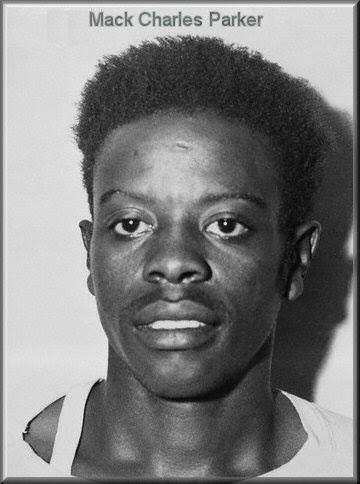
Victim's cellmate shaken by memories
Poplarville killing from 1959 among unpunished crimes
Jerry Mitchell • jmit...@clarionledger.com • April 26, 2009
- POPLARVILLE — Fifty years ago, a white mob abducted Mack Charles Parker from a jail cell and lynched him.
"I still have dreams about it," said Mondy, breaking his 50-year silence about the April 25, 1959, beating, abduction and killing.
The Parker lynching is among 43 unpunished killings in Mississippi from the civil rights era that the FBI is now seeking help in solving.
The killing was the "last classic lynching in America," said Howard Smead, author of the 1986 book Blood Justice: The Lynching of Mack Charles Parker.
Smead said to his knowledge, the last known member of the mob died several years ago.
Parker's lynching continues to resonate after 50 years because of the unresolved issues, he said.
"He was most likely guilty, but we're not 100-percent sure," Smead said. "He never got to make his case. He never confessed."
Parker, a 23-year-old African American, was awaiting trial on charges he raped a white woman, who, along with her daughter, were awaiting help in their stalled car in rural Pearl River County. Authorities took Parker to Jackson, where he was given several lie-detector tests that were either inconclusive or concluded he was telling the truth when he proclaimed his innocence.
When he returned to jail here, Parker shared what had happened, and Mondy shared his advice.
"You're going to have to leave from here," Mondy said he told Parker. "You say you didn't do it. That's not going to be good enough."
Just being black and being accused of such a crime meant he'd be a target, he said. "I knew he didn't do it, but that didn't matter."
Some time before midnight on April 24, 1959, a man inserted a key in the lock of the wooden door of the Pearl River County Jail and turned it. White inmates, who were kept on the first floor, stirred.
Mondy, sleeping upstairs with Parker and other black inmates, woke up.
He looked up to see a mob of masked white men armed with guns and clubs coming inside.
He turned to Parker and told him they must be coming for him. "(Parker) immediately started hollering," said Mondy, now 75 and living in Oakland, Calif.
Members of the mob pointed their guns at him and other black inmates. "Don't try to do nothing 'cause we've got plenty more people outside,' " Mondy quoted them as saying.
The mob told inmates to "get on the side and nobody will get hurt," Mondy said. "They said, 'We're just after Parker.' "
Members of the mob viciously beat Parker with their fists and clubs.
"They all went in on him like they do on a quarterback," Mondy said. "He tried to defend himself, but they were hitting him and overpowering him."
Parker yelled out that he was innocent and did his best to grab onto the cell bars. "They beat his hands loose with their clubs," Mondy said. "They were all bloody."
Inmates wanted to intervene, but "there was nothing we could do because they had guns," he said.
Finally, mob members grabbed Parker by the heels and dragged him down the dozen or so concrete steps. "His head was hitting each of those steps," Mondy said.
Blood covered the steps, Mondy said, and Parker screamed, "Please, let me up. I'll walk."
The story Mondy tells suggests there was more than just a wink and a nod, not only from law enforcement but also from several people in the community.
Inmates were left locked each night in the jail across the street from the Pearl River County Hospital. "They told us if somebody gets sick, just holler, and they would come over," Mondy said.
While mob members continued dragging Parker by the heels, his screams pierced the night air.
Mondy and other inmates watched the scene below, he said. "You could hear him hollering. Cars were lining up, almost as far as you could see."
They sped away, and Mondy never saw Parker alive again.
FBI agents arrived to investigate, photographing the bloodstains and smears they found as Parker was dragged from the jail, through the courtroom, through the rest of the courthouse, down the courthouse steps and down the sidewalk. The blood stains inside the jail, however, had been cleaned up.
Parker's body wasn't found until May 4, 1959 - 2.5 miles south of Mississippi 26 near Bogalusa, La. He had been shot twice and thrown over the bridge into the Pearl River.
The "blatant disregard for the law" by the prosecutor and judge ensured that no prosecution would take place, Smead said.
Both the judge and prosecutor refused to share information from an extensive FBI investigation involving 60 agents in which members of the mob were identified, and a number of them confessed, Smead wrote in his book.
In his charge to grand jurors printed in the local paper, then-Circuit Judge Sebe Dale Sr. urged them to "have the backbone to stand against any tyranny. ... You are now engaged in battle for our laws and courts for the preservation of our freedom and our way of life."
They did as they were told, and no indictments occurred.
A federal grand jury did hear the evidence and came within one vote of indicting some identified as mob members.
The night Parker supposedly raped a white woman has been depicted as one in which he cavorted with friends and talked about "getting some of that white stuff" as they passed a broken-down car with a white woman inside.
But a man who knew Parker disputes that version of events.
Parker's brother-in-law, Curt Underwood, who was 20 at the time and since has died, was one of his companions that night.
"My brother said what was attributed to them wasn't true," said Underwood's brother, Eugene.
Several days later, another companion that night, Norman "Rainbow" Malachy, was handcuffed by law enforcement and beaten, he said. "They were angry with him because he was in the same car with Mack Charles Parker, and he would not make a statement other than he was asleep when they passed that lady on the highway."
His brother ended up fleeing for his life because of what was done to Malachy, he said. "They beat that man like a dog."
After arriving in Chicago, the Chicago Defender wrote a story on his escape: "Underwood Makes It Out Alive."
Smead confirmed that Curt Underwood told him the same thing - that Parker had nothing to do with the rape.
More than 4,700 African Americans were lynched between the late 1800s and the 1960s.
"The dominance of white men was being challenged, not just by white women who by the late 19th century were leaving home to work in textile mills, but by this newly mobile black population," said Philip Dray, author of At the Hands of Persons Unknown: The Lynching of Black America.
White men felt they were losing control and used lynchings as a means of reasserting their power, he said. "It was like terrorism, and every black person knew what it meant."
Smead said the reason Parker's killing is the last classic lynching in America is because the classic lynching involves a mob storming the jail, pulling victims from custody - sometimes with the complicity of law enforcement - and killing them.
Other lynchings have taken place since, he said. "Too many. They're lynchings, but only technically."
Dray said Parker's effort to hold onto the bars of his cell symbolize his effort "to hold onto the last remnant of law and order."
After being freed from jail, Mondy fled for his life. Occasionally, he said he would sneak back to see his family.
"He had to come in the middle of night," recalled Mondy's daughter, Demetra Mondy of San Diego. "He continued to be in our life."
Time has passed, and only now is she "able to introduce my dad to my friends," she said, choking up. "I kind of get emotional."
To comment on this story, call Jerry Mitchell at (601) 961-7064.
gene young

Randall Pinkston
a child, hearing my parents talk about this case...
for all those 'God-fearing' Mississippians who committed, condoned,
and failed to prosecute those heinous crimes, I do hope there is a
special place in hell - for them, and those who still think there's no
need to 'look back' .
well, let me get back to what i'm doing todayl.. as story about a 100
year old man who wanted to be a batboy, again.
Randall Pinkston
518 West 57th Street
New York, New York 10019
212 975 6972
gene young
From: Randall Pinkston <nuse...@gmail.com>
To: lanier-hi...@googlegroups.com
Sent: Sunday, April 26, 2009 10:56:23 AM
Subject: Re: Remembering Mack Charles Parker
gene young
 |
|

