
Moses Broke the Tablets, therefore we repent with the Fast of Shiva Asar B'Tammuz, Tuesday July 11, 2017

White Buffalo Calf Woman, your Twin Deer Mother
17th of Tammuz: History, Laws and Customs


The fast of the 17th of the Hebrew month of Tammuz, known as Shivah Asar B’Tammuz, is the start of a three-week mourning period for the destruction of Jerusalem and the two Holy Temples.
The fast actually commemorates five tragic events that occurred on this date:
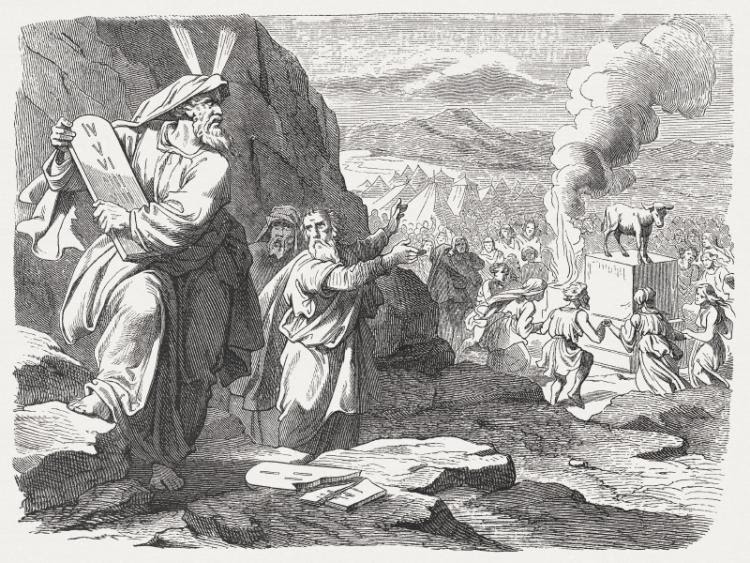
- Moses broke the tablets when he saw the Jewish people worshipping the Golden Calf.
- During the Babylonian siege of Jerusalem, the Jews were forced to cease offering the daily sacrifices due to the lack of sheep.
- Apostomos burned the holy Torah.1
- An idol was placed in the Holy Temple.2
- The walls of Jerusalem were breached by the Romans, in 69 CE, after a lengthy siege. (Three weeks later, after the Jews put up a valiant struggle, the Romans destroyed the second Holy Temple on the 9th of Av.)
The Jerusalem Talmud maintains that this is also the date when the Babylonians breached the walls of Jerusalem on their way to destroying the first Temple.

Practically speaking:
- Healthy A fast day is an auspicious day, a day when G‑dis accessible, waiting for us to repentadults—bar- or bat-mitzvah age and older—abstain from eating or drinking between dawn and nightfall. Click here for exact times in your location.
- Pregnant and nursing women may not have to fast. Someone who is ill should consult with a rabbi. Even those exempt from fasting, such as ill people or children, shouldn’t indulge in delicacies or sweets.
- It is permitted to wake up early before the fast begins and eat, provided that prior to going to sleep one had in mind to do so.

- During the morning prayers we recite selichot (penitential prayers), printed in the back of the prayerbook. The “long Avinu Malkeinu” is recited during the morning and afternoon prayers.
- The Torah is read during the morning and afternoon prayers. The reading—the same for both morning and afternoon—is Exodus 32:11–14 and 34:1–10, which discusses the aftermath of the Golden Calf incident, how Moses successfully interceded on the Israelites’ behalf and attained forgiveness for their sin. After the afternoon Torah reading, the special fast-day haftarah, Isaiah 55:6–56:8, is read.
- During the Amidah prayer of the afternoon service (Minchah), those who are fasting add the paragraph Aneinu in the Shema Koleinu blessing. (It is also added in the cantor’s repetition of the Amidah in both the morning and afternoon services, as its own blessing between the blessings of Re’eh and Refa’einu.) Additionally, the priestly blessing is also added in the repetition of the Amidah in the afternoon service.
- If the 17th of Tammuz falls on Shabbat, the fast is postponed until Sunday. Click here for more about this Shabbat.

Abstaining from food and drink is the external element of a fast day. On a deeper level, a fast day is an auspicious day, a day when G‑d is accessible, waiting for us to repent.
The sages explain: “Every generation for which the Temple is not rebuilt, it is as though the Temple was destroyed for that generation.” A fast day is not only a sad day, but an opportune day. It’s a day when we are empowered to fix the cause of that destruction, so that our long exile will be ended and we will find ourselves living in messianic times; may that be very soon.

Historians have long debated when this occurred: some maintain that Apostomos was a general during the Roman occupation of Israel, while others contend that he lived years earlier and was an officer during the Greek reign over the Holy Land.
This event is also shrouded in controversy: some say that this too was done by Apostomos, while others say that this was done by King Manasseh of Judea.
Fast of Shiva Asar B'Tammuz in Israel
The Fast of Shiva Asar B'Tammuz is held on the 17th day of Tammuz, which is the fourth month of the Hebrew calendar. It observes five calamities that affected the Jewish people. These are: (1) Moses broke the tablets of stone and (2) an idol known as “the Golden Calf” was erected in 1313 BCE; (3) the daily sacrificial offerings were discontinued in 423 BCE; (4) Jerusalem’s walls were breached in 69 BCE; and (5) the Roman military leader Apostomus burned a Torah scroll possibly around 50 CE just before the Bar Kokhba revolt.
What Do People Do?
Many Jewish people fast from dawn until nightfall by abstaining from food and drinks. However, people who are ill or weak, children and pregnant or nursing mothers may not fast completely but only eat simple food. In addition, special prayers are recited and sections of the Torah and Haftarah (Haftorah, Haptara) are read during the morning and evening services. In contrast to some fast days, Jewish people may be permitted to wear leather and wash themselves on the 17th of Tammuz.
Public Life
The Fast of Shiva Asar B'Tammuz, also known as the 17th (or Seventeenth) of Tammuz, is not a public holiday in Israel.
Background
The 17th day of Tammuz is a day of mourning for Jewish people. It marks the anniversary of five calamities. On this day in the year 1313 BCE, Moses broke the tablets of stone that were inscribed with the Ten Commandments and the idol of “the Golden Calf” was erected.
On this date in the year 423 BCE, the daily sacrificial offerings were discontinued in the run up to the destruction of the first temple. In the year 69 BCE Jerusalem’s walls were breached, which resulted in the destruction of the second temple. Finally, the Roman military leader Apostomus burned a Torah scroll, possibly around 50 CE. This may have contributed to the Bar Kokhba revolt, the last war between the Romans and the Jews between 132 and 135 CE.
The 17th of Tammuz marks the start of the “Three Weeks” (Bein HaMetzarim), which is a period of mourning marking the destruction of both the First Temple and the Second Temple in Jerusalem. During the “Three Weeks”, it is customary to spend extra time studying Jewish law, to give extra charity and not to hold joyous celebrations, such as weddings, or wear new clothes.
Fast of Shiva Asar B'Tammuz Observances
| Tue | Jul 11 | 2017 | Fast of Shiva Asar B'Tammuz | Observance, Hebrew https://www.timeanddate.com/holidays/israel/fast-of-shiva-asar-b-tammuz |
White Buffalo Calf Woman, your Twin Deer Mother
Is It Time to Stop Fasting on the 17th of Tamuz?
The 1967-5727 war took place from Iyar 26 until Sivan 2. The first fast that happened on the Jewish calendar after the victory was Tamuz 17. Were Jews supposed to keep fasting, having just experienced the miracle of the liberation of all of Zion and then some – from the banks of the Suez Canal to the Syrian regions?
The dispute – largely among the National-Religious, the Haredim did not engage publicly in a similar debate – was over a segment in tractate Rosh Hashanah 18b that says, in the name of Rav Hana bar Bizna quoting Rav Shimon Hasida: “They (the fasts referred to in Zecharia 8:19) were called fast days as well as days of joy and gladness. In times of peace – they will be days of joy and gladness. No peace – we fast.”
So it came down to whether the Jews in Israel considered the miracle of 1967-5727 to have restored our peace in Israel sufficiently to merit having a nice lunch on Tamuz 17 – or not. Obviously, no one actually went ahead and defied the fast that year, at least not publicly, which means that even in the midst of their euphoria over the miracle of liberation, learned Jews understood that we weren’t quite there yet.
But Rav Papa made things—and choices—more complicated, when he added his version: “In time of peace – they will be days of joy and gladness; in times of religious oppression (shmad) – fasting; no religious oppression and no peace – if they want to they fast, if they don’t they don’t. So the Gemara asks, Does this include Tisha B’Av? Which Rav Papa answers: Tisha B’Av is different, since it is imbued with multiple suffering.”
Maimonides (Laws of Fasting 5:19) expects the switch from fasting to joy to take place after the arrival of the Messiah, meaning he does not accept Rav Papa’s third option. Other Rishonim (medieval contemporaries of Rashi and Maimonides) hold that Rav Papa’s view is merely a hypothetical, and that once the Jews have begun to fast on the four minor days mentioned in Zecharia, we keep on fasting until a dramatic, messianic change of the course of history.
Maimonides views Rav Papa’s third option as pertaining to the period of the Second Temple (Pirush Hamishna Rosh Hashanah 1:3). Apparently, in those years, if a Jew wished to fast on Tamuz 17, he stated it during the Amida prayer, as we do today for an individual fast. But on 9 B’Av everyone was obligated to fast the full 25 hour period, give or take.
It has been suggested that during the Second Temple they still mourned the loss of the First Temple for two reasons: the fact that the ten, everyday miracles of the first did not exist in the second; and the fact that the first destruction of the Temple was a precedent, and therefore could be repeated.
It appears that in order to revoke an ancient law such as the fast of Tamuz 17, mourning the day on which Moses broke the two tablets of stone on Mount Sinai; the daily Tamid offering ceased to be offered; the walls of Jerusalem were breached; the Roman warrior Apostomus (or maybe it was Antiochus Epiphanes) burned a Torah scroll; and an idol was erected in the Temple – there really has to be a major consensus among all of us that the time of joy and gladness is here again.

Israeli-soldiers-liberating-the-Temple-Mount-in-1967-696x487.jpg
Back in 2005, Rabbi Benny Lau cited in an op-ed in Ma’ariv a publication of the Movement for Torah Judaism that examined the need, after the 1967 Six-Day War, to observe some of the minor annual fasts. The debate revolved around the need for an updated interpretation of Zecharia 8:19: “So says the God of hosts: the fast of the fourth month, and the fast of the fifth, and the fast of the seventh, and the fast of the tenth, shall be joy and gladness and cheerful seasons to the house of Judah; therefore love truth and peace.”
In our lunar Jewish year, which begins in the month of Nissan, the fast of the fourth month is 17 Tamuz; of the fifth month is 9 Av; of the seventh is the fast of Gedalia on Tishrei 3; and of the tenth month is 10 Tevet.
It’s the same thing as the prayer at the Temple Mount: the real reason Jews are not allowed to even visit up there in large groups, never mind to pray, is that the vast majority of Jews don’t want to go there. We’re talking about religious, Orthodox Jews, who view those who do go as being somewhere between crazy and dangerously crazy.
Here’s an example: in the morning supplications we say on Mondays and Thursdays, there’s a lot of text about the burnt down Jerusalem: “God, in all your righteousness, please remove your ire from your city Jerusalem, your holy mountain, because for our sins and the sins of our fathers Jerusalem and your nation are a disgrace to all our surroundings. […] God give us your ear and hear, open your eyes and see the desolation of the city named after You. […] Look down from the heavens and see, how we have become subjects of mocking and ridicule among the gentiles. We are considered like sheep led to the slaughter, to be killed and annihilated, beaten and humiliated…”
If most Jews today feel that the above conditions still exit in God’s world, despite the political and social changes that have taken place, then we’re probably fasting next Tuesday, Tamuz 17 (July 11).
If we feel otherwise, we should start speaking out.