
custard apple

kaysat tiwari
--
Satyendra K.Tiwari.
Wildlife Photographer, Naturalist, Tour Leader
H.NO 139, P.O.Tala, Distt Umariya.
M.P. India 484-661
00-91-7627-265309 or 09425331209

J.M. Garg
The Custard-apple (Annona reticulata; also called bullock's heart or bull's heart) is a species of Annona. A similar fruit, the sugar-apple (Annona squamosa), is also called the sweetsop or, in Vietnamese, na. In Britain Custard-apple refers to cherimoya (Annona cherimola).
The tree that bears these fruits is a small deciduous or semi-evergreen tree sometimes reaching 10 metres (33 ft) tall and a native of the tropical New World that prefers low elevations, and a warm, humid climate. It also occurs as feral populations in many parts of the world including Southeast Asia, Taiwan, India, Australia, and Africa.[citation needed]
The fruits are variable in shape, heart shaped, oblong or irregular. The size ranges from 7 centimetres (2.8 in) to 12 centimetres (4.7 in). When ripe, the fruit is brown or yellowish, with red highlights and a varying degree of reticulation, depending on variety. The flavor is sweet and pleasant, but inferior to that of the cherimoya or sugar-apple. The latter fruit is sometimes confused with this species.[citation needed]
The fruits are tasty and nutritious but all parts of this tree can be useful.
- Food
- The fruit is good to eat as is but also makes a sweet drink and can be used as a milk substitute.[2]
- Medicinal
- The unripe fruit[1] has been used to assist against diarrhea and dysentery. The tree bark is used for skin and mucosae medicines and the seed bark contains useful tannins and astringents. The leaves are generally healing and have been used against tumors and cancers. [2] The bark has been used on gums to relieve toothache.[1]
- Other
- The leaves also provide ingredients used to make dyes, stains, inks, tattoos and mordants. The whole plant is a source of hydrogen cyanide.[2][3]
For my Birds, Butterflies, Trees, Landscape pictures etc., visit http://commons.wikimedia.org/wiki/Special:Contributions/J.M.Garg
J.M. Garg
---------- Forwarded message ----------
From: Rajendra Shinde <rdsh...@gmail.com>
Date: Apr 27, 2008 11:38 PM
Subject: Re: [Indiantreepix] Re: custard apple
To: "J.M. Garg" <jmg...@gmail.com>
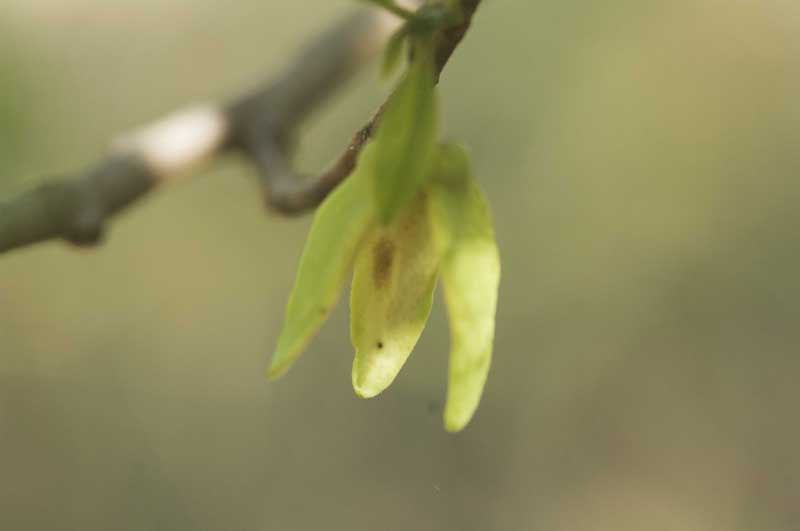
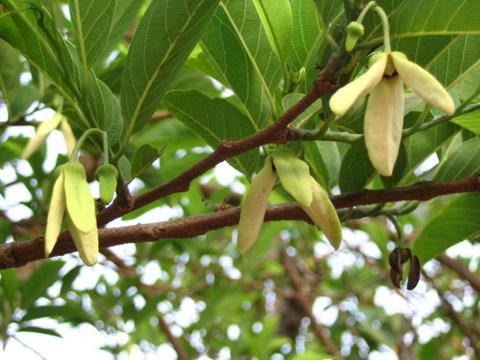
Just two days back I took this photo at Dive Agar, Tal Shrivardhan, Maharashtra.
Annona squamosa - Annonaceae "Sitaphal"
Rajendra Shinde
St. Xavier's College,
(University of Mumbai)
Mumbai 400001.
India.
Off. Tel. +91-22-2262 0662 ext 356
Cell : 9819100131
--
With regards,
J.M.Garg
"We often ignore the beauty around us"
For learning about our trees & plants, please visit/ join Google e-group (Indiantreepix) http://groups.google.co.in/group/indiantreepix?hl=en

Mahadeswara Swamy
M.Swamy
From: J.M. Garg <jmg...@gmail.com>
To: indiantreepix <indian...@googlegroups.com>
Sent: Monday, 28 April, 2008 6:07:08 AM
Subject: [Indiantreepix] Fwd: [Indiantreepix] Re: custard apple
Forwarding pl.
---------- Forwarded message ----------
From: Rajendra Shinde <rdsh...@gmail.com>
Date: Apr 27, 2008 11:38 PM
Subject: Re: [Indiantreepix] Re: custard apple
To: "J.M. Garg" <jmg...@gmail.com>
Just two days back I took this photo at Dive Agar, Tal Shrivardhan, Maharashtra.
Annona squamosa - Annonaceae "Sitaphal"
Rajendra Shinde
Here are extracts from Wikipedia link:http://en.wikipedia.org/wiki/Custard-apple
The Custard-apple (Annona reticulata; also called bullock's heart or bull's heart) is a species of Annona. A similar fruit, the sugar-apple (Annona squamosa), is also called the sweetsop or, in Vietnamese, na. In Britain Custard-apple refers to cherimoya (Annona cherimola).
The tree that bears these fruits is a small deciduous or semi-evergreen tree sometimes reaching 10 metres (33 ft) tall and a native of the tropical New World that prefers low elevations, and a warm, humid climate. It also occurs as feral populations in many parts of the world including Southeast Asia, Taiwan, India, Australia, and Africa.[citation needed]
The fruits are variable in shape, heart shaped, oblong or irregular. The size ranges from 7 centimetres (2.8 in) to 12 centimetres (4.7 in). When ripe, the fruit is brown or yellowish, with red highlights and a varying degree of reticulation, depending on variety. The flavor is sweet and pleasant, but inferior to that of the cherimoya or sugar-apple. The latter fruit is sometimes confused with this species.[citation needed]
The fruits are tasty and nutritious but all parts of this tree can be useful.
- Food
- The fruit is good to eat as is but also makes a sweet drink and can be used as a milk substitute.[2]
- Medicinal
- The unripe fruit[1] has been used to assist against diarrhea and dysentery.. The tree bark is used for skin and mucosae medicines and the seed bark contains useful tannins and astringents. The leaves are generally healing and have been used against tumors and cancers. [2] The bark has been used on gums to relieve toothache.[1]