
050909SCS1-3 Alstonia scholaris (Scholar Tree)

Suresh C. Sharma

Dinesh Valke


J.M. Garg
Some extracts from Wikipedia link (for pictures/ more details, pl. click on the link):
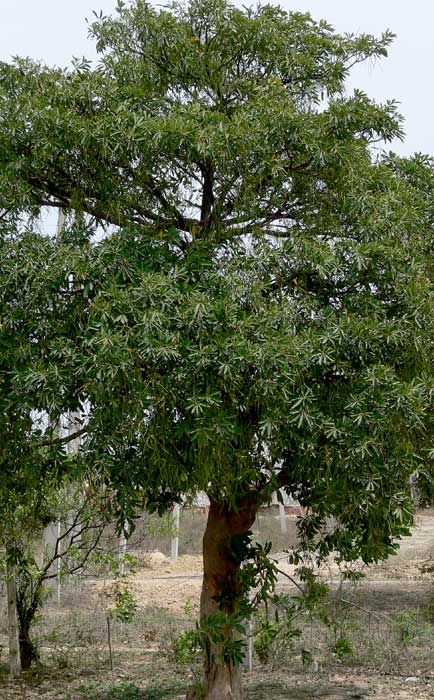
http://en.wikipedia.org/wiki/Alstonia_scholarisAlstonia scholaris (Apocynaceae, commonly called Blackboard tree, Indian devil tree, Ditabark, Milkwood pine, White cheesewood and Pulai; syn. Echites scholaris L. Mant., Pala scholaris L. Roberty) is an evergreen, tropical tree native to the Indian subcontinent and Southeast Asia.
Alstonia scholaris is a small tree that grows up to 40 m tall and is glabrous. The bark is greyish; branchlets are copiously lenticellate.
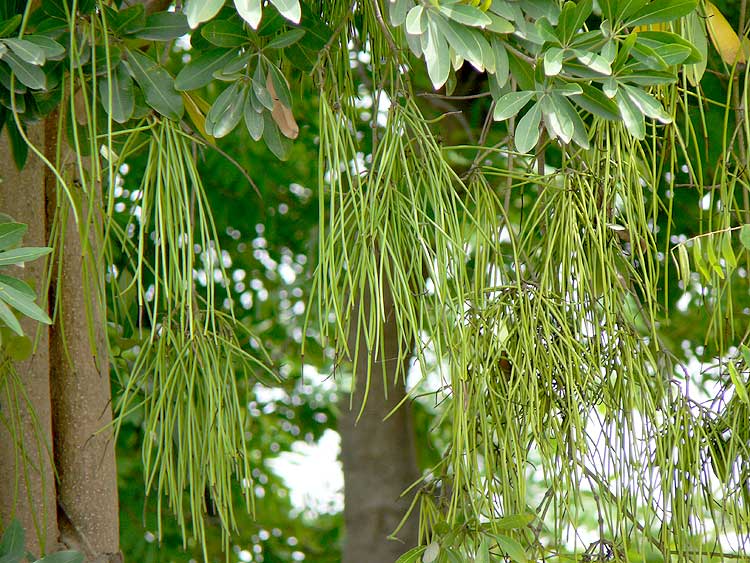
The upperside of the leaves are glossy, while the underside is greyish.[1] Leaves occur in whorls of 3-10; petioles are 1-3 cm; the leathery leaves are narrowly obovate to very narrowly spathulate, base cuneate, apex usually rounded; lateral veins occur in 25-50 pairs, at 80-90° to midvein. Cymes are dense and pubescent; peduncle is 4-7 cm long. Pedicels are usually as long as or shorter than calyx. The corolla is white and tube-like, 6-10 mm; lobes are broadly ovate or broadly obovate, 2-4.5 mm, overlapping to the left. The ovaries are distinct and pubescent. The follicles are distinct and linear.
Seeds of A. scholaris are oblong, with ciliated margins, and ends with tufts of hairs 1.5-2 cm.[2] The bark is almost odourless and very bitter, with abundant bitter and milky sap.The bark contains the alkaloids ditamine, echitenine and echitamine and used to serve as an alternative to quinine. At one time, a decoction of the bark was used to treat diarrhoea and malaria, as a tonic, febrifuge, emmenagogue, anticholeric and vulnerary. A decoction of the leaves were used for beriberi.[1] Ayurveda recommends A. scholaris for bowel complaints. In Sri Lanka its light wood is used for coffins. In Borneo the wood close to the root is very light and of white colour, and is used for net floats, household utensils, trenchers, corks, etc.[4]
Creating Awareness about Indian Flora & Fauna:http://en.wikipedia.org/wiki/User:Jmgarg1
For learning about our trees & plants, please visit/ join Google e-group (Indiantreepix) http://groups.google.co.in/group/indiantreepix?hl=en