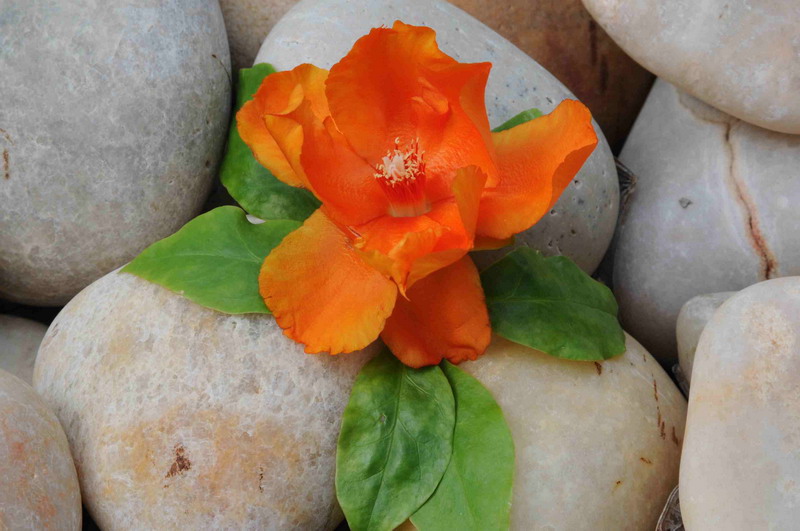
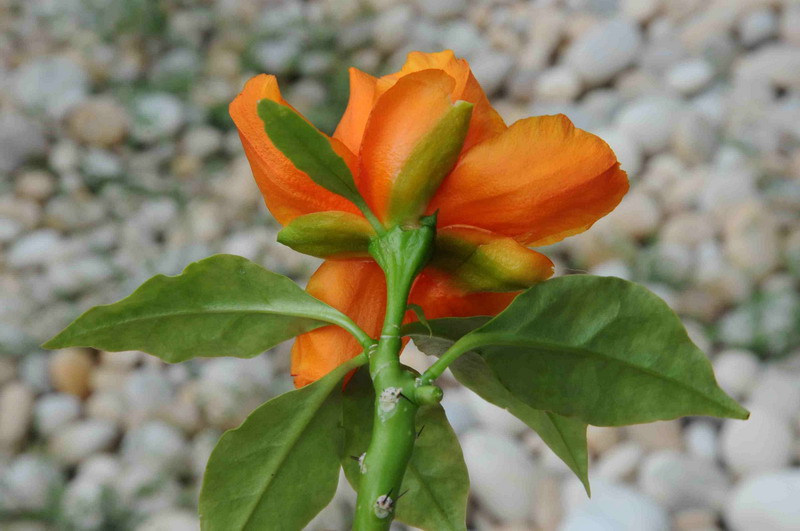
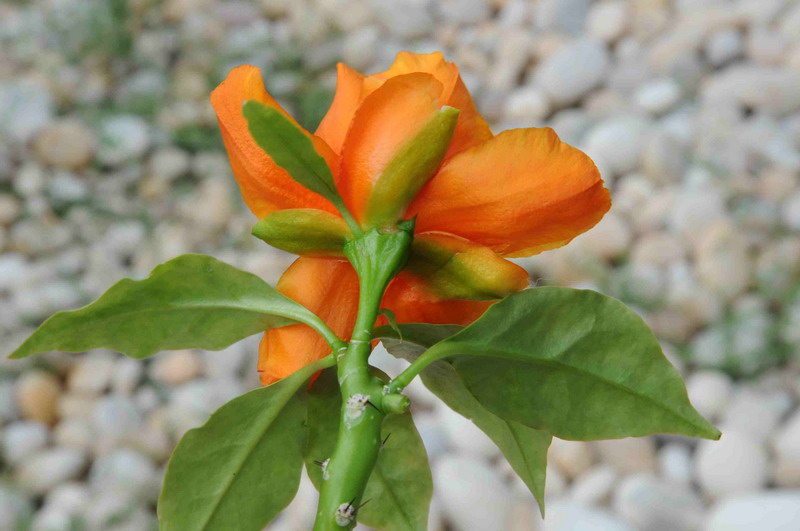
Rose Cactus (Pereskia bleo) of Cactaceae

Stephen A
Sharing a plant with you all,
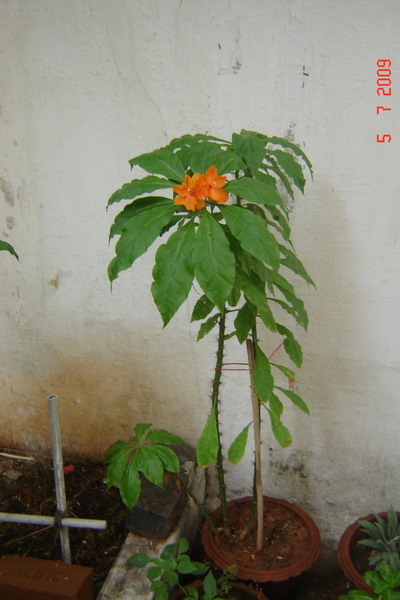
Rose Cactus (Pereskia bleo) of Cactaceae!
Kindly Validate the same...
This was taken from one of my friend's garden at Puducherry on 05.07.2009.
Thorns are visible on the stem, leaves succulent.
Regards,
Stephen...
--
http://stephenindiachennai.blogspot.com/
Think about the Environment before printing this e-mail! ü
+----------- --------- --------- --------- --------- --------- --------+
Think B4U Print
1 ream of paper = 6% of a tree and 5.4kg CO2 in the atmosphere
3 sheets of A4 paper = 1 litre of water
+----------- --------- --------- --------- --------- --------- --------+
"Lets Protect What We Enjoy"
"When the last tree is cut n the last river is poisoned, man will realize that s/he cannot eat her/his money"
If you're never scared or embarrassed or hurt, it means you never take
any chances - Anonymous

Rashida Atthar
regards,
Rashida.
--
You received this message because you are subscribed to the Google Groups "efloraofindia" group.
To post to this group, send email to indian...@googlegroups.com.
To unsubscribe from this group, send email to indiantreepi...@googlegroups.com.
For more options, visit this group at http://groups.google.com/group/indiantreepix?hl=en.




tanay bose
Tanay
Tanay Bose
+91(033) 25550676 (Resi)
9830439691(Mobile)
Stephen A
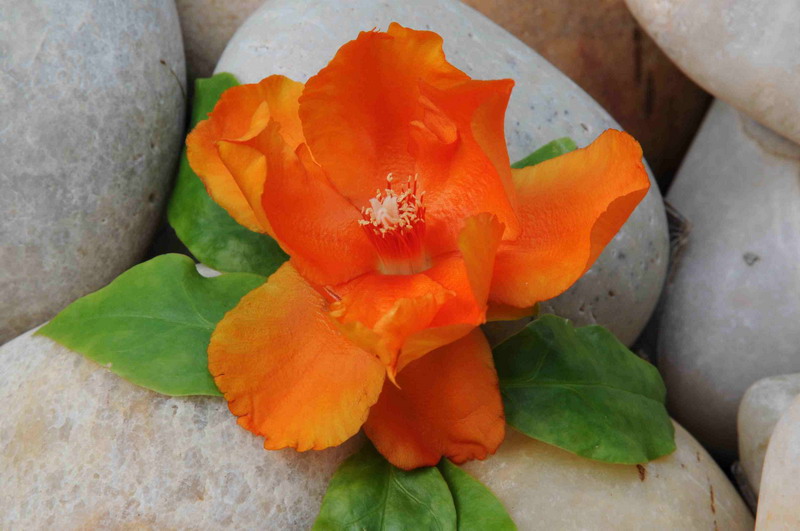
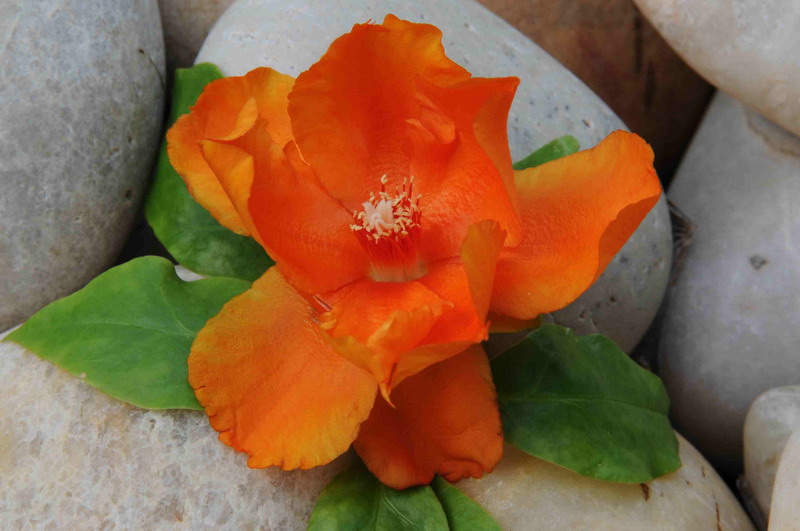
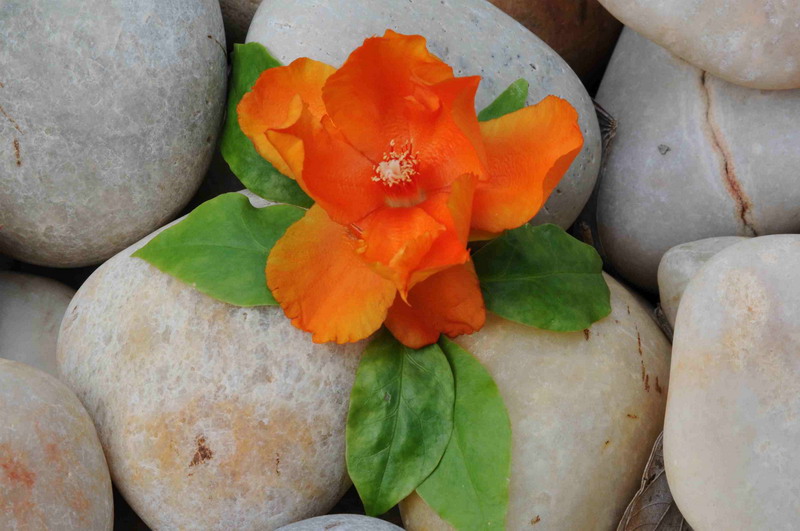
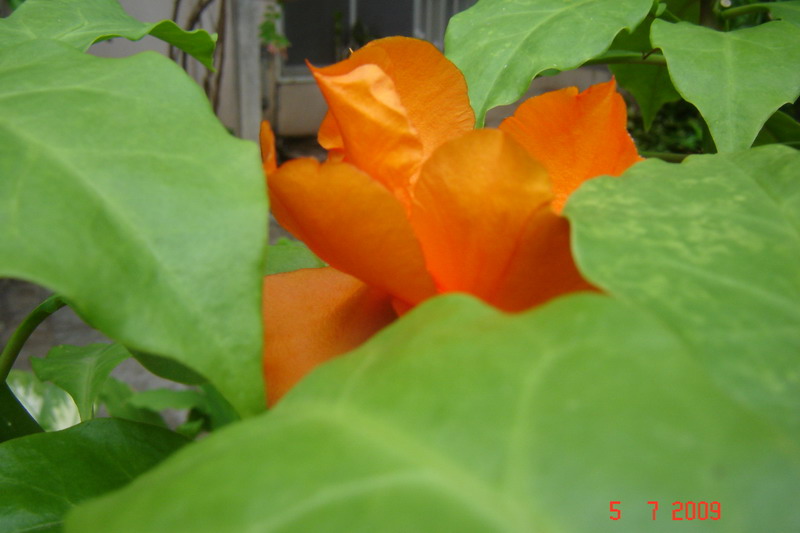
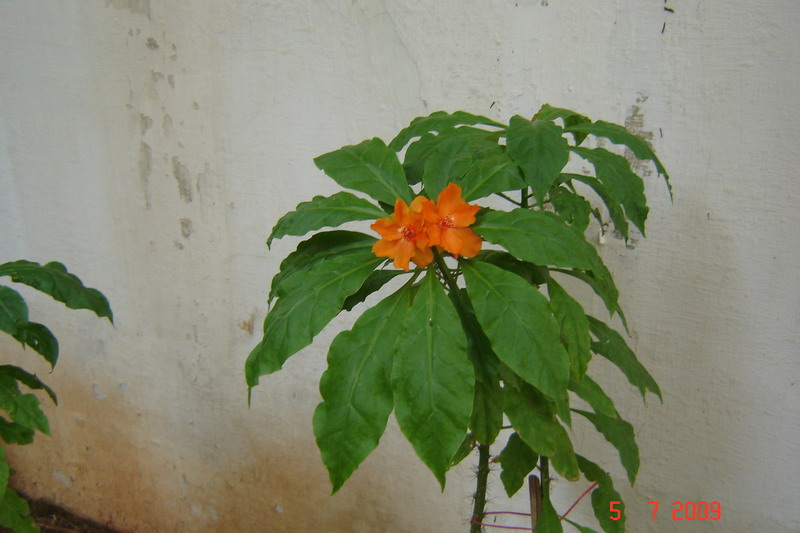
Sharing some more views of flower of Rose Cactus,
J Ethnopharmacol. 2005 Jan 4;96(1-2):287-94.
Methanolic extract of Pereskia bleo (Kunth) DC. (Cactaceae) induces apoptosis in breast carcinoma, T47-D cell line.
Tan ML, Sulaiman SF, Najimuddin N, Samian MR, Muhammad TS.
School of Biological Sciences, Universiti Sains Malaysia, 11800 Penang, Malaysia.
Abstract
Currently, breast cancer is the leading cause of cancer-related death in women. Therefore, there is an urgent need to develop alternative therapeutic measures against this deadly disease. Here, we report the cytotoxicity activity and the mechanism of cell death exhibited by the methanol extract prepared from Pereskia bleo (Kunth) DC. (Cactaceae) plant against human breast carcinoma cell line, T-47D. In vitro cytotoxicity screening of methanol extract of Pereskia bleo plant indicated the presence of cytotoxicity activity of the extract against T-47D cells with EC50 of 2.0 microg/ml. T-47D cell death elicited by the extract was found to be apoptotic in nature based a clear indication of DNA fragmentation which is a hallmark of apoptosis. In addition, ultrastructural analysis also revealed apoptotic characteristics (the presence of chromatin margination and apoptotic bodies) in the extract-treated cells. RT-PCR analysis showed the mRNA expression levels of c-myc, and caspase 3 were markedly increased in the cells treated with the plant extract. However, p53 expression was only slightly increased as compared to caspase 3 and c-myc. Thus, the results from this study strongly suggest that the methanol extract of Pereskia bleo may contain bioactive compound(s) that caused breast carcinoma, T-47D cell death by apoptosis mechanism via the activation of caspase-3 and c-myc pathways.
Scientific Name: Pereskia bleo (Kunth) DC.
Synonym: Pereskia cruenta, Pereskia panamensis, Rhodocactus corrugatus, Pereskia corrugata, Rhodocactus bleo, Cactus bleo
Family: Cactaceae
|
Peireskia bleo in Martius's 'Flora Brasiliensis' |
Recommended Temperature Zone: USDA: 9b-11 Minimum Avg. Temperature: 50°F (10°C) Heat Tolerance: Light shade in Phoenix in summer Sun Exposure: Morning sun or bright shade Origin: Panama and Colombia Growth Habits: Watering Needs: Enjoy some humidity in the air. They need good drainage, but the soil should stay moist in summer. Keep drier in winter. Propagation: |
Regards,
Stephen...
--