
Golang telnet client example

Bruno Rogério de Moura
Golang Telnet Client minimal example
I need to reproduce or do the same interaction bellow with Golang
telnet 11.11.11.1 0000
Get https://11.11.11.1:0000/httpgw.conf?Type=SMS&Address=12345678&MsgID=123&Notify=N&Validity=24:00&OAdC=15555&Message=HelloBrother HTTP/1.1
^: exit
How can I use net package properly to implement a simple client to perform these tasks:
- open a telnet connection with hostname and port only
- send a command inside this session or connection
- retrieve the output or http status (OPTIONAL)
- exit/quit session connection
I'm beginning with golang and I want to use go for this task.
I need help for write the minimal code to get these combined tasks working.
I have looking around github but some implementations seems intimidate or too complex for me.
If someone could help I'll apreciate any king of information or related tips.

Konstantin Khomoutov
Bruno Rogério de Moura <bruno...@gmail.com> wrote:
[...]
>
>
> *Get
> https://11.11.11.1:0000/httpgw.conf?Type=SMS&Address=12345678&MsgID=12
> <https://11.11.11.1:0/httpgw.conf?Type=SMS&Address=12345678&MsgID=12>3&Notify=N&Validity=24:00&OAdC=15555&Message=HelloBrother
> HTTP/1.1*
>
> *^: exit*
> How can I use net package properly to implement a simple client to
> perform these tasks:
Your example appears to be merely abusing a command-line Telnet
protocol client to do a simple HTTP GET request. Using telnet client
to interact with servers implementing text-based protocols is indeed
common (you can interact with SMTP and POP3 and IMAP servers just as
easily) but this does not mean you have to recreate this approach in
"real programming language".
To do the request you've indicated, you need something like this:
import (
"net/http"
"io"
"io/ioutil"
)
// (The URL below is elided for display purposes)
resp, err : http.Get("https://11.11.11.1:0/httpgw.conf?Type=SMS...Message=HelloBrother")
if err != nil {
panic(err)
}
if resp.StatusCode != http.StatusOK {
panic("Oh, noes my request failed!")
}
io.Copy(ioutil.Discard, resp.Body)
resp.Body.Close()
And that's basically all there is to it. This code is sloppy
but gives the basic idea of how to do a HTTP GET request with Go.
And I'd say yo don't even need Go for this as `curl` or `wget` tools,
available in any sensible POSIX-compatible system, will happily do
this request for you.
P.S.
Please be aware that there's no port "0" in TCP.
Hope you know what to do with that...

Jakob Borg
> open a telnet connection with hostname and port only
> send a command inside this session or connection
> retrieve the output or http status (OPTIONAL)
> exit/quit session connection
minimal necessary machinery to interact with a server, then you should
look into net.Dial. This gives you a socket connection to the server
(or an error). From there, see the Read() and Write() methods on that
connection. You can also use the types in the bufio package to get a
line oriented interface on top of this socket, to read and write lines
of text. That gets you quite close to a trivial telnet client, in
code.
//jb
Bruno Rogério de Moura
After to study for a while I came up with three distinct implementations, oh some progress here, but unfortunately
I'm got another weird error:
net/http GET request error tls oversized record received with length 20527
Bellow is the entire source code that I'm working on:
package main

import (
    "crypto/tls"
    "fmt"
    "io/ioutil"
    "net/http"
    "os"
)

func main() {

    cmdSecSMS := "https://11.11.11.1:0000/httpgw.conf?Type=SMS&Address=12345678&MsgID=123&Notify=N&Validity=24:00&OAdC=15555&Message="
    msg := "HelloBrother"
    cmdSecUrlSMS := cmdSecSMS + msg

    doClientTrans(cmdSecUrlSMS)

    doGetClient(cmdSecUrlSMS)

    doGet(cmdSecUrlSMS)
}

func doClientTrans(address string) {
    tr := &http.Transport{
        TLSClientConfig: &tls.Config{InsecureSkipVerify: true},
    }

    client := &http.Client{Transport: tr}

    response, err := client.Get(address)
    if err != nil {
        fmt.Printf("%s", err)
        os.Exit(1)
    } else {
        defer response.Body.Close()
        contents, err := ioutil.ReadAll(response.Body)
        if err != nil {
            fmt.Printf("%s", err)
            os.Exit(1)
        }
        fmt.Printf("%s\n", string(contents))
        fmt.Println(" Size: ", len(string(contents)), " url: ", address)
        fmt.Println(" Status Code:  ", response.StatusCode)
        hdr := response.Header
        for key, value := range hdr {
            fmt.Println(" ", key, ":", value)
        }
    }
}

func doGet(url string) {
    response, err := http.Get(url)
    if err != nil {
        fmt.Printf("%s", err)
        os.Exit(1)
    } else {
        defer response.Body.Close()
        contents, err := ioutil.ReadAll(response.Body)
        if err != nil {
            fmt.Printf("%s", err)
            os.Exit(1)
        }
        fmt.Println(" Size: ", len(string(contents)), " url: ", url)
        fmt.Println(" Status Code:  ", response.StatusCode)
        hdr := response.Header
        for key, value := range hdr {
            fmt.Println(" ", key, ":", value)
        }
    }
}

func doGetClient(url string) {
    client := &http.Client{}

    response, err := client.Get(url)
    if err != nil {
        fmt.Printf("%s", err)
        os.Exit(1)
    } else {
        defer response.Body.Close()
        contents, err := ioutil.ReadAll(response.Body)
        if err != nil {
            fmt.Printf("%s", err)
            os.Exit(1)
        }
        fmt.Println(" Size: ", len(string(contents)), " url: ", url)
        fmt.Println(" Status Code: ", response.StatusCode)
        hdr := response.Header
        for key, value := range hdr {
            fmt.Println(" ", key, ":", value)
        }
    }
}
When using telnet, this GET request works normally:
telnet 11.11.11.1 0000
Get https://11.11.11.1:0000/httpgw.conf?Type=SMS&Address=12345678&MsgID=12 3&Notify=N&Validity=24:00&OAdC=15555&Message=HelloBrother HTTP/1.1
^: exit
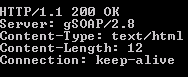
I'm running the golang app in the windows server 2012 and I don't know nothing about the server tech stack.
It's possible to fix this issue? There is a configuration workaround or something else that I can try?
thanks for your help
Obs: The port and the ip numbers are is only for demonstration porpoise

Matt Harden
--
You received this message because you are subscribed to the Google Groups "golang-nuts" group.
To unsubscribe from this group and stop receiving emails from it, send an email to golang-nuts...@googlegroups.com.
For more options, visit https://groups.google.com/d/optout.
Konstantin Khomoutov
Matt Harden <matt....@gmail.com> wrote:
> That looks like a proxy connection to me. See
> https://godoc.org/net/http#ProxyURL and
> https://godoc.org/net/http#Transport .
proxies. Does Go runtime attempt to pick proxy settings "from the
environment" up automatically (say, by reading the IE settings from the
registry)? That could explain the difference in behaviour.
Anothe thing I don't quite grok is that, again, IIUC, telnet does not
use TLS. So basically the OP does plain connection to some port and
then uses an URL with https prefix -- *not* just the path part of it
and the Host: header when doing their "GET" request. I fail to
understand how that works.
May be the problem is that the OP seems to use pictures for everything,
and I can't see them as I read this list using a conventional mail
client, not that horrible web interface.
[...]
> > implementations, oh some progress here, but unfortunately
> > I'm got another weird error:
Bruno Rogério de Moura
Matt Harden
Bruno Rogério de Moura
Matt Harden
--
Bruno Rogério de Moura
package main


import (
 "bufio"
 "crypto/tls"
 "fmt"
 "io/ioutil"
 "net"
 "net/http"
 "os"
)


func main() {
 cmdSecSMS := "GET https://10.xxx.xx.x:xx43/httpgw.conf?" +
 "Type=SMS&Address=5511111&MsgID=123&Notify=N&Validity=24:00&OAdC=15555&" +
 "Message=blablah " +
 "HTTP/1.1"


 fmt.Println(cmdSecSMS)
 cmdSecUrlSMS := cmdSecSMS
 hostName := "10.xxx.xx.x"
 portNum := "xx43"

 doDial(cmdSecUrlSMS, hostName, portNum)

 //doClientTrans(cmdSecUrlSMS)

 //doGetClient(cmdSecUrlSMS)

 //doGet(cmdSecUrlSMS)

}


func doDial(cmd, host, port string) {
 // connect to this socket
 conn, err := net.Dial("tcp", host+":"+port)


 if err != nil {
 fmt.Printf("Some error %v", err)
 return
 } else {
 defer conn.Close()
 fmt.Printf("Connection established between %s and localhost.\n", host)
 fmt.Printf("Local Address : %s \n", conn.LocalAddr().String())
 fmt.Printf("Remote Address : %s \n", conn.RemoteAddr().String())


 // send to socket
 fmt.Fprintf(conn, cmd+"\n")
 // listen for reply
 message, _ := bufio.NewReader(conn).ReadString('\n')
 fmt.Print("Message from server: " + message)
 }


}

Thank you guys for your support!