
Yanko Design - Latest Posts

Yanko Design
Yanko Design - Latest Posts
|

|

|
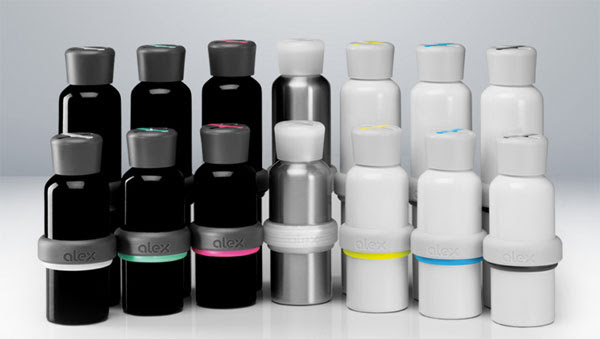
Posted: 01 Apr 2011 09:46 AM PDT I know it’s hard to embrace being “lean and green” in this new eco-culture but there’s one thing you can do to help and that’s to stop using plastic water bottles. It takes 24 million gallons of oil to produce a billion plastic bottles. 80% are not recycled and take 700 years to decompose. The deadly BPA compound in these bottles is found to be extremely hazardous and already banned in some countries. We’ve teamed up with Nice Reusables to giveaway 5 of their ALEX bottles if you make us a promise. Hit the jump for details.
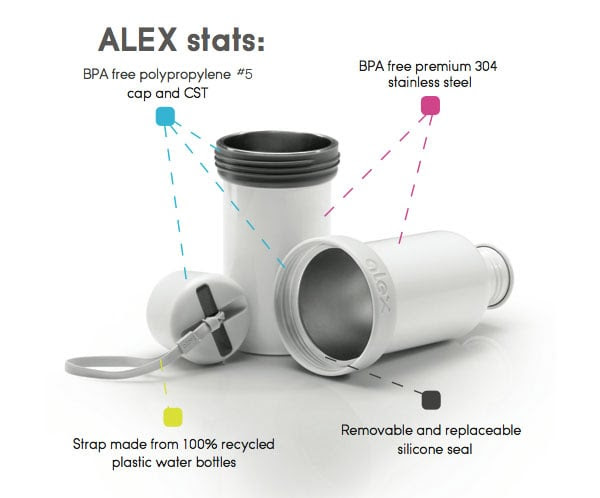
For a chance to win, leave a comment with this statement: “I insert your full name promise from here on out to never buy or use plastic water bottles again.” It will take commitment so please take this seriously. I’ll pick 5 people at random and announce the winners Monday April 4th. What’s up for grabs is the 20 oz. ALEX bottle. It’s BPA free, stackable, easy to clean and versatile. Check out my love letter to ALEX. Don’t want to wait for the giveaway? Buy your own bottle because $2 from every bottle goes to provide clean water access to those in need.
DID YOU KNOW most bottled water comes from municipal sources, not the pristine mountain reservoirs marketing would have you believe? Every time you buy bottled water, you’re paying a premium for “filtered” tap. Sponsor: Nice Reusables Support them on Facebook and Twitter! ----------       
|
| You are subscribed to email updates from Yanko Design
To stop receiving these emails, you may unsubscribe now. |
Email delivery powered by Google |
| Google Inc., 20 West Kinzie, Chicago IL USA 60610 | |
Yanko Design
- The Weighty Issue
- Simplified Smartphone
- Galleria Centercity
- Light, Deadly and Silent
- Dog on a Gun!
- Most Buzzed Designs of March 2011
- A Bus Can Be Sexy
- Biodegradable Footwear
- Woven Light
|
Posted: 01 Apr 2011 08:48 AM PDT If you’re looking for something with a sense of humor, then may I suggest The Bathroom Body Builders! Three muscle-rippling hunks that put any WWE champ to shame…they wrestle your toothbrush and contact lens-case to stay fit! Refine the form a tad bit more and I’m sold! Designer: James W. Breaux
|


----------    
|
|
Posted: 01 Apr 2011 08:48 AM PDT The Triple Flip is an attempt to make smartphones more useful than they already are. Claiming to be the first of its design ever to feature Windows Phone 7 OS, the phone has much more to offer than just that. Solar recharging, flip-out & sliding keyboards and other refinements make this a cool concept. What’s left to be seen is its acceptance by the general public. Hit the jump for the video. Musical soundtrack for the video was provided by British techno genius Lusky. Designer: Dave Schultze for SchultzeWORKS designstudio |
|


|

----------    
|
|
Posted: 01 Apr 2011 08:47 AM PDT It’s called the Galleria Centercity in Cheonan South Korea, designed to respond to the current retail climate in Asia. It’s a massive department store that also operates as a social a semi-cultural meeting place – a museum if you will. Rather than being the outcome of a prescriptive, standard-critical approach, the design of the galleria is based on observations of current behavioural tendencies in large commercial spaces. Particularly in South East Asia, department stores serve a highly social function; people meet, gather, eat, drink and both shop and window shop in these venues. The department store is no longer solely a commercial space, it now offers the architect the opportunity to build upon and expand the social and cultural experience of the visitor. If today we are seeing the museum as a supermarket, then we are also now seeing the department store as a museum. The exterior is a sight to be marveled at. The double layered facades are articulated in a trompe l’oeuil pattern of vertical mullions. The vertical lines on the façade make the scale of the building unreadable; does it contain three floor levels, or fifteen? On the inside, this play with scale and dimension is continued in a way that is at least as radical as the outside. Upon entering, the department store is revealed as a layered and varied space which encourages investigation and unfolds as you move through and up the building. Programmatically, the Galleria Cheonan incorporates a number of cultural and public spaces, including an art and cultural centre and a vip room. In the basement, a food court and specialty supermarket constitute another distinct destination within the building, which is simultaneously integrated with the overall design strategy. The main architectural theme for the Galleria Cheonan is that of dynamic flow. This is found both inside and outside. The architecture of the 66,000 m ² building responds to its central position by presenting a deliberately changeable aspect all-around. Moiré effects, special lighting and animations ensure that the outside changes appearance constantly. The interior derives its character from the accumulation of rounded plateaus on long columns. The repetition of curves, enhanced by coiled strip lighting in the ceilings of the platforms, gives the interior its distinctive character. Four stacked programme clusters, each encompassing three storeys and containing public plateaus, are linked to the central void. This organisation propels a fluent upstream flow of people through the building, from the ground floor atrium to the roof terrace. As the plateaus are positioned in a rotational manner in space, they enable the central space to encompass way finding, vertical circulation, orientation and act as main attractor of the department store. The spatial and visual connections within the space are designed to generate a lively and stimulating environment, in which the user is central. The strategy for the building enclosure consists of creating an optical illusion. During the day the building has a monochrome reflective appearance, whilst at night soft colours are used to generate waves of coloured light across the large scale illuminated surface. The lighting design was developed in parallel with the architecture and capitalises on the double layered facade structure. Computer generated animations specially designed by UNStudio are incorporated into the lighting design and refer to themes related to the department store, such as fashion, events, art and public life. Rather than creating a platform for a multiple billboard effect made up of individual brand identities, the thematic animated content of the fully integrated media façade facilitates a more holistic and site-oriented urban approach to branding. Photography: Christian Richters and Kim Jong-kwan Designer: UNStudio |
----------    
|


|
Posted: 01 Apr 2011 08:41 AM PDT I have a slight moral issue with publishing a post about a weapon but this smg concept called the Peace Maker is quite beautiful. The designer hasn’t explored all the working mechanics yet but it’s meant more for the gaming universe anyways – a light weight weapon with mid-range sight and silencer. Deadly. Designer: Alp Germaner
|


----------    
|
|
Posted: 01 Apr 2011 08:38 AM PDT Trust the Russians to teach us how to train a dog! Actually it’s more like shooting, err… walking them on a leash with the Povodokus! A pistol – shaped retractable dog-leash fit enough for your canine friend. Make that ANY friend! Designer: Art Lebedev Studio
|


----------    
|
|
Most Buzzed Designs of March 2011 Posted: 01 Apr 2011 06:07 AM PDT After a long hiatus I’m back with the most promising and talked about designs featured here on Yanko Design. Below you’ll find the most popular designs we’ve tracked over the last 30 days – an overview of designs you shouldn’t have missed in March 2011
15) Megaphones by Corentin Dombrecht
14) Rollerphone Concept by Alexey Chugunnikov
13) Gulfstream G550 by Stefan Radev
12) The Zoomin Watch by Gennady Martynov & Emre Cetinkoprulu
11) Biz Café by Youri Hong, Moonhwan Park & Hyoshin Kim
10) The Bud by Joshua Chao
9) Polyply by Andrew Seunghyun Kim
8 ) Catch That Cap by Stefano Di Lollo for Trudeau Corporation
7) The Magic Spoon by Ivan Erkic
6) Racer Bike by Allen Chester G. Zhang
5) Bairim Yacht by Timon Sager
4) Hyper Touch Guitar by Max Battaglia
3) Villa Amanzi by Adrian McCarroll, Waiman Cheung & Jamie Jamieson
2) Floor Plan Light Switch by Taewon Hwang
1) The Hug Chair by Ilian Milinov |


----------    
|
|
Posted: 01 Apr 2011 12:01 AM PDT Unlike many car-goers in Los Angeles, I will hop on the bus any chance I can get! I’m sure if the LA Metro looked anything like the Cityline concept others would be more inclined to use what I like to refer to as- my “public chauffeur”. The daytime LEDs add to it’s futuristic look, and I particularly love the way the windows merge seamlessly with the exterior panels and roof to create a smooth silhouette. Designers: Rafal Pilat & Michal Bonikowski |
----------    
|


|
Posted: 01 Apr 2011 12:01 AM PDT For those looking to put a little eco-friendliness in their step, the OneMoment shoe by Figtree Factory Studios offers comfort and modern style in this 100% biodegradable unisex slipper. Utilizing a bio-polymer injection process, the biodegradable plastic sole is only 2 mm thick (at least 3 mm less than traditional shoes) and the top portion is only 1mm thick. It only takes 6 months in the ground before 01M is 80% composted, so if they ever wear out you can guiltlessly leave them behind. Did I mention they’re only 5 euros per pair? Designer: Figtree Factory Studios
|


----------    
|
|
Posted: 01 Apr 2011 12:01 AM PDT Leave the screwdriver in the toolbox. The Disque pendant lamp by Dutch designer Marc van der Voorn achieves is modest look from two translucent bowl-shaped discs that are bound together with nothing more than a thin 65 meter string (DIY people!). Weaved beautifully between the discs, the string gives a soft touch of character to an otherwise reserved design. A little alien mothership-ish, but overall quite appealing. Designer: Marc van der Voorn
|


----------    
|
Yanko Design
- Not Afraid of Color, Interview with Karim Rashid
- City Compost Bin
- Balloony Lightsaber
- DIY Pendant Lamp by Benjamin Hubert
- Apple Peripherals Don’t Have to Look “Apple”
- Dining Table Puppetry
- Conceptual HTC New Eden is Beautiful
|
Not Afraid of Color, Interview with Karim Rashid Posted: 04 Apr 2011 08:41 AM PDT Karim Rashid is one of the most prolific designers today. He has over 3000 products in production, countless awards and an ever growing list of collaborations; exhibitions, restaurants, banks, automative and electronic companies to name a few. He is an enigmatic designer with accessible taste. That’s a rare and precious combination. There’s something rebellious about his vision, yet refined. His bold aesthetic and penchant for pushing boundaries makes him worthy of a singular moniker – Karim. Designer: Karim Rashid
Do you have nickname(s)? Care to share some and how you got them?I have been known as the “Prince of Plastic”. I use plastic in a lot of my designs because it’s a material that have wonderful properties, it is durable, malleable, and can be quite comfortable. With new technologies such as rotomoulding, I can create sensual and organic shapes that have never existed. Using plastic also enables my designs to be more accessible on the market. You’ve touched so many design disciplines from product design to interiors to brand identity. Which do you love most?I don’t favor one over the other. I love the immediate impact an interior can have on people lives. With hospitality design or public space, I know that masses of people have access to my designs, and they aren’t just looking at it, they are physically immersing themselves inside of the design. I have the power to affect them on a social level, whether it is to provide relaxing solitude, community, or a pleasurable vacation. I also derive tremendous happiness from product design, because each object has the potential to connect with the consumer, and to bring them pleasure on an everyday basis. Where does your creativity come from?I was born into a creative context. My father was so inspiring since he designed everything possible from movie sets to furniture to clothes. He was an artist and set designer for film and television. He taught me perspective at a young age, and he taught me that I could design anything and touch all aspects of our physical landscape. How do you find inspiration?I look way beyond design and architecture. Inspiration is accumulative. Everything can be inspiring. It is how you look at the world. I am inspired by my childhood, my education, by all my teachers I have ever had, by every project I have worked on, by every city I have traveled to, by every book I have read, by every art show I have seen, by every song I have heard, by every smell, every taste, sight, sound, and feeling.
You have a wonderful long list of products and accolades. What work are you most proud of? What was/is your highest moment?There hasn’t been one singular moment, but more a building journey. I can remember the satisfaction I felt from designing the Garbo and Oh Chair for Umbra back in the 90s. I love when my ideas are materialized in the form of products that are accessible, high design, and usable on a day-to-day basis. Then when I completed the Semiramis in Athens, that was my first hotel and I felt a wonderful sense of accomplishment. As of recently, I won 37 awards this year, and was inducted to the Interior Design Hall of Fame. But more than anything I am looking forward to what this next year will bring. We have just had the unveiling of Nhow hotel, Berlin, and soon the will complete a Metro Station in Naples.
You have a series of symbols that have almost become a design dialect easily recognizable as “Karim Rashid.” It’s in your work. It’s on your skin. What do they mean? How did they come about?They are my hieroglyphics. I developed 55 symbols over the last 13 years. Each has meaning. I call them Karimagologos. My book EVOLUTION explains the meanings. I never try to intentionally use them but they come into the work subconsciously at the most incidental times. I have 12 tattoos on me – one from each different city in the world from Tokyo to San Francisco to New York to London, to Chicago, etc. You seem to embrace the artificial possibilities of humanity – the merging of the organic with the artificial. Is this an accurate statement?It’s definitely accurate. I love evolution, I’m looking forward to the day when we’re 50% synthetic and artificial, there’s something obsessive, sort of like science fiction. You come from a diverse background rich in history yet I find very little nostalgia in your work. Where did this aesthetic come from?In this new century we are witnessing an exhaustive excavation into the vaults of the past, even more so than the post-modern eighties. It seems as history is unfolding at a hypertrophic rate, we keep searching into the past to unveil everything and anything, be it good or bad. But we should look to the future for change and innovation. When you harness and play with your creative energy, do you prefer to develop ideas in private or do you like to collaborate and receive input?I develop my ideas first, then I bring them to my team and we try variations using 3D renderings. I sketch profusely, mostly when I’m home, or traveling by plane. I like to be alone initially with some music playing, but later on design is a process. I need to make sure my vision will go seamlessly with the needs of my clients, and the needs of consumers. How do you change the world?I think every artist, designer, always wants to contribute something to culture I’ve always been obsessed with doing this, making a real impact on people’s lives. Even as a four year old child I used to draw pictures of buildings with my father, but I always wanted to change something: the windows, the doorway, etc. I knew back then I wanted to be a designer. Secondly, I almost consider myself more of an artist than a hard-core industrial designer, because there’s this weird drive internally to do something original in the world. I also realize that we live in a very complex world, and it can never be a utopian singular vision, and I would never want to mandate my vision on everyone else, I’m just contributing to lots of sensibilities. Finally, what is your favorite color and why?Pink. Pink is my superoptimisitc white. It is energetic, fulgent, engaging, and a moxie to the masculine world that dominates our built landscape. There are so many variations and shades of pink for every mood, ever person. Pink is the new black! |


----------    
|
|
Posted: 04 Apr 2011 08:13 AM PDT Composting is an important, vital part to creating a sustainable city but few urbanites engage in the activity because of stigmas. The idea of having a heap of organic trash slowly decomposing away inside a hot box doesn’t seem very sanitary but to change that perception, the C/N concept aesthetically improves the appearance and ease of use of city compositing bins. The bins don’t require the public to significantly modify their behavior. You still walk up to a trash bin and dump organic matter. A city attendant then rotates the bins depending on the level of decomposition into finally, a rich nutrient soil far superior to the current chemically fertilized dirt found in most cities. |
----------    
|


|
Posted: 04 Apr 2011 08:07 AM PDT Don’t look so puzzled; this concept is pretty simple actually. Balloon Flashlight is a flashlight with some extra lining to it. Pump up the inners to engulf the lightbeam and transform it to a suspended lamp. So what you get is a wonderful, handy tool for your camp outs. One moment it’s a flashlight and the next, it’s a lamp in a tent! Designers: Moonchul Kim & Ko Tae Hun |
----------    
|


|
DIY Pendant Lamp by Benjamin Hubert Posted: 04 Apr 2011 01:36 AM PDT Benjamin Hubert is at it again, this time with a DIY pendant lamp series called Roofer for Fabbian. Inspired by roof tiles in Marrakech; you “shingle” up a circular steel frame. The tiles come in various colors enabling the consumer to customize their own design. The tiles are made of silicon polymer, flexible enough to form around a compound curvature framework while allowing some light to pass through. Even within each color group, I love the gradation. Truly this is a lamp about options. Brills! Designer: Benjamin Hubert for Fabbian |
----------    
|


|
Apple Peripherals Don’t Have to Look “Apple” Posted: 04 Apr 2011 12:34 AM PDT The Kanto Morph speakers were originally designed by Alp Germaner for a competition but he missed the fine print about it being a “skin design” only and so it was relegated to languish in the dark corners of his hard drive – that is, until we got our hands on it. Look, for once it’s a design not about nostalgia. It’s not ostensibly minimalistic and it’s contemporary. Yes it’s an iPhone/iPod dock but who says all Apple peripherals have to look like Cupertino designed them? I applaud his aberrant design choices. |


|

----------    
|
|
Posted: 04 Apr 2011 12:27 AM PDT I love to play with my left overs. I figure, someone is just going to throw away all the scraps so why not prepare it into something beautiful before it’s marched to the dark voids of a food disposal. Play is a physical expression of our imagination and we need more of. Damn the rules of etiquette! Puppets are flatware shaped like people starring Mr. Knife, Miss Spoon and the mysterious Lady Spoon. Ooo GIRL! I can already imagine the ensuing drama! Create your own stories at the dining table. I encourage it. Designer: Su Jo-yin |
----------    
|


|
Conceptual HTC New Eden is Beautiful Posted: 04 Apr 2011 12:14 AM PDT The HTC New Eden 1 Concept is 1 of 2 designs to come out of the New Eden project, hosted by BriefMobile, that sets out to create the most appealing, feasible, hardware design for mobile devices. It aims to captivate with innovative and attractive hardware, as HTC did with the original Touch Diamond and other products that followed. The New Eden 1 is a device with a durable aluminum shell that combines traditional HTC design language with a fresher, more futuristic look. I think it’s a good direction but something about the design, and to a larger extent all HTC phones, doesn’t feel effortless. Yes it’s clean and minimal but I think it’s time for designers to look elsewhere for inspiration. Apple has the whole slim aluminum and glass aesthetic down. It’s become a part of their DNA. Any manufacturer playing with those materials fall victim to the “it’s not an iPhone” category. There are other materials out there to play with – wonderful and tactile options that can enhance the mobile experience in a way Apple hasn’t thought of yet. Thinking caps ON! Designer: Jason Wang |
----------    
|


Yanko Design
- Lamp with No Joints or Screws
- Sun & Solar Powered Clock
- Rolling Bookshelf
- Best of Digital and Analog Reading
- For All You Hot Messes
- Break It On Down
- All in One, Two Three, Four
|
Posted: 06 Apr 2011 07:28 AM PDT The Tweety table lamp, designed by Bonaguro Giorgio has a simple and intuitive design, made up of two main parts – the bulb and body. These two elements are combined without using screws or joints but by simply letting the bulb hang from body, making it easy to clean, assemble and package. The lamp is made of eco-friendly polycarbonate and comes with an energy A class light bulb. It’s adorable! Designer: Giorgio Bonaguro |
----------    
|


|
Posted: 06 Apr 2011 07:25 AM PDT Light Gap is a concept clock with solars cells on its backside. You stick it on a window so sunlight can illuminate the slit on the face to form the hour hand. As day moves into night, batteries kick in to illuminate a row of LEDs in the slit, thanks to the aforementioned solar cells. Light Gap is a Red Dot Concept Design 2010 winning entry. Designers: Chengyuan Wei, Fangtian Ying, Duyin Qin, Pengxiang Jia, Fan Zhang, Huabiao Shan, Yu Zhang, Chen Zheng, Guanyun Wang & Lifu Yao |
----------    
|


|
Posted: 06 Apr 2011 07:20 AM PDT The Patatras is a new way to store books – a wheel of knowledge if you will. Made of expanded polypropylene in a range of colors, each one contains cells for which you put books in. It’s actually not that large. At only 122 cm in diameter, you won’t need to worry about it accidentally rolling over the family cat. Photography: Pierre-François Gerard Designer: Michaël Bihain |
----------    
|


|
Best of Digital and Analog Reading Posted: 06 Apr 2011 07:15 AM PDT Digital books are here to stay but there’s still a disconnect with people who prefer the tactile experience of paper. The Smart Bookrest Docking System hopes to bridge the gap by giving you the best of both worlds. It works by reading a QR code printed on the page. Relevant media is then displayed on the tablet. Twice as much of fun! Designers: In-oh Yoo & Tae-soon Nam for Metatrend Institute |
----------    
|


|
Posted: 06 Apr 2011 12:47 AM PDT I’ll admit, I can be a huge one myself, which is why I’m happy to Introduce Release, a series of urban stress relieving and preventing products from designer Adhirath Bali. This eclectic group of aesthetically charming devices help prevent chronic anxiety in an equally broad but creative number of ways. One wakes the user up with a pleasant aroma in the morning and another even recreates the oddly relieving feeling of breaking glass. I’m a little worried that I think I could use each one multiple times a day. Sign me up! Designer: Adhirath Bali |
|


|

----------    
|

|
Posted: 06 Apr 2011 12:01 AM PDT Let’s be honest, there’s kinda this unspoken understanding that products that are made for efficient transportation will usually reflect it in their design… and not always in a good way. The Complect coffee table is a union of simple home assembly and high quality construction that merge to create a practical flat-packing table without sacrificing style. Complect features bent plywood legs and a solid walnut table top that break down to a height of under 3.5″ and can be assembled within minutes using a common screwdriver. Gotta love this one! Designer: Matt Finder |
----------    
|


|
Posted: 06 Apr 2011 12:01 AM PDT This puzzling design by designer Sanjin Halilovic isn’t your average shelving unit. It is, however, a modular furniture collection that become a table, chair, or lounge when broken down from the completed arrangement. The set’s four elements are constructed of wooden plaques fixed together with drvofix adhesive and finished in acrylic mat paint in fitting primary colors. While it seems more practical as a side table and chair set for my purposes, I love having options of alternative use for those times you’re itching to switch things up. Designer: Sanjin Halilovic |
----------    
|


Yanko Design
- First & Last Impressions from a Clothespin
- Two Halves of Time
- The Lunar Effect on Faucets
- What a Cute Cushion!
- Bee Charmin’ Shelving
- Pushy Handle
- A Take on the Carafe
|
First & Last Impressions from a Clothespin Posted: 05 Apr 2011 08:12 AM PDT When Keith Magruder decided he was ready for branch out and interview for a position at the GAP Inc. headquarters, he needed a way to make his candidacy stand out. He tinkered with several ideas and ultimately settled with a clothespin. The end result is humorous, functional and very memorable. His “calling card” thumb drive containing his portfolio is a testament to what we, as designers must do to prove ourselves. Be creative and bold like Keith. Question is, did he get the job? Designer: Keith Magruder for CreativeSESSION |
----------    
|


|
Posted: 05 Apr 2011 08:06 AM PDT Many watch innovations come from the digital neophyte camp. The possibilities are limitless but what about the analog peeps? The Ikku is a watch project aimed squarely at innovating how time is read using traditional movements. The face is divided into half spheres. The left half signifies hours while the right tells minutes. Each of the half spheres are demarcated into 12 points with its own needle. To read time, just look at the hours on the left, then minutes on the right. Beautiful design and it’s certainly different. Should be in stores soon. Designer: LÖYTÖ ESINEIDEN |
----------    
|


|
Posted: 05 Apr 2011 07:59 AM PDT I am totally captivated by the Luna Faucet! It is such a super sexy curve that has the audacity to compete with the crescent edge of the moon! And guess what, it succeeds in its efforts and is quite a design inspiration. Available in polished chrome and brushed Steelnox satin nickel finishes, I’ll be picking up the faucet and shower combo when I remodel my bathroom. Designer: Graff |
----------    
|


|
Posted: 05 Apr 2011 07:59 AM PDT Cute as a button, the adorable iCushion is the perfect seat for your iPhone. It gives you a great viewing angle while watching videos and keeps your earphone cable and USB charging cord neatly organized. It’s made from silicone and features a suction cup to that iPhone from slipping. Totally Want! Designer: Fadtronics |
----------    
|


|
Posted: 05 Apr 2011 12:01 AM PDT This modular shelving unit by Sam Holmes focuses on the use of a simplified metal connector to combine equally sized planks together to form it’s honeycomb compartments. The finished product is a geometrically efficient structure that uses the least amount of material possible to create a lattice of hexagonal cells that can be modified for the perfect fit within a space. Mmm, I’m suddenly hungry for honeycomb cereal. Designer: Sam Holmes |
----------    
|


|
Posted: 05 Apr 2011 12:01 AM PDT Unlike traditional door handles, the UltraLatch doesn’t twist or turn. Instead, this functional hardware simply pushes or pulls to open an interior door, making it possible for small children, physically challenged adults, or anyone who’s arms are full to enter and exit safely with a mere 1/2 inch push or pull. Inspired by the auto gear shifter, the Ultralatch was designed to conform to the shape of the human hand and is not only ergonomic, but retrofits to most existing cutouts on standard doors. Designer: SOSS |
----------    
|


|
Posted: 05 Apr 2011 12:01 AM PDT This reinterpretation of the Lebanese water carafe is the eye-catching work of designer Vrouyr Joubanian. Beeq’s layers are composed of 6mm thick concentric DuPont Corian that appear seamless, making the joints in between them completely invisible. The smooth and transparent traditional form of the carafe has been transformed into a jarring, opaque, and fragmented sculpture with Lego-like style. Designer: Vrouyr Joubanian |
----------    
|


Yanko Design
- Portion Control with Meat
- How Bare Can a Mouse Get?
- Utensils That Just Hang Around
- The New Social Video Game Console
- One to Five
- Revolutio
- Backpack Creates Renewable Energy
|
Posted: 07 Apr 2011 06:24 AM PDT The original intent of PerfectPlate is to promote vegetarianism, however I want to look at in a different light. With the unique shape and design of the plate, it’s impossible to pile it high with food. This means eating smaller portions, perhaps a great tool for progressive weight loss. Yea, I’m battling the bulge on a daily basis and such mind tricks do help! Designer: Dave Wu |
----------    
|


|
Posted: 07 Apr 2011 06:23 AM PDT Very basic and minimal if you leave it to Vrouyr Joubanian! He’s designed the Void mouse with bare-minimums; only one button that functions all as right, left, middle clicks and scroll. The hollow, wireless mouse sports uneven thickness ranging from 4 to 10mm and all the electrical parts are contained in the bulky bottom. It looks ergonomic enough for us to give it a try, what do you say? |


|

----------    
|
|
Utensils That Just Hang Around Posted: 07 Apr 2011 06:21 AM PDT Muuto’s new cooking set and salad servers combine form, function and craftsmanship. The elegant wooden tools are precisely designed and crafted for a sleek modern look. The innovative extrusion cut in the back of the cooking set HANG AROUND lets you work freely in the kitchen, while your utensils hang out on your pots or pans. TOSS AROUND, the salad servers, tell the same story of craftsmanship used for centuries but with contemparty design and modern ergonomics. These are the first Muuto products by KiBiSi – a Copenhagen based idea-driven industrial design firm founded by Kilo Design / Lars Holme Larsen, BIG Architects / Bjarke Ingels and Skibsted Ideation / Jens Martin Skibsted. The recently founded design studio has numerous International awards between them. KiBiSi partner Jens Martin Skibsted explains the idea behind Hang Around and Toss Around: “We were originally inspired by Bhutanese crafts. Their wooden everyday tools seem to have layers of stories and thoughts. We combined that with our Scandinavian design heritage and our idea-lead, no fluff design philosophy – and this little invention was bread. ” HANG AROUND & TOSS AROUND designed by KiBiSi for Muuto |
----------    
|


|
The New Social Video Game Console Posted: 07 Apr 2011 06:14 AM PDT Njoin is an ultra portable video game system specially designed to play videogames and run multimedia applications – capable of simultaneous, differentiated and private interaction between two or more users without reducing the characteristics required for individual use. Confused? Interest peeked? Hit the jump!
Designer: Xavier Torres Gómez |
|


|

----------    
|


|
Posted: 07 Apr 2011 01:15 AM PDT One to Five is an installation comprised of ten previously unreleased chair designs by Viennese designer Thomas Feichtner. All of these are presented as printouts of 3D models done at a scale of 1:5, and they will be shown at the Salone Internazionale del Mobile 2011 in Milan’s Zona Tortona district. This is an experiment which seeks to present designs not as finished projects but rather as processes which have yet to be concluded allowing producers to become part of the development process almost from the very beginning. Designer: Thomas Feichtner |
----------    
|

|
Posted: 07 Apr 2011 12:02 AM PDT This simple and modern watch by designer Mickaël Chros presents a new perception on time telling. Minutes and hours are displayed on Revolutio’s rotating rings and are powered by a standard watch engine. The magnetic locking system is perfectly discreet. I’m really digging the center-less design- the loop, versus the standard circle, is an interpretation of eternity and reminds that time has no real beginning or end. Designer: Mickaël Chrost |
----------    
|


|
Backpack Creates Renewable Energy Posted: 07 Apr 2011 12:01 AM PDT Unlike my camping buddies who will poke fun at me for this, I will always bring along every electronic device that I can fit in my pack. Gotta have the phone, the camera, and I’ve even been known to sneak a laptop on occasion. Problem is, the batteries are dead within the day and I inevitably regret the extra weight. The Alppac is for anyone like me. It uses a suspended load mechanism to produce an electrical charge when the user is walking. Plug in your phone, iPad, or any other electronic device and get a renewable, clean charge between stops. Designer: Joel Lim YM |
----------    
|


