
Alvaro Garcia Linera: Geopolitics of the Amazon - Part I: Revolution and counterrevolution in Bolivia
15 views
Skip to first unread message

Bolivia Rising
Dec 11, 2012, 9:23:45 PM12/11/12
to
Bolivian
leader replies to critics of the Morales government’s development
strategy
Introduction and translation by Richard Fidler, Life on the Left
Álvaro García Linera is one of Latin America’s leading Marxist intellectuals. He is also the Vice-President of Bolivia — the “co-pilot,” as he says, to President Evo Morales, and an articulate exponent of the government’s policies and strategic orientation.
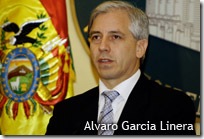
In a recent book-length essay, Geopolitics of the Amazon: Patrimonial-Hacendado Power and Capitalist Accumulation, published in September 2012, García Linera discusses a controversial issue of central importance to the development process in Latin America, and explains how Bolivia is attempting to address the intersection between economic development and environmental protection.
The issues he addresses are of great importance not only in Bolivia but throughout Latin America, and in fact in most of the countries of the imperialist periphery. They are especially important to understand in the “First World,” where there is an increasing campaign in parts of the left to turn against the progressive and anticapitalist governments in Latin America on the ground of their alleged “extractivism.”
García Linera examines the classic Marxist criteria on the forms of appropriation of nature by humanity. “Extractivism,” he shows, is not synonymous with underdevelopment. Rather, it is necessary to use the resources gained from primary or export activity controlled by the state to generate the surpluses that can satisfy the minimal conditions of life of Bolivians and to guarantee an intercultural and scientific education that generates a critical mass capable of assuming and leading the emerging processes of industrialization and economic development.
A major theme of the book is to refute the allegations in the opposition media that the TIPNIS highway between Cochabamba and Beni is intended for the export of Brazilian products to the Pacific via Bolivian territory. The book clearly demonstrates that the route is intended as part of the national unification of the country.
Geopolitics of the Amazon has attracted wide attention throughout Latin America. In a recent review, the eminent Brazilian sociologist Emir Sader says “it refutes each and every one of the allegations of the opposition in his country and their international spokespersons.” He describes it as “an essential book, without which it is not possible to understand the present phase of the Bolivian process and the root of the conflicts affecting it.”
The book has sparked fierce debate in Bolivia itself, including a lengthy response by Raúl Prada Alcoreza, a former comrade of García Linera in the Comuna collective.
There is an extensive literature on these issues now being produced in Latin America. Another example is a book, El desarrollo en cuestión: reflexiones desde América Latina. It includes articles by some of the authors cited in the debate between García Linera and Prada.
Geopolitics of the Amazon has attracted commentary in Quebec, including a favourable review by André Maltais in the widely-read L’aut’journal. A compendium of articles by the legendary Peruvian Marxist José Carlos Mariátegui recently published in Quebec also includes writings by Álvaro García Linera. More of his texts may be found on-line (Spanish only) on his web site.
Starting in today’s post, I am publishing my translation of the full text of Geopolitics of the Amazon. Because of its length (more than 25,000 words), I will publish it in five consecutive posts in coming days. To see the Table of Contents, click here. A glossary of terms and acronyms appearing in the text will be found here.
García Linera’s footnotes are included as well as a few of my own, the latter signed “Tr.” I have substituted English-language references, where available, for texts cited in the notes.
Muchas gracias to Federico Fuentes and Cristina Rojas for their diligent and critical reviews of my draft translation. I am of course solely responsible for the final text, published here.
– Richard Fidler
Introduction and translation by Richard Fidler, Life on the Left
Álvaro García Linera is one of Latin America’s leading Marxist intellectuals. He is also the Vice-President of Bolivia — the “co-pilot,” as he says, to President Evo Morales, and an articulate exponent of the government’s policies and strategic orientation.
In a recent book-length essay, Geopolitics of the Amazon: Patrimonial-Hacendado Power and Capitalist Accumulation, published in September 2012, García Linera discusses a controversial issue of central importance to the development process in Latin America, and explains how Bolivia is attempting to address the intersection between economic development and environmental protection.
The issues he addresses are of great importance not only in Bolivia but throughout Latin America, and in fact in most of the countries of the imperialist periphery. They are especially important to understand in the “First World,” where there is an increasing campaign in parts of the left to turn against the progressive and anticapitalist governments in Latin America on the ground of their alleged “extractivism.”
García Linera examines the classic Marxist criteria on the forms of appropriation of nature by humanity. “Extractivism,” he shows, is not synonymous with underdevelopment. Rather, it is necessary to use the resources gained from primary or export activity controlled by the state to generate the surpluses that can satisfy the minimal conditions of life of Bolivians and to guarantee an intercultural and scientific education that generates a critical mass capable of assuming and leading the emerging processes of industrialization and economic development.
A major theme of the book is to refute the allegations in the opposition media that the TIPNIS highway between Cochabamba and Beni is intended for the export of Brazilian products to the Pacific via Bolivian territory. The book clearly demonstrates that the route is intended as part of the national unification of the country.
Geopolitics of the Amazon has attracted wide attention throughout Latin America. In a recent review, the eminent Brazilian sociologist Emir Sader says “it refutes each and every one of the allegations of the opposition in his country and their international spokespersons.” He describes it as “an essential book, without which it is not possible to understand the present phase of the Bolivian process and the root of the conflicts affecting it.”
The book has sparked fierce debate in Bolivia itself, including a lengthy response by Raúl Prada Alcoreza, a former comrade of García Linera in the Comuna collective.
There is an extensive literature on these issues now being produced in Latin America. Another example is a book, El desarrollo en cuestión: reflexiones desde América Latina. It includes articles by some of the authors cited in the debate between García Linera and Prada.
Geopolitics of the Amazon has attracted commentary in Quebec, including a favourable review by André Maltais in the widely-read L’aut’journal. A compendium of articles by the legendary Peruvian Marxist José Carlos Mariátegui recently published in Quebec also includes writings by Álvaro García Linera. More of his texts may be found on-line (Spanish only) on his web site.
Starting in today’s post, I am publishing my translation of the full text of Geopolitics of the Amazon. Because of its length (more than 25,000 words), I will publish it in five consecutive posts in coming days. To see the Table of Contents, click here. A glossary of terms and acronyms appearing in the text will be found here.
García Linera’s footnotes are included as well as a few of my own, the latter signed “Tr.” I have substituted English-language references, where available, for texts cited in the notes.
Muchas gracias to Federico Fuentes and Cristina Rojas for their diligent and critical reviews of my draft translation. I am of course solely responsible for the final text, published here.
– Richard Fidler
* * *
Geopolitics of the Amazon
Patrimonial-Hacendado power and capitalist accumulation
The whole course of the ... revolution ... strikingly
confirmed one of Marx’s profound propositions: revolution progresses by giving
rise to a strong and united counter-revolution, i.e., it compels the enemy to
resort to more and more extreme measures of defence and in this way devises ever
more powerful means of attack.
V.I. Lenin[1]
I want to
welcome the initiative taken by Ana Esther Ceceña, and all the comrades who have
commented on her article,[2] in opening the
debate around the present political situation in Bolivia. The thoughts of each
of the participants not only demonstrate the interest and greater or lesser
revolutionary engagement with the events, but also help to shed light on the
complexity of the political processes and possible ways to advance them.Revolution and counterrevolution
It was Lenin who pointed out that any real revolutionary process will generate an even greater counterrevolution. This means that any revolution must advance in order to consolidate itself, but in doing so it arouses forces opposed to its advance that block the revolution, which in turn, in order to defend and consolidate itself, will have to advance further, arousing even greater reactions from the conservative forces, and so on indefinitely. In Bolivia, in the last 12 years, we have experienced an ascending revolutionary process which, emerging from organized civil society as a social movement, has affected and traversed the state structure itself, modifying the very nature of civil society.... continue reading here http://boliviarising.blogspot.com.au/2012/12/alvaro-garcia-linera-geopolitics-of.html
Reply all
Reply to author
Forward
0 new messages