
Where There Is A Will, There Is Theatre
0 views
Skip to first unread message

Mumbai Theatre Guide
Jun 3, 2026, 6:02:44 AMJun 3
to curtain-c...@googlegroups.com
if you are unable to view the mail click here.



Wednesday, 03 June 2026
Dear Reader,
Where There Is A Will, There Is Theatre
It had to be sooner than later that voices from Palestine reached the stage, through a collection of nine short plays written by Palestinian playwrights, poets and artists., directed by Ahmed Masoud and Micaela Miranda, reports Arifa Akbar in The Guardian. The show was put out with just one week of rehearsals. "Four writers are currently in Gaza while two are former political prisoners, including Walid Daqqa, one of the longest-serving Palestinian prisoners, who died in custody in 2024. An extract from The Martyrs Return to Ramallah (translated by Julia Choucair Vizoso) is both absurdist and haunting, featuring the dead bodies of prisoners stored in Israeli prisons and denied burials, who begin to talk to each other," she writes.
"Its absurdist overtones run across several plays, including The Last Letter by Mohammed Al Qudwa (translated by Mona Al-Khatib) in which a bewildered character in the last house standing on the wreckage of one Gazan street receives letters full of existential questioning and stark lyricism, written to the world and humanity.
"What are the basic requirements of theatre-making? Actors, writers, resource and rehearsal space, to name a few. What happens when these factors are narrowed to their most dangerous extremities? Companies like Belarus Free Theatre and the Freedom Theatre have shown that theatre does not stop its production even as bombs and bullets assail the building. The work finds its way to an audience."
As lived experiences intersect with political theatre, the overwhelming message is hope. "The world of these dramas is “a city of zombies” and a result of “the most absurd of wars,” as one character says in a piece called Ruins. But hope still sits beside horror."
Where There Is A Will, There Is Theatre
It had to be sooner than later that voices from Palestine reached the stage, through a collection of nine short plays written by Palestinian playwrights, poets and artists., directed by Ahmed Masoud and Micaela Miranda, reports Arifa Akbar in The Guardian. The show was put out with just one week of rehearsals. "Four writers are currently in Gaza while two are former political prisoners, including Walid Daqqa, one of the longest-serving Palestinian prisoners, who died in custody in 2024. An extract from The Martyrs Return to Ramallah (translated by Julia Choucair Vizoso) is both absurdist and haunting, featuring the dead bodies of prisoners stored in Israeli prisons and denied burials, who begin to talk to each other," she writes.
"Its absurdist overtones run across several plays, including The Last Letter by Mohammed Al Qudwa (translated by Mona Al-Khatib) in which a bewildered character in the last house standing on the wreckage of one Gazan street receives letters full of existential questioning and stark lyricism, written to the world and humanity.
"What are the basic requirements of theatre-making? Actors, writers, resource and rehearsal space, to name a few. What happens when these factors are narrowed to their most dangerous extremities? Companies like Belarus Free Theatre and the Freedom Theatre have shown that theatre does not stop its production even as bombs and bullets assail the building. The work finds its way to an audience."
As lived experiences intersect with political theatre, the overwhelming message is hope. "The world of these dramas is “a city of zombies” and a result of “the most absurd of wars,” as one character says in a piece called Ruins. But hope still sits beside horror."
"Acting is a matter of giving away secrets."
Ellen Barkin

A LOVE STORY OF 12.5 LACS

BHARAT KA LADLA DEENDAYAL

Reach Out To 7000+ Theatre Lovers On Social Media

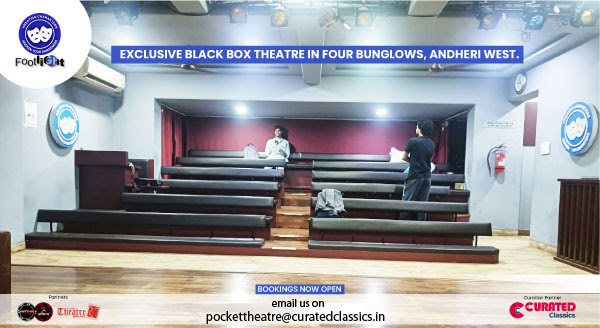
BOOKINGS NOW OPEN : EXCLUSIVE BLACK BOX THEATRE IN FOUR BUNGLOWS, ANDHERI WEST.


News


Upcoming Shows


Reviews


Workshops

.jpg)
Schedules


Website URL: mumbaitheatreguide.com
Address: B/8, Ground floor, Sahyog Apartment, SV Rd, opposite Lohana Mahajan Wadi, Kandivali West, Mumbai, Maharashtra 400067 india.
Contact Number: 91.9892121148 / 9223251148
Email ID: resp...@mumbaitheatreguide.com
if you wish to unsubscribe to this newsletter, please click here
powered by phpList

Reply all
Reply to author
Forward
0 new messages