
Women's Points Of View In Theatre

Mumbai Theatre Guide
if you are unable to view the mail click here.



Wednesday, 11 March 2026
Women's Points Of View In Theatre
Awards are always exciting news. Each year, the Susan Smith Blackburn Prize gives a $25,000 prize (and a signed Willem de Kooning print) to a woman+ playwright for an outstanding English-language play. Writes Rob Weinert-Kendt in americantheatre.org, " It has typically alternated between British and American playwrights . But today, in a ceremony at the Royal Court Theatre in London, the prize goes to two writers, repping both sides of the Atlantic: U.S.-based Ro Reddick for Cold War Choir Practice, and U.K./Ireland-based Hannah Doran for The Meat Kings! (Inc.) of Brooklyn Heights. Awarded annually since 1978, it's the largest and oldest award recognizing women+ writing for the English-speaking theatre. Eight additional finalists were named and will receive prizes of $5,000. This is only the third time, the award has gone to two writers."
Cold War Choir Practice has been described as a "brainy, satirical Off-Broadway play with songs by Ro Reddick, set in 1987 Syracuse, NY. The story follows a young girl dealing with family drama and a mysteriously ill aunt, while navigating the era's fear of nuclear war, consumerism, and espionage." And The Meat Kings! (Inc.) of Brooklyn Heights, "is a tense drama set in a struggling Brooklyn butcher shop. It follows apprentices Billy and JD, who are pitted against each other for survival by owner Paula, while navigating financial desperation, toxic masculinity, and the high-stakes dangers of US immigration policies and the healthcare crisis."
"We are excited to see two debut plays win the prize," said Leslie Swackhamer, executive director of the Susan Smith Blackburn Prize, in a statement. "These writers are on the cusp of brilliant careers, and their plays could not be more different—one is a surreal romp of political intrigue, and the other is firmly grounded in realism—and both are dealing with our current moment in theatrically thrilling ways."
"Theatre is about the collective imagination... Everything I use on-stage is driven by the subject matter and what you might call the text - but that text can be anything, from a fragment of movement or music to something you see on a TV."
Simon McBurney

ZEN KATHA

HOME IN A SUITCASE

DARBAR

SAKSHI EVENT

MTG PROMOTIONAL PLAN

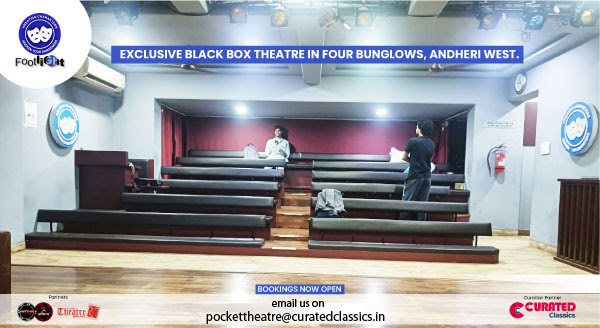
BOOKINGS NOW OPEN : EXCLUSIVE BLACK BOX THEATRE IN FOUR BUNGLOWS, ANDHERI WEST.


News


Upcoming Shows


Reviews


Workshops


Schedules


Website URL: mumbaitheatreguide.com
Address: B/8, Ground floor, Sahyog Apartment, SV Rd, opposite Lohana Mahajan Wadi, Kandivali West, Mumbai, Maharashtra 400067 india.
Contact Number: 91.9892121148 / 9223251148
Email ID: resp...@mumbaitheatreguide.com
if you wish to unsubscribe to this newsletter, please click here
