
[Jonquil's Journey] Inclusivity.
0 views
Skip to first unread message

Jonquil
Mar 5, 2012, 10:25:41 AM3/5/12
to countryside-mansarov...@googlegroups.com
I keep writing how inclusive, welcoming, hospitable India is but this attitude runs deep, like a vein of blood to the heart, or a river that runs to the sea. It's a way of life, steeping far back in the memory of the land, to the first rising of Himalayas and 'civilisation'.
My uncle, Jerome told me a story once about another uncle I didn't know existed. During the 1920's my maternal grandparents lived in India and Michael was born in 1928. Sadly, 18 months later he caught a tropical disease and thinking the cool air in the hills might help, my grandmother went to a hill station called Ranikatt. Michael never survived and he was buried there in a British military cemetery. In 1965 Jerome went on a personal pilgrimage to visit his brother's grave and pay respect to Michael, who he never knew. He commented, "I was shocked to see Indians were still looking after the cemetery." Certainly, in England if there was no immediate, personal gain or vested interest, something like that would surely be ignored. The selflessness touched him profoundly, it made him feel how his mother felt, leaving her son behind.
It's not just a question of acceptance, it's realising that sacred ground is Sacred Ground, whether a Buddhist, Hindu, Christian, Jain, Parsi, Jew or Muslim.
But there's another angle too. It's India's ability to assimilate the good and make it all part of ITSELF.
Buddha rejected caste and the traditions of Vedic ritual but is now believed to be the ninth incarnation of the Hindu God Vishnu, sustainer and preserver of the world.
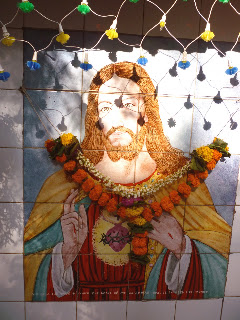 Jesus has always been attractive in India. In the 15th Century, Emperor Akbar heard stories from the Jesuits about Jesus, fascinated he listened with awe but to the Jesuits dismay did not convert. Akbar was able to take on the miracles and the worship of Jesus, without losing his own tradition or faith. The teachings did not provide a threat, being Hindu. This is practically unheard of in Christianity. Even Protestants and Catholics who believe in the same Jesus, have fought with each other.
In Europe, during the middle ages Jews were persecuted and excluded from society but in India they found a home. During the 10th Century, Parsees fled from persecution in Iran and found refuge in India. Today, India is a home to thousands of Tibetans and houses the Dalai Lama. Each religion and its variant culture is able to live in peace.
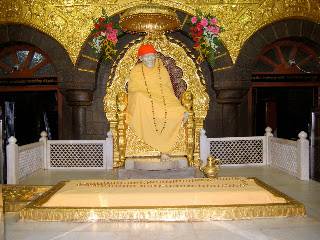
Look at Shirdi Sai Baba. Nobody knows what tradition he really came from. Maybe Hindu, maybe Muslim. In all likelihood and probability he was a Sufi Fakir. (Old Islamic traditional priest.) Even where he stayed is named, 'Dwarkamai' meaning Mosque. However today, Baba is worshipped like a Hindu God, complete with traditional rituals.
I think it comes down to a simple truth, realised before by a Greek Mathematician called Pythagoras, who wrote: MAN KNOW THYSELF AND YOU SHALL KNOW THE UNIVERSE AND GOD.
Whatever works!
Om
My uncle, Jerome told me a story once about another uncle I didn't know existed. During the 1920's my maternal grandparents lived in India and Michael was born in 1928. Sadly, 18 months later he caught a tropical disease and thinking the cool air in the hills might help, my grandmother went to a hill station called Ranikatt. Michael never survived and he was buried there in a British military cemetery. In 1965 Jerome went on a personal pilgrimage to visit his brother's grave and pay respect to Michael, who he never knew. He commented, "I was shocked to see Indians were still looking after the cemetery." Certainly, in England if there was no immediate, personal gain or vested interest, something like that would surely be ignored. The selflessness touched him profoundly, it made him feel how his mother felt, leaving her son behind.
It's not just a question of acceptance, it's realising that sacred ground is Sacred Ground, whether a Buddhist, Hindu, Christian, Jain, Parsi, Jew or Muslim.
But there's another angle too. It's India's ability to assimilate the good and make it all part of ITSELF.
Buddha rejected caste and the traditions of Vedic ritual but is now believed to be the ninth incarnation of the Hindu God Vishnu, sustainer and preserver of the world.

In Europe, during the middle ages Jews were persecuted and excluded from society but in India they found a home. During the 10th Century, Parsees fled from persecution in Iran and found refuge in India. Today, India is a home to thousands of Tibetans and houses the Dalai Lama. Each religion and its variant culture is able to live in peace.
Look at Shirdi Sai Baba. Nobody knows what tradition he really came from. Maybe Hindu, maybe Muslim. In all likelihood and probability he was a Sufi Fakir. (Old Islamic traditional priest.) Even where he stayed is named, 'Dwarkamai' meaning Mosque. However today, Baba is worshipped like a Hindu God, complete with traditional rituals.

I think it comes down to a simple truth, realised before by a Greek Mathematician called Pythagoras, who wrote: MAN KNOW THYSELF AND YOU SHALL KNOW THE UNIVERSE AND GOD.
Whatever works!
Om
--
Posted By Jonquil to Jonquil's Journey on 3/05/2012 07:25:00 AM
Reply all
Reply to author
Forward
0 new messages