
Volume 2-oae2023, 2023 | Guide to Best Practices in Ocean Alkalinity Enhancement Research

Geoengineering News
The Paris Agreement to limit global warming to well below 2 ∘C requires the ambitious reduction in greenhouse gas emissions and the balancing of remaining emissions through carbon sinks (i.e., the deployment of carbon dioxide removal or CDR). While ambitious climate mitigation scenarios until now primarily consider land-based CDR methods, there is growing concern about their potential to deliver sufficient CDR, and marine CDR options are receiving more and more interest. Based on idealized theoretical studies, ocean alkalinity enhancement (OAE) appears as a promising marine CDR method. However, the knowledge base is insufficient for a robust assessment of its practical feasibility, of its side effects, social and governance aspects, and monitoring and verification issues. A number of research efforts aims to improve this in a timely manner. We provide an overview on the current situation of developing OAE as a marine CDR method and describe the history that has led to the creation of the OAE research best practices guide.
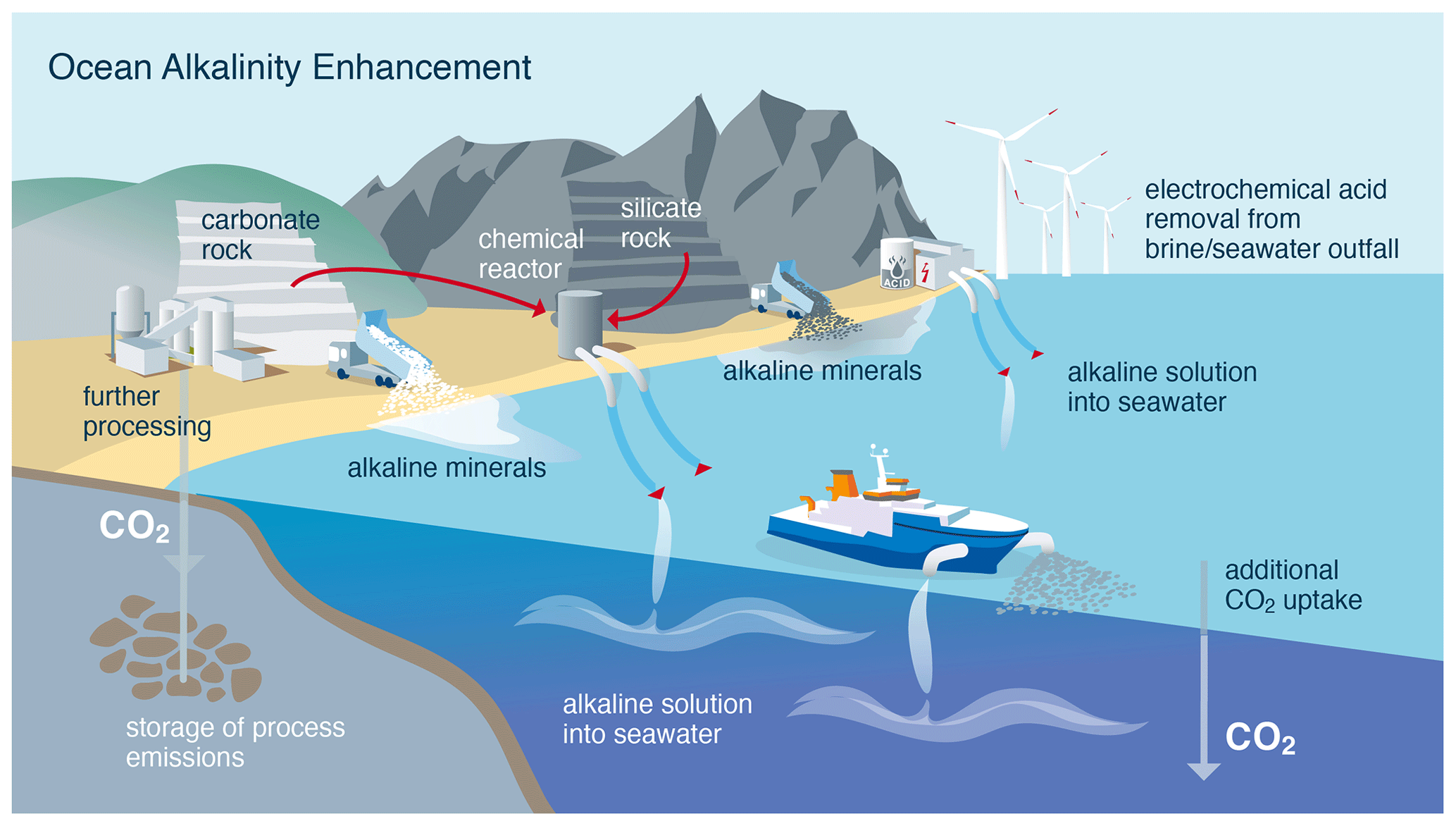
Figure 2Illustration of the various methods that have been proposed as ocean alkalinity enhancement measures to achieve carbon dioxide removal.
Ocean alkalinity enhancement (OAE) is a proposed marine carbon dioxide removal (mCDR) approach that has the potential for large-scale uptake of significant amounts of atmospheric carbon dioxide (CO2). Removing anthropogenic legacy CO2 will be required to stabilise global surface temperatures below the 1.5–2 ∘C Paris Agreement target of 2015. In this chapter we describe the impacts of various OAE feedstocks on seawater carbonate chemistry, as well as pitfalls that need to be avoided during sampling, storage, and measurement of the four main carbonate chemistry parameters, i.e. dissolved inorganic carbon (DIC), total alkalinity (TA), pH, and CO2 fugacity (fCO2). Finally, we also discuss considerations in regard to calculating carbonate chemistry speciation from two measured parameters. Key findings are that (1) theoretical CO2 uptake potential (global mean of 0.84 mol of CO2 per mole of TA added) based on carbonate chemistry calculations is probably secondary in determining the oceanic region in which OAE would be best; (2) carbonate chemistry sampling is recommended to involve gentle pressure filtration to remove calcium carbonate (CaCO3) that might have been precipitated upon TA increase as it would otherwise interfere with a number of analyses; (3) samples for DIC and TA can be stabilised to avoid the risk of secondary CaCO3 precipitation during sample storage; and (4) some OAE feedstocks require additional adjustments to carbonate chemistry speciation calculations using available programs and routines, for instance if seawater magnesium or calcium concentrations are modified.
Ocean alkalinity enhancement (OAE) is an emerging strategy that aims to mitigate climate change by increasing the alkalinity of seawater. This approach involves increasing the alkalinity of the ocean to enhance its capacity to absorb and store carbon dioxide (CO2) from the atmosphere. This chapter presents an overview of the technical aspects associated with the full range of OAE methods being pursued and discusses implications for undertaking research on these approaches. Various methods have been developed to implement OAE, including the direct injection of alkaline liquid into the surface ocean; dispersal of alkaline particles from ships, platforms, or pipes; the addition of minerals to coastal environments; and the electrochemical removal of acid from seawater. Each method has its advantages and challenges, such as scalability, cost effectiveness, and potential environmental impacts. The choice of technique may depend on factors such as regional oceanographic conditions, alkalinity source availability, and engineering feasibility. This chapter considers electrochemical methods, the accelerated weathering of limestone, ocean liming, the creation of hydrated carbonates, and the addition of minerals to coastal environments. In each case, the technical aspects of the technologies are considered, and implications for best-practice research are drawn. The environmental and social impacts of OAE will likely depend on the specific technology and the local context in which it is deployed. Therefore, it is essential that the technical feasibility of OAE is undertaken in parallel with, and informed by, wider impact assessments. While OAE shows promise as a potential climate change mitigation strategy, it is essential to acknowledge its limitations and uncertainties. Further research and development are needed to understand the long-term effects, optimize techniques, and address potential unintended consequences. OAE should be viewed as complementary to extensive emission reductions, and its feasibility may be improved if it is operated using energy and supply chains with minimal CO2 emissions.
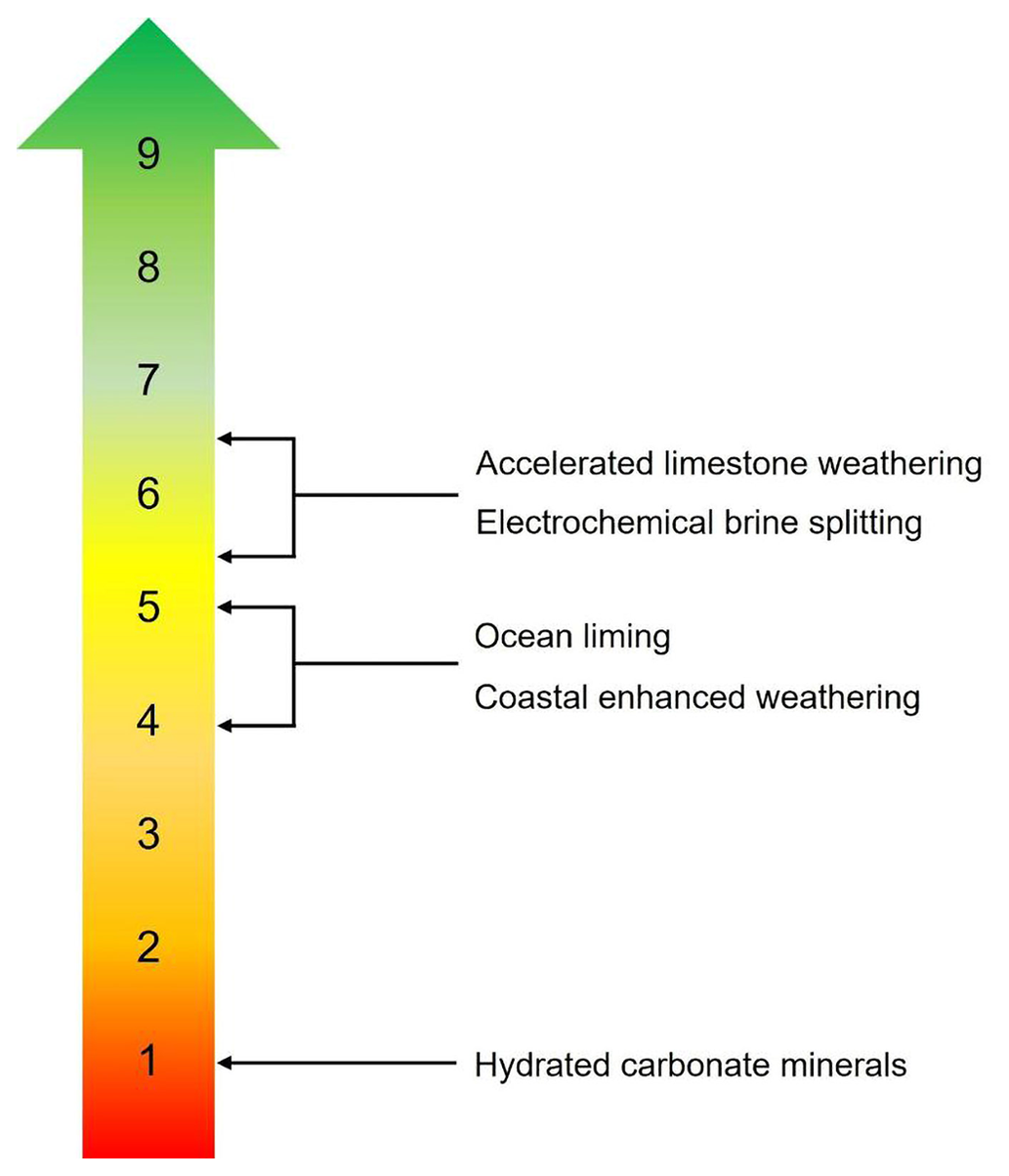
Figure 2Technology readiness levels (TRLs) for different ocean-alkalinity-enhancement approaches: (1) basic principles observed, (2) technology concept formulated, (3) experimental proof of concept, (4) technology validated in laboratory environment, (5) technology validated in a relevant environment, (6) technology demonstrated in a relevant environment, (7) system prototype demonstration in an operational environment, (8) actual system completed and qualified, (9) actual system proven in an operational environment
General considerations for experimental research on ocean alkalinity enhancement
Ocean alkalinity enhancement (OAE) is proposed as an approach to capture carbon by adding alkaline substances to seawater to enhance the ocean's natural carbon sink. These substances include minerals, such as olivine, or artificial substances, such as lime or some industrial byproducts. Deployment of OAE will lead to complex and dynamic changes in the seawater carbonate chemistry, and in some cases the addition of other compounds and impurities from the minerals. While OAE alters the carbonate chemistry in a very different way, much can be learned from the abundant literature on ocean acidification documenting the impact of changes in the carbonate chemistry on marine life from genes to ecosystems. A vast majority of the experimental work was performed by manipulating the concentration of carbon dioxide in seawater under constant alkalinity (TA) to simulate near-future ocean acidification. Understanding the impact of changes in alkalinity on marine species and the ecosystem is less understood. In the context of OAE, it is critical to resolve such impacts, alone or in combination with other compounds and impurities from the minerals to be co-released during implementation, to ensure that any field manipulation does not translate into damaging biological effects. As for other environmental drivers, this will require an understanding across all the levels of biological organizations from species to ecosystems over relevant time exposure considering the method of deployment (e.g., dilution, repeated exposure) and factors such as local adaptation. Such complex questions cannot be resolved using a single approach, and a combination of monitoring, modeling, laboratory, natural (i.e., proxies or analogs), and field experiments will be required. This chapter summarizes some key general considerations for experimental design. It also compares strengths and weaknesses of the different approaches. We will also consider best practices relevant to OAE such as the need to properly monitor and consider the addition of trace elements and byproducts, as well as potential interactions with other naturally occurring drivers.
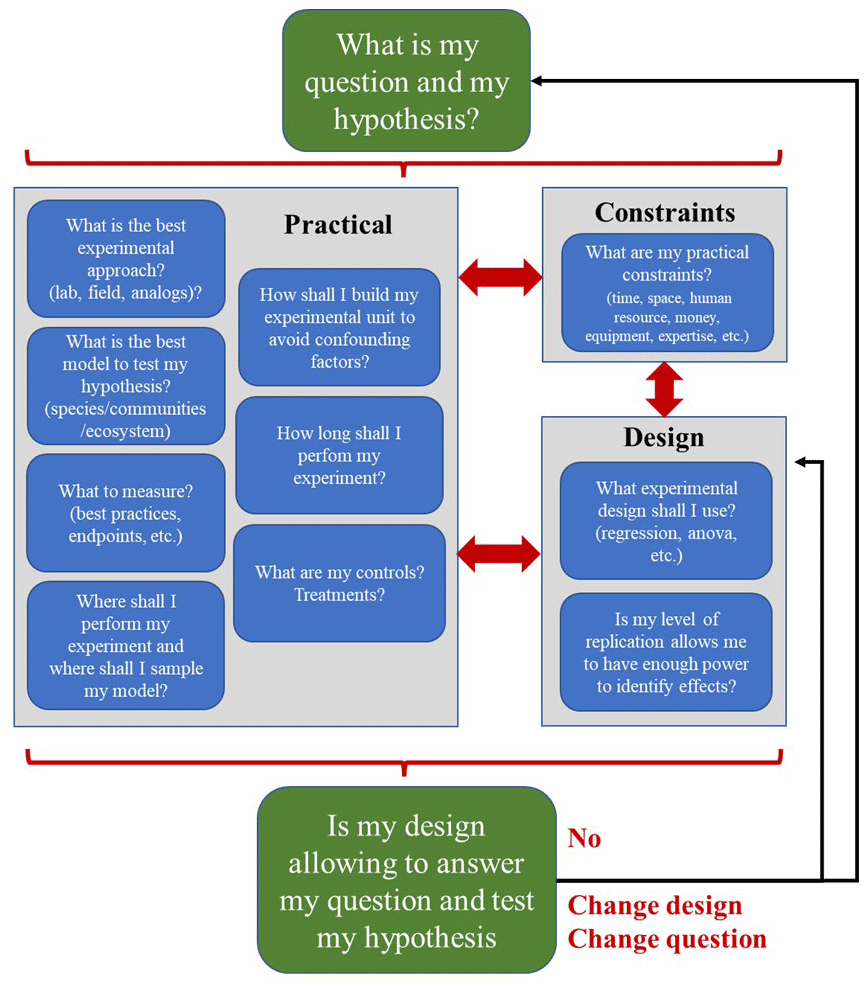
Figure 2Flowchart guiding decisions for the design of experiments evaluating the impact of OAE. First, start with a question and a hypothesis. The design of the experiment is an array of decisions at the crossroad between constraints (e.g., time, space), experimental choices (e.g., tested biological model, duration), and analytic approaches (e.g., regression, ANOVA). When the final design is fixed, ensure that it would allow for answering the initial question. If not, correct your design or, if this is not possible, change your question
Laboratory experiments in ocean alkalinity enhancement research
Recent concern about the consequences of continuing increases in atmospheric CO2 as a key heat-trapping agent (Wuebbles et al., 2017; Masson-Delmotte et al., 2021) has prompted ocean experts to come together to discuss how to provide science-based solutions. Ocean alkalinity enhancement (OAE) is being considered not only as an ocean carbon dioxide removal (CDR) approach but also as a potential way to mitigate ocean acidification. Over the last 2 decades, inter-laboratory comparisons have proven valuable in evaluating the reliability of methodologies associated with sampling and analysis of carbonate chemistry parameters, which have been routinely used in ocean acidification research. Given the complexity of processes and mechanisms related to ecosystem responses to OAE, consolidating protocols to ensure compatibility across studies is fundamental for synthesis and upscaling analysis. This chapter provides an overview of best practice in OAE laboratory experimentation and facilitates awareness of the importance of applying standardized methods to promote data re-use, inter-lab comparisons, meta-analysis and transparency. This chapter provides the reader with the tools to (1) identify the criteria to achieve the best laboratory practice and experimental design, (2) provide guidance on the selection of response variables for various purposes (physiological, biogeochemical, ecological, evolutionary) for inter-lab comparisons, (3) offer recommendation for a minimum set of variables that should be sampled and propose additional variables critical for different types of synthesis and upscaling, and (4) identify protocols for standardized measurements of response variables. Key recommendations include ensuring reproducibility through appropriate experimental design and replication, assessing alkalinity thresholds for secondary precipitates for each experimental approach and condition, using recommended targets of alkalinity (3000–4000 µmol kg−1) and levels exceeding these concentrations to mimic responses at the site of deployment/non-equilibrium and to use intermediate alkalinity levels to identify potential nonlinear responses, and establishing the appropriate experimental design to address questions at specific levels of organization (chemical, physiological, molecular) and assuming different scenarios (e.g., mimicking impacts at the site of deployment in a non-equilibrated system versus steady-state scenarios in an equilibrated system).
Mesocosm experiments in ocean alkalinity enhancement research
An essential prerequisite for the implementation of ocean alkalinity enhancement (OAE) applications is their environmental safety. Only if it can be ensured that ecosystem health and ecosystem services are not at risk will the implementation of OAE move forward. Public opinion on OAE strategies will depend first and foremost on reliable evidence that no harm will be done to marine ecosystems, and licensing authorities will demand measurable criteria against which environmental sustainability can be determined. In this context mesocosm experiments represent a highly valuable tool in determining the safe operating space of OAE applications. By combining biological complexity with controllability and replication, they provide an ideal OAE test bed and a critical stepping stone towards field applications. Mesocosm approaches can also be helpful in testing the efficacy, efficiency and permanence of OAE applications. This chapter outlines strengths and weaknesses of mesocosm approaches, illustrates mesocosm facilities and suitable experimental designs presently employed in OAE research, describes critical steps in mesocosm operation, and discusses possible approaches for alkalinity manipulation and monitoring. Building on a general treatise on each of these aspects, the chapter describes pelagic and benthic mesocosm approaches separately, given their inherent differences. The chapter concludes with recommendations for best practices in OAE-related mesocosm research.
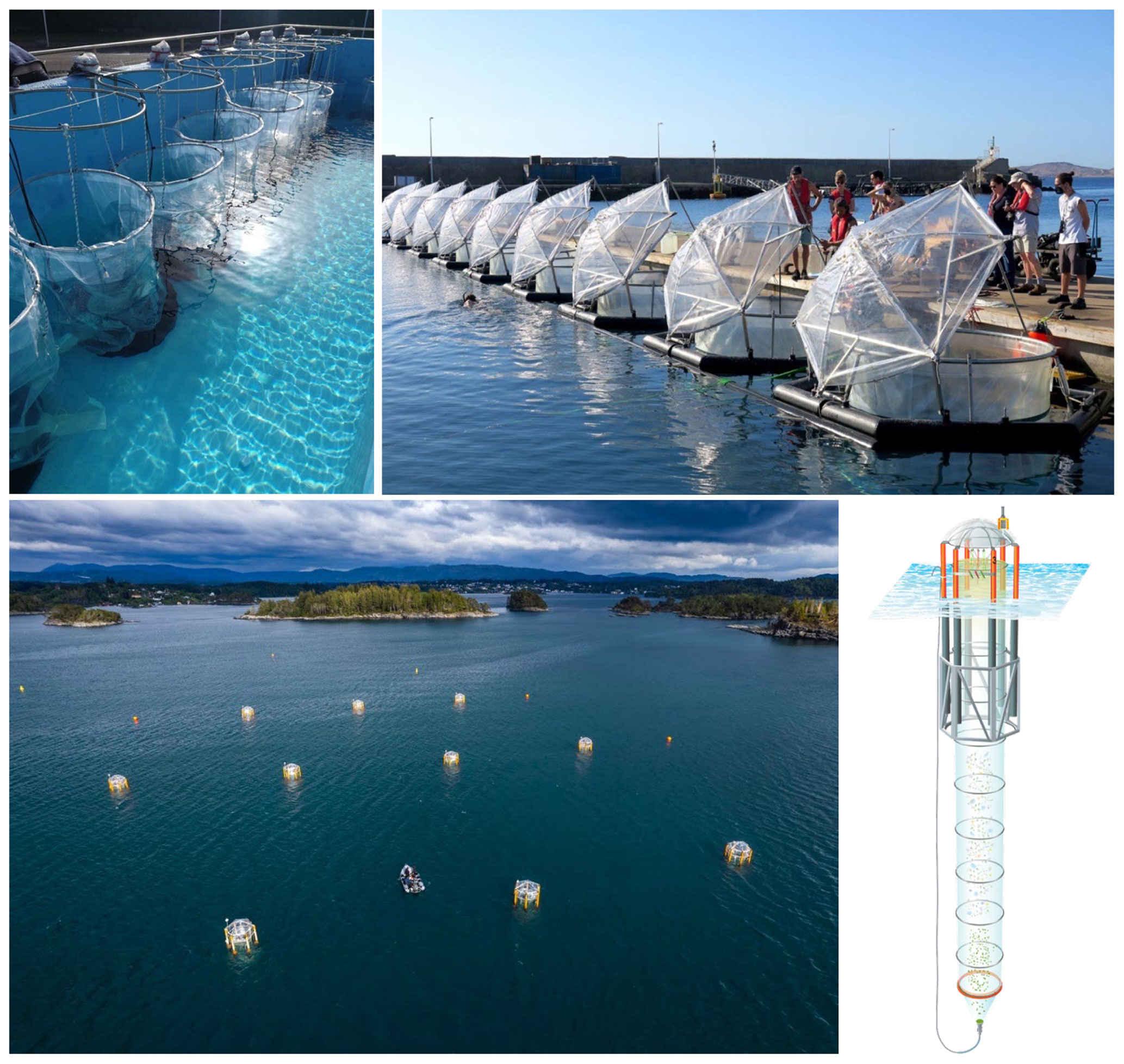
Figure 1Pelagic mesocosm facilities currently used in OAE research. Top left: land-based mesocosms (1 m3) at the University of Vigo, Spain. Top right: in situ on-shore mesocosms (10 m3) operated by GEOMAR, here employed on Gran Canaria, Spain. Bottom left: Kiel Off-Shore Mesocosms for Ocean Simulations (KOSMOS), here employed in the Raunefjord, Norway. Bottom right: sketch of a KOSMOS mesocosm unit (55 m3). Image sources: (top left) Daniela Basso, University of Milano-Bicocca; (top right) Ulf Riebesell, GEOMAR; (bottom left) Uli Kunz; (bottom right) Rita Erven, GEOMAR.
Field experiments in ocean alkalinity enhancement research
This chapter focuses on considerations for conducting open-system field experiments in the context of ocean alkalinity enhancement (OAE) research. By conducting experiments in real-world marine and coastal systems, researchers can gain valuable insights into ecological dynamics; biogeochemical cycles; and the safety, efficacy, and scalability of OAE techniques under natural conditions. However, logistical constraints and complex natural dynamics pose challenges. To date, only a limited number of OAE field studies have been conducted, and guidelines for such experiments are still evolving. Due to the fast pace of carbon dioxide removal (CDR) research and development, we advocate for openly sharing data, knowledge, and lessons learned as quickly and efficiently as possible within the broader OAE community and beyond. Considering the potential ecological and societal consequences of field experiments, active engagement with the public and other stakeholders is desirable, while collaboration, data sharing, and transdisciplinary scientific teams can maximize the return on investment. The outcomes of early field experiments are likely to shape the future of OAE research, implementation, and public acceptance, emphasizing the need for transparent and open scientific practices.
Natural analogs to ocean alkalinity enhancement
Ocean alkalinity enhancement (OAE) research can be supplemented by studying the natural alkalinity cycle. In this chapter, we introduce the concept of natural analogs to ocean alkalinity enhancement. We describe Earth system processes relevant to OAE deployment and its measurement, reporting, and verification. We then describe some suitable natural analog locations that could serve as study sites to understand how these processes may interact with OAE. Approaches to examining the geological record are also considered. Practical considerations for establishing a natural analog study are discussed, including geochemical mass balance, choosing a site, establishing a control, choosing a measurement suite and platform, and coordinating with ocean models. We identify rivers and their plumes, glacial fjords, whiting events, and basinal seas with elevated alkalinity as promising candidates for initial natural analog studies. This chapter is not meant to be prescriptive but instead is written to inspire researchers to creatively explore the power of natural analogs to advance our understanding of OAE. Key recommendations include considering appropriate spatial and temporal scales of the study and associated measurement criteria and designing the study with applicable outcomes to OAE research, including implications for deployment and/or monitoring.
Modelling considerations for research on ocean alkalinity enhancement (OAE)
The deliberate increase in ocean alkalinity (referred to as ocean alkalinity enhancement, or OAE) has been proposed as a method for removing CO2 from the atmosphere. Before OAE can be implemented safely, efficiently, and at scale several research questions have to be addressed, including (1) which alkaline feedstocks are best suited and the doses in which they can be added safely, (2) how net carbon uptake can be measured and verified, and (3) what the potential ecosystem impacts are. These research questions cannot be addressed by direct observation alone but will require skilful and fit-for-purpose models. This article provides an overview of the most relevant modelling tools, including turbulence-, regional-, and global-scale biogeochemical models and techniques including approaches for model validation, data assimilation, and uncertainty estimation. Typical biogeochemical model assumptions and their limitations are discussed in the context of OAE research, which leads to an identification of further development needs to make models more applicable to OAE research questions. A description of typical steps in model validation is followed by proposed minimum criteria for what constitutes a model that is fit for its intended purpose. After providing an overview of approaches for sound integration of models and observations via data assimilation, the application of observing system simulation experiments (OSSEs) for observing system design is described within the context of OAE research. Criteria for model validation and intercomparison studies are presented. The article concludes with a summary of recommendations and potential pitfalls to be avoided.
Legal considerations relevant to research on ocean alkalinity enhancement
This article examines the legal considerations relevant to ocean alkalinity enhancement (OAE) and provides some best-practice guidance for responsible (field) research on OAE. The article examines recent developments in international law in order to inform what may legally be required of researchers when planning and designing OAE research projects. To this end, the article acknowledges unavoidable differences in domestic legal systems but highlights the role of international law, especially as can be found in the London Convention and Protocol, in developing appropriate minimum rules and standards. The article notes that domestic legal systems may wish to account for such minimum international rules and standards when developing permitting conditions and laws for OAE research activities. Additionally, the article examines international agreements and customary international law that find general application to OAE research. This latter examination assists in the identification of areas where additional legal research may also be required. The article concludes by highlighting that it remains crucial for legal researchers to work with the scientific community and those from other disciplines to assist States in understanding the science–policy interface to develop a comprehensive legal framework for ocean-based carbon dioxide removal approaches. This will, in turn, guarantee that field research is carried out in a safe and responsible manner and in a manner that reduces the likelihood of adverse environmental and other consequences.
Ocean alkalinity enhancement (OAE) seeks to increase the alkalinity of seawater for carbon dioxide removal (CDR). Following numerous propositions to trial, test, or upscale OAE for CDR, multiple social considerations have begun to be identified. To ensure that OAE research is responsible (is attentive to societal priorities) and successful (does not prematurely engender widespread social rejection), it will be critical to understand how OAE might be perceived as risky or controversial and under what conditions it might be regarded by relevant social groups as most worthy of exploration. To facilitate the answering of these questions, this chapter does the following: (1) characterizes what is known to date about public perceptions of OAE, (2) provides methodological suggestions on how to conduct social science research and public engagement to accompany OAE field research, and (3) addresses how knowledge gained from social research and public engagement on OAE can be integrated into ongoing scientific, siting, and communications work.
Monitoring, reporting, and verification for ocean alkalinity enhancement
Monitoring, reporting, and verification (MRV) refers to the multistep process of monitoring the amount of greenhouse gas removed by a carbon dioxide removal (CDR) activity and reporting the results of the monitoring to a third party. The third party then verifies the reporting of the results. While MRV is usually conducted in pursuit of certification in a voluntary or regulated CDR market, this chapter focuses on key recommendations for MRV relevant to ocean alkalinity enhancement (OAE) research. Early stage MRV for OAE research may become the foundation on which markets are built. Therefore, such research carries a special obligation toward comprehensiveness, reproducibility, and transparency. Observational approaches during field trials should aim to quantify the delivery of alkalinity to seawater and monitor for secondary precipitation, biotic calcification, and other ecosystem changes that can feed back on sources or sinks of greenhouse gases where alkalinity is measurably elevated. Observations of resultant shifts in the partial pressure of CO2 (pCO2) and ocean pH can help determine the efficacy of OAE and are amenable to autonomous monitoring. However, because the ocean is turbulent and energetic and CO2 equilibration between the ocean and atmosphere can take several months or longer, added alkalinity will be diluted to perturbation levels undetectable above background variability on timescales relevant for MRV. Therefore, comprehensive quantification of carbon removal via OAE will be impossible through observational methods alone, and numerical simulations will be required. The development of fit-for-purpose models, carefully validated against observational data, will be a critical part of MRV for OAE.
Data reporting and sharing for ocean alkalinity enhancement research
Effective management of data is essential for successful ocean alkalinity enhancement (OAE) research, as it guarantees the long-term preservation, interoperability, discoverability, and accessibility of data. OAE research generates various types of data, such as discrete bottle measurements, autonomous measurements from surface underway and uncrewed platforms (e.g., moorings, Saildrones, gliders, Argo floats), physiological response studies (e.g., laboratory, mesocosm, and field experiments, and natural analogues), and model outputs. This paper addresses data and metadata standards for all these types of OAE data. As part of this study, existing data standards have been updated to accommodate OAE research needs, and a completely new physiological response data standard has been introduced. Additionally, an existing ocean acidification metadata template has been upgraded to be applicable to OAE research. This paper also presents controlled vocabularies for OAE research, including types of OAE studies, source materials for alkalinization, platforms, and instruments. These guidelines will aid OAE researchers in preparing their metadata and data for submission to permanent archives. Finally, the paper provides information about available data assembly centers that OAE researchers can utilize for their data needs. The guidelines outlined in this paper are applicable to ocean acidification research as well.
Source: State of the Planet