| | | | Links to recent scientific papers, web posts, upcoming events, job opportunities, podcasts, and event recordings, etc. on Carbon Dioxide Removal Technology.🗣️CONSULTATIONS REQUIRED🚨DEADLINES“AirMiners Launchpad engages with entrepreneurs in an intensive six-week program for early carbon removal teams or individuals striving to advance their startup to remove carbon from the atmosphere. Applicants from underrepresented backgrounds are especially encouraged to apply!
20% Group Subscription Discount 💸COMMERCIAL NEWS📝RESEARCH PAPERSNawaz, S., & Satterfield, T. (2024). Towards just, responsible, and socially viable carbon removal: lessons from offshore DACCS research for early-stage carbon removal projects. Environmental Science & Policy, 151, 103633.
Suba, P. I. V., Gopalakrishnan, A., Radović, J. R., Tutolo, B. M., Larter, S., Karan, K., & Thangadurai, V. (2023). Electrochemical ocean alkalinity enhancement using a calcium ion battery. International Journal of Greenhouse Gas Control, 130, 104012.
Zare, A., Boukalfa, A. K., Nogalska, A., Puga, A., Cerruti, P., Pascual-Jose, B., ... & Giamberini, M. (2023). Modified polyethyleneimine as additive for enhanced direct air capture via membrane contactors. Journal of CO2 Utilization, 78, 102629.
Criscuoli, I., Martelli, A., Falconi, I., Galioto, F., Lasorella, M. V., Maurino, S., ... & Guccione, G. D. (2023). Lessons learned from existing soil carbon removals methodologies in agriculture to drive European Union policies.
Alexieva-Nikolova, V., & Valeva, K. (2023). Natural carbon sinks-status, policy and trends. In MATEC Web of Conferences (Vol. 387, p. 05004). EDP Sciences.
Stern, R., Muller, J. D., Rotenberg, E., Amer, M., Segev, L., & Yakir, D. (2023). Photovoltaic fields largely outperform afforestation efficiency in global climate change mitigation strategies. PNAS Nexus, 2(11), pgad352.
Fischer, H.W., Chhatre, A., Duddu, A. et al. (2023). Community forest governance and synergies among carbon, biodiversity and livelihoods. Nat. Clim. Chang.
Wang, Y., de Boer, I. J., Persson, U. M., Ripoll-Bosch, R., Cederberg, C., Gerber, P. J., ... & van Middelaar, C. E. (2023). Risk to rely on soil carbon sequestration to offset global ruminant emissions. Nature Communications, 14(1), 7625.
Xiong, T., Li, H., Hu, Y., Zhai, W. D., Zhang, Z., Liu, Y., ... & Zhang, Y. (2024). Seaweed farming environments do not always function as CO2 sink under synergistic influence of macroalgae and microorganisms. Agriculture, Ecosystems & Environment, 361, 108824.
Coulston, J. W., Domke, G. M., Walker, D. M., Brooks, E. B., & O’Dea, C. B. (2023). Near-term investments in forest management support long-term carbon sequestration capacity in forests of the United States. PNAS Nexus, 2(11), pgad345.
García-Bordejé, E., & González-Olmos, R. (2024). Advances in process intensification of direct air CO2 capture with chemical conversion. Progress in Energy and Combustion Science, 100, 101132.
Zolfaghari, Z., Aslani, A., Zahedi, R., & Kazzazi, S. (2023). Simulation of Carbon Dioxide Direct Air Capture Plant Using Potassium Hydroxide Aqueous Solution: Energy Optimization and CO2 Purity Enhancement. Energy Conversion and Management: X, 100489.
Desport, L., Gurgel, A., Morris, J., Herzog, H., Chen, H., Selosse, S., & Paltsev, S. (2023, November). Exploring the conditions and implications of deploying direct air capture at scale. In IAMC 16th Annual Meeting.
Webb, R. M., & Silverman-Roati, K. (2023). Executive Actions to Ensure Safe and Responsible Ocean Carbon Dioxide Removal Research in the United States.
Ge, B., Zhang, M., Hu, B., Wu, D., Zhu, X., Eicker, U., & Wang, R. (2024). Innovative process integrating high temperature heat pump and direct air capture. Applied Energy, 355, 122229.
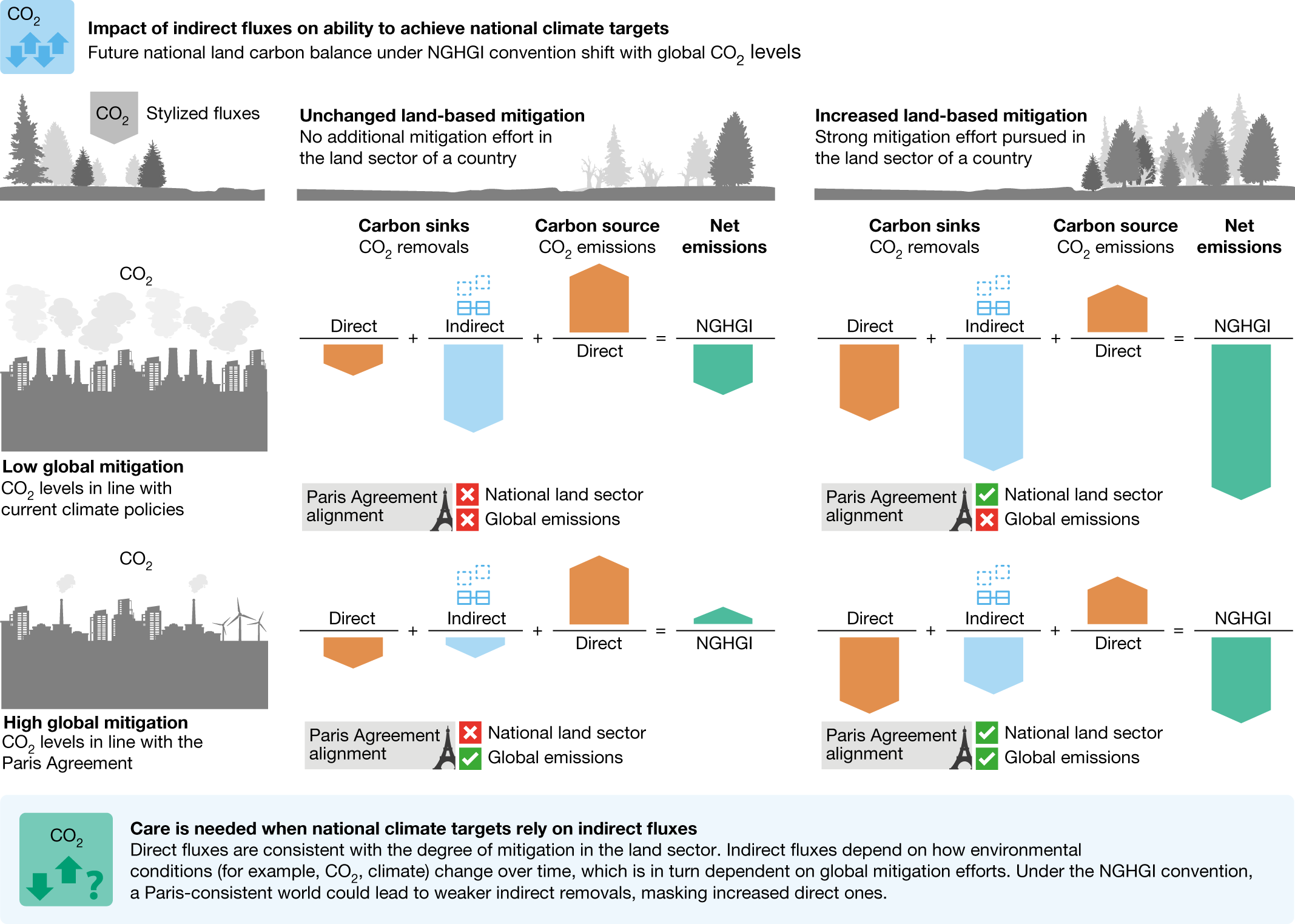
Gidden, M. J., Gasser, T., Grassi, G., Forsell, N., Janssens, I., Lamb, W. F., ... & Riahi, K. (2023). Aligning climate scenarios to emissions inventories shifts global benchmarks. Nature, 1-7.
Wu, J., Chen, Y., Xu, Y., Chen, S., Lv, H., Gan, Z., ... & Ge, T. (2023). Facile synthesis of structured adsorbent with enhanced hydrophobicity and low energy consumption for CO2 capture from the air. Matter.
Romm, J. Why scaling bioenergy and bioenergy with carbon capture and storage (BECCS) is impractical and would speed up global warming.
Lefvert, A., & Grönkvist, S. (2024). Lost in the scenarios of negative emissions: The role of bioenergy with carbon capture and storage (BECCS). Energy Policy, 184, 113882.
Hilmi, N., Carranco, M. B. B., Broussard, D., Mathew, M., Djoundourian, S., Cassotta, S., ... & Ferrier-Pagès, C. (2023). Tropical blue carbon: solutions and perspectives for valuations of carbon sequestration. Frontiers in Climate, 5, 1169663.
Stanley, T. (2024). Carbon ‘known not grown’: Reforesting Scotland, advanced measurement technologies, and a new frontier of mitigation deterrence. Environmental Science & Policy, 151, 103636.
van den Burg, S. W., Koch, S. J., Poelman, M., Veraart, J., Selnes, T., Foekema, E. M., & Lansbergen, R. (2023). Seaweed as climate mitigation solution: Categorizing and reflecting on four climate mitigation pathways. Wiley Interdisciplinary Reviews: Climate Change, e868.
Dwivedi, A., & Gupta, S. (2023). Influence of carbon sequestration in natural clay on engineering properties of cement-lime stabilized soil mortars. Developments in the Built Environment, 100270.
Kordi, Z. M., & Miansarayi, M. G. (2023). Treaty Regime of Ocean Fertilization: gaps and solutions. Revista de Direito Internacional, 20(2).
📖BOOKMuzammil, M., Arshad, M., & Arshad, M. (2023). Cost Analysis of Adsorption based Air Capture of CO2.
📰WEB POSTSUnlock the Trillion-Dollar IRA: Rural Dreams, Energy Justice & Soil Carbon (Find Funding Faster) Find Funding Faster: Neesha Mirchandani, Impact Stars Find Funding Faster: Neesha Mirchandani, Impact StarsDear Green Innovators, Welcome back to Find Funding Faster! I'm Neesha Mirchandani, your guide, and I'm thrilled to present the third installment of our newsletter series. Before we get started, if you’re not interested in the Inflation Reduction Act… 3 days ago · 1 like · Neesha Mirchandani Share Carbon Removal Updates 📘THESIS📑REPORTSCHAPTERS:
 🧰CDR FIRMS 📆UPCOMING EVENTS20% Group Subscription Discount 💼JOB OPPORTUNITIES“Marble is a climate tech venture studio. Their north star is to erase billions of tons from annual greenhouse gas emissions and create a thriving future.”
“The Department of Soil and Crop Sciences is focused on education, research, and outreach to solve the world’s most pressing food production issues and crucial matters about Earth, its ecosystems, and their services. Our faculty and staff apply research-based solutions to benefit Colorado and the world. We offer academic programs to prepare students to address national and global crop production, sustainability, and environmental quality challenges such as waste management, water quality, and reclamation of drastically disturbed lands. There are numerous opportunities for students to be involved in cutting edge research related to global food production and ecosystem function and protection.The Soil Carbon Solutions Center (SCSC) was formed in 2021 to support breakthrough research and development of new technologies for promoting soil carbon sequestration and improving overall soil health in agricultural systems. The SCSC’s goals include providing end-to-end discovery and implementation of soil-based solutions, including the development of new soil CO2 removal technologies, accurate low-cost quantification systems, market analysis and policy design, education, extension and farmer training to spur adoption of best carbon sequestering practices. We established the SCSC to leverage the unique expertise and leadership of researchers across CSU to overcome implementation barriers and bring soil carbon solutions to scale.”
“The post will include modelling fire, management and soil organic carbon (SOC) fractions under climate change using a state-of-the-art land surface model. This will include evaluating and improving the novel parameterisation of SOC fractions, including pyrogenic carbon (PyC), in JULES. The research will evaluate: i) the impact of PyC both on forest regrowth after burning and future soil C storage and ii) whether land management (fire frequency, selective logging) can control the quantities of stabilised SOC stored in soil; and iii) develop PyC modelling in JULES.”
“We are seeking a motivated and enthusiastic person to work with us to develop/adapt reactive transport models for geochemical carbon dioxide removal. Carbon dioxide removal using rocks and minerals is recognised as an important part of meeting climate targets, but the merits and drawbacks of many approaches remain poorly understood. Upon completion of this ambitious project, the research team (working with partners at the University of Alberta, Monash University, and the Australian Synchrotron) will have completed ground-breaking research on demonstrating a new method of mineralisation of alkaline mine waste.We are looking for a candidate with a range of skills in geochemical modelling. The successful applicant must hold a degree in a physical sciences, engineering, or maths. There are also opportunities to participate in our other projects in CO2 capture, utilisation and storage, and carbon dioxide removal (https://rccs.hw.ac.uk).”
“At Leilac we’re passionate about enabling the transition to a carbon neutral world by providing the most compelling decarbonisation solution for global cement and lime.”
🎙️PODCASTSIs There a Role for Mandates to Drive CDR? | Carbon Removal Newsroom | Is There a Role for Mandates to Drive CDR? Carbon Removal Newsroom 45:59 |
“This week, we’re bringing you a panel discussion from the Institute for Carbon Removal Law and Policy’s annual CDR conference. Our policy panelist, Wil Burns, hosted the conference and led this panel discussion on the role of mandates in growing CDR in the US.The US government has stepped forward into the role of subsidizing and encouraging CDR in recent years, offering a ‘carrot’ to promote the new industry, in the form of large grants and tax incentives. But what could the government do to present a ‘stick’- requiring CDR using existing regulations?That’s the topic of this policy panel featuring Dan Galpern, the Executive Director of the Climate Protection and Restoration Initiative, and Stephanie Arcusa, a researcher at the Arizona State University Center for Negative Carbon Emissions. Dan spoke about using the Toxic Substances Control Act to regulate carbon emissions, including the possibility of mandating carbon dioxide removal as a condition for allowing ongoing emissions. He argues that the TSCA provides clear authority for such regulation, citing past precedents and legal interpretations.Stephanie discusses the concept of a Carbon Take Back Obligation, which would require fossil fuel producers to sequester a ton of carbon for every ton they extract. This policy aims to gradually transition to net-zero emissions by creating a demand for carbon removal and applying the policy upstream in the fossil fuel supply chain.Both approaches aim to address the challenges of scaling up carbon removal and mitigating climate change, but they also raise questions about political feasibility, environmental justice, and the impact on consumers, particularly those in lower-income households.We hope you enjoy this high-level look at the policy levers that may one day lead to the scaling up of CDR.”
“In our ongoing pursuit to deepen our comprehension of the opportunities and challenges around industrial decarbonization, the latest episode of Gener8 delves into the energy and emissions challenges associated with the very fabric that makes up our world: cement. Dr. Cody Finke, CEO and Co-Founder of Brimstone, joined us to illuminate how his company is working to change the narrative surrounding decarbonized cement and concrete with a cost-effective and emissions-free process. As Cody highlights, considering approximately 5% of global emissions stem from cement and concrete production, addressing emissions in this sector could be almost as impactful as decarbonizing all global automobile emissions (accounting for ~7% of global emissions).To kick off our conversation, Cody provided background on the challenges concerning energy and emissions in cement and concrete before turning to how the Brimstone process can change those paradigms. Cody then shared what led him and Brimstone to where they are today, the Brimstone team, and where they see themselves in terms of collaborators and partners. Toward the end of the discussion, Cody offered insights into Brimstone's support structure and their short and long-term trajectory. We also examined how the existing cement industry pairs with Brimstone before Cody concluded our conversation by emphasizing how meaningful it could be to address emissions in industry by approaching it as Brimstone has.We learned a lot during our discussion on all things cement and its future and look forward to more deep dives into lesser-discussed energy and emissions issues.”
How to tackle cement's massive CO2 problem, with Sublime Systems' Leah Ellis | Good Clean Energy | How to tackle cement's massive CO2 problem, with Sublime Systems' Leah Ellis Good Clean Energy 31:55 |
“Cement accounts for 8 percent of global CO2 emissions. The production of one ton of Portland cement — the kind most commonly used — results in one ton of CO2 released into the atmosphere. And since cement is exceptionally cheap and the most massively produced man-made material in the world, those emissions are going to grow. “In a do-nothing scenario, emissions from cement are projected to increase 50 percent between now and 2050,” says Dr. Leah Ellis, co-founder and CEO of Sublime Systems.Ellis’ company is producing low-carbon cement by replacing the traditional high-temperature, fossil fuel, combustion-driven kiln with an electrochemical approach that operates at ambient temperature and uses renewable electricity.“I like to say Sublime is the electric vehicle of cement making.”Covered in this episode: [3:18] How Ellis’ background in chemistry led to making carbon-free cement[5:51] Why defining cement by its performance is important[7:48] The basics of cement[9:29] The outrageous amount of cement produced annually[11:29] How Sublime Systems produces cement with fewer carbon emissions[18:06] The ability to compete economically[23:04] Scaling up Sublime’s operations[26:37 The leaky tap analogy to understand the climate crisis[29:53] A vision for the cement industry in 2035.”
HPAC takeover! Overshoot commission - Field | Reviewer 2 does geoengineering | HPAC takeover! Overshoot commission - Field Reviewer 2 does geoengineering 1:04:23 |
“Good afternoon, Reviewer 2 listeners. Some of us at the Healthy Planet Action Coalition (www.healthyplanetaction.org) have noticed that a few months ago Reviewer 2 experienced a security breach orchestrated by archrival Challenging Climate. Now normally we would refrain from taking advantage of poor Reviewer 2, but we sensed an opportunity that we couldn’t resist and decided to jump into the breach with this discussion about the recent report of the Climate Overshoot Commission (COC) between Chris Field, Stanford Professor and advisor to the COC, and Mike MacCracken, HPAC Steering Circle member and former Executive Director of the Office of the US Global Change Research Program.The Climate Overshoot Commission report "Reducing the Risks of Climate Overshoot" was released on September 14: https://www.overshootcommission.org/_files/ugd/0c3b70_bab3b3c1cd394745b387a594c9a68e2b.pdf. While the COC did not solicit public input, it did hold a series of meetings to learn and discuss the full range of questions facing the international community in dealing with the risk of climate overshoot. Their 4-part high-level recommendations were summarized in the acronym CARE, for Cut (emissions), Adapt, Remove (CO2), and Explore (SRM). Specifically, its recommendation on climate intervention advocated expanding research while placing "a moratorium on the deployment of solar radiation modification and large-scale outdoor experiments that would carry risk of significant trans-boundary harm.”
“Join energy coaches David Arkell and John Pooley, producer Lysandra Naom, with guest Chief Carbon Scientist and Head of Engineering at Deep Sky, Phil DeLuna. This episode features what is Deep Sky, technologies available to capture carbon, ideal locations, efficiencies, and economics associated with carbon capture.”
“Removing carbon from the atmosphere, alongside reducing emissions, is key to reaching ‘net’ zero emissions and preventing drastic global warming. Carbon removal policy expert Eve Tamme joins the Watt Matters team to discuss how it works.”
🎥YOUTUBE VIDEOSA Closer Look at Ocean Alkalinity Enhancement | Ocean Science Trust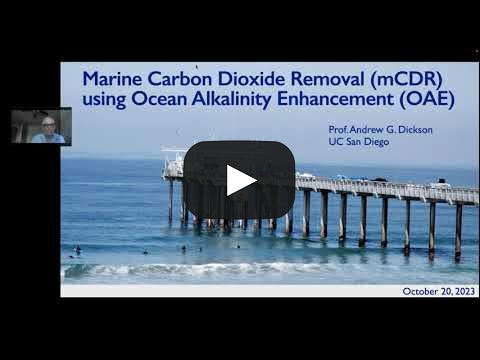 “This webinar is the third in a new series entitled Conversations on Ocean Carbon: A U.S. West Coast and Alaska Perspective, co-organized by the California Ocean Science Trust, California Current Acidification Network, and Alaska Ocean Acidification Network to deliver the best available information on marine carbon dioxide removal (mCDR) and to explore concepts related to coastal ocean carbon. This webinar series is intended to create a direct dialogue among industry members, tribes, natural resource managers and scientists within the California Current and Alaska Ecosystems. Through these co-designed webinars, participants will gain a better understanding of mCDR technologies, limitations, risks, and learn how to become engaged.”
A tour of newly funded marine carbon dioxide removal mCDR projects | Ocean Science Trust “This is the second webinar in the series entitled Conversations on Ocean Carbon: A U.S. West Coast and Alaska Perspective, co-organized by the California Ocean Science Trust, California Current Acidification Network, and Alaska Ocean Acidification Network to deliver the best available information on marine carbon dioxide removal (mCDR) and to explore concepts related to coastal ocean carbon. This webinar provides an overview of the mCDR projects funded by the National Oceanographic Partnership Program (NOPP) announcement on September 7, with particular attention to research on the West Coast and Alaska.”
Shopify's Stacy Kauk on scaling carbon removals | edie “In this episode, edie's Senior Reporter Sarah George is in discussion with Stacy Kauk, head of sustainability at Shopify. Stacy gives us a behind-the-scenes look at the creation of the business's Sustainability Fund and its collaborative investments in emerging carbon removal technologies with Meta, Alphabet and Stripe.”
How to Reduce Concrete's Environmental Impact (Without CCUS!) | Partanna “With 9% of global emissions coming from the cement industry alone, there is a desperate need to reduce the environmental impact of the construction industry.”
Futurecast: Carbfix | Startup Iceland “In this episode of the Futurecast, Bala talks to Kristinn Ingi Lárusson, Head of Business Development at Carbfix, an Icelandic company that has developed a technology to permanently store carbon dioxide (CO2) underground by turning it into stone.”
Carbon Capture and Removal | 360 Energy “Join energy coaches David Arkell and John Pooley, producer Lysandra Naom, with guest Chief Carbon Scientist and Head of Engineering at Deep Sky, Phil DeLuna. This episode features what is Deep Sky, technologies available to capture carbon, ideal locations, efficiencies, and economics associated with carbon capture.”
If you're a company working in Carbon Removal/accounting / etc. and you're interested in sponsoring any of our brands (Substack, podcast (Reviewer 2 Does Geoengineering), Twitter @geoengineering1, etc.) please get in touch. We have a large and focused audience and can help you reliably reach relevant customers/hires. Leave a comment Share © 2023 Carbon Removal Updates
548 Market Street PMB 72296, San Francisco, CA 94104
Unsubscribe 
| |
  |
|








![A) Forested NFI plot locations (approximate) and ownership. B) illustrates fire sheds [12] used to identify western forest fuel treatment locations [7]. C) The fuel treatments within priority fire sheds targeted overstocked and fully stocked USFS land and in other ownerships. Nonstocked USFS land was targeted for planting. D) Projections were based on two different fuel-treatment levels, planting, and five different climates under Shared Socioeconomic Pathway 2. The fuel treatments apply a tree basal area reduction and/or dead fuel weight reduction; E) depicts a western forest stand with 46 m2 ha−1 of basal area, thinned to 23 m2 ha−1, displaying cut and unutilized trees F) and the resulting forest without cut trees G).](https://ci5.googleusercontent.com/proxy/t162mRQS7xQmbx6VQgvzdi8U6QrZAQaifATmvFWwhofGHkcTCEZtfUuRocVMTqt4Fzc0KndBqr26rr1RIR9XKs8PNKX21haQi_vQWnJHx4gg2rEOLBd7D6kaKcas6fUy51WfAF1fd0e04j2Tgh54_KoTzcrKTVgAf018TirFTJxVJsUXOQNtqxKv10FTH3YJpUUC6oxpY-yeUmFe1Z1BCdH6Tu1R_ZUZLlhsolDbSZQsmA-aA4WuwNISgyq6xQMIMz-L5msdvcG-GRzfxXH45o5rk6WgZgrnNT4lmU4uphP3f_oY4LIgqtY=s0-d-e1-ft#https://substackcdn.com/image/fetch/w_2912,c_limit,f_auto,q_auto:good,fl_progressive:steep/https%3A%2F%2Fsubstack-post-media.s3.amazonaws.com%2Fpublic%2Fimages%2F7c955adc-ae53-4292-a778-1e226d54b903_4099x2684.jpeg)