
Cambodian School Educates New Generation of Social Workers
4 views
Skip to first unread message

Chi...@aol.com
Oct 21, 2013, 9:59:11 AM10/21/13
to Cambodian-...@googlegroups.com
Irwin Loy
October 21, 2013
PHONM PENH — Cambodia has some
3,000 registered non-profit groups. Some work on highly sensitive issues such as
violence against women and human trafficking. But there are few Cambodians
formally trained for such work. That is now changing with the country’s first
university-level degree program for social workers.
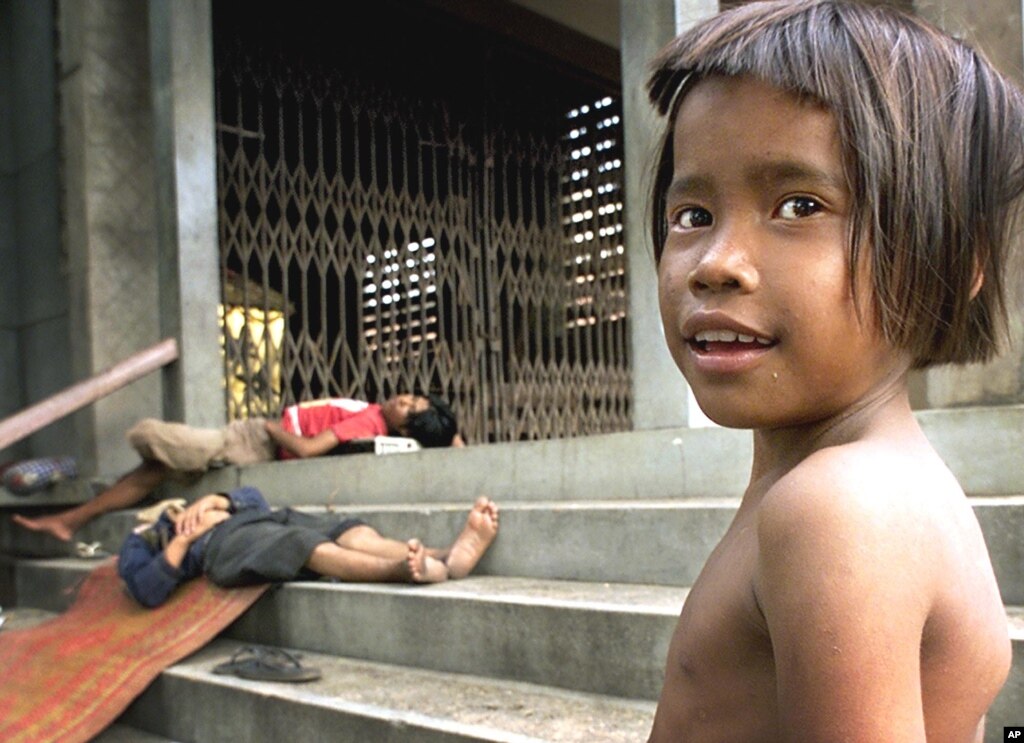
When Yoeung Kimheng was growing up in a rural community outside Phnom Penh, he did not have to look far from home to see troubling social problems. But he also saw few people who were in a position to help.
“Near my village, it’s a very poor community. I think it’s a very hard situation. Because a lot of children drop out, and use alcohol, and some drugs. I never saw social workers or others to help them. I never saw,” Kimheng said.
New university program
Now, thanks to an emerging university program, Kimheng himself may soon be equipped to help. He has finished a four-year program at the Royal University of Phnom Penh’s Department of Social Work (RUPP). Kimheng’s class is set to graduate later this year-just the second graduating class for the department.
He will join people like Heng Puthika in the workforce. The 23-year-old was part of the department’s first graduating class last year. Now, he has found a job at Transitions Global, a non-government group that works with survivors of human trafficking.
“I do family assessments, go to the community to meet with the family to assess what they are facing at the moment, the family need and family issues," Puthika stated. "And try to find out what are the available resources in the community in order to link all of the resource to the family. I try to work with the family in order to help them.”
It is the kind of work that’s intensely important in a country rebuilding after years of conflict.
Outreach
Social workers often interact with some of the country’s most vulnerable people, many of whom have suffered emotional trauma. Yet, until the RUPP department started in 2008, there was no degree-level program in Cambodia for training social workers.
Traditionally outreach groups relied on foreign experts or largely untrained local staff who learned on the job.
“You can see that after U.N. times, there’s a lot of aid dependency coming to Cambodia. There’s a lot of foreigners, they call experts, coming to help support Cambodia as well. Those who are experts are not Cambodian themselves," said Ung Kimkanika, a faculty member in the department. "So I think to have the Cambodian-trained social workers be our own social workers by ourselves is very important. Because the situation is Cambodian and only Cambodian or Khmer people would understand the situation well.”
That’s where the department comes in. In partnership with the University of Washington’s School of Social Work, Cambodian students, including Kimkanika, were sent to the United States to study and earn Master’s degrees.
Now, they’ve come back and they form the backbone of the teaching staff at RUPP’s social work department.
Social work as a profession is often poorly understood in Cambodia. Early on, even some of today’s graduates were unsure what social work was.
Kim Chanravey remembers her first few days as a university student. “I thought that social work … can help people by giving money or presents to the poor people. Charity. But when I start studying social work, it’s different,” she said.
She learned quickly. Chanravey was part of the first graduating class last year, and now she works with Hagar International, which helps abused women and girls.
“Charity means giving presents directly to the people. But social work, no. Social work tries to find the way, find the choice for the people to try to decide themselves, to do anything by themselves,” she added.
Her manager at Hagar, Wei Wang, said the benefits of four years of university education is evident in the RUPP grads her organization has hired. “I think that with a four-year degree behind you, you have more of the theoretical foundation. You have a better understanding of how to look at things holistically and assess things from a community strength-based approach," Wang said. "Whereas if you have to train on the job, a lot of time it’s fairly haphazard because you’re trying to get somebody to do something fairly difficult but you only have two trainings, rather than four years of solid foundation.”
RUPP’s social work program will likely become more crucial in the coming months. A United Nations-backed war crimes tribunal is nearing the end of one portion of a case against former Khmer Rouge leaders. Faculty member Ung Kimkanika says the eventual verdict from the court could stir up long-buried memories among traumatized survivors of the regime.
But for now, back at the university, a new class of social work students is getting set to begin its first year of studies. Their expected graduation: 2017.
When Yoeung Kimheng was growing up in a rural community outside Phnom Penh, he did not have to look far from home to see troubling social problems. But he also saw few people who were in a position to help.
“Near my village, it’s a very poor community. I think it’s a very hard situation. Because a lot of children drop out, and use alcohol, and some drugs. I never saw social workers or others to help them. I never saw,” Kimheng said.
New university program
Now, thanks to an emerging university program, Kimheng himself may soon be equipped to help. He has finished a four-year program at the Royal University of Phnom Penh’s Department of Social Work (RUPP). Kimheng’s class is set to graduate later this year-just the second graduating class for the department.
He will join people like Heng Puthika in the workforce. The 23-year-old was part of the department’s first graduating class last year. Now, he has found a job at Transitions Global, a non-government group that works with survivors of human trafficking.
“I do family assessments, go to the community to meet with the family to assess what they are facing at the moment, the family need and family issues," Puthika stated. "And try to find out what are the available resources in the community in order to link all of the resource to the family. I try to work with the family in order to help them.”
It is the kind of work that’s intensely important in a country rebuilding after years of conflict.
Outreach
Social workers often interact with some of the country’s most vulnerable people, many of whom have suffered emotional trauma. Yet, until the RUPP department started in 2008, there was no degree-level program in Cambodia for training social workers.
Traditionally outreach groups relied on foreign experts or largely untrained local staff who learned on the job.
“You can see that after U.N. times, there’s a lot of aid dependency coming to Cambodia. There’s a lot of foreigners, they call experts, coming to help support Cambodia as well. Those who are experts are not Cambodian themselves," said Ung Kimkanika, a faculty member in the department. "So I think to have the Cambodian-trained social workers be our own social workers by ourselves is very important. Because the situation is Cambodian and only Cambodian or Khmer people would understand the situation well.”
That’s where the department comes in. In partnership with the University of Washington’s School of Social Work, Cambodian students, including Kimkanika, were sent to the United States to study and earn Master’s degrees.
Now, they’ve come back and they form the backbone of the teaching staff at RUPP’s social work department.
Social work as a profession is often poorly understood in Cambodia. Early on, even some of today’s graduates were unsure what social work was.
Kim Chanravey remembers her first few days as a university student. “I thought that social work … can help people by giving money or presents to the poor people. Charity. But when I start studying social work, it’s different,” she said.
She learned quickly. Chanravey was part of the first graduating class last year, and now she works with Hagar International, which helps abused women and girls.
“Charity means giving presents directly to the people. But social work, no. Social work tries to find the way, find the choice for the people to try to decide themselves, to do anything by themselves,” she added.
Her manager at Hagar, Wei Wang, said the benefits of four years of university education is evident in the RUPP grads her organization has hired. “I think that with a four-year degree behind you, you have more of the theoretical foundation. You have a better understanding of how to look at things holistically and assess things from a community strength-based approach," Wang said. "Whereas if you have to train on the job, a lot of time it’s fairly haphazard because you’re trying to get somebody to do something fairly difficult but you only have two trainings, rather than four years of solid foundation.”
RUPP’s social work program will likely become more crucial in the coming months. A United Nations-backed war crimes tribunal is nearing the end of one portion of a case against former Khmer Rouge leaders. Faculty member Ung Kimkanika says the eventual verdict from the court could stir up long-buried memories among traumatized survivors of the regime.
But for now, back at the university, a new class of social work students is getting set to begin its first year of studies. Their expected graduation: 2017.
Reply all
Reply to author
Forward
0 new messages