
Road Design Criteria

Neal
https://www.transportation.gov/fastlane/design-flexibility-stronger-communities
Excerpt:
FHWA is working on several important developments in the area of flexibility.
First, we’ve prepared a Federal Register Notice for public comment outlining the policy changes we’re proposing on roads with speed limits of less than 50 miles per hour. After reviewing considerable data and research, we’re proposing to reduce the number of controlling design criteria on highways designed for speeds of less than 50 miles per hour from the current 13 down to 2. That's a significant reduction.
On NHS roads with design speeds of 50 miles per hour or greater, the number of criteria will be reduced to 10.
These changes will give engineers the flexibility to use their expert judgment and the autonomy to use their common sense instead of being burdened with extensive paperwork related to a list of criteria, some of which have been found to have little to do with improving road safety or effectiveness.
Cheers,
Neal
+1 mph Faster

Jim Baross
Hello All,
https://www.transportation.gov/fastlane/design-flexibility-stronger-communities
Excerpt:FHWA is working on several important developments in the area of flexibility.
First, we’ve prepared a Federal Register Notice for public comment outlining the policy changes we’re proposing on roads with speed limits of less than 50 miles per hour. After reviewing considerable data and research, we’re proposing to reduce the number of controlling design criteria on highways designed for speeds of less than 50 miles per hour from the current 13 down to 2. That's a significant reduction.
On NHS roads with design speeds of 50 miles per hour or greater, the number of criteria will be reduced to 10.
These changes will give engineers the flexibility to use their expert judgment and the autonomy to use their common sense instead of being burdened with extensive paperwork related to a list of criteria, some of which have been found to have little to do with improving road safety or effectiveness.
Neal
Hello Jim and All,
It is posted to show changing attitudes trending in FWHA design philosophy.
The pertinent part for cyclists is contained in several hyperlinks in the main article ….. It basically states the highway engineers will have more leeway in professional judgment in design decisions.
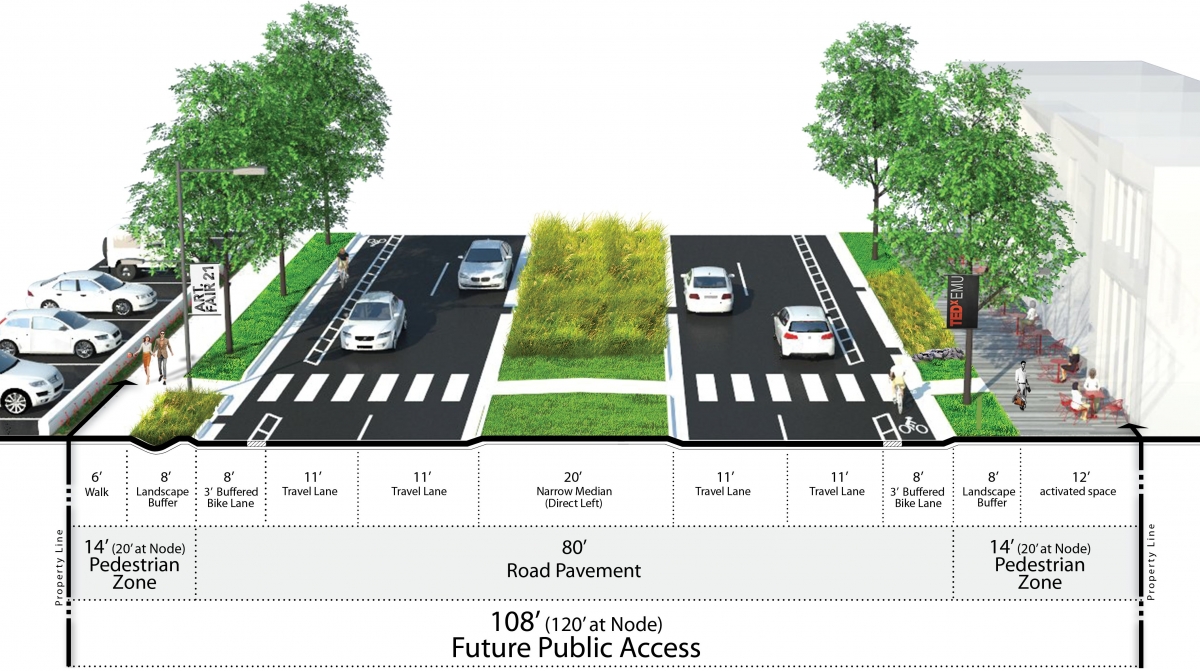
“The shift in FHWA’s approach was prompted by current research in the field of geometric design showing that the majority of the 13 design criteria yielded significant benefits only on higher speed roadways. FHWA now proposes to reduce the number of criteria for lower-speed roads in both rural and urban areas, including main and downtown streets in towns and cities. All projects must still be designed properly for speed and structural capacity, but now design criteria can include other factors. For example, engineers can use professional judgment to determine appropriate lane widths and facilities to accommodate pedestrians, bicyclists, bus stops, or landscaping for more livable communities, without needing approval from FHWA. This will enable planners and engineers to more easily design roadways in ways that enhance their community.”
“This change is a part of a major push at the agency to give engineers more autonomy in highway design so they can implement transportation projects that better connect with their communities,” said Federal Highway Administrator Gregory Nadeau. “We are always seeking new ways to improve our highway system, and today is a great step forward.”
And http://www.fhwa.dot.gov/environment/bicycle_pedestrian/guidance/guidance_2015.cfm
"Streamlining Procedures
Bicycling, walking, and enhancing accessibility embody the goals and objectives of Federal surface transportation law: they quietly, cleanly, efficiently, and effectively serve local transportation needs, providing access to jobs, education, health care, and other essential services. They are also critical to ensuring that people can get to and from transit services. Because of that, FHWA has provided maximum opportunities for States to streamline the approval and implementation of bicycle and pedestrian projects and programs. It is unnecessary for activities such as crosswalk striping, bicycle parking installation, and bike lane marking — which usually require no additional right-of-way and cause no negative environmental impact — to have the same approval process as a multi-lane highway construction project. States and MPOs are encouraged to take advantage of the following streamlining measures and to take any additional steps they can to speed up the implementation of projects that improve conditions for bicycling and walking."
[emphasis added]

CycleCA
That may be the problem: "no mention of bicycle or pedestrian uses". All roads should be designed to accommodate bicycle or pedestrian use. Freeways should have safe convenient alternate routes or bicycles should be allowed.
Bob Mack
--
You received this message because you are subscribed to the Google Groups "CABOforum" group.
To unsubscribe from this group and stop receiving emails from it, send an email to caboforum+...@googlegroups.com.
To post to this group, send email to cabo...@googlegroups.com.
Visit this group at http://groups.google.com/group/caboforum.
For more options, visit https://groups.google.com/d/optout.
--
Cycle California! Magazine
1702 Meridian Ave.
Suite L, #289
San Jose, CA 95125
ph: 408-924-0270
fax: 408-292-3005
toll free: 888-292-5323
www.CycleCalifornia.com
www.BE-ProConference.com
Facebook: www.facebook.com/CycleCaliforniaMagazine
Twitter: https://twitter.com/CycleCAMag
Google+: google.com/+Cyclecalifornia
LinkedIn: www.linkedin.com/company/cycle-california-magazine