
Mohenjo-daro stupa & Great Bath - Modeled after Ziggurat and Sit Shamshi (Kalyanaraman, 2011)
88 views
Skip to first unread message

S. Kalyanaraman
Nov 10, 2011, 11:15:15 AM11/10/11
to
http://bharatkalyan97.blogspot.com/2011/11/mohenjo-daro-stupa-great-bath-modeled.html
Executive Summary: Artisans of Susa and artisans of Mohenjo-daro were worshippers of the ancestors, offering morning prayers with water ablutions. The stupa of Mohenjo-daro should have been built over a ziggurat (memorial for ancestors) used for such water ablutions in the Great Bath situated which is located in front of the ziggurat.
This continues the discussion on the traditions depicted on Sit Shamshi Bronze of Susa in the context of decoding a Susa cylinder seal with Indus script inscription. The related notes are at http://bharatkalyan97.blogspot.com/2011/11/decoding-indus-scipt-susa-cylinder-seal.html


Left: Sit Shamshi Bronze (Depicting water ablutions on sunrise in front of Ziggurat): Susa
Right: Great Bath in front of Ziggurat (used for water ablutions on sunrise in front of Ziggurat): Mohenjo-daro

Discovery location: Ninhursag Temple, Acropole, Shūsh (Khuzestan, Iran)
Translation from French (Google):
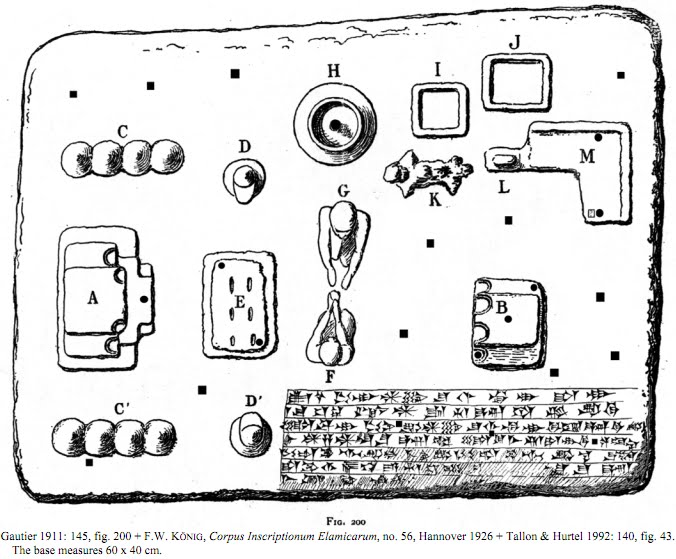
The Sit Shamshi is a three-dimensional representation of a ritual ceremony: two people, naked, crouch in front of one another and seem to practice a ritual purification by ablutions. Around them, various facilities related to the cult are visible: a basin containing holy water, bushes symbols of the sacred tree, two altars in the shape of ziggurats, steles, etc.
The texts mention the "temples of the grove," cave sanctuaries where ceremonies related to the daily renewal of nature were accompanied by deposition of offerings, sacrifice and libations. The Sit Shamshi is perhaps a representation. It is also possible that this object is a commemoration of the funeral ceremonies after the disappearance of the sovereign. Indeed, this model was found near a cave, and bears an inscription in Elamite where Shilhak-Inshushinak remember his loyalty to the lord of Susa, Inshushinak. The text gives the name of the monument, the Sit Shamshi, Sunrise, which refers to the time of day during which the ceremony takes place.
The cave sanctuaries have rarely been identified in situ, except in high places Levantine countries, such as Petra. Despite the change of dynasty which places Shutrukides sovereign power in Susa in the twelfth century BC, the ability of metal craftsmen demonstrating continuity of artistic tradition from the fourteenth century, the realization of other monuments exceptional as the statue of Queen Napir-asu or the large table of offerings to snakes.
Source: http://www.3dsrc.com/antiquiteslouvre/index.php?rub=img&img=236&cat=10
Sit Shamshi Bronze can be used as an architectural model for reconstructing ancient Mohenjo-daro stupa in front of two worshippers. The surround structures of jars holding metal artefacts, water tank model (comparable to the Great Bath) and L-shaped structure comparable to the ‘granary’ in sites such as Mohenjo-daro and Harappa.
What could be the meaning of the inscription on the Sit Shamshi bronze? Here is an excursus:
The translation: 'Shilhak-Inshushinak, king here and there, made (this) sit shamshi of bronze...The 'ziggurat' is flanked at both short sides by a row of four low piles, often described as pyramidal or conical but, in this case, very smoothed. Resembling round loves, according to Gautier they represent offerings of cereals, exposed during the celebration of the sacrifice...The large jar was probably for the lustral water, being the equivalent of the apsu of Babylonian sanctuaries...On the left of the stela, in front of the left basin, there are three trunks of tree which, with the 'ziggurat', are the tallest item on the base. The branches, originally probably enriched by leaves of some kind of metal, are badly damaged...a three-dimensional Elamite husa, a sacral grove...Shilhak-Inshushinak, the same Elamite king speaking in the inscription of the model, had built 'grove temples' in various locations of the kingdom; most of them were dedicated to the god Inshushinak...in connection with the tables of Choga Zanbil, according to Vallat the ziggurat have a funerary character in Elam...Akkadian sit shamshi, meaning 'rising of the sun'; (sit alone is 'birth', shamash 'sun') and, in a broad sense, the direction or the point of the time of sunrise, i.e. the 'East' or the 'dawn'..."at sunrise...you sweep the ground on the bank of the canal and sprinkle (ritually) pure water around"...If si-it would be Elamite, it could be related to si-it-me which means something like 'prosperity, steadiness, good luck, wellness, bliss'...I was at this point when I turn to read a forgotten note by M. Rutten where, referring to this passage, she proposed to drop sit shamshi as a Semitic 'sunrise' and translate sit as 'durable (reign)' and shamshi as 'to grant, bestow'. ' (Gian Petro Basello, 'L'Orientale' University, Naples, 07/10/04: Finding a name for an archaeological finding": the sit-shamshi from Shush). http://www.elamit.net/elam/sit_lecture.pdf
Read on...
Mohenjo-daro stupa & Great Bath (Kalyanaraman, 2011)
Stupa
--
10.11.11
Mohenjo-daro stupa & Great Bath - Modeled after Ziggurat and Sit Shamshi (Kalyanaraman, 2011)
Executive Summary: Artisans of Susa and artisans of Mohenjo-daro were worshippers of the ancestors, offering morning prayers with water ablutions. The stupa of Mohenjo-daro should have been built over a ziggurat (memorial for ancestors) used for such water ablutions in the Great Bath situated which is located in front of the ziggurat.
This continues the discussion on the traditions depicted on Sit Shamshi Bronze of Susa in the context of decoding a Susa cylinder seal with Indus script inscription. The related notes are at http://bharatkalyan97.blogspot.com/2011/11/decoding-indus-scipt-susa-cylinder-seal.html

Left: Sit Shamshi Bronze (Depicting water ablutions on sunrise in front of Ziggurat): Susa
Right: Great Bath in front of Ziggurat (used for water ablutions on sunrise in front of Ziggurat): Mohenjo-daro

Discovery location: Ninhursag Temple, Acropole, Shūsh (Khuzestan, Iran)
Translation from French (Google):
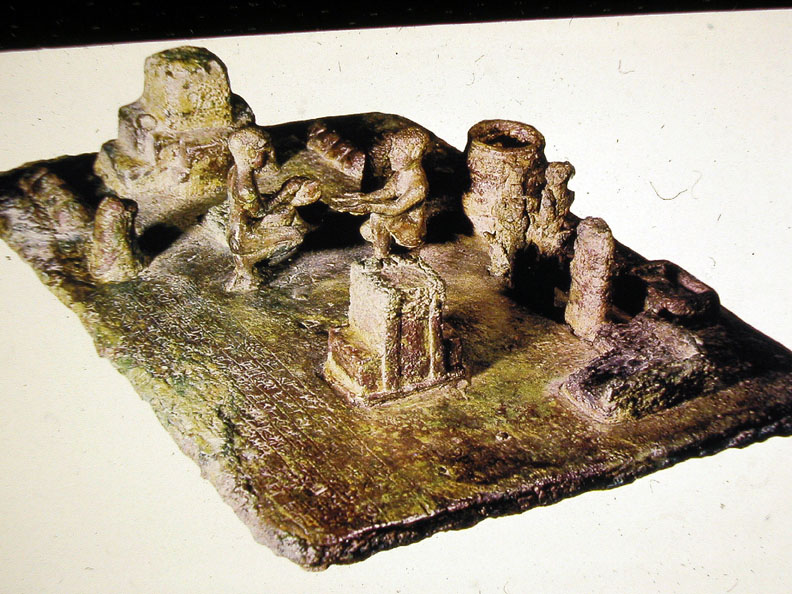
The Sit Shamshi is a three-dimensional representation of a ritual ceremony: two people, naked, crouch in front of one another and seem to practice a ritual purification by ablutions. Around them, various facilities related to the cult are visible: a basin containing holy water, bushes symbols of the sacred tree, two altars in the shape of ziggurats, steles, etc.
The texts mention the "temples of the grove," cave sanctuaries where ceremonies related to the daily renewal of nature were accompanied by deposition of offerings, sacrifice and libations. The Sit Shamshi is perhaps a representation. It is also possible that this object is a commemoration of the funeral ceremonies after the disappearance of the sovereign. Indeed, this model was found near a cave, and bears an inscription in Elamite where Shilhak-Inshushinak remember his loyalty to the lord of Susa, Inshushinak. The text gives the name of the monument, the Sit Shamshi, Sunrise, which refers to the time of day during which the ceremony takes place.
The cave sanctuaries have rarely been identified in situ, except in high places Levantine countries, such as Petra. Despite the change of dynasty which places Shutrukides sovereign power in Susa in the twelfth century BC, the ability of metal craftsmen demonstrating continuity of artistic tradition from the fourteenth century, the realization of other monuments exceptional as the statue of Queen Napir-asu or the large table of offerings to snakes.
Source: http://www.3dsrc.com/antiquiteslouvre/index.php?rub=img&img=236&cat=10
Sit Shamshi Bronze can be used as an architectural model for reconstructing ancient Mohenjo-daro stupa in front of two worshippers. The surround structures of jars holding metal artefacts, water tank model (comparable to the Great Bath) and L-shaped structure comparable to the ‘granary’ in sites such as Mohenjo-daro and Harappa.
What could be the meaning of the inscription on the Sit Shamshi bronze? Here is an excursus:
The translation: 'Shilhak-Inshushinak, king here and there, made (this) sit shamshi of bronze...The 'ziggurat' is flanked at both short sides by a row of four low piles, often described as pyramidal or conical but, in this case, very smoothed. Resembling round loves, according to Gautier they represent offerings of cereals, exposed during the celebration of the sacrifice...The large jar was probably for the lustral water, being the equivalent of the apsu of Babylonian sanctuaries...On the left of the stela, in front of the left basin, there are three trunks of tree which, with the 'ziggurat', are the tallest item on the base. The branches, originally probably enriched by leaves of some kind of metal, are badly damaged...a three-dimensional Elamite husa, a sacral grove...Shilhak-Inshushinak, the same Elamite king speaking in the inscription of the model, had built 'grove temples' in various locations of the kingdom; most of them were dedicated to the god Inshushinak...in connection with the tables of Choga Zanbil, according to Vallat the ziggurat have a funerary character in Elam...Akkadian sit shamshi, meaning 'rising of the sun'; (sit alone is 'birth', shamash 'sun') and, in a broad sense, the direction or the point of the time of sunrise, i.e. the 'East' or the 'dawn'..."at sunrise...you sweep the ground on the bank of the canal and sprinkle (ritually) pure water around"...If si-it would be Elamite, it could be related to si-it-me which means something like 'prosperity, steadiness, good luck, wellness, bliss'...I was at this point when I turn to read a forgotten note by M. Rutten where, referring to this passage, she proposed to drop sit shamshi as a Semitic 'sunrise' and translate sit as 'durable (reign)' and shamshi as 'to grant, bestow'. ' (Gian Petro Basello, 'L'Orientale' University, Naples, 07/10/04: Finding a name for an archaeological finding": the sit-shamshi from Shush). http://www.elamit.net/elam/sit_lecture.pdf
Read on...
Mohenjo-daro stupa & Great Bath (Kalyanaraman, 2011)
Stupa
Kalyanaraman
Member, Action Committee Against Corruption in India (ACACI)
Reply all
Reply to author
Forward
0 new messages