
Dharmaraja

Veeranarayana Pandurangi
--
Veeranarayana N.K. Pandurangi
Head, Dept of Darshanas,
Yoganandacharya Bhavan,
Jagadguru Ramanandacharya Rajasthan Samskrita University, Madau, post Bhankrota, Jaipur, 302026.
अथ चेत्त्वमिमं धर्म्यं संग्रामं न करिष्यसि। ततः स्वधर्मं कीर्तिं च हित्वा पापमवाप्स्यसि।। तस्मादुत्तिष्ठ कौन्तेय युद्धाय कृतनिश्चयः। निराशीर्निर्ममो भूत्वा युध्यस्व विगतज्वरः।। (भ.गी.)

Dr. S. Ramakrishna Sharma
As known to those who perform SandhyAvandanam,
यमाय धर्मराजाय मृत्यवे शान्तकाय च ..... this verse only provides
the names which glorify the Dik-Pala of the South.
In the Kaathaka Upanishat he is depicted as Brahma Vidya Acharya
of Nachiketa and yet no details of form, weapons, color, vehicle are
mentioned there. Perhaps the commentaries and foot notes may
provide these details.
However, the color is Neela(neelaaya paramEshtine); Vrkodaraya,
CitrAya also give some clue regarding the form.
Coming to Temple Tantra rituals, at the bottom of the FLAG POST, Dhvhaja-Stambha,
the Idol of Yamadharmaraja can be found in full detail, as it is cast
according to the prescriptions of Agama-Dhyana-Shloka.
Further, at different occasions as described in the episodes of the
PurANas and ItihAsas he has different weapons and attires. He is the
presiding Deity of Danda, Pasha and also Aanjaleeka-Astra(given to Arjuna).
Here is an informative quotation from: http://www.veda.harekrsna.cz/encyclopedia/dying.htm
from Hindu Dictionary by Manurishi Foundation
Yama - Restrainer. Pluto, etc. In the Vedas Yama is god of the dead, with whom the spirits of the departed dwell. He was the son of Vivasvat (the Sun) and had a twin-sister named Yami or Yamuna. These are by some looked upon as the first human pair, the originators of the race; and there is a remarkable hymn, in the form of a dialogue, in which the female urges their cohabitation for the purpose of perpetuating the species. Another hymn says that Yama "was the first of men that died, and the first that departed to the (celestial) world." It was Yama who found the way to the home which cannot be taken away. "Those who are now born follow) by their own paths to the place where our ancient fathers have departed." "But," says Muir, "Yama is nowhere represented in the Rigveda as having anything to do with the punishment of the wicked." So far as is yet known, "the hymn of that Veda contain no prominent mention of any such penal retribution... Yama is still to some extent an object of terror. He is represented as having two insatiable dogs [Rigveda 10.14.10-12] with four eyes and wide nostrils, which guard the road to his abode, and which the departed are advised to hurry past with all possible speed. These dogs are said to wander about among men as his messengers, no doubt for the purpose of summoning them to their master, who is in another place identified with death, and is described as sending a bird as the herald of doom." In the epic poems Yama is the son of the Sun by Sanjna (conscience) and brother of Vaivasvata (Manu). He was the father of Yudhishthira. He is the god of departed spirits and judge of the dead. A soul when it quits its mortal form goes to his abode in the lower regions; there the recorder, Citragupta, reads out his account from the great register called Agrasandhani, and a just sentence follows, when the soul either ascends to the abodes of the Pitris (Manes), or is sent to one of the twenty-one hells according to its guilt, or it is born again on earth in another form. Yama is regent of the south quarter, and as such is called Dakshinashapati. He is represented as having a green color and clothed with red. He rides upon a buffalo, and is armed with a ponderous mace and a noose to secure his victims. In the Puranas a legend is told of Yama having lifted his foot to kick Chaya, the handmaid of his father. She cursed him to have his leg affected with sores and worms, but his father gave him a cock which picked off the worms and cured the discharge. Through this incident he is called Shirnapada, "Shrivelled foot." Yama had several wives, as Hemamala, Sushila, and Vijaya. He dwells in the lower world, in his city Yamapura. There, in his palace called Kalichi, he sits upon his throne of judgment, Vicharabhu. He is assisted by his recorder and councillor, Citragupta, and waited upon by his two chief attendants and custodians, Canda or Mahacanda, and Kalapurusha. His messengers, Yamadutas, bring in the souls of the dead, and the door of his judgment-hall is kept by his porter, Vaidhyata. Yama has many names descriptive of his office. He is Mrityu, Kala, and Antaka, "death"; Kritanta, "the finisher"; Shamana "the settler"; Dandi or Dandadhara, "the rod-bearer"; Bhimashasana, "of terrible decrees"; Pashi, "the noose-carrier"; Pitripati, "lord of the manes"; Pretaraja, "king of the ghosts"; Shraddhadeva, "god of the exequial offerings"; and especially Dharmaraja, "king of justice." He is Audumbara, from Udumbara, "the fig-tree," and from his parentage he is Vaivasvata. There is a Dharmashastra which bears the name of Yama.
The details requested are not found compiled for the reason that Yamaraja is not a Major Upasya-Devata except in the cases: 1)of Kunti who was given suitable mantra of Yama by the Rishi(Durvasa) which must be necessarily accompanied by Dhyana 2) of Savithri(not exactly in upasana)who encountered Yama in an argument regarding sun-rise 3) of Markandeya(not exactly in upasana)who was saved by Lord Siva's intervention. 4) of Nachiketa who was blessed under peculiar/unique circumstances.Prapancha-sara-sara-sangraha of Geervanendrasaraswati provides the details which are not to be quoted here.
--
अथ चेत्त्वमिमं धर्म्यं संग्रामं न करिष्यसि।
ततः स्वधर्मं कीर्तिं च हित्वा पापमवाप्स्यसि।।
तस्मादुत्तिष्ठ कौन्तेय युद्धाय कृतनिश्चयः।
निराशीर्निर्ममो भूत्वा युध्यस्व विगतज्वरः।। (भ.गी.)
--
Aangirasa/Dr.S.Ramakrishna Sharma. M.A.,Ph.D.(Eng.Lit.),Ph.D.(Sanskrit.).

Dipak Bhattacharya
Dear Pandurangiji, There is a vast indigenous literature on Dharmarāja in Bengal dating from the 15th century or earlier. The deity is widely worshipped in the Rāḍha region. If you like I may write to you on this later. Best wishes DB |
|

Surendra Mohan Mishra
The god presiding over death is variously called in our tradition.Yama and Shani are both sons of SUrya.During the Pitripaksha when we offer water to the manes,we also offer the same to 14 kinds of deities presiding over death or after-life world(called 'sAmparAya in Katha.Upa.).
In the SAvitryupAkhyAnam of the MBh.Yama is found personified as a harbinger of death : "tatah satyavatah kAyAt pAshabaddham vashangatam/aNgushThamAtram purusham nishchakarsha balaad yamah //.This story has been treated as a spiritual symbol of the eternal journey of evolution by Sri Aurobindo in his legendary epic poem Savitri which stands out as the largest epic poem in English language.
In the GaruDa PurANa etc there are vivid descriptions.
In his autobiographical ChitshaktivilAsa,Swami Muktananda confirms through his realisation that the Yamaloka etc lokas are existing as a matter of fact.
Mostly Yama is a side-deity in the temples and so is he depicted in the literature on iconography.
Some cases of NDE(near-death experiences) also give retrospective outlines of what the corporeal aspect of Yama is like.
There is a Yamasmriti,but this Yama is an AchArya.
In the literature related to eschatology a lot of matter could be traced on Yama in Hindu and other religions.
The two versions of the Tibbetan Book of Death are highly revealing.Death is not less interesting than life.
The GItA says " Yamah samyamatAm aham".
Yama is also equated with Time or Guardian deity of Time.
In Odisha there is a certain observation or vrata as we call it,called "BATa OshA" which seems to be of a tantric origin to ward off premature death and ensure longevity through fasting,worship and swearing in the local language with the roots and branches of a plant named 'vajramUli' symbolising strength to fight death.
In the Vedas the hymns of AyushkAma etc delineate the nature and force of this fearful deity.
Best regards,
SMMishra
--
*****
Surendramohan Mishra
Dept of Sanskrit,Pali & Prakrit
Faculty of Indic Studies,Kurukshetra University
KURUKSHETRA-136 119,Haryana,INDIA
Tel : (Off.)01744 238410(extn.)2504
(Mob.)098960 86579;(Res.)01744-238567
Blogs : http://surendrashastram.blogspot.com
http://surendra-shaastram.blogspot.com

hn bhat
--
Dr. Hari Narayana Bhat B.R.
EFEO,
PONDICHERRY

S P Narang
From: Veeranarayana Pandurangi <veer...@gmail.com>
To: bvpar...@googlegroups.com
Sent: Fri, July 16, 2010 3:33:37 PM
Subject: {भारतीयविद्वत्परिषत्} Dharmaraja
Veeranarayana Pandurangi
hn bhat
The Rajasthan Highcourt is going etablish a library on judicial systems. Justice Chouhan asked us to find the description of symbol of justice in indian literature. The muslim and christian traditions have the symbol of weighing machine (TulA) for justice. is there anything such in our tradition?
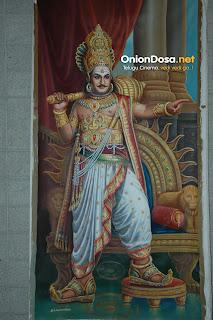
I heard from my elders that Yama has two forms Yama and Dharma. Yama is for decision of the fate sinners where as the Dharma sees the worthy people. any reference? it will be better if we find some fotos yama in his dharmasana. may it be available?

hn bhat
The Rajasthan Highcourt is going etablish a library on judicial systems. Justice Chouhan asked us to find the description of symbol of justice in indian literature. The muslim and christian traditions have the symbol of weighing machine (TulA) for justice. is there anything such in our tradition?


Dr. S. Ramakrishna Sharma
>The Rajasthan High Court is going establish a library on judicial systems.
In the above context, certainly "justice" does not pertain to or connote posthumous
execution of some sentence/punishment. Yama and Dharma or Yamadharmaraja
and his weapons come into picture after the departure of the embodied soul from the body, that is death.
The Library is going to be in Manushya-Loka and not in Pitr/Preta-Loka and hence using Symbols related to Yama would be incongruous, if not ridiculous.
However, there is no dearth of resources in our Scriptural Lore for suitable symbols with apt quotations.
Why not suggest रथारूढ-अर्जुन-पार्थसारथि: with the quotation "तत्रश्री:विजयो भूति: ध्रुवा नीति:"
as the dynamic symbol of divine justice with righteous human vigil, for the Library?
Do they not use the Bhagavadgita as the Sacred Scripture for swearing?To be secular, let there be the TulA too!
प्रणाम:
--
अथ चेत्त्वमिमं धर्म्यं संग्रामं न करिष्यसि।
ततः स्वधर्मं कीर्तिं च हित्वा पापमवाप्स्यसि।।
तस्मादुत्तिष्ठ कौन्तेय युद्धाय कृतनिश्चयः।
निराशीर्निर्ममो भूत्वा युध्यस्व विगतज्वरः।। (भ.गी.)
--
Aangirasa/Dr.S.Ramakrishna Sharma. M.A.,Ph.D.(Eng.Lit.),Ph.D.(Sanskrit.).

Ashok Aklujkar
>The Rajasthan High Court is going establish a library on judicial systems. Justice Chouhan asked us to find the description of symbol of justice in indian literature. The muslim and christian traditions have the symbol of weighing machine (TulA) for justice. is there anything such in our tradition?<
The tulaa symbol comes from the Greek-Roman tradition as far as I can determine. See http://en.wikipedia.org/wiki/Lady_Justice The symbol has no particular association with any living religion. If it is found in Islamic states, it has come from Christianity or recent Western influence.
The association of tulaa with moral force is found in the Indian tradition; cf. Mahaabhaarata: 1.69.22 and 13.74.29: a;sva-medha-sahasra.m ca satya.m ca tulayaa dh.rtam / a;sva-medha-sahasraad.dhi satyam eva vi;si.syate //
(MB 12.156.26 differs only in the fourth paada: satyam evaatiricyate. MB 13.23.14 differs in the third and fourth paadas: naabhijaanaami yady asya satyasyaardham avaapnuyaat /)
When there is a conflict between history (which is a necessary but imperfect science) and the 'aa no bhadraa.h kratavo yantu vi;svata.h' principle, the latter should prevail. This is the spirit of Miimaa.msaa, too, and Miimaa.msaa is a very important science for law interpretation.
Mahaabhaarata 13.74.30 reads: satyena suuryas tapati. satyenaagni.h pradiipyate / satyena maaruto vaati. sarva.m satye prati.s.thitam //
Just writing "sarva.m satye prati.s.thitam, Mahaabhaarata 13.74.30" under the tulaa image should suffice to indianize the symbol. The text a;sva-medha-sahasraad.dhi satyam eva vi;si.syate / satyam evaatiricyate would be too long and too particular. Because of its reference to a;sva-medha, the text may even seem outdated to most people.
ashok aklujkar
>
S P Narang
From: hn bhat <hnbh...@gmail.com>
To: bvpar...@googlegroups.com
Sent: Mon, July 19, 2010 3:44:13 PM
Subject: Re: {भारतीयविद्वत्परिषत्} Dharmaraja
Veeranarayana Pandurangi
--
अथ चेत्त्वमिमं धर्म्यं संग्रामं न करिष्यसि।
ततः स्वधर्मं कीर्तिं च हित्वा पापमवाप्स्यसि।।
तस्मादुत्तिष्ठ कौन्तेय युद्धाय कृतनिश्चयः।
निराशीर्निर्ममो भूत्वा युध्यस्व विगतज्वरः।। (भ.गी.)
Ashok Aklujkar
If any depictions of Citra-gupta are available, in visual arts or texts, one of them or parts thereof, could furnish a symbol.
a.a.
Dr. S. Ramakrishna Sharma
The Yama Samhita which is an extract from the 9th Chapter of Ahilya Kamdhenu, a work of Hindu Law, says that Dharamaraja complained to Lord Brahma about his difficulties in performing his most responsible duties of keeping records of the deeds of men and doing justice to them. Lord Brahma went into meditation. Shree Chitragupta sprang from his body and stood before him bearing an ink pot and a pen. The God Brahma (Creator) said: "Because you are sprung from my body (kaya), therefore you shall be called Kayastha and as you existed in my body unseen I give you the name of Chitragupta."
Wikipedia provides many details regarding temples of Chitragupta, in Kanchipuram etc. But the one in Khajuraho is really imposing and elegant.
http://chitraguptvanshi.wetpaint.com/page/Ancient+Temple+of+SheeChitraguptji
http://chitraguptvanshi.wetpaint.com/page/Bhagvaan+Chitragupt
The picture in the above page(file attached) does not depict the items mentioned to be held by him. However, ink pot and pen are the items associated with Chitragupta as held by the Kayastha community; also are worshiped by them during Chitragupta Puja.
प्रणाम:
--
अथ चेत्त्वमिमं धर्म्यं संग्रामं न करिष्यसि।
ततः स्वधर्मं कीर्तिं च हित्वा पापमवाप्स्यसि।।
तस्मादुत्तिष्ठ कौन्तेय युद्धाय कृतनिश्चयः।
निराशीर्निर्ममो भूत्वा युध्यस्व विगतज्वरः।। (भ.गी.)
--
Aangirasa/Dr.S.Ramakrishna Sharma. M.A.,Ph.D.(Eng.Lit.),Ph.D.(Sanskrit.).
Dr. S. Ramakrishna Sharma
Two verses on Chitragupta in gif was forwarded by me.
It was an instant help from a student Sri Pavan Rao.
I am adding the file here to have continuity, lest the
Independent post be lost/remain isolated.
--
Aangirasa/Dr.S.Ramakrishna Sharma. M.A.,Ph.D.(Eng.Lit.),Ph.D.(Sanskrit.).


subrahmanyam korada
Professor of Sanskrit,
CALTS,
University of Hyderabad 500046
Ph:09866110741(R),91-40-23010741,040-23133660(O)
I V Nacharya I
From: Dr. S. Ramakrishna Sharma <d.ramak...@gmail.com>
To: bvpar...@googlegroups.com
Sent: Tue, 20 July, 2010 10:21:01 PM
Subject: Re: {भारतीयविद्वत्परिषत्} Dharmaraja, symbol for justice
Veeranarayana Pandurangi
--
Head, Dept of Darshanas,
Yoganandacharya Bhavan,
Jagadguru Ramanandacharya Rajasthan Samskrita University, Madau, post Bhankrota, Jaipur, 302026.