
Stevia can help meet sugar crisis in Bangladesh - Cost Benifit Analysis

Sayeed Rahman
=====================================================================================
The subject of searches and seizures, trade complaints and embargoes on importation, stevia has been handled at times by the FDA as if it were an illegal drug.
Since the passage of the Dietary Supplement Health and Education Act (DSHEA), stevia can be sold legally in the United States, but only as a "dietary supplement." Even so, it can be found in many forms in most health-food stores, and is also incorporated into drinks, teas and other items (all labeled as "dietary supplements"). It cannot, however, be called a "sweetener" or even referred to as "sweet." To do so would render the product "adulterated," according to the FDA, and make it again subject to seizure.
The purpose of our Web site is to provide as much information about stevia as possible, from the scientific studies regarding its safety to the petitions submitted by the Lipton Tea Company and the American Herbal Products Association. Stevia.net will be an ongoing project for us at Body Ecology, so check back often, as we will be augmenting and updating this information frequently.
In addition to demonstrating stevia's nearly instant popularity in locales far removed from its native habitat, Japan's experience proved several other significant facts about this phenomenal plant: its adaptability and its safety. Adaptability was proven through the discovery that the plant could be grown throughout most of this temperate island nation, albeit under special hothouse conditions. Studies were even initiated to evaluate the substitution of stevia for rice under cultivation in some areas. Stevia's safety was proven through extensive scientific testing.
The spread of the stevia phenomenon was not limited to Japan. Today it is also grown and used in approximately 10 other countries outside South America, including China, Germany, Malaysia, Israel and South Korea. Stevia might by now be entrenched in the United States as well, had it not been for a concerted effort to block its very entry.
From "The Stevia Story: A tale of incredible sweetness & intrigue."
Growing Stevia
How to start your own stevia patch
You need not be a South American planter to be a successful stevia grower. While the herb's native locale may make it appear somewhat exotic, it has proved to be quite adaptable and capable of being cultivated in climate zones as diverse as Florida and southern Canada.
True, home-grown stevia may lack the potency of refined white stevia extract; whole stevioside content generally ranges from 81 to 91 percent, as compared to a leaf level of approximately 12 percent. But it can provide you with a quantity of freshly harvested stevia 'tea leaves' to augment your supply of commercial stevia sweeteners.
Organic gardeners in particular should find stevia an ideal addition to their yield. Though nontoxic, stevia plants have been found to have insect-repelling tendencies. Their very sweetness, in fact, may be a kind of natural defense mechanism against aphids and other bugs that find it not to their taste. Perhaps that's why crop-devouring grasshoppers have been reported to bypass stevia under cultivation.
Then, too, raising stevia yourself, whether in your back yard or on your balcony, is another positive way you can personally (and quite legally) protest the wrongheaded government policies that have for so long deprived the American people of its benefits -- a kind of contemporary Victory Garden.
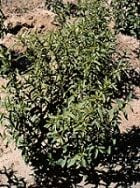 -- that is, by planting seeds. Even if you could get them to germinate, results might well prove disappointing, since stevioside levels can vary greatly in plants grown from seed.
The recommended method is rather to buy garden-ready 'starter' plants, which given stevia's 'growing' popularity, may well be obtainable from a nursery or herbalist in your area -- provided you're willing to scout around a bit. If you're not, or are unsuccessful in locating any, there are at least three growers of high-quality stevia who will ship you as many baby plants as you'd like.
Keep in mind that not all stevia plants are created equal in terms of stevioside content, and, hence, sweetness. It's therefore a good idea to try to determine if the plants you're buying have been grown from cuttings whose source was high in stevioside.
Because tender young stevia plants are especially sensitive to low temperatures, it's important that you wait until the danger of frost is past and soil temperatures are well into the 50s and 60s before transplanting them into your garden.
Once you begin, it's best to plant your stevia in rows 20 to 24 inches apart, leaving about 18 inches between plants. Your plants should grow to a height of about 30 inches and a width of 18 to 24 inches.
| The care and feeding of stevia |
Stevia plants do best in a rich, loamy soil -- the same kind in which common garden-variety plants thrive. Since the feeder roots tend to be quite near the surface, it is a good idea to add compost for extra nutrients if the soil in your area is sandy.
Besides being sensitive to cold during their developmental stage, the roots can also be adversely affected by excessive levels of moisture. So take care not to overwater them and to make sure the soil in which they are planted drains easily and isn't soggy or subject to flooding or puddling.
Frequent light watering is recommended during the summer months. Adding a layer of compost or your favorite mulch around each stevia plant will help keep the shallow feeder roots from drying out.
Stevia plants respond well to fertilizers with a lower nitrogen content than the fertilizer's phosphoric acid or potash content. Most organic fertilizers would work well, since they release nitrogen slowly.
| Gathering autumn stevia leaves |
Harvesting should be done as late as possible, since cool autumn temperatures and shorter days tend to intensify the sweetness of the plants as they evolve into a reproductive state. While exposure to frost is still to be avoided, covering the plants during an early frost can give you the benefit of another few weeks' growth and more sweetness.
When the time does come to harvest your stevia, the easiest technique is to cut the branches off with pruning shears before stripping the leaves. As an extra bonus, you might also want to clip off the very tips of the stems and add them to your harvest, as they are apt to contain as much stevioside as do the leaves.
If you live in a relatively frost-free climate, your plants may well be able to survive the winter outside, provided you do not cut the branches too short (leaving about 4 inches of stem at the base during pruning). In that case, your most successful harvest will probably come in the second year. Three-year-old plants will not be as productive and, ideally, should be replaced with new cuttings.
In harsher climates, however, it might be a good idea to take cuttings that will form the basis for the next year's crop. Cuttings need to be rooted before planting, using either commercial rooting hormones or a natural base made from willow tree tips, pulverized onto a slurry in your blender. After dipping the cuttings in such a preparation, they should be planted in a rooting medium for two to three weeks, giving the new root system a chance to form. They should then be potted -- preferably in
4.5-inch pots -- and placed in the sunniest and least drafty part of your home until the following spring.
| Unlocking the sweetness in your harvest |
Once all your leaves have been harvested you will need to dry them. This can be accomplished on a screen or net. (For a larger application, an alfalfa or grain drier can be used, but about the only way an average gardener might gain access to such a device is to borrow it from a friendly neighborhood farmer). The drying process is not one that requires excessive heat; more important is good air circulation. On a moderately warm fall day, your stevia crop can be quick dried in the full sun in about 12 hours. (Drying times longer than that will lower the stevioside content of the final product.) A home dehydrator can also be used, although sun drying is the preferred method.
Crushing the dried leaves is the final step in releasing stevia's sweetening power. This can be done either by hand or, for greater effect, in a coffee grinder or in a special blender for herbs. You can also make your own liquid stevia extract by adding a cup of warm water to 1/4 cup of fresh, finely-crushed stevia leaves. This mixture should set for 24 hours and then be refrigerated.
| Growing stevia without land |
Just because you live within the confines of an apartment or condominium doesn't mean you can't enjoy the benefits of stevia farming. This versatile plant can be grown either in pots on your balcony or any sunny spot, or else in a hydroponic unit. Stevia plants also do quite well in "container gardens." A 10" to 12" diameter container filled with a lightweight growing mix is an ideal size for each plant. A little mulch on the top will help retain the moisture in the shallow root zone. A properly fertilized hydroponic unit or container garden can provide you with as much stevia as an outdoor garden, if not more.
By BSS, Dhaka
Fri, 2 Jun 2006, 10:17:00
The scientific name of the herbal plant is "Stevia Serrata" and family name being 'Asteraceae'. It is sometimes known as sweet leaf or 'Chinipata'.
Elaborating the quality of the plant, he further said 5gm- stevia leaf contains the same power as it exists in 1kg of sugar. Dr. Mati said 1kg of sugar is being sold now at Taka 65 while it takes at best only Taka 5 to produce 5gm stevia.
"Bangladesh being an agro-based country could easily cultivate the plant in its vast 'char' lands as it grows well in open space having regular sunlight ", he added. "After 60 days of cultivation, the leaf of the plant can be harvested and be turned into granules like that of sugar", said the herbal expert. The renowned herbal expert said the Stevia granules could be used in making bread, lozenge, biscuit and sweetmeat like of sugar. Dr. Alamgir, who is now working with the plant, said "if the country's vast char areas are brought under Stevia cultivation it can help minimize import of sugar side by side help create job opportunities for large number of unemployed youths.
Describing medicinal quality of the plant, the herbal expert said it has no side effect as an alternative to sugar. Rather it reduces blood pressure risks of the obesity and diabetic patients because it contains low- carbohydrate.
The expert urged the government to take effective measures for cultivation of the plant especially in the backdrop of fall of sugar production in Bangladesh.
Source: http://nation.ittefaq.com/artman/publish/printer_28260.shtml
===============================================================
The form in which stevia is primarily used as a sweetener in Japan is that of
a white powdered extract. In this form it is approximately 200 to 300 times sweeter than sugar (by weight).
This white powder is an extract of the sweet glycosides (natural sweetening agents) in the stevia leaf.
Not all stevia extract powders are the same. The taste, sweetness and cost of the various white stevia powders will likely depend on their degree of refinement and the quality of the stevia plant used. You may find that some powders have more of an aftertaste.
Since extracted stevia powder is so intensely sweet, we recommend that it be used by the pinch (or drop if diluted in water). Once mixed, this solution should be stored in the refrigerator.
===========================================================================
What's good for Bangladesh is good for BANGLA IT. Serving your need to know.
"Innovation distinguishes a leader from a follower" - Steve Jobs
Sayeed Rahman
Founder BANGLA IT
http://www.banglait.org