
SPECIAL REPORT: What Is President Asiwaju Bola Ahmed Tinubu Doing with Nigeria's Increased Revenue Funds?

Chukwuemeka Okala


Increased Revenue: What Is Tinubu Doing with Nigeria’s Funds?

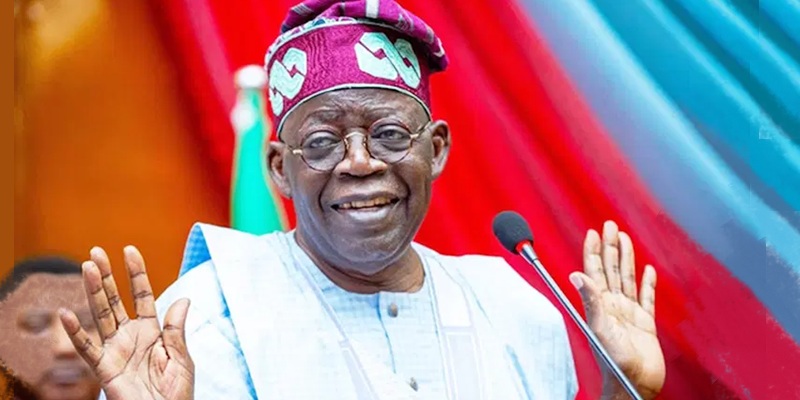
TDThe question is increasingly being asked in homes, markets, offices, and across social media platforms: What exactly is President Bola Tinubu’s administration doing with Nigeria’s growing revenues?

The question has become more pressing following the release of financial figures from key government revenue-generating agencies, which indicate that Nigeria is earning significantly more money than in previous years.
According to publicly released figures, the Nigerian National Petroleum Company Limited (NNPC Ltd) reported a profit after tax of N3.297 trillion in 2023.
In 2024, the figure rose dramatically to N5.4 trillion, before increasing further to N5.76 trillion in 2025.
Similarly, the Nigerian Upstream Petroleum Regulatory Commission (NUPRC) reported generating and remitting N4.34 trillion in 2023, N12.25 trillion in 2024, and N8.50 trillion in 2025.
Combined, the reported revenues and profits from these two oil-sector institutions alone amount to tens of trillions of naira within three years.
Yet these figures represent only a fraction of government earnings.
How Much Revenue Did NNPC, NUPRC, FIRS and Customs Generate from 2023–2025 Exactly Under Tinubu?
The claim that Nigeria’s major revenue-generating agencies have recorded unprecedented earnings in recent years is broadly supported by available official data.
However, it is important to distinguish between revenue generated, profit, and remittances to government.
1. NNPC Limited
NNPC’s publicly reported figures are profit after tax (PAT), not total government revenue.

NNPC announced a profit after tax of ₦5.4 trillion for 2024 on revenues of ₦45.1 trillion. In 2025, the company reported provisional revenues of ₦60.517 trillion and profit after tax of ₦5.760 trillion.
2. Nigeria Customs Service (NCS)
Customs revenue collections have risen sharply under recent reforms.

The Nigeria Customs Service officially reported collecting ₦3.2 trillion in 2023 and a record ₦6.105 trillion in 2024, representing about a 90% increase year-on-year.
3. Federal Inland Revenue Service (FIRS)
FIRS has become Nigeria’s largest non-oil revenue collector.

The Federal Government cited significantly higher collections from FIRS when expanding the 2025 budget.
It noted that the agency generated an additional ₦1.4 trillion above earlier projections.
4. Nigerian Upstream Petroleum Regulatory Commission (NUPRC)
NUPRC collects royalties, rents, gas flare penalties, and other upstream petroleum revenues on behalf of the federation.

NUPRC reported remitting about ₦4.34 trillion in 2023.
That makes it one of Nigeria’s largest revenue-generating agencies outside FIRS and NNPC.
Various official updates indicate continued growth in 2024 and 2025 as oil production and compliance improved.
Combined Picture of Revenues Under Tinubu
Using the most widely reported figures:

Key Fact-Check Conclusion
The data supports the argument that Nigeria’s major revenue-generating institutions have experienced substantial growth since 2023.
FIRS remains the largest revenue contributor, while Customs and NUPRC have recorded significant increases.
NNPC’s profit after tax rose from ₦3.297 trillion in 2023 to ₦5.760 trillion in 2025.
They do not include revenues collected by the Nigerian Midstream and Downstream Petroleum Regulatory Authority (NMDPRA).
They also do not include revenues collected by other government-owned enterprises, independent revenues from ministries, departments and agencies, as well as domestic and foreign borrowings secured by the Federal Government.
 Nigeria revenue growth between 2023 and 2025 under Tinubu’s government
Rising Revenues, Worsening Economic Hardship Under Tinubu
This apparent contradiction between rising revenues and worsening economic hardship has fueled growing public concern.
Across the country, many Nigerians complain that they are yet to feel the impact of the increased revenues reflected in official reports.
this is despite the government’s insistence that reforms are necessary for long-term economic stability.
Citizens continue to grapple with high inflation, rising food prices, transportation costs, unemployment, and declining purchasing power.
The removal of fuel subsidies and the floating of the naira were presented as difficult but necessary decisions that would free up enormous resources for infrastructure, healthcare, education, and social welfare.
Three years later, many Nigerians are asking where those savings and additional revenues have gone.
More Questions on Budgetary Allocations, Actual Releases
Questions have also emerged regarding budgetary allocations and actual releases to ministries and agencies.
Critics point to the apparent disparity between the trillions reportedly earned by government institutions and the financial constraints repeatedly cited by public institutions.
The health sector, for instance, continues to face shortages of medical personnel, inadequate infrastructure, poor remuneration, and persistent brain drain as healthcare professionals seek opportunities abroad.
Public hospitals remain underfunded, while many citizens struggle to access affordable healthcare services.
The education sector faces similar challenges.
Universities and polytechnics frequently complain of inadequate funding.
Meanwhile, public schools in many parts of the country continue to operate under difficult conditions.
Road infrastructure, electricity supply, water projects, and security operations also require substantial investments.
If revenues are indeed rising significantly, many observers argue that there should be visible improvements in these critical sectors.
 An AI-generated image showing a sorry picture of Nigeria
Supporters Versus Critics of Tinubu Administration
Supporters of the Tinubu administration, however, contend that the situation is more complex than it appears.
They argue that revenue figures alone do not provide a complete picture of the nation’s finances.
According to government officials, a significant portion of federal revenues goes toward servicing existing debts accumulated over several administrations.
Nigeria’s debt obligations, both domestic and foreign, consume a substantial share of government income annually.
The administration also points to increased allocations to state governments following the removal of fuel subsidies.
It argues that more funds are now available at the subnational level for development projects.
Government officials further maintain that resources are being invested in infrastructure projects, student loans, social intervention programmes, agricultural initiatives, security operations, and efforts to stabilize the economy.
However, critics insist that transparency remains a major issue.
They argue that Nigerians deserve a comprehensive breakdown showing how revenues from NNPC, NUPRC, FIRS, Customs, and other agencies are being utilized.
Neutral Interrogations
For many citizens, official claims of progress are difficult to reconcile with the realities they encounter daily.
Economic analysts note that transparency and accountability are essential in sustaining public trust.
When citizens see rising revenues but experience declining living standards, questions about governance naturally arise.
The challenge for the Tinubu administration is therefore not only to generate revenue.
Rather, it must also to demonstrate clearly how those resources are translating into tangible improvements in the lives of ordinary Nigerians.
As the country moves closer to another electoral cycle, demands for greater fiscal transparency are likely to intensify.
Nigerians want answers.
More Questions for Tinubu
How much money is the Federal Government generating annually from all sources?
How much is being spent on debt servicing?
How much is going to infrastructure, education, healthcare, security, and social welfare?
What proportion is being consumed by the cost of governance?
And perhaps most importantly, why are many Nigerians not seeing corresponding improvements in their quality of life despite reports of unprecedented revenue generation?
These are questions that will continue to dominate national discourse.
The figures released by NNPC and NUPRC suggest that substantial resources are flowing into government coffers.
Whether those resources are being effectively managed, appropriately allocated, and transparently accounted for remains a matter of intense public interest.
Ultimately, the debate is not merely about trillions of naira in revenue. It is about accountability, governance, and the ability of government policies to improve the lives of citizens.
Until Nigerians receive clear and convincing answers, the question will persist: What exactly is Tinubu doing with Nigeria’s funds?
https://thisdawn.com/increased-revenue-what-is-tinubu-doing-with-nigerias-funds/
KINDLY SHARE 🔁
Follow This Dawn channel:
https://whatsapp.com/channel/0029Vb72wDP5EjxwI0tat30f

femi Olajide
You always like to jump on any bandwagon that may or may not be going your way.
If you understand public finances, you will know that all revenue does not translate to government expenditure on public infrastructures.
There are legacy bill servicing to contend with, increased national reserve etc etc.
If you had taken time to look under the heading "Supporters and critics of Tinubu government" your questions would have been answered.
See the great things Tinubu is doing in the article below.
https://www.thecable.ng/tinuboom-is-coming-the-early-returns-are-beginning-to-show/
Regards,
Femi Olajide
To join this group, send email to naijao...@googlegroups.com
View this message at https://groups.google.com/a/googlegroups.com/d/msg/naijaobserver/topic-id/message-id
---
You received this message because you are subscribed to the Google Groups "||NaijaObserver||" group.
To unsubscribe from this group and stop receiving emails from it, send an email to naijaobserve...@googlegroups.com.
To view this discussion visit https://groups.google.com/d/msgid/naijaobserver/1430120487.1673075.1780334661162%40mail.yahoo.com.
Chukwuemeka Okala
To join this group, send email to naijao...@googlegroups.com
View this message at https://groups.google.com/a/googlegroups.com/d/msg/naijaobserver/topic-id/message-id
---
You received this message because you are subscribed to the Google Groups "||NaijaObserver||" group.
To unsubscribe from this group and stop receiving emails from it, send an email to naijaobserve...@googlegroups.com.