
Agbakoba Calls for Electronic Transmission of Results

Chukwuemeka Okala


Agbakoba Calls for Electronic Transmission of Results
Says It Should Be Enshrined in The Electoral Act Before 2027

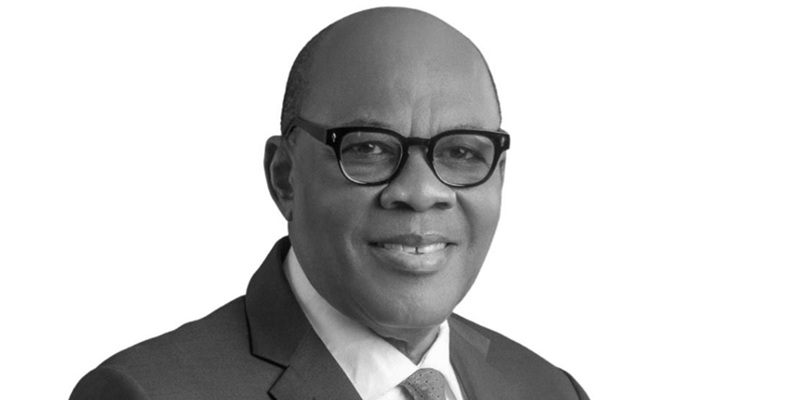

Legal luminary, Dr. Olisa Agbakoba, SAN, has called for electronic transmission of election results to be enshrined in the Electoral Act before 2027.
According to Dr. Agbakoba, Nigeria’s electoral framework has long been plagued by legal uncertainty, forcing courts rather than voters to determine election outcomes.
This recurring problem, he stated, stems from the absence of strong regulatory processes backed by explicit statutory authority.
With every election cycle, the country rushes to amend the Electoral Act, yet the same challenges persist.
According to Agbakoba, this vicious cycle must end before the 2027 general elections.
The Legal Gap Exposed in 2023
Agbakoba observed that the 2023 elections highlighted a critical flaw.
The Independent National Electoral Commission (INEC) deployed the IReV portal for electronic transmission of results in 2023.
 Ex-Chairman of the Independent National Electoral Commission (INEC) in 2023, Mahmood Yakubu
However, the Supreme Court ruled that the innovation lacked legal force because it was not expressly provided for in the Electoral Act 2022.
The Court held that IReV served only for public viewing and was not admissible evidence in election petitions.
This ruling, Agbakoba said, underscored the danger of relying on innovations without statutory backing.
He noted that electronic transmission remained optional and legally inconsequential, no matter how transparent or efficient.
The Burden of Proof in Election Petitions
The absence of statutory authority creates an insurmountable evidentiary burden, according to Agbakoba.
As Justice Pat Acholonu observed in Buhari v. Obasanjo (2005), a petitioner would need to call 250,000 to 300,000 witnesses across Nigeria’s constituencies to prove electoral malpractice.
Even if successful, the president-elect would likely have completed the four-year tenure, rendering any victory meaningless.
This prophecy has proven accurate: no presidential election petition has succeeded since 1999.
This is largely because verifying results from over 176,000 polling units within legal timelines is practically impossible.
Lessons From History
Nigeria’s June 12, 1993, election remains the gold standard of electoral credibility.
Despite being entirely manual, the Option A4 system ensured immediate, open verification at polling units, generating unprecedented public confidence.
Dr. Agbakoba argues that if manual transparency could achieve such credibility in 1993, real-time electronic transmission in 2026 would be transformative.
It would combine immediate verification with tamper-proof digital records, delivering transparency with efficiency, security, and verifiability.
The Legislative Imperative
The current legislative process offers a monumental opportunity for the National Assembly to resolve this issue before 2027.
Agbakoba stressed that by embedding mandatory real-time electronic transmission of results in the Electoral Act, lawmakers can:
Remove ambiguity and close legal loopholes.
Reduce reliance on courts to decide elections.
Restore public confidence in Nigeria’s democracy.
Without this amendment, Nigeria risks perpetuating the cycle of disputed elections, protracted litigation, and damaged democratic credibility that has plagued the Fourth Republic.
Dr. Olisa Agbakoba in his statement, democracy demands nothing less than decisive legislative action.
By enshrining electronic transmission in the Electoral Act, Nigeria can end decades of electoral uncertainty and unlock a future of transparent, credible, and people-driven elections.

femi Olajide
Very good points raised by Agbakoba.
I have said as much in terms of the emphasis being placed on electronic transmission of results. It's just an option and as existing cannot be made mandatory.
Another point he failed to mention is the enforcement of sanctions against electoral malpracticers and steep sanctions against candidates that bring frivolous cases to electoral tribunals.
Not to mention sanctions on candidates and practitioners found guilty in those tribunals for malpractices.
Regards,
Femi Olajide
You received this message because you are subscribed to the Google Groups "Corporate Nigeria" group.
To unsubscribe from this group and stop receiving emails from it, send an email to corporate-nige...@googlegroups.com.
To view this discussion visit https://groups.google.com/d/msgid/corporate-nigeria/1418995909.1902659.1770741763112%40mail.yahoo.com.