
Azerbaijan Post Int. & TürkEuroAsia - Azerbaijan & TürkicWorld News, Views, Kültür & Heritage - 394

a_c...@yahoo.com


Ekin Altunbay's - openions , writtings:
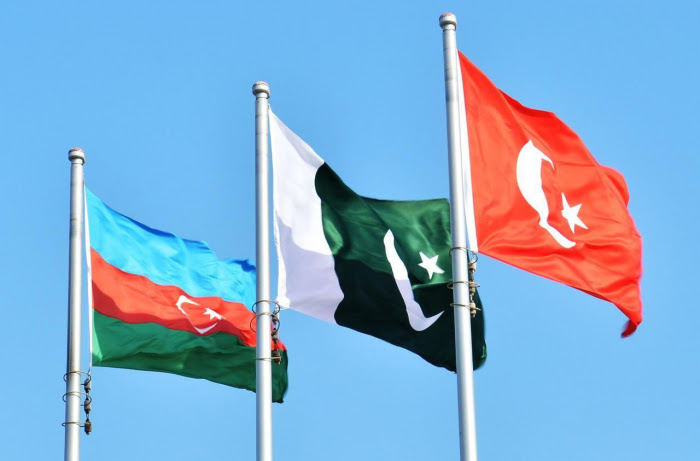
New horizons for trilateral plus 5's cooperation; Türkiye - Azerbaijan - Pakistan plus | Opinion


.
New horizons for trilateral plus 5's cooperation; Türkiye - Azerbaijan - Pakistan plus | Opinion
* Azerbaijan - Armenia peace and reconciliation process: overcoming the external - regional and the internal challenges 2025-2026 , Ekin Altunbay


Why the Zangezur Corridor / TRIPP sparks fear in Georgia

A few days ago, media across the Caucasus reported that several Azerbaijan-bound freight trucks were held up at Georgian customs — an incident that sparked questions far beyond routine transit issues. What initially appeared to be a simple technical delay soon took on the shape of a political message.
Azerbaijani freight trucks carrying tobacco products to Europe were halted in early November at customs checkpoints in Batumi and Tbilisi, with no explanation provided to the drivers or the companies involved. The vehicles sat idle for nearly three weeks — an unusually long delay in international logistics, where even short holdups translate into financial losses.
The standoff ended only after the Embassy of Azerbaijan stepped in. Once diplomatic pressure was applied, the trucks were released within hours.

Photo credit: Report.az
Drivers stressed that all rules for transporting tobacco products through Georgia had been fully complied with. Duties were paid, documentation completed, and the cargo was legally declared and properly handled.
No Georgian official offered a clear explanation for the delay. According to the drivers, the most troubling issue was not the detention itself but the rude and dismissive conduct of customs officers — behavior at odds with long-standing Azerbaijani-Georgian relations. For three weeks, the drivers slept in their trucks, uncertain whether their cargo would be released or seized, and confused as to why they were suddenly treated as unwelcome.
Once the situation drew public attention, Azerbaijani journalists contacted Georgian authorities. The response was vague, claiming the detained trucks were “undergoing standard procedures.” Yet, when pressed, no official could clarify what kind of standard procedure would take nearly a month at the border. Notably, the delays ended only after diplomatic intervention from Baku. Coincidence? Perhaps, but the timing raises serious questions.
For decades, Georgian transit has been a stable, predictable, and trusted route — a backbone of regional supply chains along the Middle Corridor. What happened in November disrupted not only logistics but also confidence, raising doubts not about ordinary Georgian citizens but about whether decision-making in Tbilisi is increasingly shaped by short-term geopolitical anxieties rather than long-standing strategic interests.

Photo credit: forbes.ge
Azerbaijani drivers have occasionally raised concerns about inconsistent treatment at the Red Bridge border crossing. While these incidents were previously isolated and not systemic, recent developments suggest an emerging pattern, and patterns like these rarely appear by chance.
Some of the detained drivers said Georgian customs officers responded to their inquiries with the sarcastic remark, “Why don’t you go through Zangezur instead?”
Casual, emotional, and even mocking, the comment is revealing. Ordinary customs officers do not spontaneously adopt geopolitical language, nor do border staff suddenly become defenders of transit politics. The remark suggests that someone has influenced the institutional environment, making such language acceptable.
Some observers suggest that Georgia’s Armenian community, one of the country’s most organized and politically active minority groups, is promoting narratives framing the Zangezur Corridor as a threat to Georgia’s regional role. Others argue the shift may reflect pressure from external actors pursuing their own strategic agendas. Some attribute it to Russian influence, though this theory is considered weak given Moscow’s waning leverage in the South Caucasus.
The central argument circulating in media and on social networks is straightforward, and misleading:
“Once the Zangezur Corridor opens, Georgia will lose its transit monopoly, its strategic role, and the financial benefits tied to the Middle Corridor.”

Photo credit: trendsresearch
These concerns appear repeatedly in Armenian, Georgian, and Russian media, often accompanied by sensational headlines predicting Georgia’s economic marginalization. When repeated frequently, such narratives can shape perceptions, particularly within bureaucratic structures sensitive to political pressures.
However, the fears are largely overstated.
Georgia has little to worry about from the Zangezur route. Azerbaijan has invested billions in modernizing Georgian infrastructure, including funding upgrades to Georgian railways and spearheading the Baku-Tbilisi-Kars line. These investments were never intended to be temporary; strategic infrastructure cannot function on seasonal interest.
Once operational, the Zangezur route will not replace the Georgian corridor — it will complement it. Logistics networks rely on redundancy, diversification, and parallel capacity. No serious transport corridor depends on a single route.
Yet this reality comes with a caveat: Georgia must keep pace.
For years, Georgia relied on its geography alone, assuming regional transit would inevitably pass through its territory. Geography, however, is only an advantage when backed by infrastructure, efficiency, and political predictability.
The Baku-Tbilisi-Kars railway remained underutilized for nearly a year due to issues specifically on the Georgian side. That delay cost millions, damaged reputations, and forced Azerbaijan to consider alternative routes. No country, even a friendly neighbor, can absorb such losses indefinitely.

Photo credit: gtreview.com
Azerbaijan will continue developing the Zangezur Corridor, as the project serves broader geopolitical and economic goals, including providing access to Türkiye and Europe without dependence on unpredictable actors. Armenia is expected to benefit as well, though the advantages will take time to materialize.
Construction is still in the early stages. Yerevan plans to begin infrastructure work in the second half of next year, focusing initially on power lines and pipelines under the TRIPP framework. The railway, the corridor’s central component, remains a distant prospect.
This gives Georgia time — not unlimited, but enough — to transform from a mere “territory of transit” into an indispensable partner. To maintain this role, the country must treat transit not as a privilege it grants others, but as a strategic asset and a competitive market.
Azerbaijan has repeatedly proven itself a reliable neighbor, often at critical moments. For Tbilisi, the wisest approach is not fear, but cooperation.
In global logistics — as in politics — one rule holds:
Routes are not enemies. Routes are options. And in a rapidly changing world, the value of having multiple options only grows.
By Tural Heybatov
The Great Return: How Azerbaijan is rebuilding liberated lands

Implemented on the instruction of President of the Republic of Azerbaijan Ilham Aliyev, the Great Return Program stands as one of the most significant socio-political and humanitarian processes in the country’s modern history.
The phased return of former internally displaced persons to the territories liberated from occupation has moved beyond symbolism and promises. It has become an irreversible, dynamic state policy that is already delivering tangible results. Large-scale reconstruction and restoration works underway in Karabakh and East Zangezur clearly demonstrate that the Great Return is built on a solid and sustainable foundation.
The arrival of another resettlement convoy to the village of Khidirli in Aghdam district on December 17 is a vivid example of the continuity of this process. At this stage, keys to new homes were handed over to 16 families comprising 45 people. These families had spent many years living in temporary accommodation — dormitories, sanatoriums, and administrative buildings — across various regions of the country. Their return to their native land represents not merely a physical relocation, but the restoration of historical justice and a powerful act of social rehabilitation.
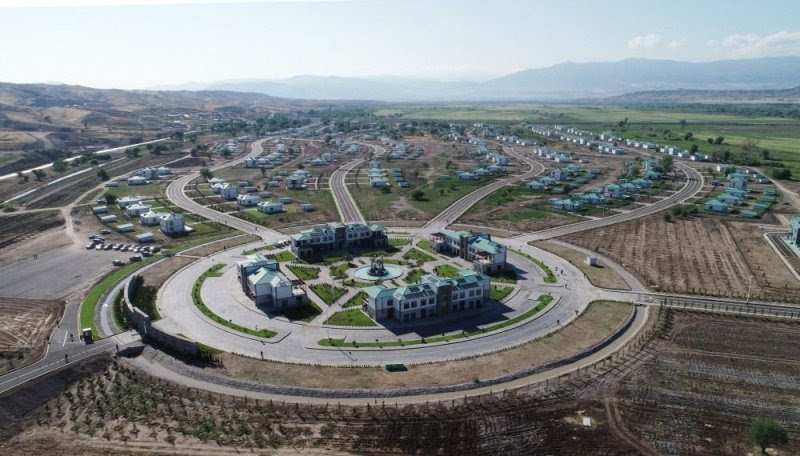
The presence of representatives from the Special Representation of the President of Azerbaijan for the Aghdam, Fuzuli, and Khojavend districts, as well as officials from the State Committee for Refugees and Internally Displaced Persons, at the key handover ceremony once again underscored the importance the state attaches to this process. Returning residents expressed deep gratitude to the country’s leadership for the modern living conditions created for them, emphasizing that today’s prosperity is a direct outcome of the historic Victory achieved in the Patriotic War. They honored the memory of martyrs who sacrificed their lives for the liberation of Azerbaijani lands and wished good health to veterans.
The Great Return Program occupies a special place among Azerbaijan’s five National Priorities defining the country’s socio-economic development. Under the leadership of President Ilham Aliyev, efforts to create modern infrastructure, establish new settlements, and ensure safe and comfortable living conditions in the liberated territories are progressing at an accelerated pace. This process goes far beyond the construction of residential buildings. It includes the development of roads, schools, hospitals, and social service facilities. As a result, Karabakh and East Zangezur are not only being restored but are being rebuilt in line with modern standards to ensure long-term, sustainable development.
President Ilham Aliyev’s regular visits to Karabakh and East Zangezur are among the most compelling demonstrations of the real outcomes of the Great Return. His direct engagement with residents in the liberated territories confirms that the human dimension lies at the heart of this policy. A new era of revival has begun on these lands, where new life is taking shape after decades of longing and displacement. The “smart village” model implemented in Aghali village of Zangilan district has become a symbol of the Great Return, setting a benchmark for other settlements.
At the first stage of the program, the reconstruction of eight cities and 100 villages was identified as a key objective. The return of residents to cities such as Lachin, Fuzuli, Shusha, Khojaly, Jabrayil, and Kalbajar, as well as to numerous villages and settlements, demonstrates that these goals are already being realized in practice. Over the past week alone, 67 families (254 people) returned to the Qirmizi Bazar settlement in Khojavend district; 33 families (177 people) to Mammadyarli village in Zangilan district; 38 families (139 people) to Horovlu village in Jabrayil district; 27 families (112 people) to the city of Kalbajar; and 110 families (378 people) to Khanyurdu village in Khojaly district. In Khidirli village of Aghdam, 568 families — 2,243 people — have already been resettled. These figures clearly show that the Great Return has become part of everyday reality.

Mine clearance plays a critical role in accelerating the return process. Ensuring safety is a prerequisite both for peaceful living and for the expansion of construction and development works. At the same time, the implementation of the “green energy zone” concept — including solar, wind, and hydropower projects — is enabling the region to emerge as an environmentally clean and energy-independent space. The Great Return is not merely an infrastructure initiative; it is a comprehensive social welfare program. The creation of employment opportunities, access to education and healthcare, and the establishment of agricultural and industrial zones ensure long-term prospects for returning residents.
Equally important is the restoration of cultural heritage and the reconstruction of historical monuments, which serve to revive Karabakh’s national identity. The development of Shusha as a cultural capital is one of the most striking examples of this approach. In this sense, the Great Return to the liberated territories reflects Azerbaijan’s political will, economic strength, and the unity between the state and its people.
Ultimately, the Great Return represents a strategic development model that constitutes the socio-economic and humanitarian continuation of Azerbaijan’s Victory in the Patriotic War. It marks a new stage of national revival. The renaissance of Karabakh and East Zangezur is not only a guarantee for the future of these regions but a solid foundation for Azerbaijan’s overall development.
Rovshan Seyyaroglu
The material was prepared with the financial support of the Media Development Agency of the Republic of Azerbaijan.

Azerbaijan–Türkiye military pact signals new security architecture in the region


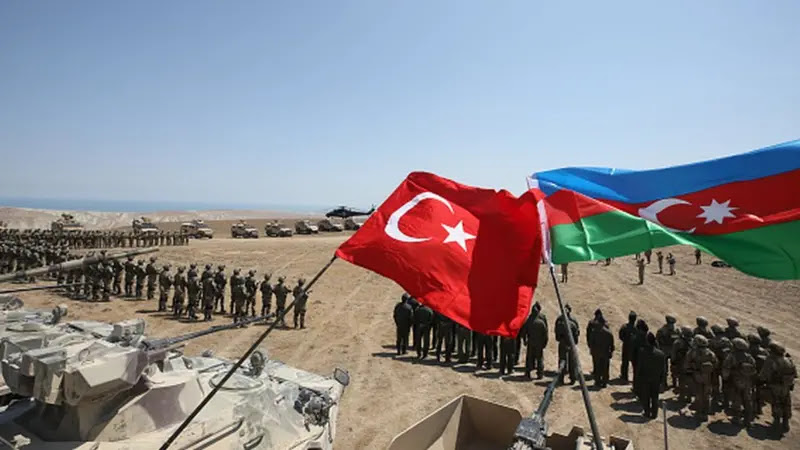
The Azerbaijani parliament has taken a new legislative step to deepen defense cooperation with Türkiye, approving in its first reading a draft law endorsing a Memorandum of Understanding between Azerbaijan’s Ministry of Defense and Türkiye’s Ministry of National Defense on strengthening mutual military security. The memorandum sets out obligations for mutual assistance in the event that either party is subjected to armed aggression and affirms the exercise of individual and collective self-defense rights in full accordance with Article 51 of the United Nations Charter.
Commenting on the document, experts in both Azerbaijan and Türkiye described it as a timely and significant move to reinforce regional security, noting that it is expected to enhance joint operational readiness, improve coordination of military exercises, and further institutionalize defense cooperation between the two allied states.
Javid Valiyev, a member of the Board of Directors of the Center of the Analysis of International Relations (AIR CENTER), told News.Az that the legal and political foundations of defense cooperation between Azerbaijan and Türkiye are firmly rooted in binding international agreements.

Photo: Javid Valiyev, a member of the Board of Directors of the Center of the Analysis of International Relations (AIR CENTER)
He recalled that the Shusha Declaration established a principled and legally formalized framework under which the two states assume responsibility for each other’s security in the event of an attack by a third party. According to Valiyev, the declaration is not merely a political understanding but a fully signed and ratified agreement endorsed at the highest state level.
Valiyev described the newly approved memorandum as a direct continuation of the Shusha Declaration, explaining that it translates strategic commitments into practical and technical mechanisms. He said the document signed by the defense ministers specifies in detail how mutual assistance would be implemented if either side were subjected to armed aggression, clearly defining responsibilities and obligations.
He added that as the Azerbaijani Armed Forces continue their transition to the Turkish military model, bilateral cooperation, particularly in the defense sphere, is intensifying. “This process is directly linked to the strengthening of military collaboration between the two countries,” Valiyev noted.
The expert described Azerbaijan as a central and leading state in the South Caucasus, emphasizing its importance for regional connectivity, as well as energy and transport cooperation across the Turkic world. “Azerbaijan’s security is of critical importance for the Turkic world as a whole,” he said, adding that Baku is steadily reinforcing its security posture within this broader framework.
Valiyev also pointed to Azerbaijan’s historically complex security environment, noting that risks in the South Caucasus may persist. “Against this background, Azerbaijan–Türkiye military cooperation has entered a new phase,” he said. “This phase has shifted the regional balance of power in favor of Azerbaijan and Türkiye, a reality once again confirmed by the documents signed between the defense ministers.”
Addressing the legal dimension, Valiyev explained that Article 51 of the United Nations Charter provides the sole exception to the prohibition on the use of force, allowing states to exercise individual or collective self-defense in the event of an armed attack. He stressed that Azerbaijan acted strictly within this legal framework during the Second Karabakh War in 2020, defending itself and restoring control over its occupied territories.
According to him, both the Shusha Declaration and the latest memorandum with Türkiye are fully consistent with Article 51. He emphasized that the cooperation is defensive in nature and not directed against any third party. “The purpose is solely to ensure mutual defense in the event of an attack against Azerbaijan or Türkiye,” Valiyev said, adding that this approach fully complies with international law and poses no threat to others.
Commenting on regional and international perceptions, Valiyev said the reality of this cooperation will ultimately be accepted. He noted that both Azerbaijan and Türkiye are sovereign states with the right to choose their allies freely, while remaining open to cooperation with all regional actors. Ensuring security for energy and transport projects, he added, benefits not only the two countries but also neighboring states and external stakeholders with interests in the region.
Valiyev further described Azerbaijan and Türkiye as key guarantors of stability in the South Caucasus, arguing that the memorandum strengthens a cooperative environment that will also benefit neighboring countries. Given the defensive character of the agreements, he said, there is no basis for serious political concern.
He also noted that while the current framework is bilateral, it could evolve into a collective model in the future if other Turkic states choose to join. “Such a model would serve stability and cooperation across the Turkic geography and ultimately benefit all regional states,” he said.
Mehmet Bozkuş, a Turkish strategist and political scientist, told News.Az that the signing and ratification of the memorandum by Azerbaijan’s parliament marks the beginning of a new phase in regional security.

Photo: Mehmet Bozkuş, a Turkish strategist and political scientist
According to Bozkuş, the document establishes a comprehensive security framework between Azerbaijan and Türkiye, covering all aspects of mutual military cooperation. He said the memorandum elevates strategic and defense cooperation to the highest possible level, laying the groundwork for new regional power dynamics.
Bozkuş stressed that the primary objective is to strengthen the armed forces of both countries through coordinated strategies, enhancing deterrence and strategic depth. In his view, the memorandum inspires confidence among partners while serving as a clear deterrent to potential adversaries.
He noted that the world is undergoing profound geopolitical transformation, with land-based power increasingly shaping global influence. Within this context, he said, the Azerbaijan–Türkiye partnership assumes heightened strategic significance.
Bozkuş described the memorandum as a major step forward following the Shusha Declaration, highlighting its importance for regional stability, energy security, the Black Sea and Caspian regions, and emerging trade routes. “It enables Azerbaijan and Türkiye, as the main drivers of regional security, to act jointly and emerge as a consolidated center of power,” he said.
He added that while the Shusha Declaration reflected the spirit of alliance, the new memorandum provides a concrete legal framework for addressing military risks jointly, strengthening coordination, interoperability, and collective response capabilities.
The expert also emphasized the document’s role in enhancing technological and operational superiority amid shifting global power balances. He noted that the memorandum clearly defines the scope of military, technical, and operational assistance under Article 51 of the UN Charter, creating new institutional and infrastructural mechanisms for cooperation.
“This approach not only reaffirms commitment to international law but also introduces a new security perspective in the face of hostile actors,” Bozkuş said, adding that it could also influence security perceptions within the Organization of Turkic States.
According to him, the partnership between Azerbaijan and Türkiye acts as a strong deterrent against attempts to destabilize the region, reinforcing Azerbaijan’s long-term security guarantees and effectively establishing a collective defense model.
In conclusion, Bozkuş said the memorandum sends a broader message internationally, demonstrating that joint policies, coordinated diplomacy, and shared strategic decisions between Azerbaijan and Türkiye are shaping a durable power partnership. He added that this approach contributes to the emergence of a new understanding in contemporary security and strategic doctrine.
UK and Azerbaijan deepen strategic partnership across key sectors


Editor's note: Huseyn Sultanli, expert at the Center of Analysis of International Relations (AIR Center). The views expressed are the author’s own and do not necessarily reflect those of News.Az.
Since the United Kingdom and Azerbaijan upgraded their relations to the level of a strategic partnership in August 2025, both sides have taken concrete steps that signal the beginning of a new phase in bilateral ties. While the concept of a strategic partnership can be defined in different ways, one key indicator is the development of broad, long-term cooperation across multiple sectors. Such partnerships are resilient, grounded in shared interests and mutual goals, and marked by steady, upward momentum.
Azerbaijan has long attached special importance to its relationship with the United Kingdom. These ties represent a significant milestone in Azerbaijan’s post-independence history, as the UK played a decisive role in connecting the country’s energy resources to global markets in the 1990s. BP continues to play an active role in Azerbaijan, having served as a cornerstone of the bilateral economic relationship, which has expanded and diversified over time.

Source: News.az
The UK has consistently ranked as Azerbaijan’s largest foreign direct investor. According to the Central Bank of Azerbaijan, figures for the first half of 2025 once again confirm this trend, with UK investment totaling $806 million during that period. Political relations have also been constructive, with Baku placing particular value on London’s principled support for Azerbaijan’s territorial integrity during the now-former conflict with Armenia.
Bilateral cooperation has never been limited to narrow or purely transactional engagement. Education, trade, business development, and humanitarian assistance, particularly UK support for mine action in Azerbaijan, have long been integral elements of the relationship. In the education sector, cooperation reflects mutual trust and a shared commitment to innovation, with UK universities ranking among the most popular destinations for Azerbaijani students.
What distinguishes a strategic partnership from other forms of cooperation, however, is the continuous pursuit of new initiatives and areas of engagement. In this regard, the second half of 2025 proved particularly important. Following the visit of UK Minister of State for Europe, North America and Overseas Territories Stephen Doughty to the region in August 2025, and the subsequent upgrade of relations, the bilateral agenda has expanded significantly, with a steady stream of meetings, visits, and announcements.

Source: mod.gov.az
In Baku, this has been especially evident in the defense sphere. British Ambassador Fergus Auld met with Azerbaijan’s Minister of Defense in October 2025, building on the momentum created by the appointment of the UK’s first resident defense attaché in March 2025. This trajectory was further reinforced by the visit of UK Minister of State for Defence Lord Vernon Coaker to Azerbaijan in December 2025, during which he met with President Ilham Aliyev, underscoring the high-level importance both sides attach to developing cooperation in this area.
The ongoing military training program, under which Azerbaijani personnel train alongside their British counterparts, is particularly noteworthy. As in any bilateral relationship, certain areas remain underdeveloped despite existing coordination. With both Baku and London placing greater emphasis on defense and security cooperation, especially through direct, in-person engagement, further announcements in the coming months appear likely.
The bilateral agenda received another significant boost last week with the visit to Baku of John Alderdice, the UK’s trade envoy to Azerbaijan and Central Asia. In addition to meeting with President Aliyev, Alderdice held a wide range of discussions with Azerbaijani officials, ministers, and institutions, including engagements with the Ministry of Economy, the Ministry of Digital Development and Transport, representatives of the aviation sector, and the Ministry of Health. He also visited Nakhchivan.

Source: APA
This visit stands out as one of the broadest programs undertaken by a senior UK official, covering not only traditionally strong areas of cooperation but also sectors of emerging importance. Notably, the focus on engagement with specific industry representatives points to the UK’s intention to move toward more institutionalized, sector-to-sector cooperation — an important step for the future of bilateral ties.
Azerbaijan remains a central pillar of the UK’s engagement in the South Caucasus. At the same time, the UK’s decision to upgrade relations with Armenia to a strategic partnership in August 2025 is also significant, particularly against the backdrop of the ongoing normalization process between two of the region’s three states.
As a new regional security architecture continues to take shape, the role of external actors that are impartial, focused on progress, and committed to economic development is increasingly important. The UK’s record in the South Caucasus aligns with this approach. Enhanced British engagement should therefore be welcomed, especially at a time when some regional and global actors continue to view the South Caucasus primarily through the lens of geopolitical confrontation.
(If you possess specialized knowledge and wish to contribute, please reach out to us at opin...@news.az).
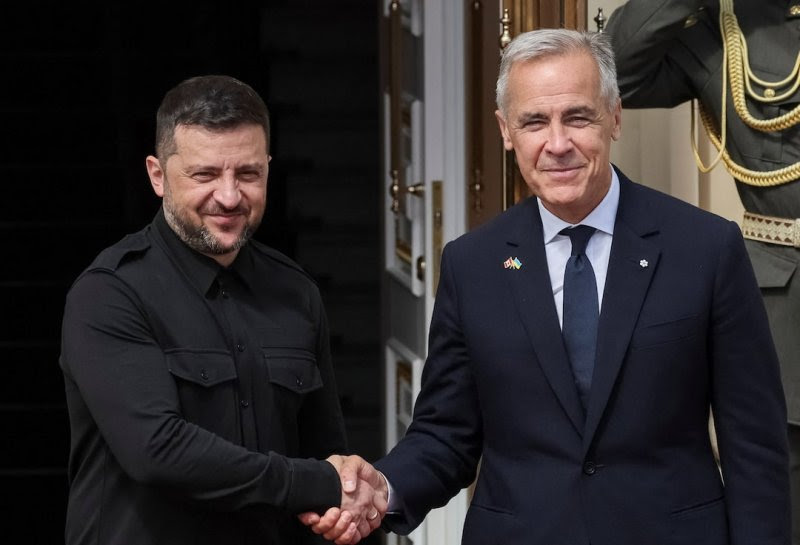
Canada to provide $2.5 billion in economic aid for Ukraine, prime minister says

Is Japan becoming the new strategic counterweight to China in Central Asia?


Editor’s note: Ahmet Sağlam is a specialist in business development, sales and marketing, B2B collaboration, and corporate communications. Most recently, he served as business development and international relations coordinator at the Hacettepe University Technology Development Zone. The views expressed are the author’s own and do not necessarily reflect those of News.Az.
The first leaders-level summit held within the framework of the “Central Asia plus Japan” Dialogue Summit (Central Asia plus Japan Dialogue – CA+JAD) took place in Tokyo on December 20, 2025. The meeting marked a significant milestone by elevating the institutional framework of relations between Japan and the Central Asian states to the level of heads of state.
Hosted by Japanese Prime Minister Sanae Takaichi, the summit was attended by Kazakhstan’s President Kassym-Jomart Tokayev, Kyrgyzstan’s President Sadyr Japarov, Tajikistan’s President Emomali Rahmon, Turkmenistan’s President Serdar Berdimuhamedov, and Uzbekistan’s President Shavkat Mirziyoyev.
Following the dissolution of the Soviet Union, Japan became the first country to initiate a regular dialogue mechanism with the Central Asian states under the “Central Asia + 1” format. The first foreign ministers’ meeting was held in Astana in 2004 under the name “Central Asia + Japan Dialogue,” and this framework remained at the ministerial level for many years. The Tokyo Summit in December 2025 represents a structural transformation by raising this process to the level of heads of state.
 Photo: eureflect.com
Within the framework of the summit, numerous bilateral cooperation documents were signed between Japan and the Central Asian countries, involving both public and private sector actors. These agreements cover a broad range of areas, including political dialogue, trade and economy, energy, infrastructure, agriculture, environment, digitalization, education, health, science, artificial intelligence and technology, and disaster management. The scope of the documents reflects Japan’s multidimensional and cross-sectoral approach toward Central Asia.
A country-by-country review of the signed agreements shows the following:
Between Kazakhstan and Japan, cooperation documents were signed in the fields of trade and economy, energy, including nuclear, environment, agriculture, transportation, digitalization, education, and science. Energy, nuclear technology, and industrial investment featured most prominently.
The agreements between Kyrgyzstan and Japan focused on the prevention of double taxation, energy infrastructure, health, education, disaster management, and space technologies. Infrastructure projects and human capital development emerged as priority areas.
Documents signed with Uzbekistan covered strategic partnership, renewable energy, health, agriculture, water management, digitalization, education, and industry, with energy, health, and higher education projects standing out.
Cooperation between Tajikistan and Japan concentrated on investment protection, energy infrastructure, agriculture, transportation, satellite and climate monitoring technologies, and education. Electricity infrastructure and disaster and climate monitoring projects were particularly prominent.
The agreements between Turkmenistan and Japan addressed energy, petrochemicals, transportation, banking, digital technologies, and higher education. Natural gas and petrochemical projects constituted the main focus areas.
Beyond these bilateral arrangements, one of the most significant regional outcomes of the summit was the announcement by Prime Minister Sanae Takaichi of the “Central Asia plus Japan Tokyo Initiative.” For the Central Asian countries, this initiative represents an important step toward diversifying industrial development through Japan’s technological and institutional support.
In recent years, China’s growing role in Central Asia’s industrial development has increased the region’s external economic dependence. In this context, industrial cooperation projects between Japan and the Central Asian states have the potential to reduce structural dependence on China and contribute to a more balanced regional power structure, particularly in the industrial sphere.
 Photo: Japanese PM's Office
Another strategic balancing element introduced by Japan through this summit is its emergence as an alternative partner, alongside the United States and China, in the development of critical minerals. This creates new opportunities for diversification and negotiation for Central Asia and represents a potential turning point for the region. Central Asian leaders at the summit explicitly welcomed cooperation in critical minerals, particularly within the framework of the “Central Asia plus Japan Tokyo Initiative.”
Another notable feature of the summit was the increased diplomatic-level visibility of the Uyghur Turkic and Uzbek Turkic languages.
Uzbekistan’s President Mirziyoyev was welcomed at the airport in Japan by Deputy Foreign Minister Arfiya Eri, who is of Uyghur origin and Uzbek descent. According to footage shared from Eri’s social media account, Mirziyoyev was greeted in the Uyghur Turkic language. His warm response and conversation with Eri strengthened the summit’s symbolic dimension. The footage’s caption also showed Mirziyoyev telling Eri, “I am proud of you.”
In recent years, Eri, a politician of Uyghur origin and Uzbek descent who has become increasingly prominent in Japanese politics, has played a growing bridge-building role, both symbolically and practically, in relations between Japan and the Turkic-Islamic world.
(If you possess specialized knowledge and wish to contribute, please reach out to us at opin...@news.az).
Comparative analysis: Azerbaijan’s digital modernization and its position among post-Soviet economies

In the 21st century, the global economy is entering a phase in which digital transformation is no longer a supporting factor but has become one of the central pillars of national competitiveness.
Countries increasingly measure their progress not only through traditional development indicators but also through the sophistication of their digital ecosystems, the resilience of their infrastructures, the depth of their innovation cycles, and their ability to cultivate human capital capable of meeting the challenges of an interconnected technological world. It is within this strategic context that Azerbaijan’s newly approved Digital Economy Development Strategy for 2026–2029 represents a decisive step toward building a modern, secure, resilient, and internationally integrated digital environment.
The strategy encompasses six critical domains: the development of digital infrastructure, the digital transformation of business, the creation of an innovation ecosystem, the strengthening of human capital, the formation of a sustainable and green digital economy, and the expansion of international cooperation. The breadth and coherence of this framework underscore Azerbaijan’s intention to move beyond incremental reforms and instead construct a comprehensive digital architecture capable of supporting long-term economic growth and regional leadership.

Photo credit: adventtr | Credit: Getty Images
To fully appreciate the strategic importance of this document, it is essential to view it within the broader regional context, where Kazakhstan, Uzbekistan, Georgia, and Armenia are also pursuing their own digital modernization agendas. Despite their individual strengths, the approaches of these countries vary significantly, and their comparison highlights the distinctive ambitions and advantages of Azerbaijan’s new strategy.
Kazakhstan
Kazakhstan has positioned itself as one of the most active and ambitious players in the digital transformation of Eurasia. Through substantial state investments and the implementation of the Digital Kazakhstan program, the country has broadened access to e-government services, expanded cloud capabilities, and developed several large-scale data centers. The establishment of Astana Hub has further cemented Kazakhstan’s reputation as a regional hub for innovation, attracting startups and technology companies from around the world.
However, despite its achievements, Kazakhstan faces several challenges that limit the consolidation of its digital leadership. The country’s digital infrastructure remains energy-intensive and requires substantial modernization. Integration across its various platforms and databases is less advanced than the level Azerbaijan is aiming for, and the country’s reliance on imported technologies exposes vulnerabilities that complicate long-term planning. Azerbaijan’s strategy, particularly its emphasis on building a secure, cohesive technological platform in cooperation with the financial sector, demonstrates a more mature and synchronized approach to digital governance.

Photo credit: rmmagazine.com
Uzbekistan
Over the past several years, Uzbekistan has undergone a dynamic period of reforms that have accelerated the digitalization of public services, expanded technological education, and encouraged the growth of IT entrepreneurship. New technology parks, collaborations with South Korean and Chinese tech companies, and the introduction of digital literacy programs in schools reflect the country’s determination to join the broader technological transformation taking place across Eurasia.
Yet Uzbekistan’s digital landscape, while developing quickly, is still marked by fragmentation and uneven integration. Many of its digital solutions function in isolation rather than within a unified ecosystem. Mechanisms that support the digitalization of small and medium-sized enterprises remain limited, and the analytical tools necessary for businesses to manage and optimize digital processes are still at an early stage of development.
By contrast, Azerbaijan’s strategy envisions a comprehensive transformation of the business sector, including a national system for assessing digital maturity, a unified digital registry of entrepreneurs, and sophisticated analytics platforms designed to modernize business operations across the country.
Georgia
Georgia has earned a strong reputation as one of the region’s pioneers in electronic government, having introduced advanced digital public services earlier than many of its neighbors. The country’s streamlined business registration processes and its citizen-friendly digital platforms have long been considered a model for public administration reform.
Nevertheless, Georgia’s innovation sector has not expanded at a similar pace. Its system of support for digital transformation in the private sector remains limited in scope, and the number of technology parks and research centers capable of fostering large-scale innovation is relatively small. While Georgia has laid the administrative foundation for a digitally enabled society, Azerbaijan’s strategy aims to build not only a functional but a deeply layered innovation ecosystem that includes accelerators, research partnerships, grant programs, and long-term initiatives for scientific collaboration. This reflects a broader vision that extends beyond public digital services to encompass the structural transformation of the entire economy.
Armenia
Armenia is often praised for its strong IT talent pool, with many highly skilled programmers and engineers contributing to global technology firms or founding startups with international potential. This success is due in part to Armenia’s long-standing tradition of excellence in mathematics and engineering, as well as the active role played by its global diaspora.
However, despite its human capital advantages, Armenia lacks a coordinated and comprehensive digital development strategy. Public sector digitalization efforts remain uneven, investment in digital infrastructure is comparatively modest, and innovation initiatives tend to be concentrated in narrow sectors rather than integrated into a national framework.
Political uncertainties in recent years have also discouraged large-scale foreign investment in the technology sector. Against this backdrop, Azerbaijan’s structured, government-led strategy, which combines infrastructure, innovation, sustainability, and international connectivity, presents a more consistent and forward-looking foundation for long-term digital transformation.
Azerbaijan’s strategic advantages in the regional digital race

Photo credit: Azernews
A comparison with its regional neighbors highlights several strategic advantages that position Azerbaijan as one of the most promising actors in Eurasia’s digital transformation.
First, Azerbaijan places strong emphasis on modernizing its digital infrastructure, including upgrades to cloud systems, improved cybersecurity, and the creation of an integrated technological environment closely linked with the financial sector. This coherence sets a higher standard for digital governance in the region.
Second, unlike many countries that treat e-government as the core of digitalization, Azerbaijan aims to transform the business sector itself. The focus on SMEs — the engines of job creation and innovation — reflects an understanding that broad-based digital adoption is essential for long-term competitiveness.
Third, Azerbaijan’s innovation agenda is not limited to isolated initiatives. Instead, it seeks to establish a multilayered ecosystem that includes incubators, research institutions, grant programs, and international partnerships, forming a solid platform for sustainable technological development.
Fourth, the strategy recognizes human capital as a central pillar of national progress. Educational programs in digital skills, cybersecurity, artificial intelligence, and advanced IT disciplines are designed not only for major urban centers but also for regions, including recently liberated territories. This inclusive approach broadens the country’s technological base.
Fifth, Azerbaijan is pioneering the integration of sustainability and digitalization, promoting green technologies, energy-efficient data centers, and the development of digital resilience standards — an area where many regional states have only begun initial steps.
Finally, Azerbaijan’s multi-vector international integration distinguishes it from its neighbors. While Kazakhstan focuses primarily on Asia, Georgia on Europe, Armenia on diaspora networks, and Uzbekistan on eastern partnerships, Azerbaijan seeks to develop all vectors simultaneously. Its participation in the Middle Corridor, cooperation with Türkiye, engagement with European institutions, and growing ties with the United States and Asian partners place the country at the center of major transcontinental digital and logistical routes.
Azerbaijan’s Digital Economy Development Strategy for 2026–2029 represents one of the most ambitious and comprehensive digital modernization frameworks in the region. It addresses infrastructure, business transformation, innovation, education, sustainability, and international integration as interdependent components of a single strategic vision. When compared with analogous initiatives in neighboring states, Azerbaijan’s approach appears more structured, future-oriented, and resilient.
This strategy not only strengthens Azerbaijan’s internal technological capacity but also elevates its geopolitical significance as a digital hub and a key connector between continents. In the coming years, it will serve as a foundational blueprint for transforming the nation’s economic landscape and for positioning Azerbaijan as one of the leading digital economies of Eurasia.
Bakı. TurkicWorld:

TurkicWorld xəbər verir ki, məktubda deyilir:
"Mərhəmətli və rəhmli Allahın adı ilə!
Zati-aliləri.
Təbiətin yenidən canlandığı, firavan gələcəyin ümidli şəfəqi və Hicri-şəmsi təqvimi ilə 1404-cü ilin başlanğıcı olan Novruz bayramı münasibətilə Sizi və Azərbaycan Respublikasının hörmətli xalqını səmimi-qəlbdən təbrik edirəm.
Bahar təbiətin ahənginin təcəssümüdür, mehribanlıq, şəfqət və həyatın yenilənməsinin mənbəyidir. Ümid edirəm ki, bu yeni il bizim ölkələrimizin dost münasibətlərinə müstəsna transformasiya gətirəcək və xalqlarımızın rifah və firavanlığına xidmət edəcək.
Uca Allahdan Zati-alinizə cansağlığı və uğurlar diləyir, Azərbaycan Respublikasının xalqına isə xoşbəxtlik və tərəqqi, o cümlədən Novruz bayramını qeyd edən xalqların regionunda əlaqələrin və əməkdaşlığın daha da genişləndirilməsini arzulayıram".
Türkiye's FM Hakan Fidan: Türkiye must lead peace push as global system weakens
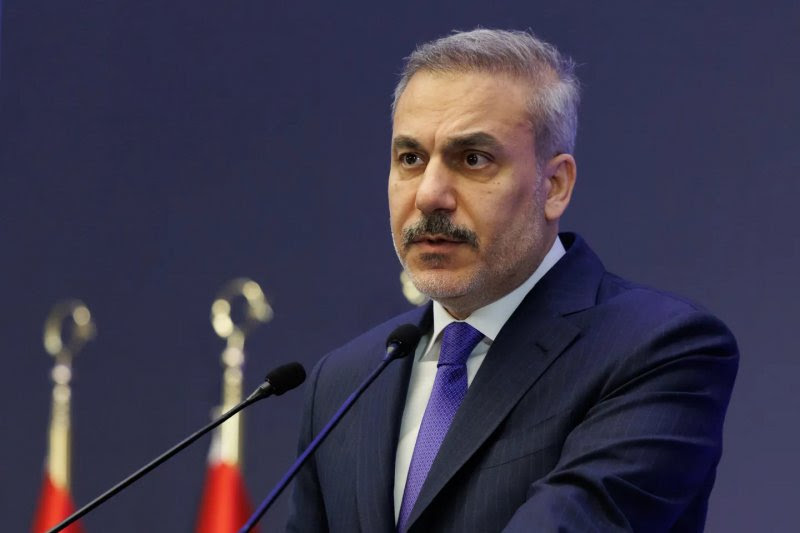
Foreign Minister Hakan Fidan stated that Türkiye must take the lead in fostering peace, stability, and prosperity using its own diplomatic tools, especially as the international system becomes increasingly dysfunctional.
Speaking at the opening of the 16th Ambassadors Conference in the capital Ankara on Monday, Fidan said existing global mechanisms have become paralysed and are no longer capable of resolving crises, News.Az reports, citing Turkish media.
He stressed that the era of shaping policy using concepts produced by others and within boundaries drawn by others is over.
“In an environment where the international system is blocked and solution mechanisms are paralysed, we have to build peace, stability, and prosperity ourselves through our diplomatic tools,” Fidan said.
Drawing attention to the increasingly unpredictable global landscape, Fidan said the role of diplomats has become more vital than ever, as they are tasked with distinguishing qualified information from misinformation and understanding not only what is said, but what is truly meant in international capitals.
He highlighted Türkiye’s proactive and multidimensional foreign policy, noting that Ankara is strengthening its role as a regional and global actor capable of shaping order rather than merely reacting to crises.
“We are building a respected and leading Türkiye that produces security and prosperity in its immediate region, strengthens its order-shaping role at the regional and global levels, increases its market share and competitiveness in international trade, and is able to offer its own original political and cultural contribution to the international system," he said.


OSCE Minsk Group dissolved: Azerbaijan declares new reality

Editor’s note: Faig Mahmudov is a journalist based in Azerbaijan. The views expressed are the author’s own and do not necessarily reflect those of News.Az.
The dissolution of the OSCE Minsk Group is not merely the closure of a formal structure; it marks the definitive end of a long-running model of “managed instability” in the South Caucasus. For more than three decades, this mechanism stood at the center of international diplomacy, yet it failed to deliver either a just settlement or a credible mediation framework. What happened today is, in essence, the complete collapse of a mediation architecture designed and maintained by major powers — the United States, Russia and France. For Azerbaijan, this is not only the end of an outdated mechanism, but also the international confirmation of the new geopolitical reality that Baku itself created. Azerbaijan ended this game through its own will and strength.
When the Minsk Group was established in 1992, it was, on paper, meant to facilitate a diplomatic solution to the Armenia–Azerbaijan conflict. The political weight of the three co-chairs was supposed to ensure results. In reality, however, the platform quickly became an arena for geopolitical rivalry among the great powers. The United States and France politically shielded Armenia, while Russia viewed the South Caucasus as an integral part of its sphere of influence. Under such conditions, real and fair mediation was impossible. Azerbaijan warned for years that the Minsk Group was not solving the conflict — it was freezing it. Thirty years of experience proved Baku right.

Source: Radar Armenia
President Ilham Aliyev made this point explicitly in late 2020 during his meeting with the co-chairs. His remarks reflected the essence of the problem: the conflict had already become history, and the Minsk Group had played no meaningful role in resolving it. It had the mandate, it had the time and it had the resources, but it had no results.
One of the most problematic aspects of the Minsk Group was its attempt to equate the aggressor with the victim. Under the label of a “balanced approach,” Armenia’s occupation was downplayed while Azerbaijan was expected to defend its legitimate rights alone in international arenas. The group’s supposed neutrality distorted the essence of the conflict and effectively shielded Armenia from responsibility. This was not mediation; it was a mechanism that kept the situation stagnant and unresolved.
Another fundamental flaw was the lack of pressure tools. The co-chair states had enough leverage to compel Armenia toward a constructive solution, yet none of them used it. Armenia served as a symbolic partner for the West, and for Russia the presence of unresolved tension in the region was a convenient means of influence. As a result, the Minsk Group had no incentive to resolve the conflict; its very existence depended on the continuation of the conflict.

Source: AzerTAG
After the 2018 change of power in Armenia, the situation became even worse. The new government increased its maximalist rhetoric, attempted to legitimize separatist structures and introduced impossible demands. The negotiating process became practically meaningless. The co-chairs issued repetitive statements, made symbolic visits and maintained the illusion of activity, while Azerbaijan increasingly moved toward a real solution.
The 44-day Patriotic War was the moment the Minsk Group lost all political legitimacy. Azerbaijan changed the status quo through its own strength, liberated its occupied territories and restored full control over its borders. What the Minsk Group failed to achieve in 30 years, the Azerbaijani Army achieved in 44 days. From that moment on, the group had no mandate, no subject and no function. The conflict was resolved — not by diplomacy, but by justice restored on the battlefield.

Source: Trend
After the war, President Ilham Aliyev’s message to the co-chairs — “I did not invite you here” — was an ultimatum expressed in diplomatic language. It signaled that the Minsk Group was finished both politically and practically. Between 2023 and 2025, the group became entirely irrelevant, and even Armenia was forced to accept this reality during the Washington process. Finally, in 2025, the OSCE Ministerial Council formally confirmed the group’s dissolution. This was more than a procedural step; it was the official recognition of Azerbaijan’s diplomatic victory.
Today, there is no conflict in the region, no separatism and no platform where the Minsk Group could play even a symbolic role. The new regional reality has been shaped, implemented and secured by Azerbaijan. Order in the South Caucasus is now determined not by external powers but by the region itself, and first and foremost, by Azerbaijan.
The dissolution of the Minsk Group marks the end of a thirty-year diplomatic burden for Azerbaijan. It is both liberation from an ineffective past and acknowledgment of a new regional order. It is the triumph of Azerbaijan’s sovereign foreign policy and the collapse of outdated mediation monopolies. Azerbaijan closed a frozen diplomatic chapter and drew the new political map of the South Caucasus with its own hands.
(If you possess specialized knowledge and wish to contribute, please reach out to us at opin...@news.az).

Kyrgyz president begins first visit to Pakistan in 20 years
- Central Asia
- Share

Kyrgyzstan's President Sadyr Japarov began his two-day maiden visit to Pakistan on Wednesday, marking the first visit by a Kyrgyz president to the South Asian country in 20 years.
Japarov was welcomed by the Pakistani Prime Minister Shehbaz Sharif and President Asif Ali Zardari upon landing at the Nur Khan Air Base in Rawalpindi, just next to the capital Islamabad, News.Az reports citing foreign media.
The Kyrgyz president is expected to meet Zardari, hold delegation-level talks with Premier Sharif, and also address the Pakistan-Kyrgyzstan Business Forum during the visit, Pakistan's Foreign Ministry said in a statement.
The two countries will review the "full spectrum of bilateral relations and explore new avenues to further deepen cooperation across diverse sectors," including trade, energy, defense, education, people-to-people exchanges, and regional connectivity.
This visit, while highlighting "the brotherly ties between Pakistan and the Kyrgyz Republic, rooted in shared history, faith, and common aspirations for peace and prosperity in Central and South Asia," is also expected to "impart fresh momentum to bilateral cooperation and reinforce collaboration at regional and multilateral forums," the ministry said.
The last Kyrgyz presidential visit to Pakistan took place in January 2005.
Complete guide to Caspian Sea environmental crisis

The ecological crisis unfolding in the Caspian Sea has become one of the most pressing environmental challenges in Eurasia, affecting Azerbaijan, Kazakhstan, Turkmenistan, Russia, and Iran.
This unique body of water—the world’s largest enclosed basin—has for centuries been a source of biodiversity, economic prosperity, and strategic opportunity. Today, however, accelerating climate change, unsustainable resource management, industrial pollution, and declining water levels are pushing the Caspian toward a dangerous threshold, beyond which the damage could become irreversible. Understanding the crisis requires a holistic view that spans hydrology, climate science, biology, energy policy, and geopolitics.
The most alarming trend is the rapid decline in water levels. Over the past several decades, the Caspian Sea has steadily retreated, and scientists warn that it could fall by 9 to 18 meters by the end of the century if current patterns continue. The causes are interconnected: reduced inflow from the Volga River, higher temperatures across the region, increased evaporation, and a disrupted water balance. Because the Volga contributes about 80% of the Caspian’s freshwater, any climatic shift in its basin immediately affects the sea. Extended droughts in Russia, record-breaking summer heatwaves, and declining precipitation are accelerating this downward spiral. Kazakhstan is already witnessing severe shallowing in the northeastern Caspian, where former coastal zones are turning into salt flats, destroying spawning grounds and upending local economies that depend on fishing and maritime transport.
Rising temperatures and changing water chemistry have intensified ecological stress. The Caspian has warmed by nearly 2°C in recent decades, a dramatic shift for a closed marine system. This has had devastating consequences for endemic species. The Caspian seal—one of the region’s most iconic mammals—has suffered a catastrophic decline of more than 90% over the past century. Mass die-offs now occur almost annually, driven by pollution, viral outbreaks, and the deteriorating quality of the water that seals depend on for survival. The collapse of such a keystone species is more than symbolic; it signals a broader destabilization of the sea’s ecological pyramid.
A similar fate threatens the Caspian’s legendary sturgeon populations, which once supported a global caviar industry. Historically, the region supplied up to 90% of the world’s black caviar. Today, overfishing, poaching, habitat destruction, hydropower dams, and falling water levels have pushed sturgeon to the brink of extinction. International organizations classify them among the most endangered fish groups on the planet. While fishing bans exist, they remain insufficient without unified law enforcement, reliable monitoring, and a coordinated regional strategy.
Industrial pollution continues to compound the crisis. The Caspian is at the heart of a major oil and gas extraction zone, with offshore and coastal infrastructure stretching across multiple countries. Aging pipelines, routine leaks, and periodic spills have degraded water quality and coastal ecosystems. Beyond hydrocarbons, the sea receives agricultural runoff, heavy metals, and untreated industrial waste carried by rivers from inland territories. These pollutants accumulate in seabed sediments, creating long-term toxicity that suppresses marine life and disrupts food chains.
The ecological decline carries serious socio-economic consequences. Falling water levels threaten ports, coastal infrastructure, and transport corridors. Key hubs—including Baku, Aktau, Turkmenbashi, Atyrau, and Astrakhan—are already facing operational challenges as shorelines recede. Maritime navigation becomes more difficult, dredging costs soar, and entire logistics chains are forced to adapt. For countries prioritizing the development of the Middle Corridor as a strategic East–West route, the Caspian’s transformation represents a direct economic risk.
Against this backdrop, regional governments increasingly acknowledge the urgency of coordinated action. Yet political declarations have not transformed into a consistent, binding environmental framework. Existing intergovernmental structures lack strong enforcement mechanisms, real-time monitoring capabilities, and cross-border ecological accountability. Environmental experts argue for a comprehensive governance model similar to successful frameworks in the Baltic or Mediterranean regions—an institutional system that integrates scientific data, surveillance, and joint decision-making.
Promising areas for cooperation include unified climate research programs, shared water-level monitoring networks, cross-border operations against illegal fishing, and the modernization of environmental legislation. Rebuilding ecosystems will require long-term investments, from sturgeon repopulation initiatives to the protection of seal habitats and coastal biodiversity. The region can also benefit from international scientific partnerships, climate finance, and technology transfer supporting sustainable water management and advanced pollution control.
The Caspian Sea crisis is not merely an environmental issue; it is a multidimensional challenge that touches on national security, economic stability, energy policy, food systems, and the geopolitical landscape. If current trends continue, the Caspian could face a fate similar to that of the Aral Sea—one of humanity’s greatest ecological disasters. Unlike the Aral, however, the Caspian still has time to avoid catastrophe, but the window for action is rapidly closing.
The future of the Caspian depends on a fundamental shift in policy priorities. States must treat environmental protection not as an auxiliary concern but as a core strategic imperative. Investments in scientific research, sustainable fisheries management, climate adaptation technologies, and environmentally responsible energy extraction are essential. Saving the Caspian Sea means safeguarding the livelihoods, cultural heritage, and economic futures of millions of people for whom this body of water is not just a geographical feature, but an integral part of identity, history, and prosperity.
The South Caucasus is closer to peace than ever — If the world allows it

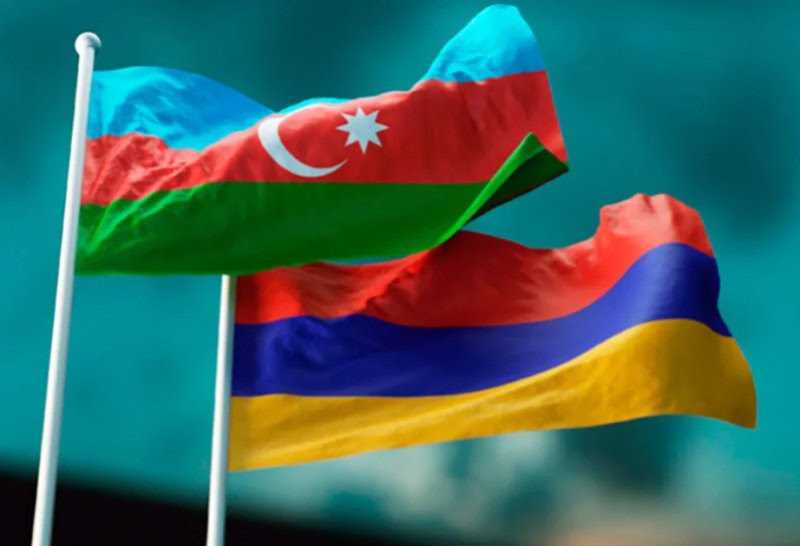
Editor's note: Abulfaz Babazade is a scientist, Japanese scholar, and political observer, as well as a member of the Union of Journalists of Azerbaijan. The views expressed in this article are the author’s own and may not reflect the position of News.Az.
For decades, the South Caucasus was viewed as a frozen conflict zone — a geopolitical grey area where violence could erupt at any moment and where peace was discussed far more often than it was genuinely pursued. International actors alternated between neglect and last-minute crisis management, while regional dynamics remained hostage to narratives shaped in the 1990s. Yet today, the region stands at a turning point more profound than anything witnessed since the breakup of the Soviet Union. What recently occurred between Armenia and Azerbaijan would have been dismissed as unrealistic only a few years ago: the Armenian deputy prime minister traveling to Azerbaijan, the two sides meeting to advance border delimitation, and most striking of all, discussing bilateral trade, including the potential export of Azerbaijani oil and petroleum products to Armenia.
These are not symbolic gestures for the cameras. They signal that both nations are finally capable of shifting from inherited hostility to pragmatic cooperation. Even the discussion of grain transit through Azerbaijan — whether from Kazakhstan or Russia — points to the same conclusion: peace is no longer an abstract diplomatic aspiration but an emerging ecosystem of shared interests. Economic interdependence, not ideology, is beginning to define the future.
None of this happened overnight. The five years since the 2020 war have involved difficult, often exhausting diplomacy. Dozens of meetings, technical negotiations, seemingly insurmountable disagreements, and political compromises requiring courage on both sides gradually built the foundations of a new reality. The real inflection point came when Azerbaijan put forward a draft peace treaty grounded in five fundamental principles of interstate relations. By doing so, Baku shifted the process from vague political intentions to concrete structure. Without this document, the peace trajectory would likely still be trapped in a cycle of symbolic statements and postponed expectations.
The decisive acceleration arrived when President Donald Trump’s administration re-engaged in the process, bringing Washington’s political weight back into the region in a meaningful way. Trump’s personal involvement signaled something essential: the United States was once again willing to act not as a distant observer, but as a country ready to provide guarantees, apply pressure when needed, and help both sides navigate difficult decisions. For Azerbaijan, this alignment was natural — Baku had long argued that durable peace in the South Caucasus required active U.S. participation, not out of favoritism but because Washington was uniquely positioned to enforce accountability and prevent backsliding.
The results followed quickly. Beginning in February and March, U.S.–Azerbaijan and U.S.–Armenia engagement intensified, converging into a coherent diplomatic corridor. A milestone came in Abu Dhabi, where negotiations between Armenian and Azerbaijani officials lasted more than five hours — an unprecedented display of sustained dialogue. The core parameters of what would become the Washington Agreement were shaped there. And despite the reluctance of some critics to acknowledge it, Trump’s role was pivotal. Without his willingness to apply political pressure and invest personal capital, the agreement might still be circulating in draft form.
 On August 8, 2025, Azerbaijan, the U.S. and Armenia signed the Washington Declaration (Photo: AZERTAC)
The decision to sign the peace agreement in the Oval Office was not political theater. It served a strategic purpose: to eliminate ambiguity, bind both sides to their commitments, and signal to the world that the era of sporadic mediation and endless provisional arrangements was over. In diplomacy, visibility is sometimes a form of enforcement. A public ceremony imposes a political cost on any attempt to reverse what has been agreed.
Still, the most important lesson is that Armenians and Azerbaijanis had to assume ownership of the process. No external power — not Washington, Brussels, or Moscow — could impose peace or manufacture reconciliation. The two countries had to demonstrate their capacity to negotiate directly, maintain an uninterrupted dialogue, and present their agreement as the product of shared political will. Bilateral engagement ultimately proved far more effective than the multilayered, often contradictory formats of earlier years.
Yet this is where global actors risk a damaging mistake. Peace can be undone not only by tanks or drones but also by careless rhetoric and outdated narratives. Analysts, civil society groups, and international organizations often cling to simplified storylines developed decades ago. These narratives may be emotionally resonant, but they distort present realities and can shape policy in counterproductive ways.
This issue surfaced at the Doha Forum during a conversation with Tucker Carlson, whose segment unintentionally echoed obsolete frames that no longer reflect regional dynamics. To his credit, Carlson acknowledged the problem. But the broader challenge endures: the international community must stop reanimating a past the region is finally leaving behind.
 Construction of the Zangezur Corridor is underway on the Azerbaijan-Armenia border (Photo: Screengrab)
The economic stakes could not be higher. Peace requires dividends; otherwise, it will not last. The South Caucasus needs investment, infrastructure, and connectivity. It needs accelerated development of the Zangezur Corridor — not as a geopolitical instrument but as a practical artery for trade, mobility, and long-term stability. The region must become a platform for cooperation rather than a battleground for competing narratives.
For once, the South Caucasus offers something extraordinarily rare: a protracted conflict that is genuinely closing. One long, painful chapter is ending. At a time when war dominates headlines from Europe to the Middle East, the Armenia–Azerbaijan peace process serves as a reminder that diplomacy can succeed when political will aligns with strategic maturity.
It has always been easier to talk about war than peace. For years, meetings between Armenians and Azerbaijanis revolved around grievances, losses, and unresolved trauma. Now, for the first time in a generation, they revolve around possibilities — economic openings, new corridors, joint projects, and the vision of a region no longer defined by conflict. The world should take note, and more importantly, it should not get in the way.
(If you possess specialized knowledge and wish to contribute, please reach out to us at opin...@news.az).
Bu haftaki KÖŞE YAZI'mı ekte gönderiyorum.
İyi çalışmalar dilerim.
TÜRK SİYASET VE GÜVENLİK AKADEMİSİ LİSTESİ
- KUMSAL KATLİAMI NASIL OLDUProf. Dr. Ata Atun, AkademisyenTarih 24 Aralık 1963, günlerden Salı. Yer Lefkoşa’nın Kumsal bölgesi,Mehmet Akif Caddesi ve Mürüvet İlhan Sokak (olay günkü ismi İrfan BeySokak). Saat akşam üstü 18.00 civarı. Hava kararmış, ısı yaklaşık 8oC.Pazartesi gecesi, yani bir gün evvelki 23 Aralık gecesi, ev sahibi HasanYusuf Gudum, karısı Feride Hasan Gudum, Meriç’li (eski ismi Mora) Ayşe(Cankan), kucağında iki yaşındaki kızı Işıl (Cankan) ve Ayşe hanımın kızkardeşi Növber İbrahimoğlu daha güvenli olduğu düşüncesi ile Kıbrıs TürkAlayında görevli Tabip Binbaşı (Em. TuğGn) Nihat İlhan ile eşi Mürüvethanımın evine sığınmışlardı.EOKA milisleri ve Yunan Subaylarının komutasındaki küçük bir Rumbirlik ise evin 120 m. kuzeyindeki Severis un fabrikasına mevzilenmiş,fabrikanın en üst katına da kum torbalarından yüzü Türk bölgesine dönükküçük bir korugan yaparak içine 1 adet A4 tipi makineli tüfek yerleştirmişti.A4 tipi makineli tüfek binanın damına, ellerinde 1959 yapımı CZ vz.52/57 tipiotomatik tüfek, 1936/57 yapımı M1 Garand tipi yarı otomatik tüfek veStengun makineli tabanca olan Rum çetecilere, masum Türk evlerineyaptıkları saldırılarda atış desteği vermek ve düşman ateşinden korumakamacı ile kurulmuştu.Hasan Yusuf Gudum dışarıda durup bir nevi gözcülük yaparken,Mürüvet hanım da çocuklarını pijamalarını giydirmiş, kahvaltı türü bir şeyleryedirmiş ve onları yatırmaya hazırlanıyordu. Evdeki komşu hanımlar ise hepbirlikte yiyecek bir şeyler hazırlayıp masaya oturmuşlardı.Evin batı tarafından geçen Kanlıdere’nin diğer kıyısından silah sesleriduyulmaya başladığı vakit Hasan Bey büyük bir telaşla içeri girmiş ve“Rumlar bizi basıyor” diyerek heyecanlı bir şekilde bağırarak evdekileriuyarmıştı.Çok geçmeden Kanlı Dere tarafından eve kurşun yağmaya başladı.Kurşunlar yağmur gibi geliyordu. Mutfağın önündeki yemek odasınıntehlikeli olduğunu ve eve pencerelerden giren kurşunlardan kendilerinikoruyamayacağını hisseden masum ve savunmasız dokuz insan, elektriklerikapattılar ve evin güvenli olduğunu düşündükleri yerlerine saklanmakçabası içine girdiler.Dr. İlhan’ın eşi Mürüvet Hanım, eşi kendisine “Eğer ateş olursaduvardan duvara geçecek kurşunlara hedef olmazsınız, banyo sizi korur”dediği için hemen daha 6 aylık olan Hakan’ı kucaklar, 6 yaşındaki Murat ile 4yaşındaki Kutsi’yi de ellerinden sıkı sıkı tutarak evin sol arka köşesinde yeralan banyoya doğru koşar. Arkasından Növber hanım ve kucağında kızı Işıl’ısıkı sıkı tutan Ayşe hanım ve Hasan dede, hep birlikte banyoya girerler vesaklanmaya çalışırlar. Kalın taş duvarları ve küçük de bir penceresi olanbanyo gerçekten de iyi bir korugan gibidir.
- Not: Bu yazıda anlatılan “Kumsal Katliamı”nda geçen olayların derlemesi,
- SAMTAY VAKFI arşivindeki belgelerin ve o günü yaşayan kişilerin anılarının,Prof. Dr. Ata ATUN tarafından derinlemesine incelenip, kronolojik olaraksıralanması ile yapılmıştır.
- Prof. Dr. (İnş Müh), Doç. Dr. (UA. İliş.) Ata ATUNAkademisyen


