
AI and Children – 5 Critical Dangers

Junaid Tahir
AI and Children – 5 Critical Risk Areas To Address
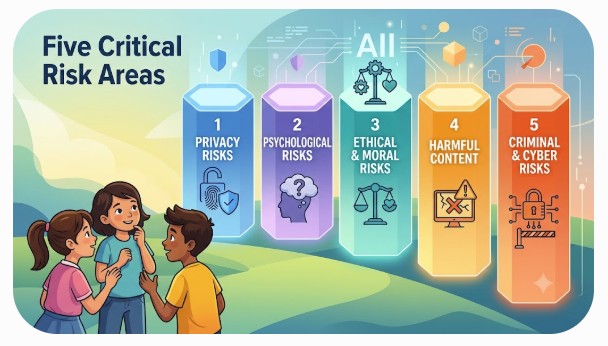
AI and Children – 5 Critical Risk Areas To Address
Table of Contents
Introduction
Artificial Intelligence is rapidly becoming part of childhood. Unlike previous technological revolutions, AI is not limited to specialists or professionals. It is available to almost anyone with a smartphone, often at little or no cost. Children can use AI to ask questions, generate content, solve problems, write code, create images, and seek advice at any time of day.
The benefits of AI are widely recognized and extensively discussed. This article deliberately focuses on another side of the conversation: the risks that AI presents to children and teenagers, and the collective responsibility required to reduce those risks.
The purpose is not to create fear of AI. Nor is it to discourage innovation. Instead, it is to encourage thoughtful action before isolated incidents become widespread societal problems.
Every new technology has introduced new risks. Automobiles led to seatbelts and traffic laws. Medicines require child-resistant packaging. The internet led to parental controls, online safety education, and cybersecurity measures.
Artificial Intelligence deserves the same level of attention.
عقلمند میاں بیوی ایک دوسرے کیلئے بننے سنورنے اور خوبصورت دکھنے کا اہتمام کرتے ہیں بیوقوف میاں بیوی اظہارِ محبت اور تعریف کو بیکار سمج...

عقلمند میاں بیوی ایک دوسرے کیلئے بننے سنورنے اور خوبصورت دکھنے کا اہتمام کرتے ہیں
بیوقوف میاں بیوی اظہارِ محبت اور تعریف کو بیکار سمجھتے ہیں
بیوقوف میاں بیوی اپنے رشتے کی بنیاد رسومات، گناہوں، اور، خواہشاتِ نفس پر رکھتے ہیں
بیوقوف میاں بیوی ایک دوسرے کے حریف اور مقابل ہوتے ہیں
بیوقوف میاں بیوی ایک دوسرے کا مذاق اڑاتے اور تذلیل کرتے ہیں
بیوقوف میاں بیوی اظہارِ محبت اور تعریف کو بیکار سمجھتے ہیں
بیوقوف میاں بیوی اپنے اختلافات دنیا کے سامنے ظاہر کرتے ہیں
بیوقوف میاں بیوی چھوٹی چھوٹی باتوں پر رائی کا پہاڑ بنادیتے ہیں
بیوقوف میاں بیوی انا پرستی میں گھر تباہ کرلیتے ہیں
بیوقوف میاں بیوی ایک دوسرے کو کنٹرول کرنے کی کوشش میں رشتہ تباہ کرلیتے ہیں
بیوقوف میاں بیوی بات بات پر جھگڑ کر تنہا رہ جاتے ہیں
بیوقوف میاں بیوی ہر وقت اس فکر میں رہتے ہیں کہ کس طرح دوسرے سے زیادہ سے زیادہ فائدہ حاصل کرلیں
بیوقوف میاں بیوی ایک دوسرے کے ماں باپ کو بوجھ سمجھتے ہیں
عقلمند میاں بیوی تمام دنیا کے مقابلے میں ایک دوسرے کا ساتھ دیتے ہیں
بیوقوف میاں بیوی دوسروں کو ایک دوسرے پر ترجیح دیتے ہیں
بیوقوف میاں بیوی آپس کے جھگڑوں اور بدسلوکی سے اولاد کو بھی تباہی کے راستے پر ڈال دیتے ہیں