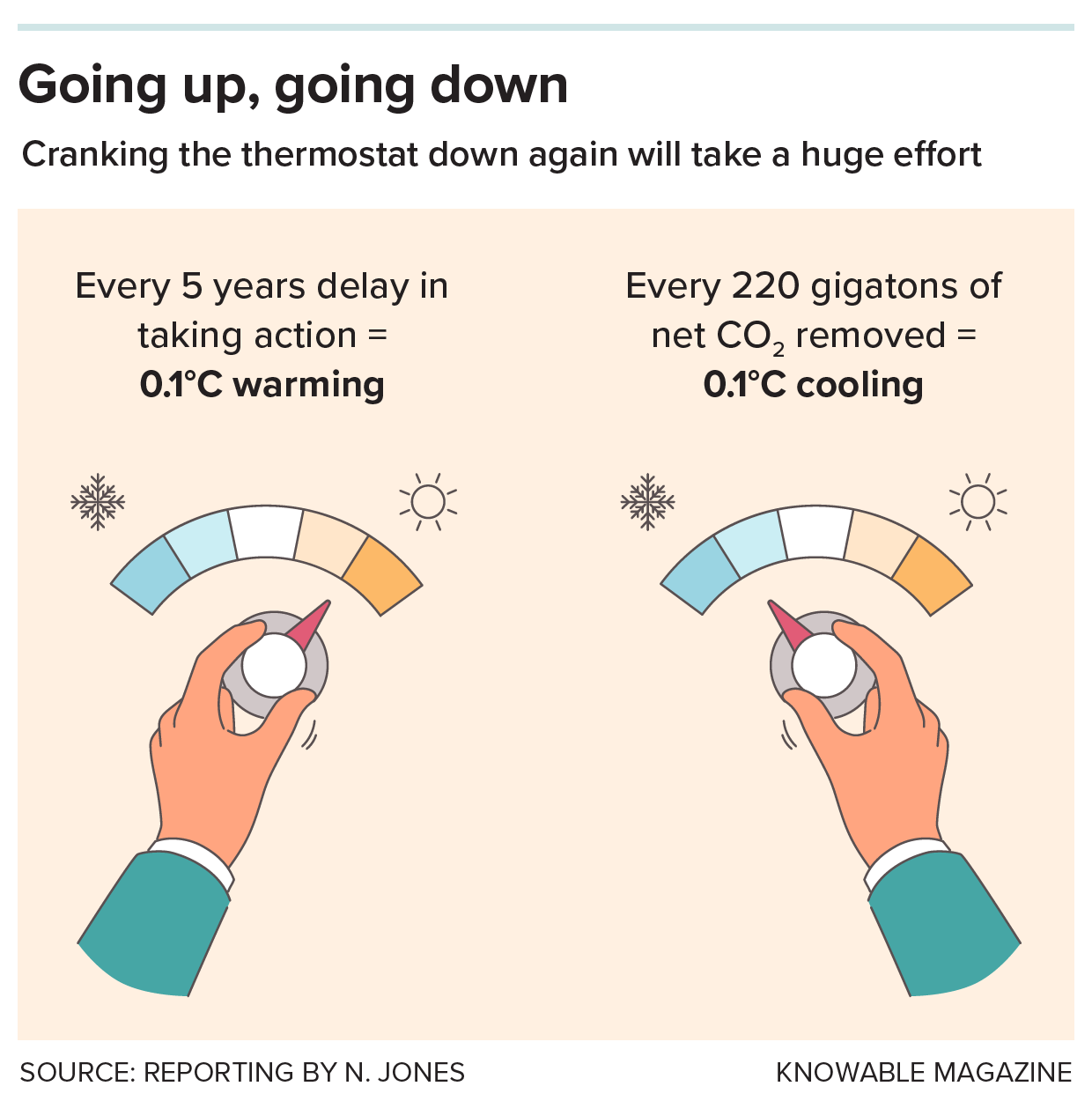
| | | | Links to recent scientific papers, web posts, upcoming events, job opportunities, podcasts, and event recordings, etc. on Carbon Dioxide Removal TechnologyScientists estimate that for every five years of ongoing emissions at current levels adds about 220 gigatons of carbon dioxide and 0.1 degrees C of eventual global warming. If we continue planting trees at the current rate, stop all deforestation and bring emissions to net zero, it would still take 100 years to soak up 220 gigatons of carbon dioxide and bring the average temperature down 0.1 degree. (Source)JUMP TO SECTIONTHIS WEEK’S TOP CDR HIGHLIGHTSWorld’s First Surficial Mineralization Hub: Frontier, in partnership with Carbon Removal Canada, has launched the world’s first surficial mineralization hub in Quebec, using mine tailings to permanently store CO₂. The facility aims to enable low-cost, scalable CDR testing and support early-stage innovation. Applications for pilot and research projects are now open, with pre-applications due by May 26, 2026. Commercial News: Octopus Energy Generation announced to invest $500 million in U.S. afforestation and reforestation projects developed by Living Carbon, alongside ~$13 million into its CDR business. The funding is expected to enable up to 50 million tonnes of CO₂ removal over 40 years, roughly equivalent to New York City’s annual emissions. Ecosystem Restoration Bond: World Bank launched $120 million ecosystem restoration bond backed by Amazon carbon removal deal. Request for Proposals: Carbonaires has launched a new RFP aimed at bringing offtake-backed financing into high-quality CDR projects. The initiative targets engineered and nature-based CDR projects, including biochar, DAC, BECCS, and afforestation. Eligible projects must have at least $3M in signed or imminent offtake agreements, with financing structured case-by-case against those contracts to improve bankability and scale deployment. Projects submission deadline: 22 May 2026 New Initiative: Carbon to Sea Canada has launched new collaborative ocean-based carbon removal initiatives in Halifax, bringing together researchers, innovators, and policymakers to advance ocean alkalinity enhancement research, testing, and governance for scalable climate solutions. Report: A new Senate of Canada report explored how ocean alkalinity enhancement could help remove carbon dioxide from the air and store it in the ocean over the long term. The committee urges the federal government to advance research, regulation and collaboration to scale this technology and strengthen Canada’s leadership in marine carbon removal. Read on to unpack more updates: This newsletter is free to read, but not free to produce. Please consider a paid subscription to support our independent reporting. Donate < $10 Get 20% off a group subscription COMMERCIAL NEWS RESEARCH PAPERSAuthors: Nathielly P. Martins, Lucia Fuchslueger, Laynara F. Lugli, et al.Synopsis: In this experiment in the Amazon rainforest, elevated CO₂ (~+300 ppm) was tested in a phosphorus-limited forest understory. Results show plants adjusted root strategies differently across litter and soil layers: litter roots increased foraging efficiency, while soil roots enhanced mycorrhizal associations. However, elevated CO₂ intensified phosphorus competition, reduced soil organic P, and strengthened nutrient constraints, potentially limiting the forest’s long-term carbon sink capacity.
Authors: Chunhong Huo, Shijie Zhou, and Ping HuangSynopsis: This idealized study examines how CDR affects seasonal sea surface temperature (SST) patterns in the tropical Pacific. Even when returning to a 2°C warming target, the El Niño–Southern Oscillation–like warming response differs between CO₂ increase and decrease phases. During CDR (CO₂ ramp-down), stronger warming occurs in boreal autumn–winter due to shifts in wind patterns, ocean circulation, and a southward shift of the Intertropical Convergence Zone, altering ocean heat redistribution.
Authors: Donald Edward Martocello, Thomas Storwick, Carolyn BuchwaldSynopsis: This perspective examines efforts to develop a credible carbon credit framework for macroalgae-based CDR. Although Macroalgae Cultivation is widely proposed as a scalable ocean CDR pathway, field validation and agreed crediting standards remain limited. The attempt highlights major scientific and practical challenges, emphasizing the need for public investment, improved monitoring (including satellite remote sensing), and advanced computational tools such as AI to enable reliable and scalable macroalgae CDR systems.
Authors: L. Tesch, B.S. Bandarra, H. Craveiro, H. GervásioSynopsis: Portugal forests may be a net carbon source rather than a sink. An improved model accounting for wildfires and logging shows emissions of ~2500 kt CO₂ annually since the early 2000s, contradicting near-neutral official estimates. Underestimated wildfire impacts and data gaps distort inventories, highlighting the need for better monitoring, accounting, and climate-adaptive forest management.
Authors: Jordan Hood Miller, Trond Kristiansen, and Dr. Momme ButenschönSynopsis: Marine Carbon Dioxide Removal needs scalable modeling to assess impact and verify carbon credits. This study introduces the Lagrangian Flux Decomposition framework, which efficiently tracks air–sea CO₂ flux changes using stochastic particle methods. It enables high-resolution global analysis, quantifies uncertainty, and supports planning, monitoring, and verification of mCDR projects.
Authors: Le Bienfaiteur Sagang, Ricardo Dalagnol, Lee White, et al.Synopsis: This study shows land-use change strongly shapes carbon dynamics in the Congo Basin. Logged forests hold ~8% less aboveground carbon, while degraded areas lose up to 50%. Despite pressures, the region remains a net carbon sink, driven mainly by old-growth forests, logging concessions, and protected areas. Sustainable forest management is critical to maintaining carbon storage and mitigating emissions.
Authors: Maria-Elena Vorrath, Johannes, Meyer zu Drewer, Ingrid Smet, et al.Synopsis: This study examines combined land-based carbon dioxide removal using Enhanced Rock Weathering and Pyrogenic Carbon Capture and Storage. Results show that co-applying biochar with minerals (especially Mg-rich rocks like peridotite and basanite) can enhance alkalinity production and carbon sequestration, though outcomes vary by material type. While some combinations improve stable carbon storage, others reduce geogenic carbon sinks, highlighting strong trade-offs in ERW–PyCCS integration.
Authors: Endre Tvinnereim, Gisle Andersen, Christine Merk, Marie Louise Ljones and Åsta Dyrnes NordøSynopsis: This study simulates a public deliberation process in Norway on CDR technologies. Using online groups and surveys, it finds that deliberation significantly increases participants’ support for Bioenergy with Carbon Capture and Storage while reducing “don’t know” responses across CDR options. Discussions focused on feasibility, effectiveness, and risks, highlighting deliberation as a useful tool for informing public engagement in net-zero policy design.
Authors: Sara L. Seck, Cecilia EnglerSynopsis: This article examines governance of Marine Carbon Dioxide Removal in a fragmented international legal context. It argues that a human rights-based approach—grounded in instruments like the UN recognition of the right to a clean, healthy and sustainable environment and business and human rights principles—should guide states, companies, and researchers. Such frameworks aim to ensure mCDR development does not impose disproportionate burdens on present or future generations.
Authors: Haris IshaqSynopsis: In this study, integrating Geothermal Energy with Direct Air Capture and district heating creates a carbon-negative system. It captures ~666.6 tCO₂/year while supplying heat to 124 households. Results show performance depends on geothermal conditions, with optimized pressures improving CO₂ capture efficiency and system reliability.
Authors: Andrea Conti, Luca Lezuo, Alexander Hoheneder, et al.Synopsis: This study investigates how Wollastonite captures CO₂ at the atomic scale. Using Noncontact Atomic Force Microscopy and Density Functional Theory, it shows that a stable water layer on the mineral surface enables nearly barrier-free CO₂ chemisorption and carbonate formation. The findings reveal a water-assisted, gas-phase carbonation pathway that supports long-term carbon sequestration without requiring full mineral dissolution.
Authors: Rosalia Shiimi, Will Savage, Evangelos Mouchos, Ottomar Brussee, Erik Ronne, Steven PearceSynopsis: This EU-funded pilot within the C-SINK project tests ERW in mine tailings at Kevitsa Mine. A monitored test cell tracks CO₂, O₂, and geochemical changes to quantify carbon dioxide removal and carbonate formation. The study develops a scalable monitoring, reporting, and verification (MRV) framework linking pore-scale chemistry and gas fluxes to long-term carbon storage in tailings facilities.
Authors: Robert W. Buchkowski, Alexander Polussa, Mark A. BradfordSynopsis: Using data from the Canada’s National Forest Inventory, this study assesses how well soil carbon changes can be detected over time. High spatial variability in soil carbon makes small changes difficult to measure, with minimum detectable differences exceeding typical long-term trends. Simulations suggest that more sampling and subsampling could improve detection, while some observed trends may reflect statistical artifacts rather than real changes, highlighting challenges in national soil carbon accounting.
Authors: Alireza Zabihihesari, Will Burt, Colin Sonnichsen, et al.Synopsis: This study reports the first field use of an autonomous Lab-on-a-Chip system during an Ocean Alkalinity Enhancement trial using magnesium hydroxide. High-frequency in situ measurements showed a ~40 µmol/kg increase in total alkalinity and evidence of cumulative “system memory,” where alkalinity did not return to baseline between dosing events. The results demonstrate that autonomous sensing can capture fine-scale variability needed for monitoring, reporting, and verification of ocean-based carbon dioxide removal.
Authors: Arathi Chandran, Ashok KumarSynopsis: Soil Carbon Sequestration is a key climate solution, with soils storing far more carbon than the atmosphere. However, land-use change and intensive agriculture have weakened this sink. Emerging Nanotechnology approaches—using materials like nano-biochar and graphene—can enhance carbon stability, improve soil health, and address limits of conventional sequestration methods.
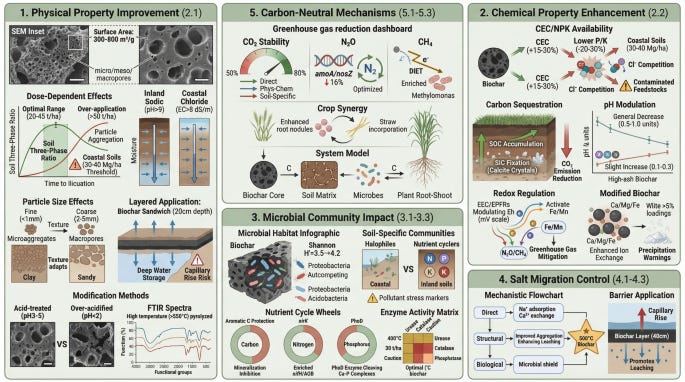
Authors: Xingyao Meng, Liuxia Li, Hanjie Yang, Zifan Huang, Jinglin Li, Pan Wang & Lianhai RenSynopsis: This study presents that biochar offers strong potential for saline-alkali soil restoration and carbon sequestration. It improves soil properties, supports plant growth, regulates microbial nutrient cycles, and alters salt dynamics. Biochar also stores carbon directly and reduces Nitrous Oxide and Methane emissions, forming an integrated soil-amendment and climate mitigation pathway.
The Effect of Biochar on Saline-alkali soil Amelioration and its Carbon Sequestration and Emission Reduction Effects (Source)WEB POSTSShare REPORTSShare Carbon Removal Updates UPCOMING EVENTSMay 2026June 2026We have curated a “Carbon Removal Events Calendar.” Explore and stay informed about upcoming events, conferences, and webinars on Carbon Dioxide Removal technology. Sync specific events / all events to your default calendar to ensure you never miss out on important CDR updates. Carbon Removal Events Calendar Add our Carbon Removal Events Calendar to your default calendar in 2 ways:Sync specific event: Click the event → menu (≡) → Share → choose your calendar → Save.Or sync all events: Menu (≡) → Preferences → iCalendar Feeds → Copy URL → Add to your calendar settings → Subscribe.JOB OPPORTUNITIES“Duke University is seeking an entrepreneurial and strategic leader to help build and launch its Marine Carbon Dioxide Removal (mCDR) Hub. The Managing Director will work closely with Duke faculty across multiple schools to develop a bold research portfolio, secure sustainable funding, convene global leaders, and position Duke as a trusted authority on responsible marine carbon dioxide removal. This role is ideally suited for a mission-driven professional who thrives at the intersection of science, policy, and strategy, and who is excited to build something new with the potential for global impact.”
“Patch exists to rebalance the planet by making environmental commodities easier to understand, trust, and buy at scale. Their platform routes hundreds of millions of dollars into carbon removal, renewable energy, sustainable aviation fuel, and other environmental markets.”
“Brineworks is building the electrolyzer of the future — a patented system that powers ultra-low-cost Direct Air Capture using intermittent renewables and low-cost abundant materials.”
“Mission Zero Technologies is a London-based climate-tech start-up, working to reframe how the world views carbon in order to enable a thriving planet. Since 2020, we have pioneered the world’s most versatile direct air capture (DAC) technology to recover historic CO₂ emissions from the atmosphere, anywhere, at any scale.”
“Onnu’s mission is to deliver what the world needs most – substantial and scalable carbon removal.”
“Mati Carbon is an award-winning durable carbon removal enterprise with a mission to empower 100 million smallholder farmers by 2040.”
“Terradot’s mission is to stabilize Earth’s climate by transforming nature’s most powerful permanent carbon removal process into a global climate solution.”
“Planetary Technologies’ vision is to protect and restore the ocean and climate for generations to come. We do this by enhancing the ocean’s natural ability to fight climate change through carbon dioxide removal and storage.”
“As spin-off from the TU Munich, Reverion is a tech-driven climate startup paving the way to 100% renewable, decarbonized future by making the most of biogas.”
“Nordic Carbon develops scalable biochar solutions that turn agricultural and forestry residues into permanent carbon removal.”
“AirCapture provide commercial and industrial customers Beverage Grade CO2 captured from the atmosphere to radically disrupt legacy distribution models – giving you control of your supply chain, securing your CO2 and operations.”
“Climeworks is a leading high-quality carbon removal provider, combining decades of expertise in DAC technology with a holistic approach to carbon removal solutions.”
Looking for your dream job in CDR? There are 548 jobs available *right now*: check them all out at: CDRjobs Board PODCASTS“In the final episode of our CDR Buyers Deep Dive, Tom and Emily ask what needs to change if carbon removal buying is going to move from early adopters to something much bigger. What would make buying easier, less risky, more attractive, and more scalable? And what happens when the market’s biggest buyer suddenly causes a wobble?”
Hasan Muslemani speaks to Naser Odeh about ex-situ enhanced mineralisation (ESEM) - an emerging carbon removal solution with strong potential to support climate targets.
“Lizzy Aldrich of Anew Climate joins us to break down what’s changing in carbon markets—and what “high-integrity” supply looks like on the ground. We dig into why forestry remains central, how RNG projects pencil out, and what the shift toward insetting means for corporate climate plans. Plus: Carbon Bridge, a deferred-payment approach to help companies move faster toward 2030 targets.”
“In this episode, Alexandra Luca talks with Chris Slater, CEO of Oka - a leading carbon insurance provider supporting credits in the initial phase of the Carbon Offsetting and Reduction Scheme for International Aviation (Corsia). They discuss Oka’s current insurance-based credits pipeline, recent challenges for insurers, and future developments in the Corsia market.”
“In this episode, Shauna Matkovich joined by Julia Strong, Founder and Executive Director of Symbiosis Coalition. In this conversation, Julia explains how buyer-led demand can help scale high-integrity forest carbon projects and mobilize capital into nature-based carbon removal. We talk about the role of long-term offtake agreements, the quality criteria Symbiosis uses to evaluate developers, and the common reasons projects fall short in the RFP process. Julia also shares what investors and project developers need to understand about readiness, benefit sharing, and the future of forest carbon as an investable asset class.”
Carbon removal is stuck in low earth orbit. Here’s how we get out. | Carbon Curve The Carbon Curve The Carbon CurveEpisode 64 is with Dr. Julio Friedmann, Chief Scientist at Carbon Direct… 4 days ago · 1 like · Na’im Merchant “In this episode, Na’im speaks with Dr. Julio Friedmann about Carbon Direct’s recent publication “ 5 Pillars of Successful Project Deployment and Delivery” on what the carbon dioxide removal industry needs to de-risk projects in order to attract new buyers and to stand up infrastructure-scale carbon removal projects.”
“Martin Freimüller is the co-founder and CEO of Octavia Carbon, a direct air capture company in Kenya. He’s been listening to this show since 2020 and credits it, generously, with pulling him into carbon removal in the first place.He’s also someone who thought I’d taken a wrong turn lately with grim prognostications, and he had an idea he wanted to talk through.His pitch: carbon dioxide removal is the prodigal son, and it’s time to come home. We’ve spent the last few years building CDR as a separate category, defining ourselves against the “legacy” voluntary carbon market, trashing clean cooking credits and REDD+ and Verra and basically everyone who came before us.Martin thinks that was a mistake, and he includes himself in the indictment. He was on stage a year ago telling investors about DAC’s explosive growth. Now he’s calling clean cooking founders and asking who their buyers are.He shared some numbers that caught my attention: there are roughly 200 corporates that have ever bought carbon removal. There are about 35,000 buying carbon credits more broadly, and about 3 million individuals. Article 6.2 bilateral deals and 6.4-based transactions are quietly channeling tens of millions of tons of demand per year. The broader VCM is growing. CDR is not, at least not in real revenue recognized terms. Martin’s argument is that instead of fighting over the tiny pot of dedicated CDR buyers, we should be figuring out how to sell into the market that actually exists and is expanding.”
“Gabrielle Walker. You probably know her as a scientist, author, science communicator, co-founder of CUR8 and Rethinking Removals. She has spent three decades at the intersection of climate science and storytelling. Too much to confine to a 30 minute episode.Introducing our new series, Digging Deep, we kick off our special long-form conversation where Sebastian Manhart and Eve Tamme have the privilege to go beyond the usual format to go deeper into the person. How Gabrielle thinks, her lived experiences, and how it has shaped her work in carbon removal and beyond.The conversation moves from her earliest encounters with nature, through years as a science journalist at Nature and the BBC, multiple expeditions to Antarctica, and a career pivot from covering climate change to trying to solve it. Gabrielle reflects on what it means to hold doubt as a strength, how she has changed her mind on some of the biggest questions in CDR, and why she believes curiosity may be the most underrated skill in the field.The discussion also gets practical: what it actually takes to move corporate buyers toward carbon removal, why the narrative needs to shift, and how Gabrielle thinks about building markets that can unlock real capital for the people building solutions.”
“Who should hold permanence liability, for how long, and how?In this episode of the CDR Policy Scoop, Eve and Sebastian speak with Natalia Dorfman has spent the last four years building Kita into the carbon market’s leading insurance specialist. She make the case that the market is finally ready to move beyond buffer pools, and that the tools to do it already exist.Natalia draws a sharp distinction between short and long-term liability windows, explains why buffers were a necessary starting point but were never designed for perpetuity, and lays out why standards don’t actually want to be holding that risk.That sets up the main event: the Permanence Trust, a feasibility study led by the American Forest Foundation with Kita as a supporting partner. The idea is straightforward in principle, an endowment-style fund that grows to cover reversals over time. But the questions around standards buy-in, cost structure, and what “replacement” actually means for capital markets are anything but. Natalia takes them head on.”
YOUTUBE VIDEOSCHAR: Fighting Wildfires with Biochar | Carbonfuture “A film by Carbonfuture & Ibero Massa FlorestalNarrated by Sebastian Manhart, Senior Policy Advisor, CarbonfutureEvery year, wildfires burn hundreds of thousands of hectares across Portugal, releasing carbon that took decades to store. Ibero Massa Florestal decided to do something about it.“CHAR” takes you to the forests, factory, and farms of Portugal, where Ibero Massa Florestal has built something rare: a solution that reduces wildfire risk, regenerates degraded soils, supports rural communities, and removes carbon from the atmosphere.”
Exomad Green × Supercritical: Inside the 500,000-Tonne CDR Deal and the Maturing Carbon Market | Exomad Green “In this deep dive, Exomad Green and Supercritical unpack their landmark agreement covering 500,000 tonnes of carbon removal and what it signals for the future of the carbon market.We explore how buyer behavior is evolving, and how the market is rapidly maturing toward rigor, verification, and long-term climate impact—featuring insights inspired by perspectives from some of the world’s leading carbon dioxide removal (CDR) suppliers.”
Biochar Carbon Removal: Finally Ready for Primetime? with Alan Ransil | Climate Chat “In this Climate Chat episode, host Dan Miller interview Devonian Systems co-founder and CEO Alan Ransil about their approach to producing biochar. Biochar is produced when biomass is burned without the presence of oxygen, a process know as pyrolysis. Wood treated this way is also known as charcoal. Biochar is a very stable form of carbon and, therefore, it is a way to sequester CO2 from the atmosphere. While biochar has been produced for thousands of years, it is yet to scale up to a major climate solution. Devonian systems hopes to change that.”
Amazon Forest Root Adaptations to Elevated Carbon Dioxide | Remove and Reflect Podcast “This episode covers a study that examines how Amazonian understory forests adapt their phosphorus acquisition strategies in response to elevated CO2 levels. Using open-top chambers near Manaus, researchers discovered that plants employ spatially divergent root adaptations to overcome nutrient scarcity. In the litter layer, roots become longer and thinner to increase foraging efficiency, while soil-based roots shift toward collaborative strategies by increasing mycorrhizal colonization. The findings also reveal a significant reduction in soil organic phosphorus, suggesting intensified competition between plants and microorganisms. Ultimately, the research indicates that the Amazon’s ability to act as a carbon sink depends heavily on these flexible biological mechanisms for securing vital nutrients.”
The GigaTen Episode #17 | Tree+ “In this 17th Episode of The GigaTen, we get into the details of CDR policy around the world and with a touch at the finish on the Microsoft pause.”
AirMiners: What’s Hot in Carbon Doxide Removal, April 2026 | AirMiners Leaning on uncertainty: How Europe’s flawed approach to carbon removals threatens the climate | Carbon Market Watch “To reach their climate targets, European governments are increasingly relying on technologies and processes to remove CO2 from the atmosphere. Carbon dioxide removal (CDR) is idealised as a readily available and reliable method and has been adopted in various European climate strategies.However, CDR is more difficult to implement than is often assumed and presents significant challenges. If deployed correctly, as a supplement to emission reductions, it can help the European Union reach climate neutrality. But, CDR can undermine and impede real climate action if it becomes a substitute for, rather than a supplement to, rapid, deep, and sustained emissions reductions.This event was hosted by MEP Lena Schilling (Green/EFA) and marked the launch of Carbon Market Watch’s Leaning on Uncertainty reports, which assess the reliance of European countries and the European Union on carbon removals and land-based carbon sequestration. We explored not only what the findings reveal about current trends and risks, but also what they mean from a legal and political perspective, examining legal guardrails to CDR and implications for the post-2030 climate policy package in the European Union.”
What About Carbon Removal? Climate solution or corporate distraction? | Fossil vs Future “To mitigate climate change, we must reduce new emissions. But what about the greenhouse gases already in the atmosphere? And what about the emissions that we can’t easily reduce with existing technologies?In this episode, James and Daisy discuss carbon dioxide removal (CDR). How is it done? What does it cost? And do we really need it?”
NIM Industry Insights Series - Beyond Capture: CO₂ Mineralisation and Carbon Circularity | Net-Zero Industries Mission “The NIM Industry Insights webinar “Beyond Capture: CO₂ Mineralisation and Carbon Circularity for a Net-Zero Industry”, held on 21 April 2026, brought together 90 participants from over 14 countries to explore how CO₂ mineralisation and carbon circularity can support industrial decarbonisation. A key message emerged throughout the session: CO₂ should no longer be seen as waste, but as a resource. From permanent storage to the production of valuable materials, innovative approaches are transforming carbon into a building block for a net-zero industry.Experts from industry, research, and policy shared insights into real-world projects already scaling globally, from Iceland to Saudi Arabia and China, and discussed both the challenges and opportunities of moving from pilot to industrial deployment. The session highlighted the importance of combining technical feasibility with economic viability to accelerate implementation and underlined the growing role of international collaboration in advancing carbon management solutions.”
Turning Roads Into Carbon Sinks: The Low Carbon Materials Story | Blue Earth “In this episode, Natasha Boulding, co-founder and CEO of Low Carbon Materials and Blue Earth BE100 winner, shares how her team is transforming the built environment into part of the climate solution, starting with a carbon-negative aggregate used in roads, concrete, and infrastructure.From spinning out of academia to delivering over 40 real-world construction projects, Natasha breaks down the journey from lab to large-scale deployment, the challenge of breaking into a risk-averse industry, and why scaling production is the next big unlock.With demand already outpacing supply, this conversation explores how Low Carbon Materials is building trust, driving adoption, and shaping the future of sustainable construction at scale.”
The Future of Marine CDR: Scaling Ocean Alkalinity Enhancement with Planetary | Nature Tech Collective “This session, hosted by Amal Ketata (Founder & CEO, Nui) and Paige Perillat Piratoine (Community Lead, Nature Tech Collective), is part of the Ocean Series Webinar co-organized by the Nature Tech Collective and Nui.The discussion focuses on marine carbon dioxide removal (mCDR) and, in particular, on Ocean Alkalinity Enhancement (OAE), one of the most advanced and scalable approaches in this field.”
From Forests to Coastlines: A Deep Dive into Symbiosis’s Updated Quality Criteria | Symbiosis Coalition “In this webinar, Symbiosis presents a deep dive into our updated Quality Criteria, now expanded to include mangrove restoration alongside reforestation and agroforestry. The updated criteria strengthen guidance across the Symbiosis quality pillars, reflect the latest science and input from experts across academia, NGOs, and the private sector, and lay the groundwork for our upcoming mangroves RFP.This webinar explores the science and thinking behind our updated criteria, and what it signals for the future of nature-based carbon removal.”
Weekly Carbon Removal Updates from 27 April - 03 May 2026 | Carbon Removal Updates BulletinDEADLINESFollow us on:Twitter | Bluesky | LinkedIn | YouTube | Substack | Podcast 1 | Podcast 2
Support us here:Support This Newsletter Share Carbon Removal Updates © 2026 Carbon Removal Updates
548 Market Street PMB 72296, San Francisco, CA 94104
Unsubscribe 
| |
  |
|