| Links to recent scientific papers, web posts, upcoming events, job opportunities, podcasts, and event recordings, etc. on Carbon Dioxide Removal Technology.🚨DEADLINES“AirMiners Launchpad engages with entrepreneurs in an intensive six-week program for early carbon removal teams or individuals striving to advance their startup to remove carbon from the atmosphere.”
Focus: Nature-positive CDR, sustainable management of ecosystems, nature as infrastructure, regenerative agriculture, and circular nature-positive solutions
💸COMMERCIAL NEWSShare Carbon Removal Updates 📝RESEARCH PAPERSBouaboula, H., Chaouki, J., Belmabkhout, Y., & Zaabout, A. (2024). Comparative review of Direct air capture technologies: From technical, commercial, economic, and environmental aspects. Chemical Engineering Journal, 149411.
Ganti, G., Gasser, T., Bui, M., Geden, O., Lamb, W., Minx, J., ... & Gidden, M. (2024). Carbon dioxide removal deployment consistent with global climate objectives.
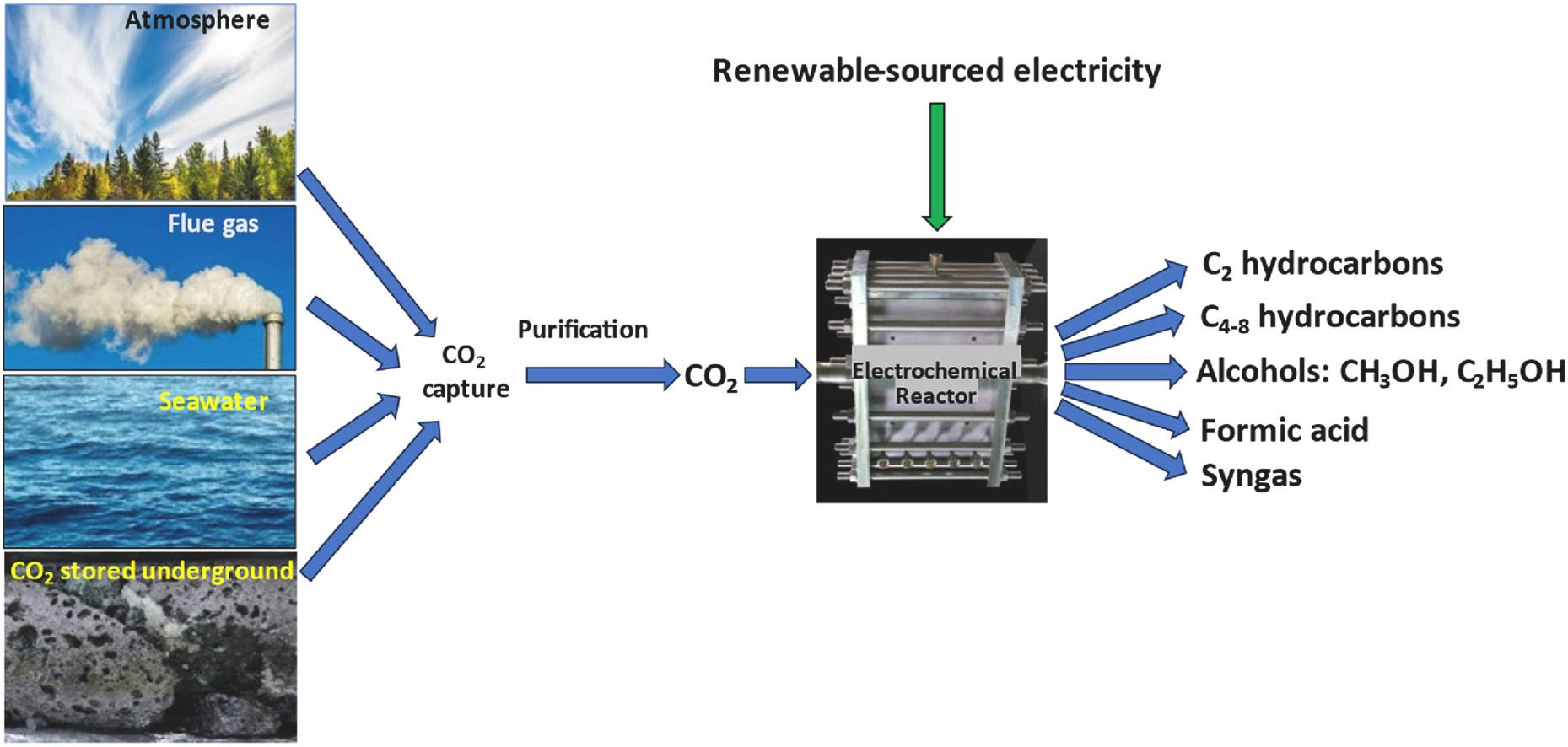
Lowy, D. A., Melendez, J. R., & Mátyás, B. (2024). Electroreduction of carbon dioxide to liquid fuels: A low-cost, sustainable technology. Renewable and Sustainable Energy Reviews, 194, 114300.
Zaid, O., Alsharari, F., & Ahmed, M. (2024). Utilization of engineered biochar as a binder in carbon negative cement-based composites: A review. Construction and Building Materials, 417, 135246.
Afrane, S., Ampah, J. D., Yusuf, A. A., Jinjuan, Z., Yang, P., Chen, J. L., & Mao, G. (2024). Role of negative emission technologies in South Africa's pathway to net zero emissions by 2050. Energy for Sustainable Development, 79, 101401.
Miura, H., Kigo, Y., & Terada, A. (2024). Effectiveness of biofilm scouring in improving the carbon and nitrogen removal performance of membrane-aerated biofilm reactors installing novel high oxygen-transfer polyethylene membranes. Journal of Water Process Engineering, 59, 104880.
Xie, X., Li, M., Lin, D., Li, B., Li, C., & Liu, D. (2024). CO2 Adsorption by Bamboo Biochars Obtained via a Salt-Assisted Pyrolysis Route. Separations, 11(2), 48.
Shivangi, S., Singh, O., Shahi, U. P., Singh, P. K., Singh, A., Rajput, V. D., ... & Ghazaryan, K. (2024). Carbon Sequestration through Organic Amendments, Clay Mineralogy and Agronomic Practices: A Review. Egyptian Journal of Soil Science, 64(2), 581-598.
de Vriesa, A., Golovizninab, K., Reitera, M., Salanneb, M., & Lukatskayaa, M. R. (2023). Durable Light-Driven pH Switch for CO2 Capture/Release Enabled by Tuning Solvation Environment of Photoacids.
Goldenberg, S. U., Riebesell, U., Brüggemann, D., Börner, G., Sswat, M., Folkvord, A., Couret, M., Spjelkavik, S., Sánchez, N., Jaspers, C., and Moyano, M.: Viability of coastal fish larvae under ocean alkalinity enhancement: from organisms to communities, EGUsphere [preprint]
La Plante, E. C., Simonetti, D. A., Jassby, D., Corsini, L., & Sant, G. N. (2024, February). Seawater Enables High-Quality Carbon Removal. In TMS Annual Meeting & Exhibition (pp. 95-100). Cham: Springer Nature Switzerland.
Keeley, A. R., Chapman, A., Yoo, S., Kurita, K., Kumagai, J., Rinawati, D. I., ... & Managi, S. (2024). Direct Air Capture and Utilization: Life Cycle Assessment and CO2 Reduction Potential Estimation.
van Doorn, E., Marandino, C. A., Peters, A. J., & Keywood, M. (2024). Science, international law, and policy across the air–sea interface. Elementa: Science of the Anthropocene, 12(1).
Koeve, W., Landolfi, A., Oschlies, A., & Frenger, I. (2024). Marine carbon sink after temperature overshoot is dominated by biological pump carbon.
Ribó, E. G., Mao, Z., Hirschi, J. S., Linsday, T., Bach, K., Walter, E. D., ... & Nyman, M. (2024). Implementing vanadium peroxides as direct air carbon capture materials. Chemical Science.
Soinne, H., Hyyrynen, M., Jokubė, M., Keskinen, R., Hyväluoma, J., Pihlainen, S., ... & Heikkinen, J. (2024). High organic carbon content constricts the potential for stable organic carbon accrual in mineral agricultural soils in Finland. Journal of Environmental Management, 352, 119945.
Ojeda, G., Gil, J. M., Mattana, S., Bachmann, J., Quenea, K., & Sobral, A. J. (2024). Biochar ageing effects on soil respiration, biochar wettability and gaseous CO2 adsorption. Mitigation and Adaptation Strategies for Global Change, 29(2), 11.
Cameli, F., Delikonstantis, E., Kourou, A., Rosa, V., Van Geem, K. M., & Stefanidis, G. D. (2024). Conceptual Process Design and Technoeconomic Analysis of an e-Methanol Plant with Direct Air-Captured CO2 and Electrolytic H2. Energy & Fuels.
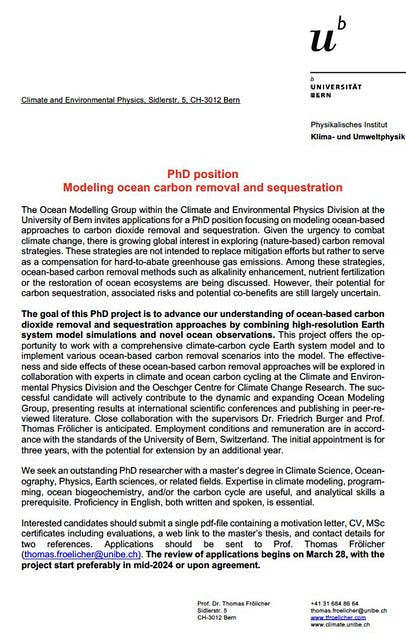
📰WEB POSTS📑REPORTS🗣️DISCUSSIONS🧰CDR FIRMS📆UPCOMING EVENTSWe have curated a “Carbon Removal Events Calendar.” Explore and stay informed about upcoming events, conferences, and webinars on Carbon Dioxide Removal technology. Sync specific events / all events to your default calendar to ensure you never miss out on important CDR updates. Carbon Removal Events Calendar Find sync guidelines in the calendar’s “About” section or you can sync all Carbon Removal events to your default calendars by pressing the link below: Sync CDR Events to your Default Calendar 💼JOBS OPPORTUNITIES“The Kühne Foundation’s work on climate action aims to help decouple the growth of prosperity from greenhouse gas emissions and accelerate the transition to a just, low-carbon society. They therefore work on solutions to reduce emissions, remove carbon, and strengthen resilience; we focus on the role that logistics can play in facilitating the transition; and we use our capacities to support in particular low- and middle-income countries to seize the opportunities of their low-carbon and sustainable development.”
“Groundwork BioAg, a global bioagriculture company, leverages the natural power of mycorrhizal fungi to improve the productivity, sustainability and profitability of commercial agriculture and expand regenerative agriculture practices. Groundwork BioAg is the first to use innovative techniques to solve challenges inherent in high-volume mycorrhizal inoculant production. We will not rest until every hectare of arable land is protected by mycorrhizae and every farmer benefits from higher crop yields while preserving our soils and permanently sequestering carbon.We are looking for a researcher with vast knowledge in soil microorganisms to play a key role in our carbon sequestration project.”
🎙️PODCASTS“Our guest today is Freya Chay, Carbon Removal Program Lead at CarbonPlan, a non-profit organization in the US working on data and science for climate action by improving the transparency and scientific integrity of climate solutions with open data and tools. Carbon Plan and Freya have produced a number of stellar publications and tools, widely regarded in the field and insightfully crafted. Notably, the CDR primer is a bibliography of crucial concepts to understand if one wants to enter the world of CDR. Similarly, the CDR Verification Framework is an insightful and informative tool to explore detailed layers of CDR approaches.
In this episode, we discuss Freya's perspective on barriers to scaling, market responsibilities and market-shaping opportunities. We also discuss uncertainty and opportunities in Monitoring, Reporting and Verification.”
"Carbon is a co-benefit of restoring soil function," Chris Tolles, Yard Stick CEO & Co-Founder | Carbonsations | "Carbon is a co-benefit of restoring soil function," Chris Tolles, Yard Stick CEO & Co-Founder Carbonsations 31:51 |
“On today's episode of the show we are joined by Chris Tolles, CEO and Co-Founder of soil carbon measurement company Yard Stick. Yard Stick approaches measuring soil carbon in a much more scalable and cost-effective way than conventional lab sampling. Chris describes the process and also shares his perspective on carbon farming vs regenerative agriculture, the soil carbon movement at large, and where all of this may be headed in the years to come.”
“Two recent journal publications point to potential risks associated with large-scale carbon dioxide removal (CDR). Is 10 gigatons annually a realistic and sustainable target? Should we aim for 1 gigaton, or could 28 be feasible? What land use and energy limitations are inherent in large-scale CDR, and what policy measures could ensure a just and scientifically rigorous implementation of this emerging technology?In this episode, our Policy Panel discusses both the potential pitfalls and the potential necessity of large-scale carbon removal, as humanity continues to emit over 40 gigatons of CO2 annually (and counting).A must-listen for those who question the viability of CDR as well as those who believe in the "gigatons or bust" approach.”
🎥YOUTUBE VIDEOSDAC Day 2024: Hopes, Hubs, and Hurdles | Bipartisan Policy Center “Direct air capture (DAC) technologies are an essential part of the toolkit needed to reach net-zero emissions, and the United States is leading the world in DAC demonstration and early deployment thanks to key government initiatives like the DAC Hubs and strong private sector investments in carbon removal. However, several challenges and uncertainties must be addressed in the coming decade by industry leaders and policymakers to ensure the long-term success of this technology and to support our climate goals.Join the Bipartisan Policy Center, Department of Energy, and the broader DAC community on February 8 for a discussion on the future of DAC deployment in America, including the need to develop robust markets for DAC services, setting up the DAC Hubs for long-term success, and catalyzing public-private synergies through efforts across the federal government.Programming will include keynote addresses from members of Congress and multiple panels featuring DOE leadership, environmental NGOs, carbon management experts, labor, and the financial community.”
Lawrence Burns talks to CEO of carbon capture pioneer Climeworks | FE Trustnet This Is CDR Ep. 94: Alkali Earth with Dan Maxbauer & Sean McCauley | OpenAir “This week Toby and Megha welcome Dan Maxbauer and Sean McCauley from Alkali Earth to present and discuss the company's novel process which delivers high-quality, permanent, and verifiable CDR through optimized application of alkaline industrial minerals in gravel roads.”
Ocean-Climate Solutions Innovation Exchange | MRV for Ocean-Based CDR: Modeling and Observations | Ocean Visions “The third webinar in a series focused on current innovations in Monitoring, Reporting, and Verification (MRV) for marine carbon dioxide removal (mCDR). In this session we hear from leading scientists Raphael Ouillon (atdepth MRV), Alicia Karspeck ([C]Worthy), and Ellen Briggs (Aquatic Labs) about how modeling and observations are used to quantify, verify, and reduce uncertainty in the deployment of mCDR.”
Carbon is a co-benefit of restoring soil function," Chris Tolles, Yard Stick CEO & Co-Founder | Carbon Herald “On today's episode of the show we are joined by Chris Tolles, CEO and Co-Founder of soil carbon measurement company Yard Stick. Yard Stick approaches measuring soil carbon in a much more scalable and cost-effective way than conventional lab sampling. Chris describes the process and also shares his perspective on carbon farming vs regenerative agriculture, the soil carbon movement at large, and where all of this may be headed in the years to come.”
A Treasure Trove of Data - Open Source and Carbon Dioxide Removal | Carbon Unbound “Is open-source carbon removal data the key to accelerating climate action? Open source is a powerful tool for innovation, and it can play a vital role in accelerating the development and deployment of carbon removal technologies. By sharing data and ideas openly, we can build on each other's work and make faster progress. CDR innovators and academics need to find a way to balance the need to protect intellectual property with the public good of open data. This is essential if we want to achieve gigaton carbon removal by 2050.”
Decarbonizing the West initiative workshop: Commercialization Pathways for Direct Air Capture | Western Governors' Association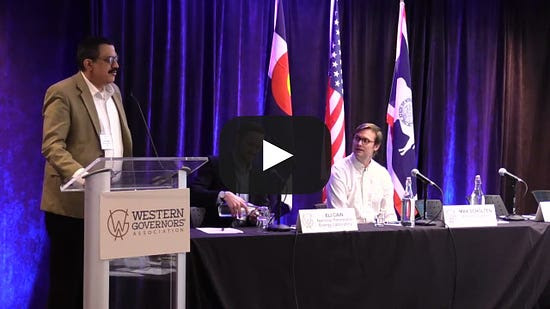 “The direct air capture (DAC) industry is still in its nascent stages, with many new technologies and companies in the early stages of development. Taking these technologies from lab-scale research to large-scale DAC facilities capable of removing gigatons of CO2 requires significant funding and carries a distinct set of risks at each stage. This panel explored pathways to the commercialization of direct air capture and large-scale carbon removal, from the lab to the market.”
Webinar - Will the EU ICMS deliver on the ambition necessary to reach net zero by 2050? | Bellona Europa “Bellona Europa organised a webinar with CCUS Norway, delving into the Industrial Carbon Management Strategy (ICMS) and how it delivers on the EU ambition to achieve net zero target by 2050.”
Climeworks' direct air capture technology - why we need it now | Climeworks “Our direct air capture (DAC) technology is one of the key technological solutions to fight climate change. It captures CO₂ directly from the air, reducing the atmospheric concentration of CO₂ by only using renewable energy, energy-from-waste, or other waste heat as energy sources.”
Carbon Removal through Biochar Application to Farmland | Role biorenew “The Bioeconomy Institute Carbon Removal Team at Iowa State University presents their XPRIZE Milestone award winning biochar plant in Redfield, Iowa, in collaboration with Stine Seed, and Frontline Bioenergy.”
20% Group Subscription Discount Share Carbon Removal Updates Leave a comment © 2024 Carbon Removal Updates
548 Market Street PMB 72296, San Francisco, CA 94104
Unsubscribe 
| |