
(``-_-´´) + BrinKadeiraS: 2505 BrinKadeiraS

(``-_-´´) BrinKadeiraS
BrinKadeiraS
|

|

- (``-_-´´) + BrinKadeiraS: 2504 BrinKadeiraS
- Chrome Ainda Mais Rapido
- Notícias do Dia
- Actual Analysis: Is HTML 5 already outmoded?
- The Economist and Launchpad
- INÊS DE MEDEIROS
- I’m just going to leave these here…
- Top 10 Reasons You Should Quit Facebook
- Momentos da vida de um Apple user
- 10 Things to Try in Google Chrome 5 Beta
- Como Não Escrever uma Notícia
|
(``-_-´´) + BrinKadeiraS: 2504 BrinKadeiraS Posted: 04 May 2010 02:07 PM PDT (``-_-) BrinKadeiraS
////////////////////////////// ///////////// Posted: 04 May 2010 07:00 AM PDT The cable company has an odd description for sesame street Picture by: dunno source Submitted by: nico1234 via Fail Uploader      
 |
|
Posted: 05 May 2010 04:00 AM PDT O Google continua a espremer o máximo do seu browser Chrome, tornando-o ainda mais rápido.
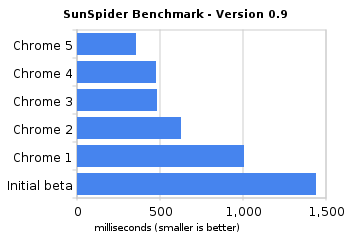 Como todos sabem, o javascript é uma parte cada vez mais importante da web, e tornar-se-á ainda mais fundamental no futuro (com as capacidades do HTML5 e outras que estejam para vir.) Para demonstrar a velocidade, o Google decidiu também utilizar umas técnicas bem originais, que envolvem câmaras de alta-velocidade apontadas para um ecrã LCD a fazer refresh às páginas web. Vejam, que vale a pena. :)    
  
 |
|
Posted: 05 May 2010 07:14 AM PDT Androids a correr Flash, a Intel no sector mobile, os novos Kin da Microsoft, novidades do iPhone OS 4.0, eBooks do Google, e muito mais.
Android Tablet a correr Flash 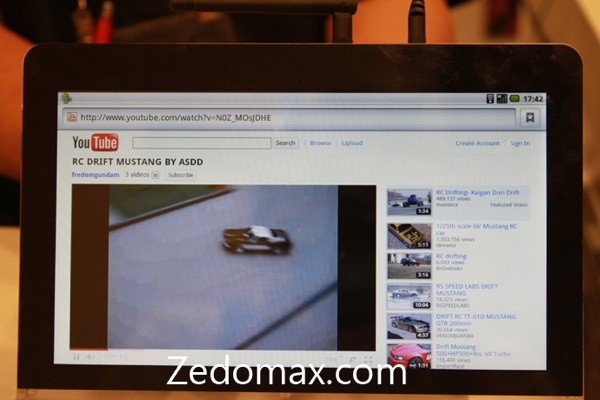 Com a guerra Apple-Adobe relativamente ao Flash a prosseguir a todo o vapor, e com as recentes acusações de que ainda não existia nenhum Flash a correr decentemente num dispositivo "mobile", eis que esta demonstração não poderia surgir em melhor altura: com um tablet Android a correr Flash de forma bastante fluida. A questão que se colocar continua a ser a mesma... trata-se de um protótipo, e ninguém sabe quando é que um tablet deste tipo chegará finalmente ao mercado. (Certamente irá acontecer como os smartphones Android - da total ausência de modelos passaremos a uma "inundação" de dezenas de modelos em poucos meses; mas até lá... o iPad continua a ser o único produto já nas lojas... nos EUA.) Novos Kin Analisados  Para a maioria da população, a decisão a fazer continuará a ser entre iPhone e Android. Atom chega aos Smartphones A Intel é uma das mais poderosas companhias mundias, e domina o mercado dos computadores. Mas com a recente viragem para os mobile, que nos próximos anos se deverão tornar no principal mercado da "computação pessoal", relegando os velhos desktops para segundo plano, a Intel não tinha CPUs apropriados para esta área, dominada pela ARM e inúmero fabricantes. Pois bem, a Intel não perdeu tempo, e agora lança um Atom criado para este tipo de dispositivos, que embora seja mais gastador que os ARM, dizem oferecer um desempenho bastante superior - permitindo que páginas web sejam processadas e exibidas em 2 segundos, enquanto que nos ARM demoram 9 ou 10 segundos. Intel demonstra Lightpeak Enquanto o USB 3.0 só agora começa a chegar até nós, e ainda num conjunnto bastante reduzido de periféricois, a Intel vai aguçando o apetite da tecnologia Lightpeak que utiliza fibra óptica para transferir dados a velocidades de 10Gbps em ambos os sentidos (e com potencial para crescimento quase "ilimitado"). A Intel espera que esta tecnologia possa um dia substituir toda a "fiarada" que temos actualmente nos nossos computadores (USB, DVI/HDMI/Displayport/etc.) Google e os eBooks  O fascínio dos Google pelos livros (e tudo o mais) é bem conhecido, contando com os seus conhecidos projectos de digitalização de livros que por vezes têm sido envoltos em polémica devido aos direitos de autor. O fascínio dos Google pelos livros (e tudo o mais) é bem conhecido, contando com os seus conhecidos projectos de digitalização de livros que por vezes têm sido envoltos em polémica devido aos direitos de autor.No entanto, todos sabemos que o futuro avança neste sentido, e que este tipo de entraves nada mais podem fazer do que adiar o inevitável. O Google pretende agora criar uma loja de eBooks online, o Google Editions, que nos permita adquirir e ler os nossos eBooks onde quer que queiramos. Ao contrário das outras plataformas, que mantêm os eBooks "fechados" nos seus dispositivos, a disponibilização dos livros na web faz com que imediatamente possam ser acedidos em múltiplas plataformas (Kindle, iPad, etc.) - o que não deixa de ser um conceito bem mais agradável do que ficar "preso" a qualquer uma delas. Novidades do iPhone OS 4.0 beta 3 À medida que nos aproximamaos do lançamento oficial da actualização do iPhone OS 4.0, as coisas vão-se afinando. Na mais recente versão beta notam-se algumas alterações interessantes - e outras que parecem ter sido lançadas à pressão. 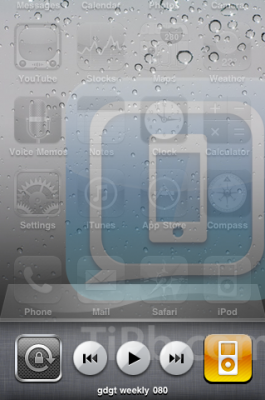 (Quero saber é como irão resolver o caso para quem - como eu - utilizava o duplo clique para ir directamente para a lista de contactos favoritos... ) Os backgrounds e icons utilizados estão também "piores" - e espera-se que sejam alterados na versão final. O dicionário parece estar agora bem mais cooperativo, deixando de corrigir estupidamente algumas palavras como "te->Tê", e outra grande novidade é a introdução de um icon para bloquear a rotação automática do ecrã - finalmente! Embora a rotação seja interessante... torna-se bastante incómoda quando estamos deitados e queremos utilizar o iPhone num único modo sem que esteja sempre a mudar de um modo para o outro.   
  
 |
|
Actual Analysis: Is HTML 5 already outmoded? Posted: 04 May 2010 02:47 PM PDT  
 |
|
Posted: 05 May 2010 04:21 AM PDT
Mark: We’re migrating the existing Economist.com stack from Coldfusion/Oracle to a LAMP stack running Drupal. At present, we’re about half way through — if you visit a blogs page, channel page, or comments page they will be served from Drupal, but the home page and actual articles are still served from Coldfusion. There’s a migration and syncronisation process happening in the background between Oracle and MySQL. Matthew: Is much of your web infrastructure based on open source software? If so, what? Mark: Our new stack sure is!
Matthew: Do you customise much of that? Mark: We do, yes. We’ve sponsored or contributed patches that have mostly been for Drupal but also made their way into Varnish & BCFG2. We use Pressflow, and our changes go there first and often get back ported into core Drupal. Our policy is to open source as much as humanly possible! Matthew: And, of course, I’d love to know what made The Economist chose Launchpad. Mark: We chose Launchpad for its usability, mostly the workflow around reviewing code (merge proposals). It provides excellent tools for managing distributed teams, and we are a very large distributed team, with three locations where development is occurring on either side of the Atlantic. The integration with Bazaar is great, and we are going to consider moving our bug tracker to Launchpad too at some time in the future. Matthew: Thanks Mark!  
 |
|
Posted: 05 May 2010 05:36 AM PDT  Boa tarde, chamo-me Mário Dias e contacto com Vexas para saber se será possível enviarem-me um recibo em falta. Sou amigo pessoal da deputada Inês de Medeiros, tendo conhecimento que esta viajou há pouco tempo para Paris pela vossa agência. Tenho todo gosto em ser um dos Portugueses que paga as viagens semanais desta deputada pois ela não tem culpa de morar em França e ter de se deslocar semanalmente a Portugal para resolver os problemas de um pais em que não reside e cuja resolução seria impossível por pessoas que morem mais perto. Critico os que se revoltam por pagar as viagens da Inês pois ela apesar de viver em França conhece perfeitamente a realidade do povo Português e do nosso Portugal e a grande prova disso é que....vive em França. Divagações à parte, estava aqui a fazer o meu IRS e lembrei-me da possibilidade de colocar as despesas da Inês de Medeiros, que eu tão orgulhosamente pago nas deduções a efectuar no que vou ter que pagar ao Estado. Preciso no entanto do recibo pelo que solicitava que me dissessem se há possibilidade de me passarem o mesmo durante o dia de amanhã segunda-feira. Caso não o possam fazer terei de indagar a Senhora Deputada sobre outras agências de viagens que ela tenha contactado para deste modo ter o meu direito aos recibos devidamente salvaguardado. Agradeço resposta pronta, Mário Dias Bom dia Exmo. Sr. Mário Dias Venho por este meio solicitar o numero de sócio. Atenciosamente, Ricardo Teixeira Agência de viagens Portravel Muito boa tarde, A Inês de Medeiros foi a candidata número 3 da lista de Lisboa à Assembleia da Republica.Provavelmente deverá ser a única Inês de Medeiros que Vexas possuem na vossa base de dados. Poderá haver outra "de Medeiros" mas é Maria. Posso dirigir-me hoje ao fim-da-tarde para ir buscar o recibo? Cumprimentos, Mário Dias Bom dia Exmo. Sr. Mário Dias Informo sem numero de sócio e muito difícil descobrir o processo, mas desde já informo que as reservas, informações ou recibos são dados ao próprio ou então só com autorização do próprio. Sem outro assunto de momento, Atenciosamente, Ricardo Teixeira Agência de viagens Portravel   
 |
|
I’m just going to leave these here… Posted: 04 May 2010 07:31 PM PDT
Whew, glad I got that off my chest. We know it’s been a long time in the making, but we’re super stoked about releasing all this stuff to you. Sorry for being so secretive! To expand a bit, we’re announcing the release of our iPad and Android apps (available in the Store and Market, respectively) and the confirmation of our Blackberry app (out quite soon!). We’ve also got a shiny new Dropbox mobile API and developer program, and the announcement of some awesome partner apps that work amazingly with Dropbox. Huge props go out to Will and Brian (iPad devs), Tom (Android dev) and Zed (API) for their hard work the past few weeks to get these out. These guys all deserve a huge vacation. Enjoy!  
 |
|
Top 10 Reasons You Should Quit Facebook Posted: 04 May 2010 12:57 PM PDT Written by Dan Yoder
Let’s all ban Facebook! Update:Due to the surprising popularity of this post, I feel I should be absolutely clear about my role as VP of Engineering for a Hollywood-based social media startup, BorderStylo. The opinions expressed here are purely my own and are not in any way endorsed by my employer. While I do not see our applications as directly competitive to Facebook, nor have I presented them as such, it would be disingenuous not to mention this. After some reflection, I’ve decided to delete my account on Facebook. I’d like to encourage you to do the same. This is part altruism and part selfish. The altruism part is that I think Facebook, as a company, is unethical. The selfish part is that I’d like my own social network to migrate away from Facebook so that I’m not missing anything. In any event, here’s my “Top Ten” reasons for why you should join me and many others and delete your account. 10. Facebook’s Terms Of Service are completely one-sided.Let’s start with the basics. Facebook’s Terms Of Service state that not only do they own your data (section 2.1), but if you don’t keep it up to date and accurate (section 4.6), they can terminate your account (section 14). You could argue that the terms are just protecting Facebook’s interests, and are not in practice enforced, but in the context of their other activities, this defense is pretty weak. As you’ll see, there’s no reason to give them the benefit of the doubt. Essentially, they see their customers as unpaid employees for crowd-sourcing ad-targeting data. 9. Facebook’s CEO has a documented history of unethical behavior.From the very beginning of Facebook’s existence, there are questions about Zuckerberg’s ethics. According to BusinessInsider.com, he used Facebook user data to guess email passwords and read personal email in order to discredit his rivals. These allegations, albeit unproven and somewhat dated, nonetheless raise troubling questions about the ethics of the CEO of the world’s largest social network. They’re particularly compelling given that Facebook chose to fork over $65M to settle a related lawsuit alleging that Zuckerberg had actually stolen the idea for Facebook. 8. Facebook has flat out declared war on privacy.Founder and CEO of Facebook, in defense of Facebook’s privacy changes last January: “People have really gotten comfortable not only sharing more information and different kinds, but more openly and with more people. That social norm is just something that has evolved over time.” More recently, in introducing the Open Graph API: “… the default is now social.” Essentially, this means Facebook not only wants to know everything about you, and own that data, but to make it available to everybody. Which would not, by itself, necessarily be unethical, except that … 7. Facebook is pulling a classic bait-and-switch.At the same time that they’re telling developers how to access your data with new APIs, they are relatively quiet about explaining the implications of that to members. What this amounts to is a bait-and-switch. Facebook gets you to share information that you might not otherwise share, and then they make it publicly available. Since they are in the business of monetizing information about you for advertising purposes, this amounts to tricking their users into giving advertisers information about themselves. This is why Facebook is so much worse than Twitter in this regard: Twitter has made only the simplest (and thus, more credible) privacy claims and their customers know up front that all their tweets are public. It’s also why the FTC is getting involved, and people are suing them (and winning). Update:Check out this excellent timeline from the EFF documenting the changes to Facebook’s privacy policy. 6. Facebook is a bully.When Pete Warden demonstrated just how this bait-and-switch works (by crawling all the data that Facebook’s privacy settings changes had inadvertently made public) they sued him. Keep in mind, this happened just before they announced the Open Graph API and stated that the “default is now social.” So why sue an independent software developer and fledgling entrepreneur for making data publicly available when you’re actually already planning to do that yourself? Their real agenda is pretty clear: they don’t want their membership to know how much data is really available. It’s one thing to talk to developers about how great all this sharing is going to be; quite another to actually see what that means in the form of files anyone can download and load into MatLab. 5. Even your private data is shared with applications.At this point, all your data is shared with applications that you install. Which means now you’re not only trusting Facebook, but the application developers, too, many of whom are too small to worry much about keeping your data secure. And some of whom might be even more ethically challenged than Facebook. In practice, what this means is that all your data – all of it – must be effectively considered public, unless you simply never use any Facebook applications at all. Coupled with the OpenGraph API, you are no longer trusting Facebook, but the Facebook ecosystem. 4. Facebook is not technically competent enough to be trusted.Even if we weren’t talking about ethical issues here, I can’t trust Facebook’s technical competence to make sure my data isn’t hijacked. For example, their recent introduction of their “Like” button makes it rather easy for spammers to gain access to my feed and spam my social network. Or how about this gem for harvesting profile data? These are just the latest of a series of Keystone Kops mistakes, such as accidentally making users’ profiles completely public, or the cross-site scripting hole that took them over two weeks to fix. They either don’t care too much about your privacy or don’t really have very good engineers, or perhaps both. 3. Facebook makes it incredibly difficult to truly delete your account.It’s one thing to make data public or even mislead users about doing so; but where I really draw the line is that, once you decide you’ve had enough, it’s pretty tricky to really delete your account. They make no promises about deleting your data and every application you’ve used may keep it as well. On top of that, account deletion is incredibly (and intentionally) confusing. When you go to your account settings, you’re given an option to deactivate your account, which turns out not to be the same thing as deleting it. Deactivating means you can still be tagged in photos and be spammed by Facebook (you actually have to opt out of getting emails as part of the deactivation, an incredibly easy detail to overlook, since you think you’re deleting your account). Finally, the moment you log back in, you’re back like nothing ever happened! In fact, it’s really not much different from not logging in for awhile. To actually delete your account, you have to find a link buried in the on-line help (by “buried” I mean it takes five clicks to get there). Or you can just click here. Basically, Facebook is trying to trick their users into allowing them to keep their data even after they’ve “deleted” their account. 2. Facebook doesn’t (really) support the Open Web.The so-called Open Graph API is named so as to disguise its fundamentally closed nature. It’s bad enough that the idea here is that we all pitch in and make it easier than ever to help Facebook collect more data about you. It’s bad enough that most consumers will have no idea that this data is basically public. It’s bad enough that they claim to own this data and are aiming to be the one source for accessing it. But then they are disingenuous enough to call it “open,” when, in fact, it is completely proprietary to Facebook. You can’t use this feature unless you’re on Facebook. A truly open implementation would work with whichever social network we prefer, and it would look something like OpenLike. Similarly, they implement just enough of OpenID to claim they support it, while aggressively promoting a proprietary alternative, Facebook Connect. 1. The Facebook application itself sucks.Between the farms and the mafia wars and the “top news” (which always guesses wrong – is that configurable somehow?) and the myriad privacy settings and the annoying ads (with all that data about me, the best they can apparently do is promote dating sites, because, uh, I’m single) and the thousands upon thousands of crappy applications, Facebook is almost completely useless to me at this point. Yes, I could probably customize it better, but the navigation is ridiculous, so I don’t bother. (And, yet, somehow, I can’t even change colors or apply themes or do anything to make my page look personalized.) Let’s not even get into how slowly your feed page loads. Basically, at this point, Facebook is more annoying than anything else. Facebook is clearly determined to add every feature of every competing social network in an attempt to take over the Web (this is a never-ending quest that goes back to AOL and those damn CDs that were practically falling out of the sky). While Twitter isn’t the most usable thing in the world, at least they’ve tried to stay focused and aren’t trying to be everything to everyone. I often hear people talking about Facebook as though they were some sort of monopoly or public trust. Well, they aren’t. They owe us nothing. They can do whatever they want, within the bounds of the laws. (And keep in mind, even those criteria are pretty murky when it comes to social networking.) But that doesn’t mean we have to actually put up with them. Furthermore, their long-term success is by no means guaranteed – have we all forgotten MySpace? Oh, right, we have. Regardless of the hype, the fact remains that Sergei Brin or Bill Gates or Warren Buffett could personally acquire a majority stake in Facebook without even straining their bank account. And Facebook’s revenue remains more or less a rounding error for more established tech companies. While social networking is a fun new application category enjoying remarkable growth, Facebook isn’t the only game in town. I don’t like their application nor how they do business and so I’ve made my choice to use other providers. And so can you. Thanks to David Harthcock for creating the great “Ban Facebook” graphic.
     
 
 |
|
Momentos da vida de um Apple user Posted: 04 May 2010 10:25 AM PDT ..."Estes Macs novos já trazem o Lampard, não é?"
  
 |
|
10 Things to Try in Google Chrome 5 Beta Posted: 04 May 2010 11:43 AM PDT If you're using the stable version of Google Chrome, the latest beta release (Google Chrome 5.0.375.29 for Windows, Mac and Linux) will be a pleasant surprise. Here are 10 things you should try after installing Chrome 5 beta:
1. Google Chrome remembers zoom settings for each domain. Go to http://www.nytimes.com, zoom using Ctrl+ or Ctrl-, close the tab and reopen it. 2. Remove individual items from the history. Go to the History tab (Ctrl+H), click on "Edit items", select the pages you want to remove and click on "Remove selected pages". 3. The new bookmark manager is an HTML page that opens in a new tab. It looks better than the previous manager and it has the advantage that extensions will be able to add new features. 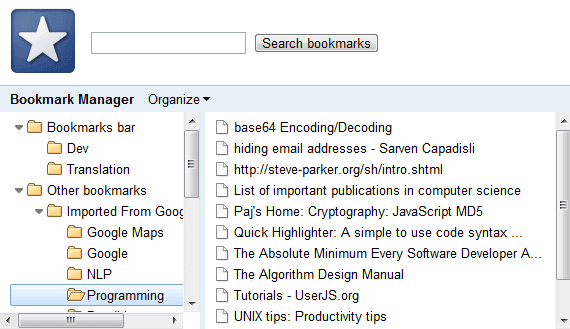 4. Google Chrome can synchronize themes and preferences, in addition to bookmarks. 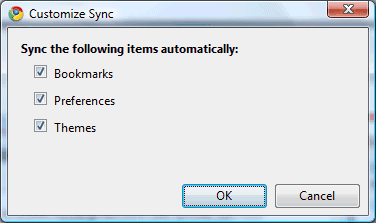 5. Google Chrome includes Adobe's Flash plug-in, so you no longer have to install it or worry about keeping it up to date. Open a site that uses Flash, right-click on a Flash object and select "About Adobe Flash". You should see the message "You have version 10,1,53,22 installed". 6. Disable individual plug-ins. Go to chrome://plugins/ and disable the plug-ins you don't need. You can disable Google Gears, Adobe Flash, Google Update or any other plug-in installed on your computer. 7. Extensions in incognito mode. Chrome disables all extensions in incognito mode, but you can manually enable some of them from the Extensions page. 8. Native geolocation. The previous Chrome versions used the Google Gears implementation, but Google Chrome now supports HTML5 geolocation, so that more web applications can easily find your location. Go to Google Maps, click on the small circle above the Street View logo and you'll see an infobar: "maps.google.com wants to track your location". "If you allow Google Chrome to share your location with a site, the browser will send local network information to Google Location Services to get an estimate of your location. The browser can then share your location with the requesting site. The local network information used by Google Location Services to estimate your location includes information about visible WiFi access points, including their signal strength; information about your local router; your computer's IP address," explains Google. 9. Manual translation. Now you can disable the auto-translation feature and still be able to use the built-in translator. Even if you disable the Google Translate integration from Settings/Under the hood, you can still right-click on a page and select "Translate to English". 10. Reorder extension buttons. You can change the order of the buttons installed by Google Chrome extensions using drag & drop and even hide some of the buttons.  Bonus enterprise feature. Google Chrome now supports Integrated Windows Authentication. If you have access to an intranet site that uses Microsoft IIS and requires NTLM authentication, open it in Chrome 5. This is one of the most requested Chrome features, after the support for Core Animation NPAPI, extensions and a bookmark manager. For those who are wondering, Google Chrome 5.0.375.29 is the latest beta and the latest dev release for Windows, Mac and Linux. This page shows the most recent two releases for all Chrome flavors.      
  
 |
|
Posted: 05 May 2010 03:00 AM PDT É certo e sabido que a internet é um local selvagem e inóspito, capaz de albergar as mais sábias obras da humanidade... a par de muitas outras coisas.
Não pretendo ser o melhor escritor do mundo, e vocês bem sabem o quanto as minhas tendências disléxicas por vezes me fazem comer letras ou até deixar palavras sem sentido a meio de frases reformuladas. No entanto... penso que na maior parte das vezes sou capaz de fazer passar a mensagem. E por isso mesmo, não posso deixar de partilhar convosco pérolas destas que aparecem em sites "sérios", como o Jornal de Negócios. (A notícia pode ter sido retirada ou editada, mas deixo-vos aqui uma imagem tal e qual como estava.)  Não quero ser demasiado severo com a Joana Gonçalves que escreveu este artigo, nem com o revisor/editor/outro que o tenha permitido "passar"... para além da gramática altamente dúbia, não deixa de ser surpreendente ficarmos a saber que o Internet Explorer é o servidor da Microsoft, Microfoft, Microsof (conforme o parágrafo) - e que o servidor da Apple é o Safari! ... hummm... deixem-me fechar esta página do meu servidor! :)   
  
 |
 The online team at
  We run almost all open source, in fact I can’t think of anything that isn’t.



| You are subscribed to email updates from (``-_-´´) BrinKadeiraS
To stop receiving these emails, you may unsubscribe now. |
Email delivery powered by Google |
| Google Inc., 20 West Kinzie, Chicago IL USA 60610 | |
You received this message because you are subscribed to the Google Groups "BrinKadeiraS" group.
To post to this group, send email to brinka...@googlegroups.com.
To unsubscribe from this group, send email to brinkadeiras...@googlegroups.com.
For more options, visit this group at http://groups.google.com/group/brinkadeiras?hl=en.