
Dsip Peptide Review - Delta-Sleep Inducing Peptide (DSIP) Guide - Dosages, Sides

Fairy Blenden
One of the peptides introduced in the market that can induce sleep by improving objective sleep quality is Delta-sleep inducing peptide, more commonly known as DSIP. This naturally occurring substance is disrupting the market, and with more clinical research, DSIP's usage can grow exponentially, considering its precise mechanism of action .

👊👊👊 CHECK OUT OUR STORE 👊👊👊
DSIP Nasal Spray | A Comprehensive Review - Peptides
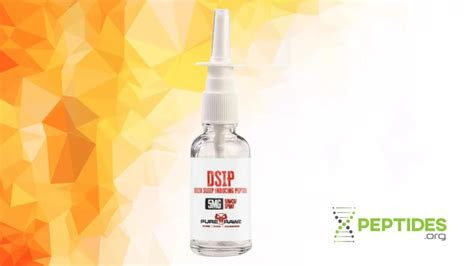
The delta sleep inducing peptide (DSIP) has been a subject of keen interest in neuroscience and sleep research. In the 1970s, DSIP was discovered to possess a remarkable capability of inducing slow-wave sleep [ 1 ]. Our discussion will delve into initial studies on DSIP, exploring its impact on different stages of sleep and potential benefits .
Delta sleep-inducing peptide (DSIP) : r/Peptides - Reddit
+:+r/Peptides+-+Reddit)
Delta sleep-inducing peptide (DSIP) is a multifunctional regulatory peptide. It was first isolated from cerebral venous blood of rabbits after low-frequency ('hypnogenic') electrical stimulation of the intralaminar thalamic nuclei by the Schoenenberger-Monnier group from Basel in 1977 []. Subsequently, the functions of the DSIP were actively investigated.
Delta-sleep-inducing peptide (DSIP): A review - ScienceDirect
:+A+review+-+ScienceDirect)
Delta sleep-inducing peptide (DSIP) was isolated from rabbit cerebral venous blood by Schoenenberger-Monnier group from Basel in 1977 and initially regarded as a candidate sleep-promoting factor. However, the link between DSIP and sleep has never been further characterized, in part because of the lack of isolation of the DSIP gene, protein
Application of Peptides: An overview
DSIP--a tool for investigating the sleep onset mechanism: a review. 1988 Feb;38 (3-4):345-53. doi: 10. 3109/00207458808990695. Department of Psychology, Bar-Ilan University, Ramat-Gan, Israel. Delta-Sleep-Inducing Peptide (DSIP) has several physiological effects in addition to its ability to promote sleep in animals under certain conditions.
5 Best Peptides for Sleep: DSIP and More - Muscle and Brawn
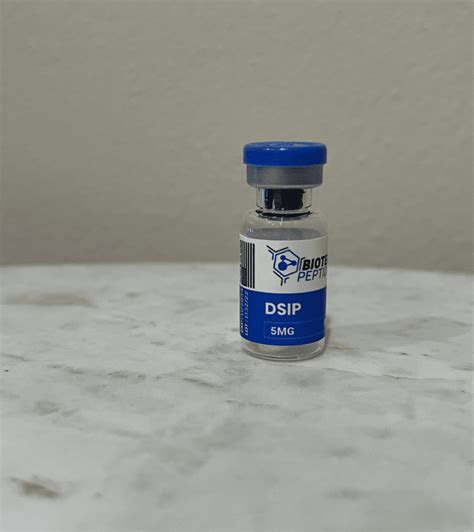
Delta-sleep-inducing peptide (DSIP): a review. 1984 Spring;8 (1):83-93. doi: 10. 1016/0149-7634 (84)90022-8. Since the turn of the century, it has been postulated that humoral factors induce sleep. Many compounds were proposed as sleep-factors, but only two of the sleep-peptides have been purified to homogeneity and characterized, so far.
Delta sleep-inducing peptide (DSIP): a still unresolved riddle
:+a+still+unresolved+riddle)
Delta-Sleep Inducing Peptide (DSIP) Overview. ⭐️ Top Benefits: Induces sleep 🧪 Form: Injectable liquid ⌛️ Max Time Used: 4 - 6 Weeks 💰 Average Cost: $35. 99 ️🩹 Side Effects: Headaches ☢️ Dangers: Not really 📚 Best Peptide Stack: HGH ⚤ Men/Women: Men and women ️ Go to the Full review
Delta sleep-inducing peptide (DSIP): a still unresolved riddle
The isolation and characterization of delta-sleep-inducing peptide (DSIP) achieved from 1963 to 1977 were reviewed in 1984. The first reports describing sleep as well as extra-sleep effects of DSIP also were included in that work. Only two years later, much additional literature concerning DSIP has accumulated. . Review MeSH terms Animals .
DSIP Peptide Review and Tests | Peptide Source

The serving size is 500 to 1000. mgs. Start off with the 500 first, then try the 1000mgs if you believe that there is still room for more sleep improvement. FYI I took 3 scoops once and realized that there is a law of diminishing returns in effect with L Carnosine supplementation.
Delta sleep-inducing peptide : European Journal of Anaesthesiology - LWW
The influence of delta sleep-inducing peptide (DSIP) on sleep was studied in 16 chronic insomniac patients according to a double-blind matched-pairs parallel-groups design. Subjects slept for 5 consecutive nights in the laboratory. Night 1 was used for adaptation, night 2 for baseline measurements. In the afternoon before the 3rd, 4th and 5th .
Acute and delayed effects of DSIP (delta sleep-inducing peptide) on .
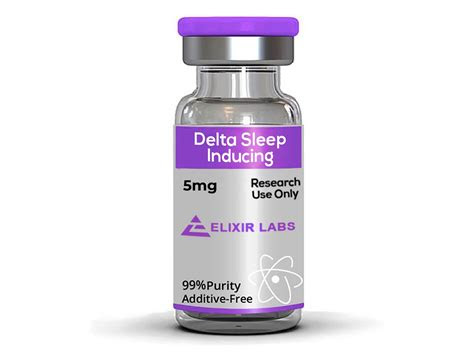+on+.)
DSIP structure is different from any other known representative of the various peptide families. In this mini-review we hypothesize the existence of a DSIP-like peptide(s) that is responsible (at least partly) for DSIP-like immunoreactivity and DSIP biological activity. . Delta sleep-inducing peptide (DSIP), a nonapeptide with a unique amino .
Delta-sleep-inducing peptide (DSIP): an update - PubMed
:+an+update+-+PubMed)
DSIP was applied as slow intravenous infusions at a dosage of 25 nmol/kg in the morning. The subjects immediately reported a feeling of sleep pressure, and sleep increased by 59% (median of total sleep time) within a 130-min interval after the treatment as compared with placebo. Delayed effects on subsequent night sleep were shorter sleep onset .
Delta-sleep-inducing peptide (DSIP): A review - ScienceDirect
Delta sleep-inducing peptide (DSIP) is a naturally occurring substance, which was originally isolated from rabbit brain in 1977 []. This curious substance is a nonapeptide that is normally synthesized in the hypothalamus and targets multiple sites including some within the brainstem []. As its name suggests DSIP promotes sleep and this has been demonstrated in rabbits, mice, rats, cats and human .
Delta Sleep Inducing Peptide (DSIP) Review: 6 Big Benefits
+Review:+6+Big+Benefits)
This mini‐review hypothesizes the existence of a DSIP‐like peptide(s) that is responsible (at least partly) for DSIP-like immunoreactivity and DSIP biological activity, and potential future studies are outlined, including natural synthesis and release of this DSip‐ like peptide and its role in neuroendocrine regulation.
Delta-sleep-inducing peptide (DSIP): A review - Semantic Scholar
:+A+review+-+Semantic+Scholar)
DSIP peptide seeks to provide you with a good night's rest. The peptide offers much promise in terms of providing better sleep and treating drug withdrawals, among other benefits. These benefits include opportunities to restore hormone imbalances and other damaging effects related to aging. Learn more about the top 6 benefits of DSIP peptide.
Delta-sleep-inducing peptide (DSIP): a review - PubMed
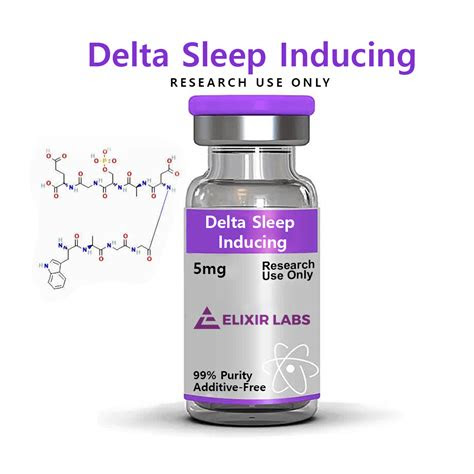:+a+review+-+PubMed)
Delta-sleep-inducing peptide (DSIP): A review. NEUROSCI BIOBEHAV REV 8 (1) 83-93, 1984. --Since the turn of the century, it has been postulated that humoral factors induce sleep. Many compounds were proposed as sleep-factors, but only two of the sleep-peptides have been purified to homogeneity and characterized, so far.
DSIP--a tool for investigating the sleep onset mechanism: a review

The Delta sleep-inducing peptide (DSIP) is a naturally occurring substance isolated from a rabbit back in 1977. This substance is a nonpeptide which is synthesized in the hypothalamus and targets different sites like the brainstem. Suggested by its name, the Delta Sleep-Inducing Peptide promotes sleep, which has been demonstrated in:
Effects of delta sleep-inducing peptide on sleep of chronic . - PubMed

DSIP, or delta sleep-inducing peptide, is a small neuropeptide made up of nine amino acids. It was first discovered in the 1970s by Swiss scientists who were . RESOURCES; DSIP Peptide Review. DSIP Peptide Review. Latest DSIP Reviews & Test Results. Semaglutide and Weight Loss: Insights from Animal Studies (Rodents, 2020) Sep 7, 2023 | PEPTIDE .
Delta-sleep-inducing peptide - Wikipedia
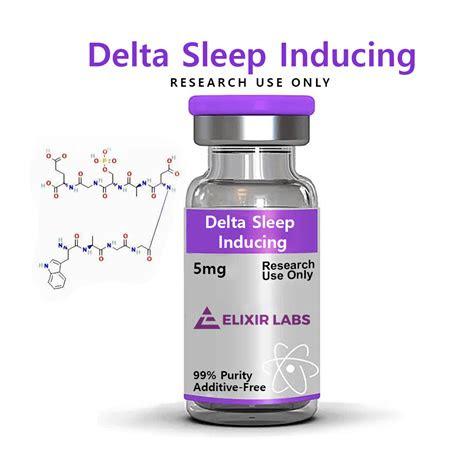
The effect of delta sleep-inducing peptide (DSIP) on the changes of body (core) temperature induced by serotonergic agonists in rats. Since the turn of the century, it has been postulated that humoral factors induce sleep. Many compounds were proposed as sleep-factors, but only two o….
Molecules | Free Full-Text | Delta Sleep-Inducing Peptide Recovers .

Peptides can be used for a variety of applications including biomedical research, peptide-based vaccines, peptide nanotubes, design of novel enzymes, diagnostic peptides, etc. . Comprehensive Reviews in Food Science and Food Safety, 11(2): 187-204, 2012. . 5. Amedea B. Seabra, et al. Biological applications of peptides nanotubes: An overview.
What is DSIP ? | Delta Sleep Inducing Peptide | HRT Experts
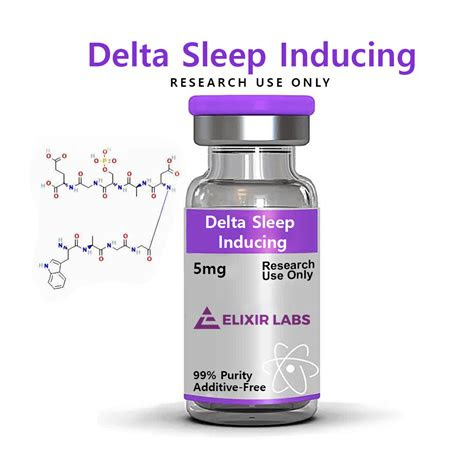
DSIP (Delta Sleep-Inducing Peptide): Benefits, Dosage & Side Effects. A good night's sleep of 7-8 hours uninterrupted is crucial for optimal testosterone levels and robust mitochondrial health. But even when we do everything "right"… there's always the barrier of magically falling asleep after closing our eyes.
Delta Sleep Inducing Peptide: A Comprehensive Guide

Delta sleep-inducing peptide (DSIP) is a neuropeptide discovered in the 1970s and heavily studied for its effects on the central nervous system, namely its ability to induce sleep. While the relationship between DSIP and sleep is still not fully understood, researchers have uncovered a variety of benefits, including the abilities to reduce .
DSIP (Delta Sleep-Inducing Peptide): Benefits, Dosage & Risks
:+Benefits,+Dosage+&+Risks)
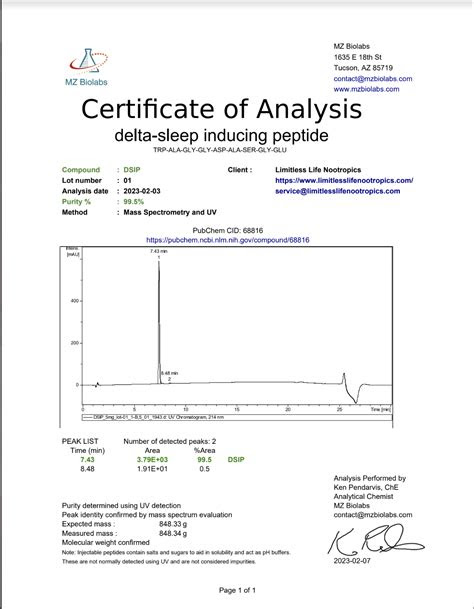
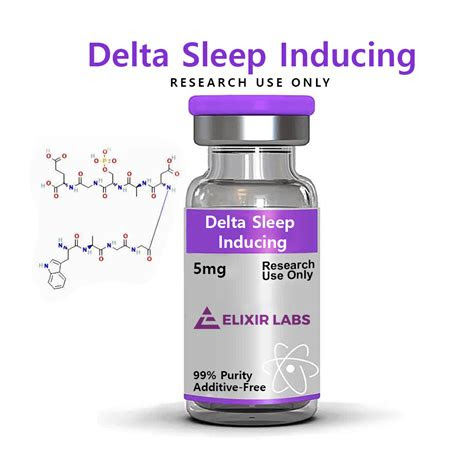
Delta-sleep-inducing peptide (DSIP) is a neuropeptide that when infused into the mesodiencephalic ventricle of recipient rabbits induces spindle and delta EEG activity and reduced motor activities. Its amino acid sequence is Trp-Ala-Gly-Gly-Asp-Ala-Ser-Gly-Glu (WAGGDASGE). The gene has yet to be found in rabbits, along with any receptors or .