
Indus seal, M-312 ஜல்லிக்கட்டு அல்ல, கொற்றவை போத்துராஜா போர் (Proto-Koṟṟavai war with Mahisha)

N. Ganesan
https://youtu.be/MQW4wKu-8zE
https://youtu.be/bl-ZLD6dmVM
ஓர் குறிப்பு: ஜல்லிக்கட்டுக்கு சிந்து முத்திரை வேறு. திரு. பாலகிருஷ்ணன் நூலிலும், யுட்யூப் சேனல் காணொளிகளிலும்
குறிப்பிடுவது கொற்றி-போத்தரையன் போர்க் காட்சி ஆகும். இம் மயிடனின் பெயர் விக்கிரமன் எனக் கவிச்சக்கிரவர்த்தி
செயங்கொண்டார் காராணை விழுப்பரையன் வளமடலில் குறிப்பிட்டுள்ளார் (ப்ராஜெக்ட் மதுரை நூல்: 60).
Indus seal, M-312 ஜல்லிக்கட்டு அல்ல, கொற்றவை போத்துராஜா போர் (Proto-Koṟṟavai war with Mahisha):
Indus seal, M-312 ஜல்லிக்கட்டு அல்ல, கொற்றவை போத்துராஜா போர் (Proto-Koṟṟavai war with Mahisha)
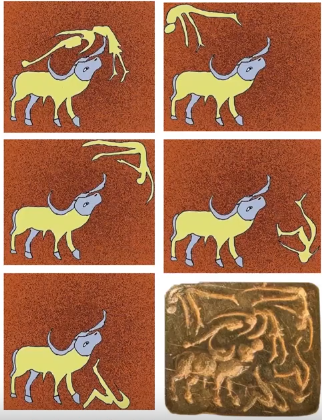
சிந்துநாகரீகப் போத்தின் போர், ஏறு அணைதல்
ஜல்லிக்கட்டு மீதான நீதிமன்றத் தடையை அரசாங்கம் நீக்கியிருக்கிறது என்பது மகிழ்ச்சியான செய்தி. கலித்தொகை, சிலம்பு போன்ற
இலக்கியங்களில் கண்ணனின் ஏறுதழுவல் நிகழ்ச்சி போற்றப்படுகிறது. இந்து
நாளிதழில் களத்து மேட்டுப்பட்டியில் உள்ள 1500 ஆண்டு பழமையான ஏறுதழுவல்
ஓவியம், 500 ஆண்டுகால ஜல்லிக்கட்டு பற்றிய கட்டுரையைப் படிக்கலாம்
ஐராவதம்
மகாதேவன் அவர்கள் சிந்து முத்திரை (M-312) பற்றிச் சுட்டிக்காட்டிய சேதி
இந்து நாளிதழில் வெளியாகி இருக்கிறது. ஹிந்து ஆசிரியருக்கு நான் ஒரு கடிதம்
வாயிலாக ஆராய்ச்சிக் குறிப்பினை அனுப்பிவைத்தேன். அக் கடித நகலையும்,
ஜல்லிக்கட்டு, மஞ்சிவிரட்டு, ஏறுதழுவல் செய்திகளை மேலைநாடுகளின்
ஆய்வாளர்கள் ஆய்ந்திருக்கும் கட்டுரைகளின் பட்டியலையும் இங்கே பதிகிறேன்.
கொற்றி/கொல்லி(Proto-Durga) போர்க்காட்சியைக் காட்டும் முக்கியமான முத்திரை
இது.
நா. கணேசன் Tiru.
Iravatham Mahadevan, expert on Indian scripts and epigraphs, has
mentioned about bull-baiting rituals in Indus valley, c. 2000 BCE. http://www.hindu.com/2008/01/13/stories/2008011355961800.htm Looking at the seal M-312 published in The Hindu newspaper, I wrote a letter to the Editor. Here, it is.
Tiru.
Iravatham Mahadevan, expert on Indian scripts and epigraphs, has
mentioned about bull-baiting rituals in Indus valley, c. 2000 BCE. http://www.hindu.com/2008/01/13/stories/2008011355961800.htm Looking at the seal M-312 published in The Hindu newspaper, I wrote a letter to the Editor. Here, it is.
----------------------------
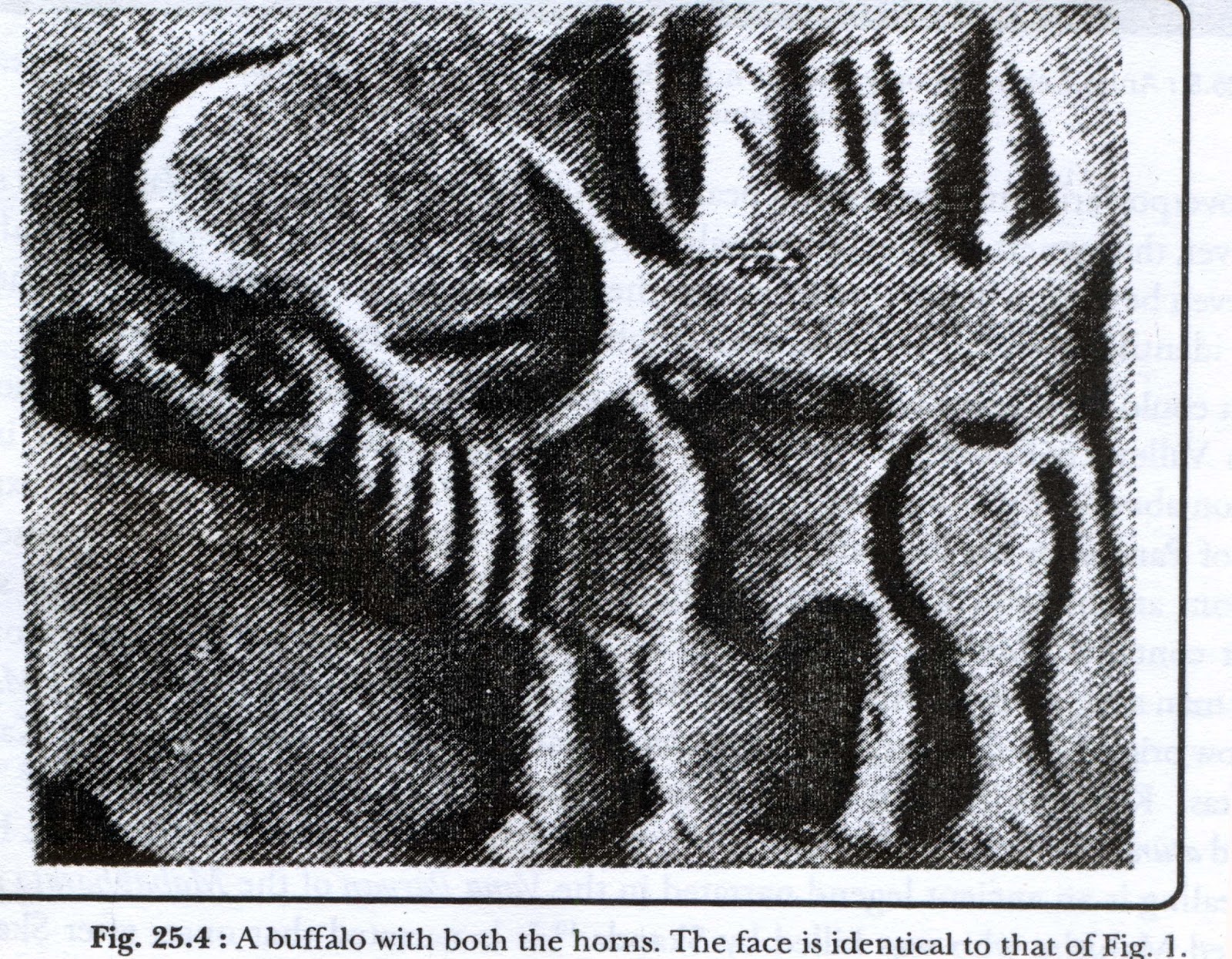
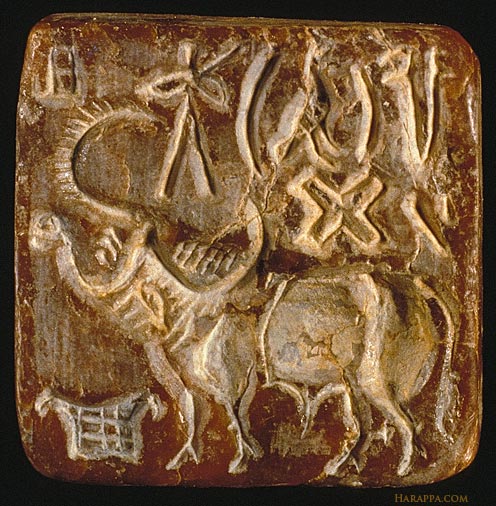

The animal in the Indus seal (M-312 in A. Parpola, Corpus of Indus seals and inscriptions) given in the article by T. S. Subramanian ("Bull-baiting of yore", The Hindu, January 13, 2008) is most likely a water buffalo, not a taurus bull. Compare with the buffalo seal (one of many seals of this kind. This is from the book by D.P.Sharma: Indus script: On its way to decipherment) and the scene is a mythological scene of the combat of KoRRavai with buffalo demon famous throughout India in the historical period.
The body structure, legs, and the graceful inward-curving horns show it as a water buffalo. While four persons are not in direct physical contact with the buffalo and are shown vaulting all around the animal, there is a person stuck in the left horn of the animal. This human being is possibly a female and her chest is stuck in the buffalo's left horn. The person could be female because her long head-pendent made of cloth or braid is particularly visible above the buffalo's body. Note also the skirt worn by the female and the skirt of the central female figure in M-312 is mentioned by Indus archaeologist, W. A. Fairservis (Sci. Am., 238:3, 1983).
Alf Hiltebeitel ("The Indus Valley 'Proto-Siva', Reexamined through Reflections on the Goddess, the Buffalo, and the Symbolism of Vaahanas." Anthropos 73:5-6 (1978):767-97 ) thinks the animal involved is a wild buffalo.
pg. 772, "Finally it is likely that the horns are not only those of the buffalo but of the wild buffalo. Other Indus Valley seals show the animal in "truculent" poses, one buffalo in particular (Mackay, no. 510) having "thrown" five human figures about him. The upward curve of the horns which characterises the buffalo on all these seals portrays the animal at his most aggressive potential."
In Indus seals, women are shown many times wearing long head-pendent made of cloth in different seals. This "turban" like cloth tied around the head has a long tail-piece of cloth floating in the air. Next, we will see five Indus examples.
 (1)
K-65 seal from Kalibangan where a woman with a long hair-pendent stands
in between two males holding spears. And this long "turban" is
especially visible on the two women whose body is attached to tigers.
The head ornamental cloth with a long tail-piece is called urumaalai, talaippaaLai, talaippaakai or talaikkaTTu in Tamil. Interestingly, the cloth-turban word stands for "generation" in Tamil, E.g., "10 generations" will be rendered as '10 talaikkaTTu' in Tamil due to the ritual of placing a turban for the succeeding generational person.
(1)
K-65 seal from Kalibangan where a woman with a long hair-pendent stands
in between two males holding spears. And this long "turban" is
especially visible on the two women whose body is attached to tigers.
The head ornamental cloth with a long tail-piece is called urumaalai, talaippaaLai, talaippaakai or talaikkaTTu in Tamil. Interestingly, the cloth-turban word stands for "generation" in Tamil, E.g., "10 generations" will be rendered as '10 talaikkaTTu' in Tamil due to the ritual of placing a turban for the succeeding generational person.(2) M-305 seal (pg. 185, Parpola, 1994) where a woman with the long head cloth pendent and also wearing buffalo horns. She sits in the same yogic pose as the famous so called proto-siva (M-304) seal. Both M-304 and M-305 seem to have buffalo hooves. In Indus art, we see often horns on several animals (e.g. on tigers) and also composites. In Tamils' every day speech, horns are part and parcel of stock phrases. For clay ovens with multiple bumps to hold vessels, Sangam literature uses horn imagery - 'pal kOTTu aTuppu' literally 'multi-horned oven' (akanAn2URu), 'kOTu uyar aTuppu' (puRanAn2URu). "avanaik kompu 'horn' ciivaatE' (don't make him big or angry), "avanukku kompu muLaiccirukkaa?" (has he grown so big? lit. has he started growing horns), "avan periya kompanaa?" & so on. KampaNa, the founder of Vijayanagara kingdom, KampaNa < KompaNa "horned-leader" (kompu 'horn' > kampu). Also, Kampan, the Tamil poet who is like Shakespeare in English, supposed to be from vELaar potters caste traditional priests of Durga and KaaLi temples. In the early Buddhist art of India, Buddha is represented aniconically using a buffalo or gaur face. Even though art historians have called the Buddhist symbol variously as trident, nandipada, nandyavarta, triratna and so on, originally this seems to be a heritage from Indus civilization and Buddha is represented by a buffalo/gaur face, which I call as mahishamukha. Refer John Marshall's treatise on Mohenjodaro (3 volumes, ASI) where he identifies the Indus sign for the bovine face. Also, the Penguin India book by I. Mahadevan (in press, 2009) has a chapter on how the tamil nILakaNTan "great buffalo" turns into sanskrit nIlakaNTha "blue necked" for 'Siva.
(3) There is a pendent-wearing being (shaman priest. male?) standing under a pipal-leaf arch (R. Meadow, H95-2485, 1995 find. Thanks, Rich for the nice picture!). The "shaman" nature of the male priest is indicated by a "ladder" sign shown above his head. Even today, shamanistic ladders are found among the Kalash people in Pakistan. In Tamil, ladders are kaTavai, iRaivai (Cf. kaTavuL 'god', iRaivi 'goddess'). The human may be a male, but wearing the female "turban" we see so often in other seals, and also wearing bangles usually worn by females in Indus art. What is "he"? May be a shaman priest of the goddess we see in the pipal trees as shown in M-1186. He imitates his goddess by wearing her "turban" with a long tail-piece and her bangles, but note that he does not wear any skirt unlike females in M-1186 and M-312 and also the horns on the head are absent. Hence, my take that he is a priest, but not the goddess.
 For
comparison of the "turban" on the male priest in the pipal arch, take a
look at the same "turban" worn by a male priest in M-1186 (5) (offering
a human warrior head? Th "double-bun" hair style of the warrior head is
visible). Here in H95-2485, bangles and long cloth pendent (both
typical for females) as well as the pipal-leaf arch are symbols for the
goddess whom the male priest serves. Such cross-dressing is seen even
today on important festival days in some large south Indian temples.
This "turban" is not the same as the braid which is shown on the seven
women in M1186 (Pleiades?, called in south Indian village festivals as 7
virgins "7 kannimAr". may be the idea behind Murukan-skanda's mothers).
For
comparison of the "turban" on the male priest in the pipal arch, take a
look at the same "turban" worn by a male priest in M-1186 (5) (offering
a human warrior head? Th "double-bun" hair style of the warrior head is
visible). Here in H95-2485, bangles and long cloth pendent (both
typical for females) as well as the pipal-leaf arch are symbols for the
goddess whom the male priest serves. Such cross-dressing is seen even
today on important festival days in some large south Indian temples.
This "turban" is not the same as the braid which is shown on the seven
women in M1186 (Pleiades?, called in south Indian village festivals as 7
virgins "7 kannimAr". may be the idea behind Murukan-skanda's mothers).Tamil name of the ficus religiosa tree is 'araicu' - so named because of the noise of bodhi tree leaves in the forest winds and this phenomenon of murmuring leaves of the peepul trees are mentioned widely in Indian literature. The other famous fig tree is ficus indica (Indian fig tree). In Tamil, it is called aal and vaTam tree, so named because of the prominent aerial roots occupying large area. vaTam, which means 'rope' in Tamil, has entered Sanskrit and other Indian languages as a loan word denoting the banyan tree. The common English name for ficus indica tree, banyan comes from merchants striking deals in the shade of the village vaTam trees and vaNi/vaNiyan "merchant" (Cf. vaNij in Rgveda) has to do with "paNam" (token for barter, cash) in Tamil. p-/v- alteration: paNam/vaNi. The northerly direction in Tamil is vaTakku and this originates from the ficus indica name vaTam because of the astronomical associations of the Indian fig tree with the pole star.
(4) H-176 from Harappa is a very important seal on the Indus goddess religion. H-176a depicts a water buffalo, and the female with the long turban standing in front of a hut. On the H-176b side, the turbaned female is seated in the typical Indus deity fashion as in so-called proto-Siva seal (M-304) in the center. On her right is a sacrificial animal (markhor goat?) and on her left is the shaman on a tree (acacia?) with a tiger with its head turned back looking at him. Acacia (khadira) tree is particularly important for KoRRavai of the forest, as the famous Vanadurga temple is in the village, khadirA-mangalam in Thanjavur district. Rajaraja Cholan I who led naval expeditions against Ceylon, Maldives and Srivijaya kings in Southeast Asia was an ardent bhakta of Katiraa-maGkalam vanadurga and his sword is placed on the idol during worship there. KatiragAmam, a Murukan (s/o KoRRavai in sangam texts) temple in the dense forests of Sri Lanka is also named after the acacia tree. In Shaakta (tantra) worship of the goddess, tAmbulam (betel leaves) is chewed with acacia nuts (an astringent) and lime paste mix in old Indian literature.
(5) The famous M-1186 seal, where a female deity in a pipal (bodhi) tree frame stands and is shown at, http://www.harappa.com/indus/34.html
 Walter
A. Fairservis, Jr. who did archaeological work in the Indus valley
sites wrote a book on Indus script taking it as belonging to Dravidian
family of languages. Dr. Fairservis remarked about the female being
attacked by a water buffalo in M-312, and mentioned the skirt worn by
this woman in M-312 (Script of the Indus valley civilization, Scientific
American, 238:3, pp. 58-66, March 1983) : "A fourth seal, even more
elaborate than the "Lord of the Beasts," introduces a "worshipper
element". It repeats the depiction of a pipal tree, this time at its
upper right corner. Between the branches of the tree stands a horned
anthropomorphic figure. Facing the horned figure is a kneeling one,
skirted and thus presumably female; to the left of the kneeling figure
is a large goat. Seven skirted figures occupy the bottom half of the
seal, their hair dressed in some kind of long "ponytail." A rather
gruesome depiction on a fifth seal [M-312 in the Parpola, Corpus of
Indus inscriptions ~NG] shows several similarly coiffed figures, one of
them wearing a skirt, being attacked by a water buffalo."
Walter
A. Fairservis, Jr. who did archaeological work in the Indus valley
sites wrote a book on Indus script taking it as belonging to Dravidian
family of languages. Dr. Fairservis remarked about the female being
attacked by a water buffalo in M-312, and mentioned the skirt worn by
this woman in M-312 (Script of the Indus valley civilization, Scientific
American, 238:3, pp. 58-66, March 1983) : "A fourth seal, even more
elaborate than the "Lord of the Beasts," introduces a "worshipper
element". It repeats the depiction of a pipal tree, this time at its
upper right corner. Between the branches of the tree stands a horned
anthropomorphic figure. Facing the horned figure is a kneeling one,
skirted and thus presumably female; to the left of the kneeling figure
is a large goat. Seven skirted figures occupy the bottom half of the
seal, their hair dressed in some kind of long "ponytail." A rather
gruesome depiction on a fifth seal [M-312 in the Parpola, Corpus of
Indus inscriptions ~NG] shows several similarly coiffed figures, one of
them wearing a skirt, being attacked by a water buffalo."Please note that this is also possibly a mythological scene where a female deity fights with a buffalo demon. This seal of buffalo fight could have arisen from jallikattu-like village festivals with bulls and buffalo male animals in the bronze era Indus valley. It need to be researched whether this deity has relations with the goddess, kOTTaavii (early centuries CE in North India) and koRRavai of old Tamil literature. Several Indus era sites have place names ending as -kOT (cf. Tamil kOTTai). While there are scores of town names ending in kOTTai in south India, there are some that start with kOT- like kOTTaiyUr, kOTTaippAkkam as well (Cf. the pre-Harappan site, Kot Diji near Mohenjo Daro). Even now, there is an ancient Dravidian language called Brahui in the Indus region. The oldest Indian descriptions of bull-baiting are found in Tamil sangam literature, written at a time midway between the mature Indus valley civilization and now. In sum, M-312 is a Proto-Durga (KoRRavai/kOTTavi in Tamil, ...) mythological battle scene, and her aspects are seen in many Harappan civilization seals such as H-176, K-65 and M-1186.
Kind regards,
N. Ganesan
References:
BTW, bull-baiting is described in sangam literature. And, later on the motif is found in Sanskrit bhakti texts like Bhagavatam written in Tamil Nadu. In sum, M-312 is a Proto-Durga (KoRRavai/kOTTavi in Tamil, ...) mythological scene. Observe that the horns of the buffalo do not seem attached to the animal head in his battle scene with proto-Durga (M-312). In historic Indian art, the most famous battle scene of Durga vs. buffalo is at Mamallapuram (7th century, Pallava) near Chennai. The buffalo horns little away from their head (M-312) can be compared with the hands dangling which are displayed at a little distance from the thighs in Indus seals showing gods in "yogic" posture. An example from Dean Anderson,
http://www.eastwestcultural.org/public/protoyogi/
It will be useful the measure the actual distance between the horns and their buffalo head, it may be ~ 0.3 mm.
Parpola, Asko, (2000), Vāc as a Goddess of Victory in the Veda and her relation to Durgā, Zinbun, Kyoto University, 34, 2, pp. 101-143. The pdf file can be downloaded at
http://repository.kulib.kyoto-u.ac.jp/dspace/handle/2433/48782
http://www.harappa.com/script/
The Indus script papers by A. Parpola
(1) http://www.harappa.com/script/indus-writing.pdf
(2) http://www.harappa.com/script/indusscript.pdf
Zvelebil, Kamil, Bull-baiting Festival in Tamil India, Annals of the Naprstek Museum 1, Prague 1962, pp. 191-199.
Erik Af Edholm and C. Suneson, The seven bulls and Krsna's marriage to Nila/Nappinnai in Sanskrit and Tamil literature, Temenos, v.8, p. 29-53, 1972.
Rabe, Michael, "Victorious Durga, The Buffalo Slayer", Muse: Annual of the Museum of Art and Archaeology, No. 20,University of Missouri - Columbia (1986), pp. 50-65 with added color plates
http://web.sxu.edu/mdr1/durga/index.htm
Vanamala Parthasarathy, Bull baiting in Tamil and Sanskrit, Jl. Inst. Asian studies, 1998
The ID of Indus bovines:
http://dakshinatya.blogspot.com/2008/11/zebu-buffalo.html
There is a long article on bull-baiting in Tamil and Sanskrit traditions by Ulrike Niklas at Cologne. It appeared in the Kolam journal. F. Gros translated VaaTivaacal novel into French. In Italian, there is a book with photos, Fabio Scialpi, La festa di Pongal a Madurai, 1991.

kanmani tamil
--
You received this message because you are subscribed to the Google Groups "வல்லமை" group.
To unsubscribe from this group and stop receiving emails from it, send an email to vallamai+u...@googlegroups.com.
To view this discussion on the web visit https://groups.google.com/d/msgid/vallamai/CAA%2BQEUfNz2ON8QOkDmntGME2Dr_Ts8HvNEJ5Maqbw6inK4xF0Q%40mail.gmail.com.
N. Ganesan
கொற்றி ~ கொல்லிதொடர்பு படுத்துவது வலிந்து சொல்வதாகத் தெரிகிறது.
N. Ganesan
On Fri, Jan 22, 2021 at 6:08 PM kanmani tamil <kanmani...@gmail.com> wrote:கொற்றி ~ கொல்லிதொடர்பு படுத்துவது வலிந்து சொல்வதாகத் தெரிகிறது.கிரேக்கர்கள் கொற்கை என்னும் துறைமுகத்தை கொல்கை என எழுதினர்.கொற்றவன், கொற்றவை கொல்- எனும் அதிகாரம் காட்டும்.கால்ட்வெல் கொற்கை பற்றிய ஆய்வுகளில் சொல்லி இருப்பதாக நினைவு.குல்- (குலை-த்தல்) குற்று-; கால்- காற்று, ... போல், கொல்- எனும் வினைச்சொல் தருவது கொற்றி, கொற்கை (கொல்கை).
kanmani tamil
--
You received this message because you are subscribed to the Google Groups "வல்லமை" group.
To unsubscribe from this group and stop receiving emails from it, send an email to vallamai+u...@googlegroups.com.
To view this discussion on the web visit https://groups.google.com/d/msgid/vallamai/CAA%2BQEUcMxAveCe9BhKCFg5GNEefBskTdxEfWOCBYi3DCtf99Vw%40mail.gmail.com.
N. Ganesan
On Fri, Jan 22, 2021 at 6:08 PM kanmani tamil <kanmani...@gmail.com> wrote:கொற்றி ~ கொல்லிதொடர்பு படுத்துவது வலிந்து சொல்வதாகத் தெரிகிறது.கிரேக்கர்கள் கொற்கை என்னும் துறைமுகத்தை கொல்கை என எழுதினர்.கொற்றவன், கொற்றவை கொல்- எனும் அதிகாரம் காட்டும்.கால்ட்வெல் கொற்கை பற்றிய ஆய்வுகளில் சொல்லி இருப்பதாக நினைவு.குல்- (குலை-த்தல்) குற்று-; கால்- காற்று, ... போல், கொல்- எனும் வினைச்சொல் தருவது கொற்றி, கொற்கை (கொல்கை).
N. Ganesan
'கடுமிபுதோ' என்று எங்கே உள்ளது?சக
To view this discussion on the web visit https://groups.google.com/d/msgid/vallamai/CA%2BjEHcv8C-1od1nR5AdiLL_dVkszML8JxBrYS-NHbPmBUz4g8Q%40mail.gmail.com.
kanmani tamil
To view this discussion on the web visit https://groups.google.com/d/msgid/vallamai/CAA%2BQEUdUJHxBdiZhupNtbWQidTx_oGB_e7LA0a96p2Rka-QodQ%40mail.gmail.com.
N. Ganesan
திணைமாந்தன் ஓரியின் கொல்லி மலையைக் காரியின் துணையோடு வென்று சேரர் தம்வசமாக்கினர். இதனால் காரி சோழருக்குப் பகையானான்.அவனது பாலகரைச் சோழன் யானைக்காலால் இடறிக் கொல்ல முற்படும் போது கோவூர் கிழார் தான் தடுத்து நிறுத்தினார்.கோவூர் கிழார் மிகப் பெரிய ஆளுமை உடையவர்சக
To view this discussion on the web visit https://groups.google.com/d/msgid/vallamai/CA%2BjEHctRiNvnaYm7tk48Vo_1VgvdU7_3y29nrwfihCnMkeqW%2Bw%40mail.gmail.com.

kanmani tamil
To view this discussion on the web visit https://groups.google.com/d/msgid/vallamai/CAA%2BQEUe1Sg_Xn0G5TYDDEEunFNmRzYBOG6JR9Z9Jfrr_5ua0iA%40mail.gmail.com.
kanmani tamil
N. Ganesan
பாடப்பட்டோன்: அதியமான் நெடுமான் அஞ்சி.
திணை: பாடாண்:
துறை: பரிசில்.
| வாயி லோயே! வாயிலோயே! வள்ளியோர் செவிமுதல் வயங்குமொழி வித்தித், தாம் உள்ளியது முடிக்கும் உரனுடை உள்ளத்து வரிசைக்கு வருந்தும்இப் பரிசில் வாழ்க்கைப் பரிசிலர்க்கு அடையா வாயி லோயே! | 5 |
| கடுமான் தோன்றல் நெடுமான் அஞ்சி தன்அறி யலன்கோல்? என்னறி யலன்கொல்? அறிவும் பகழும் உடையோர் மாய்ந்தென, வறுந்தலை உலகமும் அன்றே; அதனால், காவினெம் கலனே; சுருக்கினெம் கலப்பை; | 10 |
| மரங்கொல் தச்சன் மைவல் சிறாஅர் மழுவுடைக் காட்டகத்து அற்றே; எத்திசைச் செலினும், அத்திசைச் சோறே. |
To view this discussion on the web visit https://groups.google.com/d/msgid/vallamai/CA%2BjEHcstn6r4BPMd-bszhjFGyugNnN5CWszZNEjBHkmEYfbO7Q%40mail.gmail.com.
kanmani tamil
To view this discussion on the web visit https://groups.google.com/d/msgid/vallamai/CAA%2BQEUeSVLHFcz-A4eGeF-yw3fQ5zi4pYZ%2BhPFC9vvxTRSH5ow%40mail.gmail.com.
N. Ganesan
To view this discussion on the web visit https://groups.google.com/d/msgid/vallamai/CA%2BjEHcueVTd9UqqtfXQXfML6nThuwTZ_2r8JpWM6QjVQDLiO3g%40mail.gmail.com.
kanmani tamil
To view this discussion on the web visit https://groups.google.com/d/msgid/vallamai/CAA%2BQEUdGdAVZMZCgphT8gJaGTttc41J2yDBbewfgQUP6LbsVzA%40mail.gmail.com.
N. Ganesan
சேரவம்சம், அதியவம்சம் இரண்டும் ஒரே மக்களினத்தைச் சேர்ந்தவை.சோழனும் சேரனும் கடுமான் என்று அழைக்கப்பட்டமைக்குச் சான்றேதும் நீங்கள் காட்டவில்லை.சேரன் விஷயத்தில் நீங்கள் எது சொன்னாலும் எனக்குச் சந்தேகப் பார்வை தான்... உங்கள் வஞ்சி பற்றிய வாதங்களின் விளைவு.
To view this discussion on the web visit https://groups.google.com/d/msgid/vallamai/CA%2BjEHcvUY3pGZiSgXO-AEt7-xCDac9jxRG592WeLp7_sPaz0ow%40mail.gmail.com.
N. Ganesan
புறநானூறு - 99 - வடக்கே இருந்து வந்த வேளிர்களில் சேரர்கள் கூட்டத்தில் இருந்து அதியர் என்று ஒரு கிளை பிரிந்திருக்கிறது. எனவே அதியமான்களுக்கும் பனம் பூ தான் மாலை. தாங்கள் சேரமான்கள் எனப் 12-ஆம் நூற்றாண்டு வரை பொறித்துள்ளனர். நாமக்கல் குகைச் சிற்பங்களை சேர வம்மிச அதியர்கள் குடைந்து அமைத்துளர்,
புறம் பாடல் வரிகள்:
---தொன்னிலை மரபின் நின் முன்னோர் போல
ஈகைஅம் கழற்கால் இரும்பனம் புடையல்
பூவார் காவின் புனிற்றுப் புலால் நெடுவேல்
எழுபொறி நாட்டத்து---
மலையமான் காரி சேரமானிடம் உத்தரவு வாங்கி ஆதனின் மகன் ஓரியை அடக்கினான். சிறு போலீஸ் ஏக்ஷன். ஆதன் சேர நாட்டு வேளிர்களில்
பலருக்கும் இருந்தது. கொல்லி எனப்படும் கொற்றி சேரர் குலபர்வதத்தில் வாழும் குலதெய்வம். கொல்லிப்பாவை என்று சங்க இலக்கியத்தில்
இவ் அணங்கு பேசப்படுகிறாள். அதிரூபசுந்தரி. மாயவள் என்று சிலப்பதிகாரம் கூறும். ஆதன் என்ற பெயர் கொடுமணலில் கிடைக்கிறது.
தமிழ்நாட்டின் (ஏன், இந்தியா, தென்கிழக்கு ஆசியா) இரண்டிலும் முதன்முதல் கிடைக்கும் பள்ளிப்படைச் சிவாலய லிங்கத்தில்
தமிழ் பிராமி எகன் ஆதன் கோட்டம் என்கிறது. எகன் எஃகு என்ற சொல்லின் அடிப்பிறந்தது எனக் கொள்ளலாம்.
http://nganesan.blogspot.com/2020/07/chennimalai-devarayar-kandasashti.html
கிண்ணிமட லிங்கத்தில் உள்ள எகன், ஆதன், கோட்டம் மூன்றுமே சிறப்பான சொற்கள். கோட்டம் = கோயில், இங்கே பள்ளிப்படை. சேரர்களின் தலைநாடாகிய கொங்குநாட்டுக்குச் சங்க காலத்தில் கிண்ணிமங்கலம் மிகு தொடர்பு உடையது. கொங்கர் புளியங்குளம் (சங்ககாலக் கல்வெட்டு) கிண்ணிமடத்தின் மிக அருகே இருக்கிறது. சேரர் தலைநகர் வஞ்சி (இன்றைய கரூர்) நேர் வடக்கே உள்ளது. உதியன் சேரலாதன், நெடுஞ் சேரலாதன், செல்வக்கடுங்கோ வாழியாதன் என்ற சேர அரசர்களும், அவர்களோடு தொடர்புடைய சிற்றரசர், வேளிருக்கும் ஆதன் என்ற பெயர் உண்டு. உ-ம்: சேரர் குலச்சின்னம் ஆகிய கொல்லிமலை (பாண்டியர்க்குப் பொதியில் போல). பொதியில், பொதினி இரண்டிலும் ஆய் வேளிர். கொல்லித் தலைவன் வல்வில் ஓரியின் தந்தை ஆதன். ஓய்மான் அரசர்க்குச் சேரருடன் தொடர்புண்டு: நல்லி ஆதன், வில்லி ஆதன். அதியமான் வமிசத்து ஆதன் எழினி செல்லூர் என்னும் கேரளப் பட்டினத்தை ஆண்டான். அதேபோல, நெடுவேள் ஆதன் போந்தைப் பட்டினத்தை ஆண்டான். போந்தை = பனை, சேரர் குலச்சின்னம் ஆதலால் போந்தைப் பட்டினம் முசிறி, தொண்டி, பந்தர் போன்ற ஏதாவதோர் சேரர் பட்டினம் ஆகலாம். அதியர்கள் சேரர் வமிசம் எனப் 12-ம் நூற்றாண்டு வரை கற்பொறித்தனர். அழகர்மலை , கொங்கர் புளியங்குளம் , மேட்டுப்பட்டி, புகழூர், எடக்கல் கல்வெட்டுகளில் ஆதன் என்பதற்குப் பதிலாக அதன் என்ற பெயர் வருகிறது. ஒருவேளை அது ஆதனாக இருக்கலாம். தை என்றால் தந்தை, இறை எனப் பொருள். 12 மாதங்களில் மகர மாதம் ஒன்றனுக்கே தை எனத் தமிழ்ப் பெயர் நிலைத்தது. தை - தையல் தம்பதி. கண்ணன்+தை = கண்ணந்தை, சாத்தன்+தை = சாத்தந்தை, கொற்றன்+தை = கொற்றந்தை, பூதன்+தை = பூத்தந்தை (பூச்சந்தை என்பர் இப்போது), கீரன்+தை = கீரந்தை, ஆதன்+தை = ஆந்தை என்ற குலப் பேர்களை இன்றும் லட்சக்கணக்கான குடும்பங்களில் கொங்குநாட்டில் கேட்கலாம். கண்ணந்தை எனும் பேர் பானையோட்டில் -ணந்தை என்று மட்டும் அரபுநாட்டில் தமிழ்க் கல்வெட்டாய்க் கிடைப்பது அறிவீர்கள். ராவண காவியம் பாடின புலவர் அ.மு.குழந்தை, இணையப் பல்கலை நிறுவுநர் பேரா. வா.செ. குழந்தைசாமி போன்றோர் ஆந்தை குலத்தாரே. ஆதன், ஆந்தை என்பது பிராகிருத மரபில் முறையே அதன், அந்தை என முதல்நெடில் குறுகிப் பல சங்ககாலத் தமிழ்க் கல்வெட்டுக்களில் வருகிறது. கிண்ணிமங்கலத்தின் பழம்பெயர் கிள்ளிமங்கலம் என்று சொல்லின்செல்வர் ரா.பி.சேதுப்பிள்ளை ‘ஊரும்பேரும்’ நூலில் விளக்கியுள்ளார். கிள்ளிமங்கலம் (கிண்ணிமங்கலம்) கிழார் மகன் சேர கோவனார் பாடிய பாடல் நற்றிணையிலே இருக்கிறது. இங்கே இப்போது கிடைத்துள்ள முகலிங்கம் அவரது உறவினர் ஒருவருக்கு எடுக்கப்பட்டது போலும். புறநானூற்றுப் பாடல் 249 தும்பி சேரகீரனார் பாடியது. அப்பாடலில் தான் தலைவனை இழந்த தலைவி குங்குமம் இழந்து, வரிநீறு ஒன்றையே தரிக்கும் 16-ம் நாள் ஈமச்சீர் பாடப்பட்டுள்ளது பாசுபத காபாலிகம் கொங்கில் பரவியதைப் பாடும் பாடல் ஆகும். திரிபுண்டரம் அழகாக, தும்பி சேர கீரனாரால் ’வரிநீறு’ எனப்படுகிறது. தும்பி சேர கீரனார் பாடல், புறநானூறு 249, உரையுடன் படித்தருளுக:
http://www.diamondtamil.com/education/sangam_literature/ettuttokai/purananuru/purananuru249.html#.Xw2ulOdOnIW
ஈரோடு, பச்சோடு (பாப்பினி), பெரியோடு, சித்தோடு, வெள்ளோடு, ... போல ராசிகணத்தார் பரப்பிய பாசுபத சைவம் பழனி-திண்டுக்கல் அருகே எரியோடு வந்து, கிண்ணிமங்கலம் சேர்ந்த வரலாற்றை விளக்கும் ஆவணமாக, இப்போது கி.பி. 2-ம் நூற்றாண்டின் முகலிங்கம் “எகன் ஆதன் கோட்டம்” என்ற எழுத்துடன் கிடைப்பது அருமை.
N. Ganesan
கொற்றி ~ கொல்லிதொடர்பு படுத்துவது வலிந்து சொல்வதாகத் தெரிகிறது.
kanmani tamil
--
You received this message because you are subscribed to the Google Groups "வல்லமை" group.
To unsubscribe from this group and stop receiving emails from it, send an email to vallamai+u...@googlegroups.com.
To view this discussion on the web visit https://groups.google.com/d/msgid/vallamai/f78e77a1-36e2-4b5f-8028-80e5a7de2150n%40googlegroups.com.